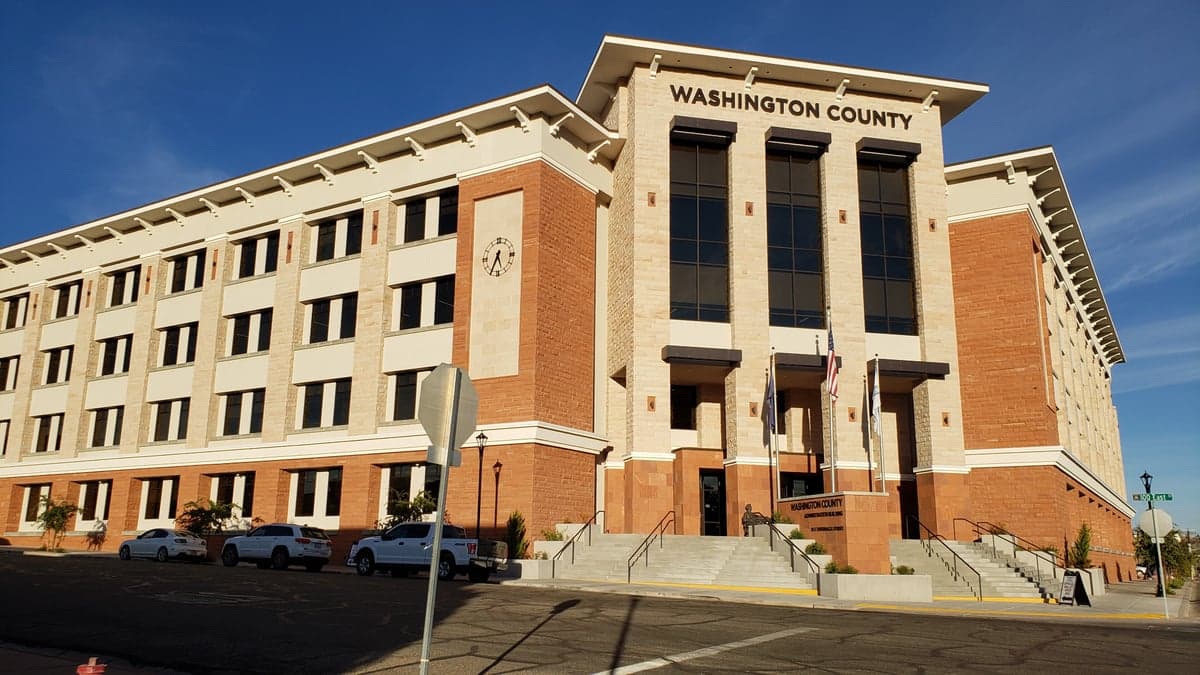
Photo: Wikipedia
Demographics of Washington County
Affluence Level in Washington County
An upper-middle-class area. Household wealth, education levels, and homeownership run ahead of national benchmarks.
People of Washington County
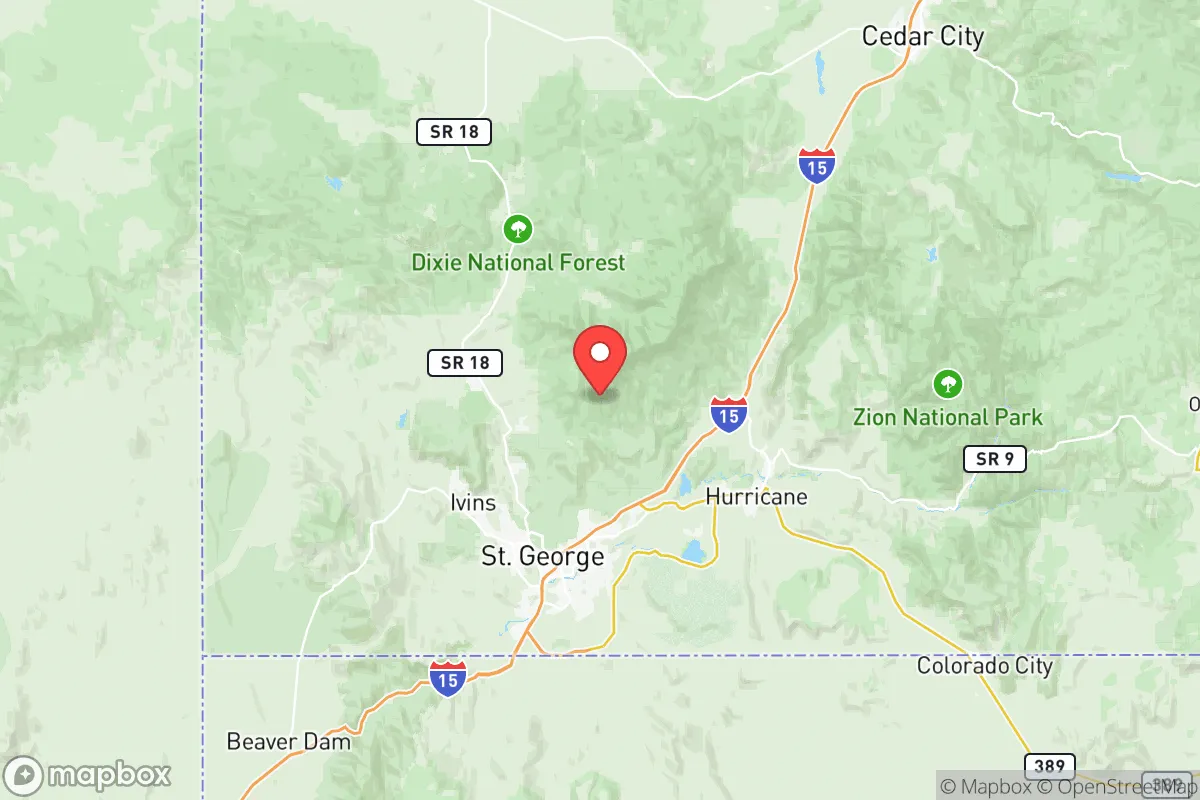
Today, the people of Washington County, Utah are predominantly white, Latter-day Saint, and politically conservative, with a rapidly growing population that has more than doubled since 2000 to reach 189,827. The county is characterized by a strong family-oriented culture, low crime rates, and a high quality of life, with St. George serving as the urban hub and smaller communities like Hurricane, Washington, and Ivins offering suburban and rural alternatives. Distinctive identity markers include a high rate of religious participation, a strong sense of community, and a growing but still modest level of diversity, with a Hispanic population of 11.7% and a foreign-born share of just 3.4%. The county’s population is notably less diverse than the national average, but it is gradually becoming more varied as in-migration from other parts of the country and some international immigration continues.
Settlement & growth (pre-1960)
Before American settlement, the area now known as Washington County was inhabited by the Southern Paiute people, who lived in small, nomadic bands across the region for centuries. Spanish explorers and traders passed through in the 18th century, but no permanent European settlements were established until the mid-19th century. The first permanent American settlers were Mormon pioneers sent by Brigham Young in the 1850s to establish cotton and other crops in the warm, arid climate. The first settlement was Washington, founded in 1857, followed by St. George in 1861, which quickly became the county seat and the largest town. These early settlers were primarily of English and Scandinavian descent, drawn by religious mission and the promise of land and self-sufficiency. The "Dixie Mission," as it was called, aimed to produce cotton, grapes, and other warm-weather crops, and the settlers were largely from the northern Utah settlements, bringing with them a strong Latter-day Saint culture and a communal work ethic.
Subsequent waves of settlement in the late 19th and early 20th centuries saw the founding of Hurricane (1906) and La Verkin (1897), both established by Mormon families who built irrigation systems to farm the Virgin River valley. The population grew slowly but steadily, reaching about 10,000 by 1950. The economy was based on agriculture, small-scale mining, and later, tourism as visitors began to discover the area’s red rock landscapes. The construction of the Interstate 15 corridor in the 1960s and the establishment of Zion National Park as a major tourist destination began to shift the economy toward services and hospitality. The population remained overwhelmingly white and Latter-day Saint through this period, with very little immigration from outside the United States.
Modern era (post-1965)
The post-1965 era brought significant changes to Washington County, driven primarily by domestic migration rather than international immigration. The 1965 Hart-Cellar Act had a minimal direct impact on the county, as the foreign-born population remains low at 3.4%. Instead, the major demographic shift came from the Sun Belt migration of the 1970s and 1980s, as retirees and families from California, the Pacific Northwest, and the Rust Belt moved to the area for its warm climate, low cost of living, and perceived safety. St. George became a major retirement destination, with a wave of older adults settling in planned communities like SunRiver and Green Valley. This in-migration increased the county’s population from about 13,000 in 1970 to over 90,000 by 2000.
The Hispanic population grew during this period, rising from a negligible share to 11.7% by 2020, driven by both domestic migration from other parts of the Southwest and some direct immigration from Mexico and Central America. Hispanic residents are concentrated in St. George and Washington City, where they work in construction, hospitality, and agriculture. The East/Southeast Asian population, at 1.0%, is small but growing, with families settling in St. George and Ivins, often drawn by professional opportunities in healthcare and education. The Indian subcontinent population is negligible at 0.1%, and the Black population remains very small at 0.5%. The county’s racial and ethnic composition is still overwhelmingly white (81.8%), but the non-white share is slowly increasing, primarily through Hispanic growth and a small but steady influx of Asian and other minority groups.
Suburbanization has reshaped the county, with new master-planned communities like Little Valley in St. George and Sand Hollow near Hurricane absorbing much of the population growth. The county’s college-educated share has risen to 33.3%, reflecting the in-migration of professionals and retirees with higher education levels. The Latter-day Saint population remains dominant, but the influx of non-Mormon residents has diversified the religious landscape, with growing numbers of evangelical Christians and secular residents.
The future
The population of Washington County is projected to continue growing rapidly, potentially reaching 250,000 to 300,000 by 2040. The county is likely to become more diverse, but slowly, as the Hispanic population grows through both natural increase and continued migration, and as more East/Southeast Asian and other minority families are drawn by economic opportunities. The white, Latter-day Saint majority will remain the dominant cultural force, but the county is not homogenizing; instead, distinct enclaves are emerging, with retirees concentrated in SunRiver and Green Valley, younger families in new subdivisions, and Hispanic communities in older neighborhoods of St. George and Washington City. The in-migration from California and other states is likely to continue, bringing a more politically moderate and culturally diverse population, but these newcomers are generally absorbed into the existing conservative, family-oriented culture rather than transforming it. The next 10-20 years will likely see a gradual increase in diversity, a continued expansion of suburban and exurban development, and a growing tension between the area’s traditional Latter-day Saint identity and the influx of newcomers with different backgrounds and values.
For someone moving in now, Washington County is becoming a more populous and slightly more diverse version of its former self, with a strong conservative character, a booming economy, and a high quality of life that continues to attract new residents. The county offers a safe, family-friendly environment with access to stunning natural landscapes, but those seeking significant racial or cultural diversity will find it limited. The future points toward steady growth, gradual diversification, and the preservation of the area’s core identity as a predominantly white, Latter-day Saint, and politically conservative community.

* Values derived from national, state, county, city and local statistics and may differ in a specific area. Last updated: 2026-05-14T12:38:31.000Z
Narrative content on this page is AI-generated and may contain mistakes. Verify any details that matter before acting on them.
ReloMaps may earn a commission from affiliate links at no extra cost to you.

