Photo: Wikipedia
Political ClimatePolitical Climate in Valley Center, KS
District shown is the primary district for this city’s centroid. Cities may span multiple districts.
Local Political AnalysisPolitical Analysis of Valley Center, KS
Valley Center, Kansas, has long been a solidly conservative community, and that hasn't changed much. With a Cook Partisan Voting Index of R+12, the area leans heavily Republican, and you can feel it in the local elections and the general vibe around town. The political trajectory here has been fairly steady, though there's a growing unease among long-time residents about the slow creep of progressive ideas from Wichita, just a few miles south, starting to influence local conversations.
How it compares
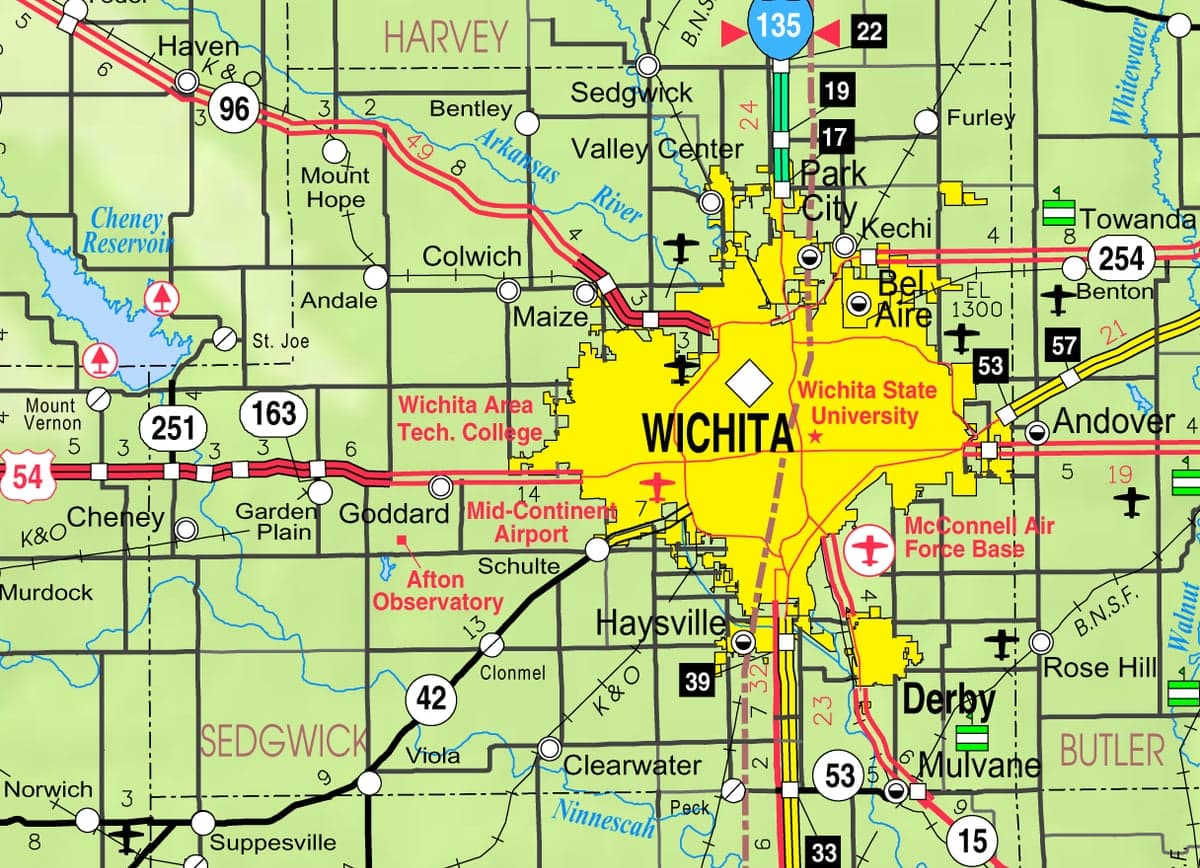
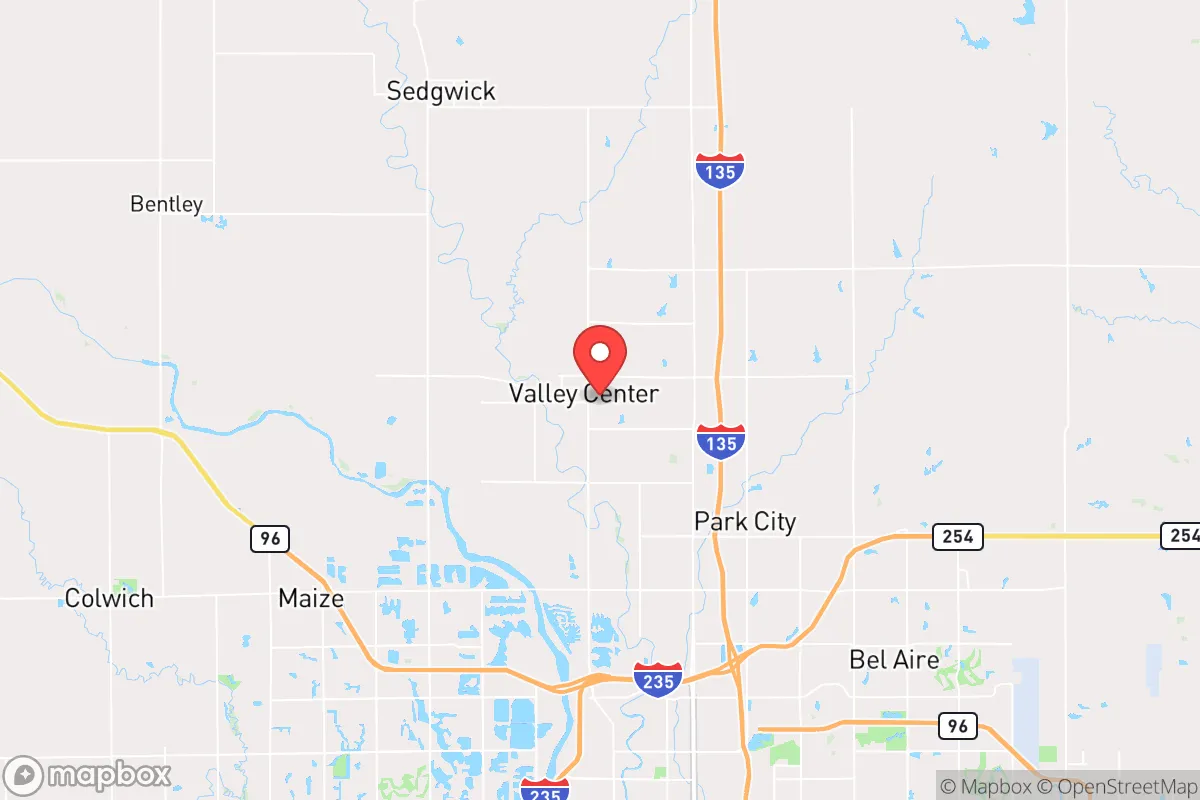
Compared to Wichita, which has a more mixed political landscape and has seen some progressive gains in recent years, Valley Center feels like a different world. Drive north on I-135, and you leave behind the city's more liberal-leaning precincts for a place where conservative values are still the default. Nearby towns like Park City and Bel Aire lean conservative too, but Valley Center has a stronger, more vocal conservative identity. The contrast is sharpest when you look at school board races or county commission meetings—Valley Center tends to push back harder against state-level mandates or federal overreach, while Wichita often seems more willing to go along with the latest progressive trends. It's not uncommon to hear folks here talk about how they moved out of Wichita specifically to get away from the growing government interference in daily life.
What this means for residents
For residents, the political climate means a greater sense of local control and fewer headaches from top-down policies that don't fit the community. You don't see the same push for things like mask mandates or vaccine passports here that you might in other parts of the state. The local government tends to take a hands-off approach, trusting families and business owners to make their own decisions. That said, there's a growing concern that as Wichita expands and more people move out to the suburbs, some of those progressive ideas are starting to trickle in. You hear it in conversations about zoning changes or school curriculum debates—people are worried that the same government overreach they left behind is slowly catching up. The long-term outlook depends on whether Valley Center can hold the line or if it'll start to mirror the political shifts happening in larger Kansas cities.
Culturally, Valley Center still holds onto a strong sense of personal responsibility and community self-reliance. There's a noticeable distrust of federal programs and a preference for local solutions. Policy-wise, the area has been resistant to things like property tax increases for new government programs, and there's a general skepticism of any new regulations that might limit personal freedoms. The biggest distinction is the attitude toward individual rights—here, the default is "let people live their lives," not "let the government decide." If you're looking for a place where you won't be constantly told what to do by bureaucrats, Valley Center still fits the bill, but keep an eye on the next few election cycles. The fight to keep it that way is getting real.

State Political ClimatePolitical Climate in Kansas
State Political AnalysisPolitical Environment in the State
Kansas has long been a reliably red state in presidential elections, but its political climate is far more nuanced than a simple Republican label suggests. Over the past 20 years, the state has shifted from a moderate, pragmatic conservative stronghold to a battleground between a dominant, increasingly populist-right wing and a resilient, urban-centered progressive coalition. The overall partisan lean remains solidly Republican at the state level, but the trajectory is one of intensifying internal conflict, with the eastern metro areas pulling left and the vast rural expanse pulling right, creating a dynamic that any new resident should understand before planting roots.
Urban vs. rural divide
The political map of Kansas is a study in stark contrasts. The two major population centers, Johnson County (suburban Kansas City) and Sedgwick County (Wichita), are the state’s political engines, but they pull in opposite directions. Johnson County, once a reliable Republican bastion, has been trending blue for a decade. In 2020, it voted for Joe Biden by a narrow margin, and in 2024, it again leaned Democratic, driven by affluent, college-educated voters and a growing professional class. This shift has made Johnson County the single most important swing area in the state. Meanwhile, Wichita remains a Republican stronghold, though its urban core is becoming more Democratic while the surrounding suburbs and exurbs hold the line. The rest of the state is overwhelmingly rural and deeply red. Counties like Thomas (Colby), Sherman (Goodland), and Grant (Ulysses) routinely deliver 80%+ margins for Republican candidates. The divide is so pronounced that the state’s 1st Congressional District (the “Big First”) covers nearly the entire western half of Kansas and is one of the most Republican districts in the nation, while the 3rd District (Johnson County) is now a genuine toss-up. This geographic split means that state-level politics often hinge on a handful of suburban precincts in Overland Park and Olathe, while the rural majority feels increasingly alienated from the cultural and economic priorities of the eastern metro.
Policy environment
Kansas’s policy environment has been defined by a long-running experiment in conservative governance, most famously the Brownback tax cuts of 2012-2013, which slashed income tax rates and eliminated taxes on pass-through business income. The result was a fiscal crisis that led to budget shortfalls, school funding lawsuits, and a bipartisan legislative override of Governor Brownback’s veto in 2017 to raise taxes again. Since then, the state has stabilized but remains a low-tax, low-service state. There is no state income tax on Social Security benefits, and the standard deduction is generous. Property taxes are moderate, but local school levies can be high. The regulatory posture is generally business-friendly, with right-to-work laws and limited zoning outside major cities. Education policy is a perennial flashpoint: the Kansas Supreme Court has repeatedly ruled that the state’s school funding formula is inadequate, leading to ongoing battles between the legislature and the judiciary. In 2024, the legislature passed a school choice expansion, allowing state funds to follow students to private or homeschool settings, a major win for parental rights advocates. Healthcare policy is largely market-driven, with no state-level Medicaid expansion despite repeated attempts, leaving roughly 150,000 Kansans in the coverage gap. Election laws have been tightened in recent years, including a voter ID requirement and restrictions on mail-in ballot drop boxes, which were passed over Democratic opposition. The state also has a constitutional amendment defining marriage as between a man and a woman, though it is unenforceable after Obergefell.
Trajectory & freedom
On the freedom front, Kansas is a mixed bag. On the positive side for conservatives, the state has expanded gun rights significantly. In 2021, Kansas became a constitutional carry state, allowing permitless concealed carry for adults 21 and older. The state also has a strong Stand Your Ground law and preemption statutes that prevent local governments from enacting stricter gun ordinances than the state. Parental rights have been bolstered by the 2024 school choice law and a 2023 law requiring schools to notify parents of any changes to a student’s mental, emotional, or physical health, effectively limiting the ability of schools to hide a child’s gender identity from parents. On the concerning side, the state has seen a steady creep of government overreach in the name of public health and safety. During the COVID-19 pandemic, Governor Laura Kelly imposed a statewide mask mandate and business restrictions, which were met with fierce resistance from the legislature and rural counties that refused to enforce them. The state also has a history of aggressive use of eminent domain for economic development projects, most notably the Wolf Creek Nuclear Plant and the Kansas City International Airport terminal expansion. Property rights advocates have fought back, but the balance still tilts toward government authority in many cases. Taxation remains a sore point: while income tax rates are low, the state’s sales tax on groceries was only partially repealed in 2023, and local sales taxes can push the combined rate above 10% in some cities. The overall trajectory is toward more freedom on cultural and Second Amendment issues, but with persistent government intervention in economic and health matters.
Civil unrest & political movements
Kansas has not seen the level of civil unrest seen in coastal states, but there have been notable flashpoints. The most significant in recent years was the 2022 abortion rights ballot initiative, where voters overwhelmingly rejected a proposed constitutional amendment that would have declared no right to abortion in the state. This was a stunning defeat for the pro-life movement and energized progressive activists, particularly in Johnson County and Lawrence. The result was a clear signal that while Kansas is culturally conservative, voters are wary of government overreach into personal medical decisions. On the right, the Kansas Republican Party has been riven by internal battles between the establishment wing and the more populist, Trump-aligned faction. The 2022 primary saw several incumbent moderates ousted by hardline challengers, leading to a more confrontational legislative session. Immigration politics are relatively muted compared to border states, but there have been local skirmishes, such as the 2019 attempt by the city of Liberal to declare itself a “sanctuary city” for immigrants, which was quickly reversed after state pressure. Election integrity has been a hot topic since 2020, with the legislature passing stricter voter ID laws and banning private funding of election administration, a response to the “Zuckerbucks” controversy. There have been no major instances of political violence, but the rhetoric is heated, and the divide between urban and rural Kansans is palpable in everyday conversation.
Projection
Looking ahead 5-10 years, Kansas is likely to become more politically competitive at the statewide level, but not necessarily more liberal. The key demographic trend is the continued growth of Johnson County, which is attracting young professionals and remote workers from the coasts. This influx is slowly shifting the state’s political center of gravity eastward. At the same time, rural counties are losing population, which will reduce their electoral clout. The result could be a state that is more purple in presidential elections but remains red in state legislative races due to gerrymandering. The biggest wild card is the ongoing battle over education funding and school choice. If the school choice movement continues to gain traction, it could reshape the political landscape by empowering suburban parents who feel trapped in underperforming public schools. On the cultural front, expect continued fights over transgender rights, abortion, and vaccine mandates, with the legislature likely to pass more preemptive laws to limit local control. The tax environment will remain competitive, but the state will face pressure to fund infrastructure and schools as the population grows. For a new resident, the Kansas of 2035 will likely feel similar to today: a low-cost, low-regulation state with a strong conservative cultural base, but with a growing progressive minority concentrated in the eastern suburbs. The key is to choose your location carefully—Johnson County is a different world from rural Ellis County.
For a conservative-leaning individual or family considering a move, Kansas offers a solid foundation: low taxes, strong gun rights, and a legislature that is generally aligned with traditional values. However, the state is not a monolith. The urban-rural divide means that your daily experience will vary dramatically depending on whether you settle in Overland Park, Wichita, or a small town like Hays. The ongoing political battles over education, healthcare, and local control mean that you should expect to stay engaged. If you value personal freedom and limited government, Kansas is a good bet, but keep an eye on the Johnson County trend—it could determine the state’s direction for the next generation.
* Values derived from national, state, county, city and local statistics and may differ in a specific area. Last updated: 2026-10-10T16:29:14.000Z
Narrative content on this page is AI-generated and may contain mistakes. Verify any details that matter before acting on them.
ReloMaps may earn a commission from affiliate links at no extra cost to you.

