Photo: Wikipedia
Strategic Assessment of Valley Center, KS
Meaningful friction. Expect exposure to either population pressure, blast zones, or natural disaster risk. Consider buying a retreat property.
What does the Strategic Assessment tell us?
Our Strategic Assessment grades tactical survivability of an area. Major population centers, military targets, fallout zones, natural disasters, and border exposure all drive risk — lower exposure means a more defensible position in a crisis.
This is heavily inspired by Joel Skousen's Strategic Relocation book. Highly recommended you checkout the book ($)What does this tell us?
Our Strategic Assessment grades tactical survivability of an area. Major population centers, military targets, fallout zones, natural disasters, and border exposure all drive risk — lower exposure means a more defensible position in a crisis.
This is heavily inspired by Joel Skousen's Strategic Relocation book. Highly recommended you checkout the book ($)Strategic Pillars

Key Distances
Regional Safe Places
Below is our recommended "safe zones" in Kansas and the surrounding area based on our strategic heuristics. For most people, it's unrealistic to live in a “safe zone” full-time due to work, family or other personal reasons. They tend to be more rural. However, many of these areas are perfect for second homes and retreat properties that double as a vacation home or even a short-term rental.
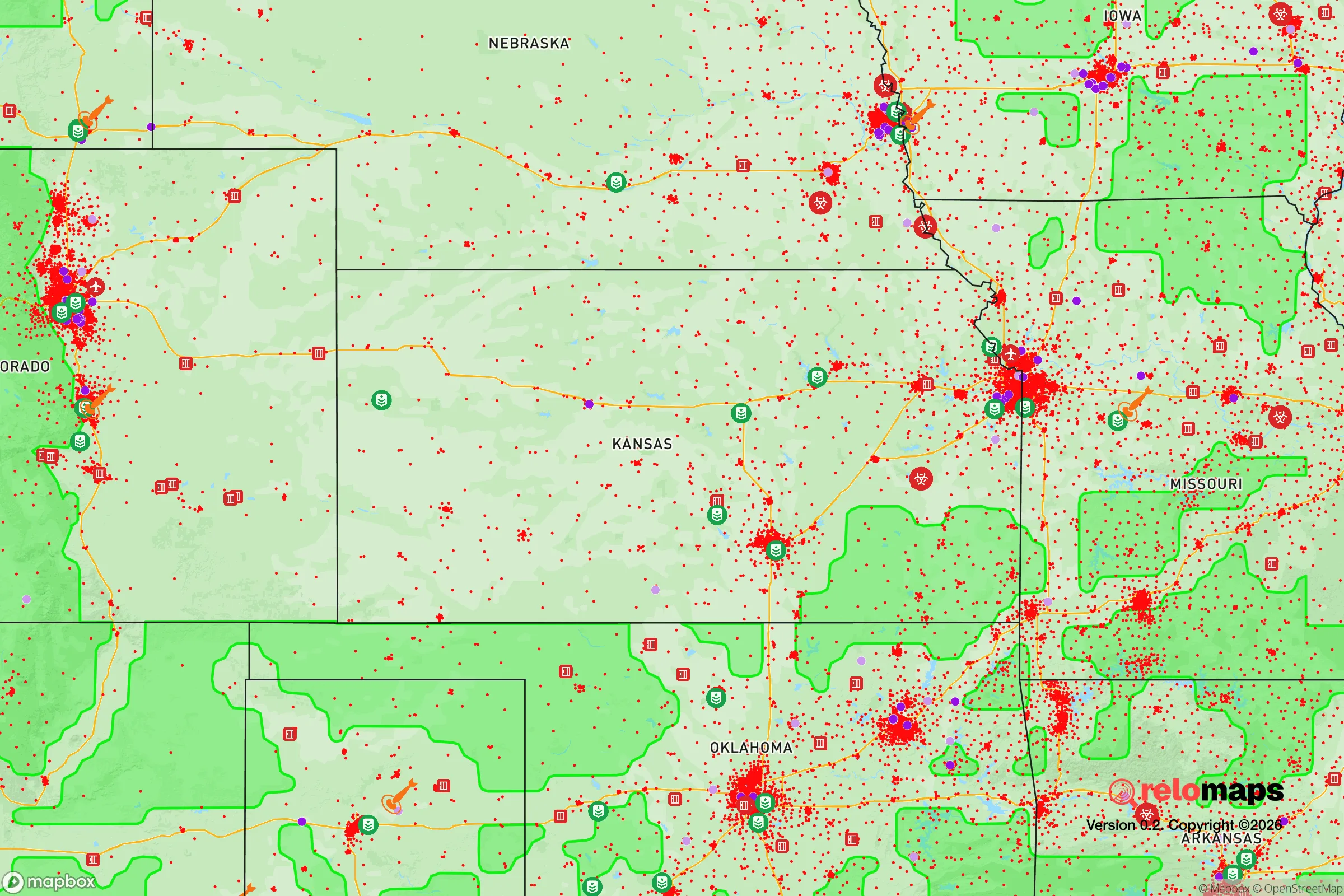
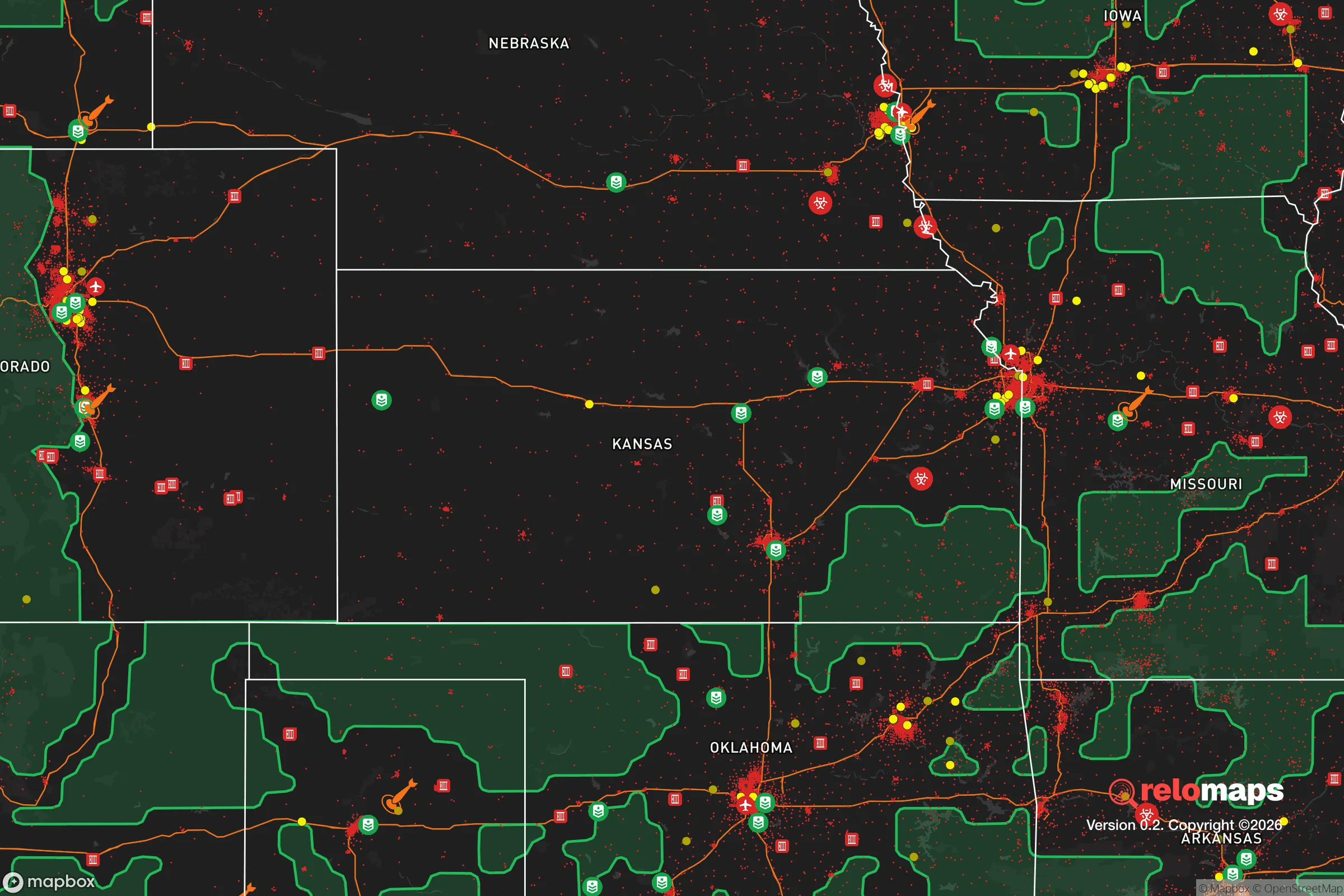


Important Note: For informational purposes only. This does not mean nothing bad ever happens in the green zones. Please use common sense. This is based on public data and modeled with AI. We tried to take a conservative approach but mistakes happen. We update this regularly as new information becomes available.
Solar Generator Recommendations
Backup power matters more here than in safer locations. We've picked three solar generators across budgets and capacity tiers — start with the budget unit if you only need a few essentials, or step up if you want to run a fridge and HVAC for days at a time.

Jackery Portable Power Station Explorer 300
Budget OptionPower on the Go: Weighing only 11 lbs, it's convenient to set up and store with book-sized foldable solar panels

BLUETTI Portable Power Station AC180
Designed for both indoor and outdoor scenarios, AC180 is highly capable as it has a robost capacity and continuous output power.

EF ECOFLOW DELTA Pro Ultra Power Station
Upgraded PickEcoFlow DELTA Pro Ultra is a whole-home energy system designed to grow with your family. Integrated with the Smart Home Panel 2, it scales to meet your evolving energy needs — keeping your home powered, intelligent, and secure through every stage of life.
We earn a commission, at no additional cost to you.
Strategic Assessment Analysis
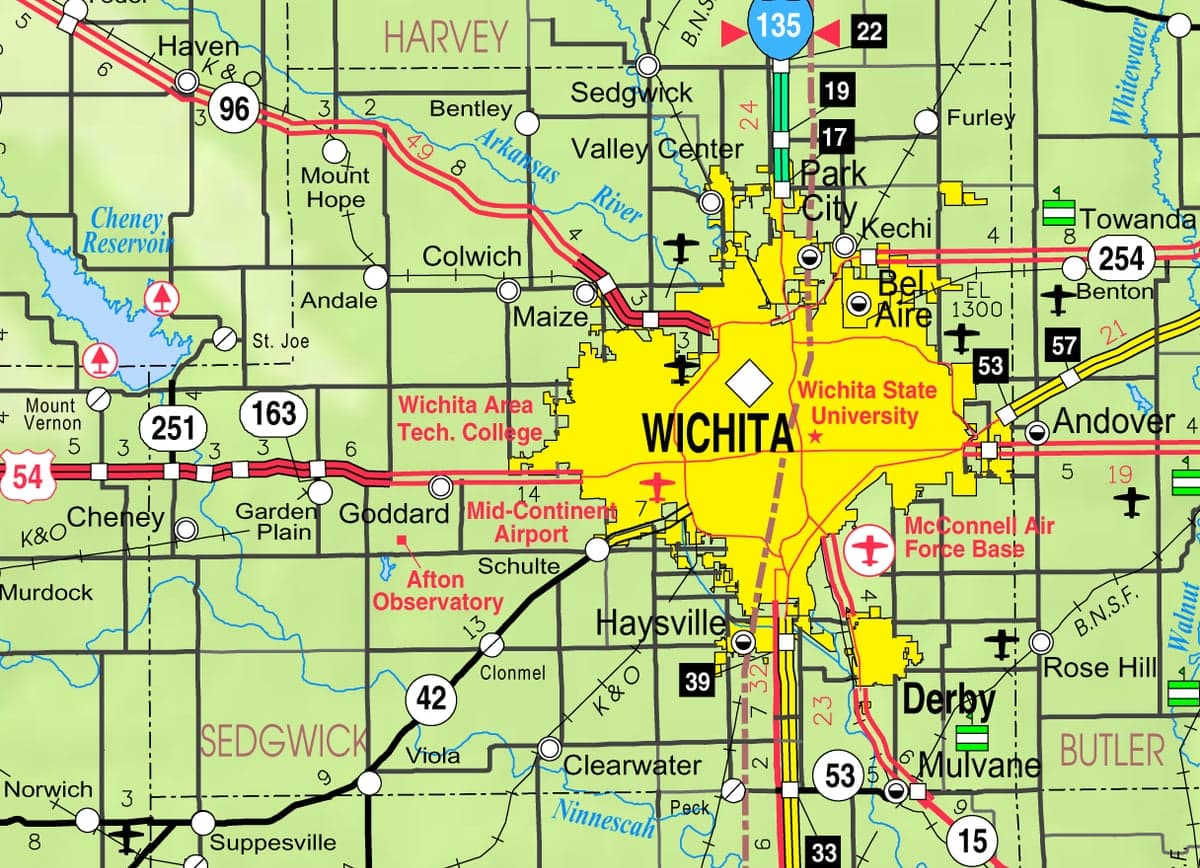
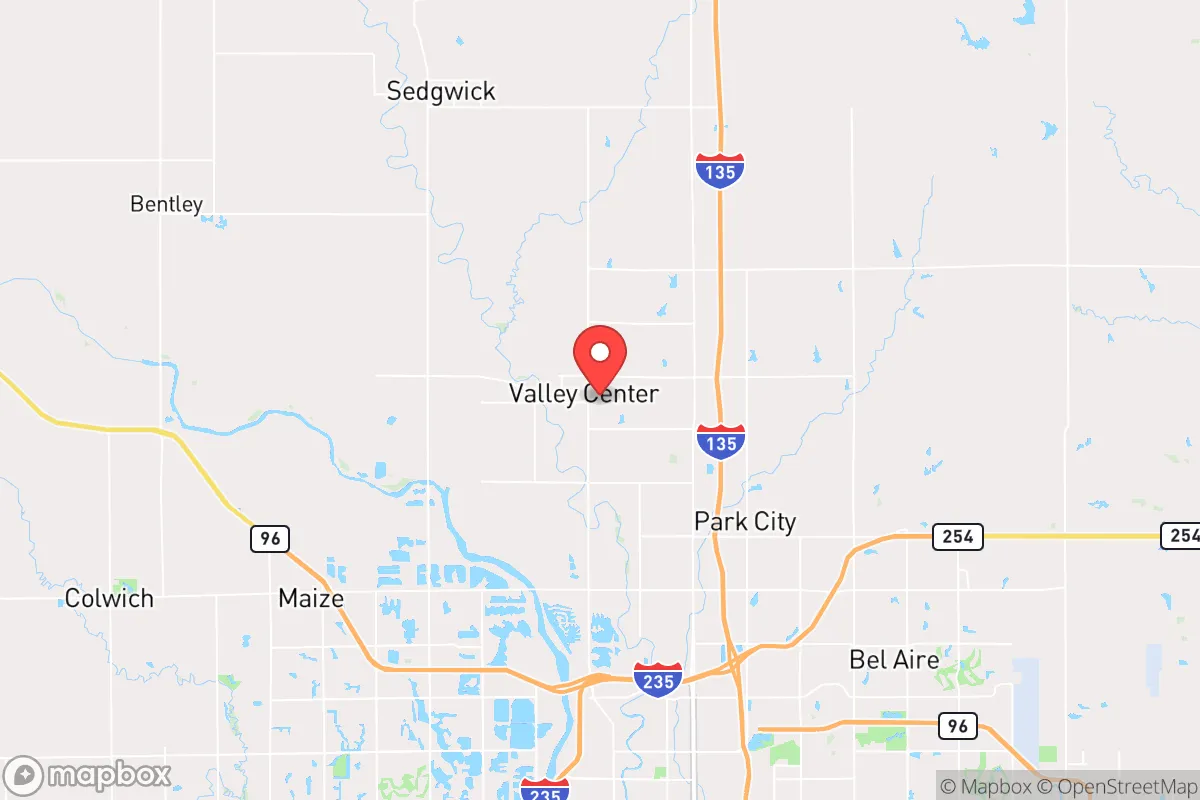
Valley Center, Kansas, presents a mixed strategic picture for those prioritizing resilience and preparedness. Its location roughly 15 miles north of Wichita offers proximity to urban resources while maintaining a distinct small-town buffer, but that same proximity introduces significant vulnerabilities in a collapse or unrest scenario. The town’s agricultural roots, relatively low population density (around 7,200 residents), and position within the broader Kansas breadbasket provide genuine advantages for food security and self-sufficiency. However, the area’s flat terrain, limited natural barriers, and closeness to a major city and critical infrastructure hubs mean that a relocator must weigh these benefits against real exposure to fallout, supply chain disruptions, and potential civil unrest.
Geographic position and natural advantages for long-term survival
Valley Center sits in the Arkansas River Valley, a region defined by fertile alluvial soil and a temperate climate that supports year-round agriculture. The area receives roughly 32 inches of annual rainfall, enough for dryland farming without heavy reliance on irrigation, and the growing season averages 190 days—long enough for staple crops like corn, soybeans, and wheat. The flat to gently rolling terrain simplifies construction, gardening, and water catchment, though it offers little in the way of natural defensive cover. The nearby Arkansas River and several smaller creeks provide surface water sources, though these are subject to agricultural runoff and seasonal variability. The town’s position within Sedgwick County places it in a region with relatively low seismic risk and no significant hurricane or wildfire threat, reducing the likelihood of natural disaster-driven displacement. For a prepper, the key natural advantage is the land’s productivity: with proper seed stock and knowledge, a household could realistically produce a substantial portion of its own calories within a single season. The area’s moderate climate also means less extreme temperature stress on off-grid systems compared to northern or desert regions.
Risks, exposures, and proximity to fallout-relevant landmarks
The most significant strategic liability for Valley Center is its proximity to Wichita, a city of roughly 390,000 people that serves as a regional economic and transportation hub. In a scenario involving civil unrest, mass casualty events, or societal collapse, Wichita’s population could become a source of refugee flow northward along major highways like I-135 and K-96. Valley Center lies directly in that path, with only about 20 minutes of driving time separating the town from downtown Wichita. This proximity also places Valley Center within the potential fallout zone of several critical infrastructure targets. McConnell Air Force Base, located southeast of Wichita, is a strategic asset that could be a target in a conflict scenario. The nearby Koch Industries headquarters and several oil refineries in the Wichita area represent industrial targets that could produce secondary hazards—chemical releases, fires, or explosions—if struck. The flat terrain offers no natural shielding from blast effects or fallout plumes, and prevailing winds from the south could carry airborne contaminants directly over Valley Center. Additionally, the town’s reliance on the Wichita water supply and electrical grid means that a disruption in the city would cascade immediately. For a relocator, the key takeaway is that Valley Center is not a remote retreat; it is a suburban buffer zone with real exposure to urban collapse dynamics.
Practical resilience for a relocator: food, water, energy, and defensibility
On the practical side, Valley Center offers several genuine advantages for a prepared household. The town is surrounded by active farmland, meaning that in a prolonged crisis, local food production could continue—provided that fuel, fertilizer, and seed supplies remain available. The area’s strong agricultural community also means that skills like animal husbandry, canning, and seed saving are still practiced, and a relocator could tap into that knowledge base. Water is a more complex picture: municipal water comes from the city of Wichita’s system, which draws from the Equus Beds aquifer and Cheney Reservoir. A grid-down scenario would require private well access or surface water treatment. Many rural properties in the area have wells, but suburban lots in Valley Center proper typically do not. Rainwater catchment is viable given the annual rainfall, but storage capacity must be planned in advance. Energy resilience is moderate: the region has good solar insolation (about 4.5 peak sun hours per day), and wind is consistent enough for small-scale turbines. Natural gas is widely available for heating and cooking, but that infrastructure is grid-dependent. Defensibility is the weakest point. The flat, open terrain offers little natural cover, and the town’s layout—with a central business district and residential sprawl—makes perimeter security difficult. A single-family home on a standard lot provides limited standoff distance. The best defensive strategy here is obscurity: blending in as a normal resident, maintaining a low profile, and relying on community ties rather than fortifications. For a relocator, the practical resilience equation comes down to this: Valley Center is a good place to grow food and build a self-sufficient homestead, but it is a poor place to hold out against a determined threat.
The overall strategic picture for Valley Center is one of calculated trade-offs. It offers genuine advantages in food production, climate stability, and community cohesion that are rare in more remote or arid regions. The town’s agricultural base and moderate population density provide a foundation for long-term self-sufficiency that many suburban areas lack. However, the proximity to Wichita and the lack of natural defensive barriers mean that a relocator must plan for the possibility of urban spillover, supply chain disruptions, and exposure to industrial or military targets. This is not a bug-out location for a complete societal collapse; it is a place to build a resilient lifestyle while the existing system still functions, with the understanding that if things go truly sideways, the buffer will be thin. For a conservative-minded individual or family looking to balance preparedness with access to jobs, schools, and healthcare, Valley Center is a viable option—but only if the risks are acknowledged and mitigated through proactive planning, community engagement, and a realistic assessment of the area’s strategic limitations.

* Values derived from national, state, county, city and local statistics and may differ in a specific area. Last updated: 2026-10-10T16:29:14.000Z
Narrative content on this page is AI-generated and may contain mistakes. Verify any details that matter before acting on them.
ReloMaps may earn a commission from affiliate links at no extra cost to you.

