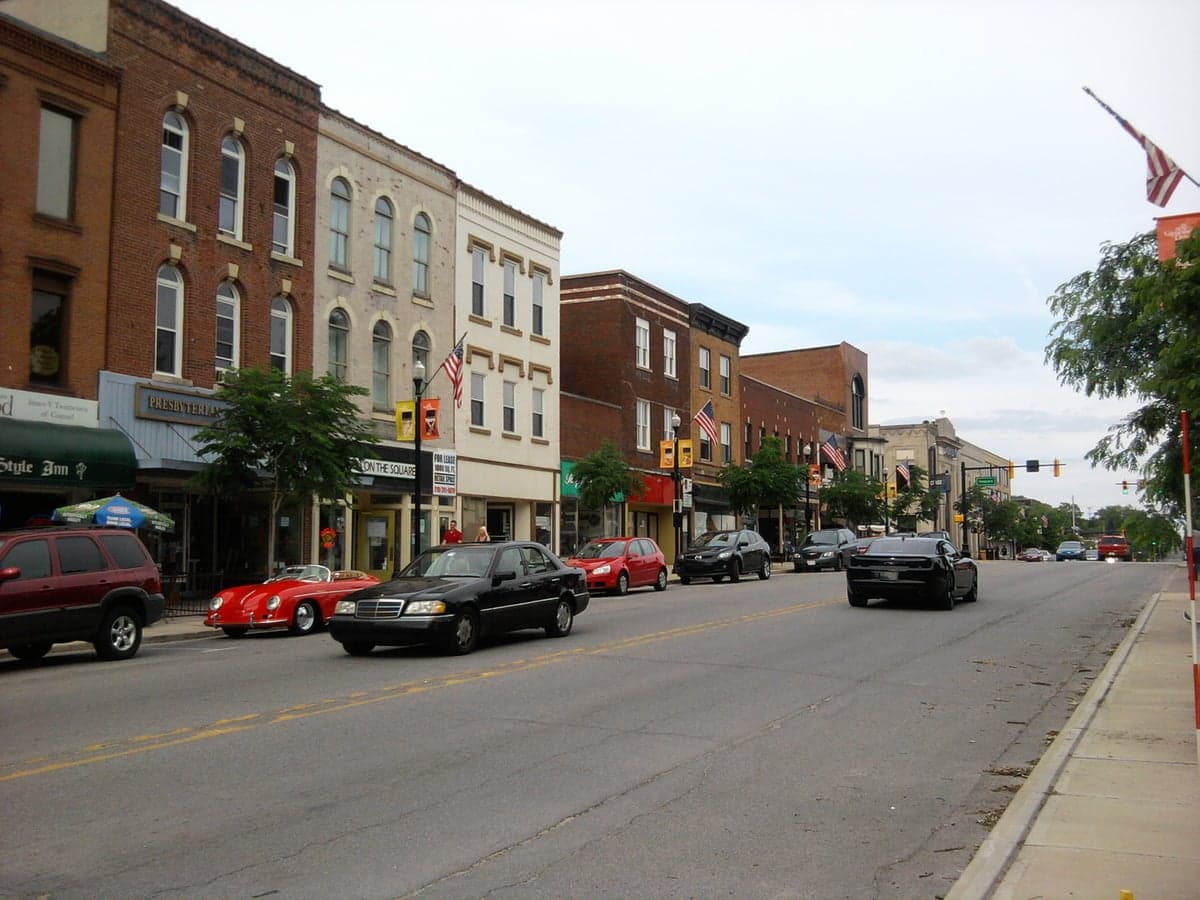
Photo: Wikipedia
Personal Sovereignty in Valparaiso, IN
Viable for self-reliance. Generally workable, though some barriers may limit total independence.
What does Personal Sovereignty tell us?
Personal Sovereignty measures your capacity for self-reliance and independence with minimal government friction. Higher scores mean fewer barriers between you and the way you want to live... but it assumes you have the space you need and good neighbors.
What does this tell us?
Personal Sovereignty measures your capacity for self-reliance and independence with minimal government friction. Higher scores mean fewer barriers between you and the way you want to live... but it assumes you have the space you need and good neighbors.
State Policy
Energy independence: Importer (35% of energy produced in-state)
Personal Liberty
Homesteading

Personal Liberty Analysis
Valparaiso, Indiana, offers a mixed bag for those prioritizing personal sovereignty, with the state-level legal framework providing a solid foundation for self-reliance while local governance and proximity to Chicago introduce friction points. For a conservative-leaning individual or family evaluating this area through a survivalist lens, the key takeaway is that Indiana’s constitutional carry law, right-to-work status, and relatively low property taxes create a baseline of freedom that is stronger than in neighboring Illinois or much of the Midwest. However, Valparaiso’s status as a growing suburban hub means zoning restrictions, a rising tax burden, and a local political climate that leans more moderate than the surrounding rural counties can chip away at that autonomy. The area is viable for those willing to navigate these constraints, but it is not a libertarian haven—it requires strategic positioning to maximize personal liberty.
Tax burden and regulatory posture in Valparaiso
Indiana’s tax structure is generally favorable for personal sovereignty, with a flat state income tax of 3.15% (as of 2025) and no inheritance or estate tax, which aligns with a prepper’s desire to retain control over assets. Porter County, where Valparaiso sits, levies a combined property tax rate of roughly 1.2% to 1.5% of assessed value, which is moderate for the region but has been creeping upward due to school funding and infrastructure bonds. The real regulatory friction comes from local zoning and building codes. Valparaiso enforces a unified development ordinance that restricts accessory dwelling units, limits livestock within city limits, and requires permits for most structural changes—a clear obstacle for those wanting to build a self-sufficient homestead on a standard suburban lot. Outside city limits, in unincorporated Porter County, regulations loosen significantly, with fewer restrictions on outbuildings, rainwater collection, and alternative energy systems. For a survivalist, the strategic move is to buy land in the county’s agricultural or rural residential zones, where the tax burden is lower and the regulatory footprint is thinner.
Self-defense and gun law specifics in Valparaiso
Indiana’s firearm laws are a strong point for personal sovereignty in Valparaiso. The state adopted constitutional carry in 2022, meaning no permit is required to carry a handgun openly or concealed for anyone legally allowed to possess a firearm. This is a significant advantage over Illinois, where a Firearm Owner’s Identification (FOID) card and concealed carry license are mandatory. Valparaiso itself has no local ordinances that further restrict gun ownership, and the Porter County Sheriff’s Office is generally supportive of Second Amendment rights, with a shall-issue policy for permits (though permits are now optional). However, there are practical limits: Indiana law prohibits carrying in schools, government buildings, and establishments that derive more than 51% of revenue from alcohol sales. For preppers, the ability to stockpile ammunition and firearms without state-level registration is a plus, but the proximity to Chicago means that federal gun laws—such as background checks for dealer purchases—still apply. The local police department is professional but not hostile to gun owners; the bigger concern is the potential for future state-level restrictions if the political balance shifts, as Indiana’s legislature has seen occasional pushes for red flag laws.
Self-reliance and homesteading viability in Valparaiso
Homesteading in Valparaiso is feasible but requires careful property selection. Within city limits, standard residential lots range from 0.15 to 0.5 acres, which is too small for meaningful food production or livestock. Zoning prohibits chickens, goats, or bees on lots under one acre, and even then, permits are required. The city’s code enforcement is active, and neighbors in suburban subdivisions are likely to report visible self-reliance efforts like composting toilets or solar panels that violate HOA covenants—many neighborhoods have HOAs that ban clotheslines, front-yard gardens, and non-standard roofing. The better option is to look at unincorporated Porter County, where lot sizes of 1 to 5 acres are common and zoning is more permissive. In these areas, you can keep chickens, rabbits, and even a few goats without permits, and rainwater collection is unrestricted. Off-grid living is technically possible but practically difficult: Indiana’s building code requires connection to the electrical grid for new construction, and septic systems must meet health department standards. Solar panels are allowed but net metering policies are mediocre, and battery storage is not incentivized. For a serious prepper, the best bet is to buy 5+ acres in the county’s rural areas, where you can dig a well, install a septic system, and build a pole barn without excessive red tape.
Personal liberties in Valparaiso: parental rights, medical autonomy, speech, and property
Parental rights in Indiana are relatively strong compared to blue states. The state has a parental bill of rights (enacted in 2024) that requires schools to notify parents about curriculum changes and medical services, and it prohibits schools from withholding information about a child’s gender identity or mental health without parental consent. Valparaiso Community Schools, the largest district, has generally complied with these laws, though some parents report that the district’s administration leans progressive on social issues. Medical autonomy is a mixed bag: Indiana has no vaccine mandate for adults, but COVID-era restrictions were enforced locally, and the state’s medical freedom laws are weaker than in places like Idaho or Montana. The state does not have a right-to-try law for experimental treatments, and telemedicine for out-of-state providers is restricted. Free speech is protected under the First Amendment, and Valparaiso has not seen the kind of permit requirements for public gatherings that exist in larger cities, though the city council has debated noise ordinances that could affect amplified speech. Property rights are generally respected, but eminent domain has been used for road expansions and the city’s downtown redevelopment projects, which is a red flag for those who view property as inviolable. The overall environment is one where you can live freely if you stay within the lines, but pushing boundaries—like building a bunker or running a home business without a license—will invite scrutiny.
Relative to other areas in the Midwest, Valparaiso offers a moderate level of personal sovereignty that is workable for a survivalist or conservative family but requires deliberate choices. It is far freer than Chicago or Cook County, where gun laws are draconian and taxes are crushing, but it lags behind rural Indiana counties like Jasper or Pulaski, where zoning is minimal and local government is more hands-off. The proximity to Lake Michigan and the Chicago metro area provides economic opportunities and access to resources, but it also brings cultural and political influences that can erode autonomy over time. For those willing to live on the outskirts of town, buy acreage, and engage with local politics to protect their rights, Valparaiso is a viable base. For those seeking a truly unregulated environment where government overreach is minimal, the deeper rural areas of the state or even other states like Wyoming or Montana would be a better fit. The bottom line: Valparaiso is a compromise—a place where you can build a self-reliant life if you are strategic, but not a place where freedom is handed to you without effort.

* Values derived from national, state, county, city and local statistics and may differ in a specific area. Last updated: 2026-04-19T19:56:08.000Z
Narrative content on this page is AI-generated and may contain mistakes. Verify any details that matter before acting on them.
ReloMaps may earn a commission from affiliate links at no extra cost to you.

