Photo: Wikipedia
Political ClimatePolitical Climate in Valparaiso, IN
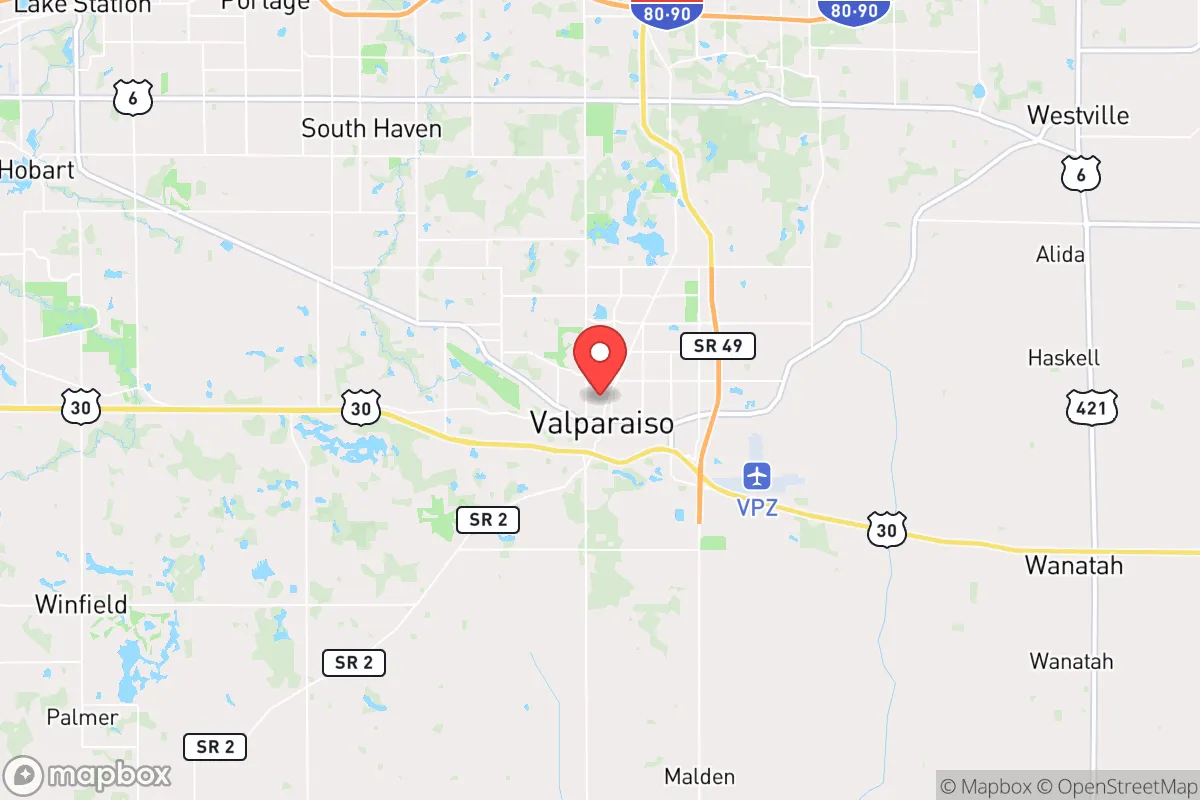
District shown is the primary district for this city’s centroid. Cities may span multiple districts.
Local Political AnalysisPolitical Analysis of Valparaiso, IN
Valparaiso, Indiana, has long been a place where conservative values held firm, but the political winds are shifting in ways that should give any freedom-loving resident pause. The Cook Partisan Voting Index (PVI) for the area sits at D+1, meaning the district now leans just slightly Democratic—a far cry from the reliably red stronghold it was even a decade ago. This isn't just a number; it reflects a real change in the local culture, with progressive policies creeping into local governance and challenging the traditional hands-off approach that made this community feel safe and self-reliant.
How it compares
If you drive just a few miles outside Valparaiso, you'll see the contrast clearly. Neighboring communities like Crown Point and LaPorte have held onto more conservative leanings, with Crown Point's surrounding areas voting reliably red in recent cycles. But Valparaiso itself has become a bit of a blue island in a red sea, thanks largely to an influx of new residents from Chicago and the expansion of Valparaiso University's influence. The city council and school board have seen more progressive candidates winning seats, pushing agendas that feel like they're imported from Lake County rather than rooted in Porter County's independent spirit. It's a stark reminder that where you live matters—and Valparaiso's political climate is drifting away from the common-sense, limited-government approach that once defined it.
What this means for residents
For those of us who value personal freedoms, the shift is concerning. Local government overreach is becoming more noticeable, from zoning ordinances that feel like they're micromanaging property rights to school policies that prioritize ideological training over academic excellence. Taxes have crept up as the city expands its budget for social programs and "equity" initiatives, and there's a growing sense that your voice as a taxpayer matters less than the loudest activist group. If you're a small business owner or a parent who wants to raise your kids without government interference, you'll need to stay vigilant—attend those city council meetings, vote in every local election, and keep an eye on who's running for school board. The days of trusting that Valparaiso will "do the right thing" are fading.
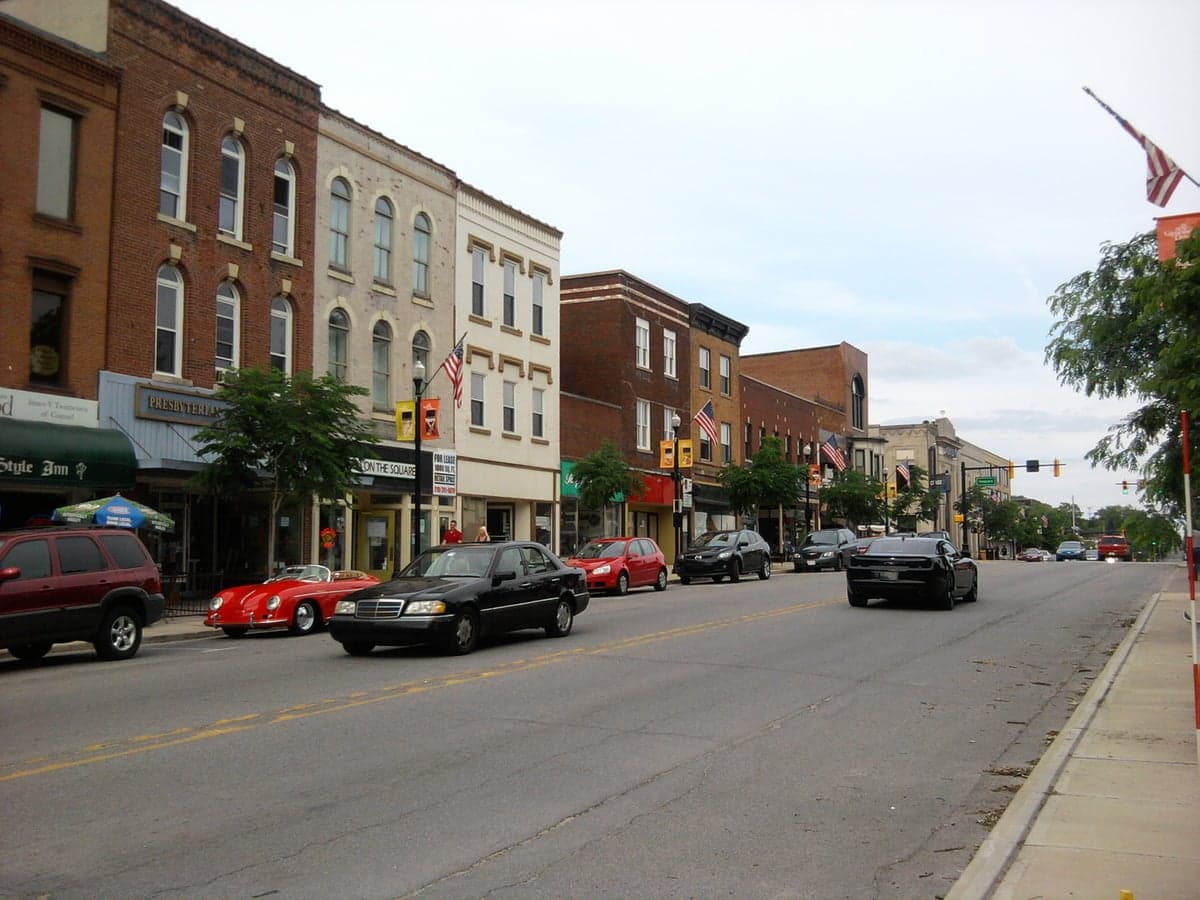
On the cultural front, Valparaiso still has its charms—the downtown square, the farmers market, the sense of community at local sports events. But the policy distinctions are real. The city has embraced sanctuary city-like policies in some respects, and there's been a push for more public funding for programs that many residents see as unnecessary government expansion. The long-term trajectory, if unchecked, points toward higher taxes, more regulations, and a loss of the local character that made this a great place to raise a family. It's not too late to push back, but it requires paying attention and getting involved. Valparaiso is still a good town, but it's at a crossroads—and the direction it takes depends on whether residents remember what made it great in the first place.

State Political ClimatePolitical Climate in Indiana
State Political AnalysisPolitical Environment in the State
Indiana has been a reliably Republican state for decades, but don’t let the red-on-the-map fool you—it’s a more complicated place than the presidential results suggest. The state voted for Trump by about 16 points in 2024, but that margin has actually shrunk from 19 points in 2016, driven by suburban shifts in the Indianapolis metro and a growing Democratic stronghold in Lake County. Over the last 10-20 years, the GOP has solidified its grip on the legislature and governor’s office, but the coalition is fracturing between traditional chamber-of-commerce conservatives and a newer, more populist, freedom-oriented wing.
Urban vs. rural divide
The political map of Indiana is a classic study in contrast. Indianapolis (Marion County) is the blue anchor, voting for Biden by 20 points in 2020 and Harris by a similar margin in 2024, powered by a growing professional class and minority populations. Lake County (Gary, Hammond) is the other Democratic stronghold, voting blue by 30+ points, but its population is stagnant. The real story is the suburban ring around Indianapolis: Hamilton County (Carmel, Fishers, Noblesville) was once ruby-red but has shifted from +30 R to +15 R over the last decade, as educated professionals move in and moderate on social issues. Meanwhile, Fort Wayne (Allen County) and Evansville (Vanderburgh County) remain reliably red but are seeing slow in-migration from blue states. The rural counties—like Greene, Daviess, and Jay—vote 75-80% Republican and are the GOP’s firewall. The divide isn’t just urban vs. rural; it’s growth vs. stagnation. Fast-growing suburbs are moderating, while shrinking small towns are doubling down on conservative populism.
Policy environment
Indiana’s policy environment is broadly conservative, but with some notable wrinkles. The state has a flat income tax rate of 3.05% (down from 3.23% in 2023, with a scheduled phase-down to 2.9% by 2027), and no inheritance or estate tax. Property taxes are capped at 1% of assessed value for owner-occupied homes, which is a major draw for families. The regulatory posture is business-friendly: Indiana is a right-to-work state (though the law was repealed in 2025 by a Democratic governor, a rare loss for conservatives), and it has a constitutional carry law (permitless carry since 2022). Education policy is a mixed bag: the state has one of the nation’s most expansive school voucher programs (Choice Scholarship Program), covering nearly all low- and middle-income families, but the Department of Education has pushed critical race theory bans and parental rights in curriculum (HB 1608, 2022). Healthcare is a sore spot: Indiana expanded Medicaid under the HIP 2.0 waiver, but the state has some of the highest hospital consolidation rates in the country, driving up costs. Election laws are moderately restrictive: voter ID is required, and the state purges inactive voters every two years, but early voting is available for 28 days. No major election integrity controversies have erupted, unlike in some neighboring states.
Trajectory & freedom
Indiana’s trajectory on personal freedom is a mixed bag, and that’s where the concern lies for a conservative. On the plus side, the state has expanded gun rights significantly: the 2022 permitless carry law (HB 1077) was a major win, and the state preempts all local gun ordinances. Parental rights got a boost with HB 1608 (2022), which requires schools to notify parents of any curriculum involving human sexuality and allows parents to opt their kids out. But there are troubling signs. The 2023 ban on gender-affirming care for minors (HEA 1569) was a victory for traditional values, but it was followed by a 2024 law requiring schools to out transgender students to parents (HEA 1608), which, while popular with conservatives, has drawn federal lawsuits and could invite DOJ intervention. On medical freedom, Indiana was one of the first states to ban COVID-19 vaccine mandates for state employees (2021), but it also criminalized ivermectin prescriptions for COVID in 2022, a move that angered many in the liberty movement. The biggest red flag is property rights: the state has a controversial law allowing private companies to seize land for carbon pipeline projects (HB 1192, 2023), which has sparked a massive backlash from farmers and rural landowners. This is a classic case of government overreach in the name of “green energy” that should worry anyone who values property rights.
Civil unrest & political movements
Indiana has seen its share of political flashpoints. The 2020 Black Lives Matter protests in Indianapolis were large and occasionally violent, leading to property damage downtown and a lasting distrust of the city’s Democratic leadership. On the right, the Indiana Freedom Coalition and Hoosiers for Responsible Energy have organized massive protests against the carbon pipeline seizures, drawing thousands of rural residents to the statehouse. Immigration politics are relatively quiet—Indiana is not a border state, and the state has a law requiring E-Verify for all employers (2011), which is widely supported. There is no sanctuary city movement of note; even Indianapolis has resisted it. Election integrity has been a low-key issue: the 2020 election saw no major fraud allegations, but the GOP-controlled legislature passed a law in 2021 banning ballot drop boxes and limiting absentee voting, which was seen as a preemptive measure. The most visible flashpoint for a new resident would be the constant tension between the statehouse and Indianapolis city government over crime and homelessness—the state has repeatedly preempted local ordinances on panhandling and camping, leading to a standoff that feels like a microcosm of the national divide.
Projection
Over the next 5-10 years, Indiana is likely to become more polarized but not bluer. The key demographic shift is in-migration from Illinois and California, particularly to the Indianapolis suburbs and the Lake Michigan shoreline (Michigan City, LaPorte). These newcomers tend to be moderate Republicans or independents who want lower taxes and less crime but are less enthusiastic about social conservatism. This will push the suburbs leftward, but the rural counties are aging and shrinking, so the net effect is a slow drift toward a 10-12 point Republican lean by 2032, down from 16 today. The carbon pipeline fight is a wildcard: if the state continues to side with corporate interests over property rights, it could fracture the GOP coalition and energize a libertarian or populist third-party movement. The biggest risk for conservatives is that the suburban shift could flip the governor’s office to a Democrat in 2028, as it did in 2024, leading to a repeal of right-to-work and a push for expanded Medicaid. The state is not going to become California, but it could become Ohio—a purple state where the legislature is red but the governor’s mansion flips every few cycles.
Bottom line for a new resident: If you’re moving to Indiana for freedom, you’ll find a state that is still broadly conservative on taxes, guns, and education, but you need to be aware of the fault lines. The Indianapolis suburbs (Carmel, Fishers) are becoming more moderate and expensive, while rural areas (Greene, Daviess) are cheap and deeply red but lack economic opportunity. The carbon pipeline issue is a genuine threat to property rights that could affect you if you buy rural land. And the political trajectory is toward more suburban moderation, not less. If you want a state that is actively fighting back against federal overreach, Indiana is doing okay—but keep an eye on the 2028 governor’s race. That will tell you everything about where this state is headed.
* Values derived from national, state, county, city and local statistics and may differ in a specific area. Last updated: 2026-04-19T19:56:08.000Z
Narrative content on this page is AI-generated and may contain mistakes. Verify any details that matter before acting on them.
ReloMaps may earn a commission from affiliate links at no extra cost to you.

