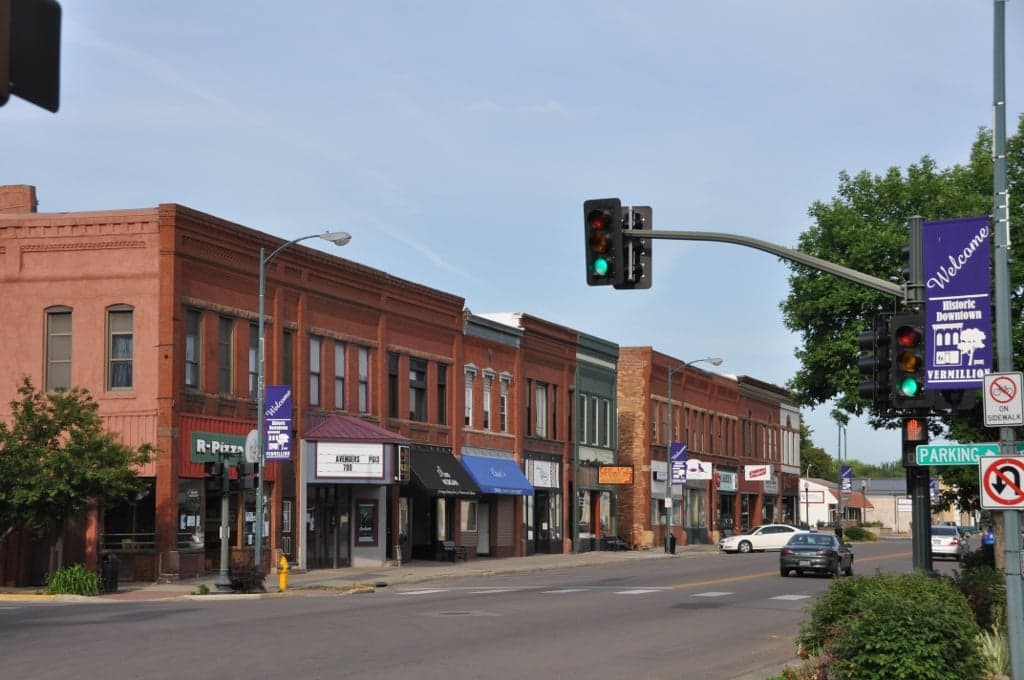
Photo: Wikipedia
Personal Sovereignty in Vermillion, SD
Strong independent fundamentals that actively favor personal liberty and low regulation.
What does Personal Sovereignty tell us?
Personal Sovereignty measures your capacity for self-reliance and independence with minimal government friction. Higher scores mean fewer barriers between you and the way you want to live... but it assumes you have the space you need and good neighbors.
What does this tell us?
Personal Sovereignty measures your capacity for self-reliance and independence with minimal government friction. Higher scores mean fewer barriers between you and the way you want to live... but it assumes you have the space you need and good neighbors.
State Policy
Energy independence: Importer (35% of energy produced in-state)
Personal Liberty
Homesteading

Personal Liberty Analysis
Vermillion, South Dakota, offers a notably high degree of personal sovereignty compared to many regions, particularly those on the coasts or in the upper Midwest. The state’s constitutional and legislative framework consistently prioritizes individual autonomy over government intervention, making it a viable destination for those seeking to minimize state overreach. For a conservative-leaning individual or family concerned with the trajectory of federal and state power, Vermillion represents a pocket where the default posture is one of personal responsibility and limited government, though it is not without its local nuances.
Tax burden and regulatory posture: How South Dakota keeps government off your back
South Dakota’s tax environment is among the most favorable in the nation for those seeking to retain the fruits of their labor. There is no state income tax, no personal property tax, and no inheritance or estate tax, meaning the state does not take a cut of your earnings, investments, or what you leave to your heirs. The primary revenue source is a 4.5% state sales tax, with local municipalities like Vermillion adding up to 2% (currently around 6.5% total), which is applied to goods and some services. Property taxes are moderate, with Clay County’s effective rate hovering around 1.2% of assessed value, but these are levied locally and subject to voter-approved increases. The regulatory posture is equally lean: South Dakota has a right-to-work law, minimal occupational licensing requirements compared to neighboring states, and a state government that actively resists federal overreach in areas like environmental regulation and land use. For a prepper or survivalist, this means fewer bureaucratic hurdles for starting a home business, building a workshop, or simply keeping more of your money to invest in self-sufficiency.
Self-defense and gun law specifics: Constitutional carry and castle doctrine in Clay County
South Dakota is a strong Second Amendment state, and Vermillion reflects that. The state has permitless (constitutional) carry for both open and concealed firearms for anyone 18 or older who can legally possess a firearm. No permit, training, or registration is required. The state also has a robust castle doctrine with no duty to retreat in your home, vehicle, or place of business, and a broad stand-your-ground law extending to any place you are lawfully present. Clay County does not impose any additional local gun restrictions beyond state law, and Vermillion’s city ordinances are generally firearm-friendly. There are no magazine capacity bans, no assault weapon bans, and no waiting periods. For those concerned about government overreach, South Dakota also passed a Second Amendment Preservation Act, which prohibits state resources from being used to enforce federal gun laws that the state deems unconstitutional. This means that even if federal restrictions tighten, local law enforcement is statutorily barred from assisting in enforcement—a significant layer of protection for personal armament.
Self-reliance and homesteading viability: Lot sizes, zoning, and off-grid feasibility in Vermillion
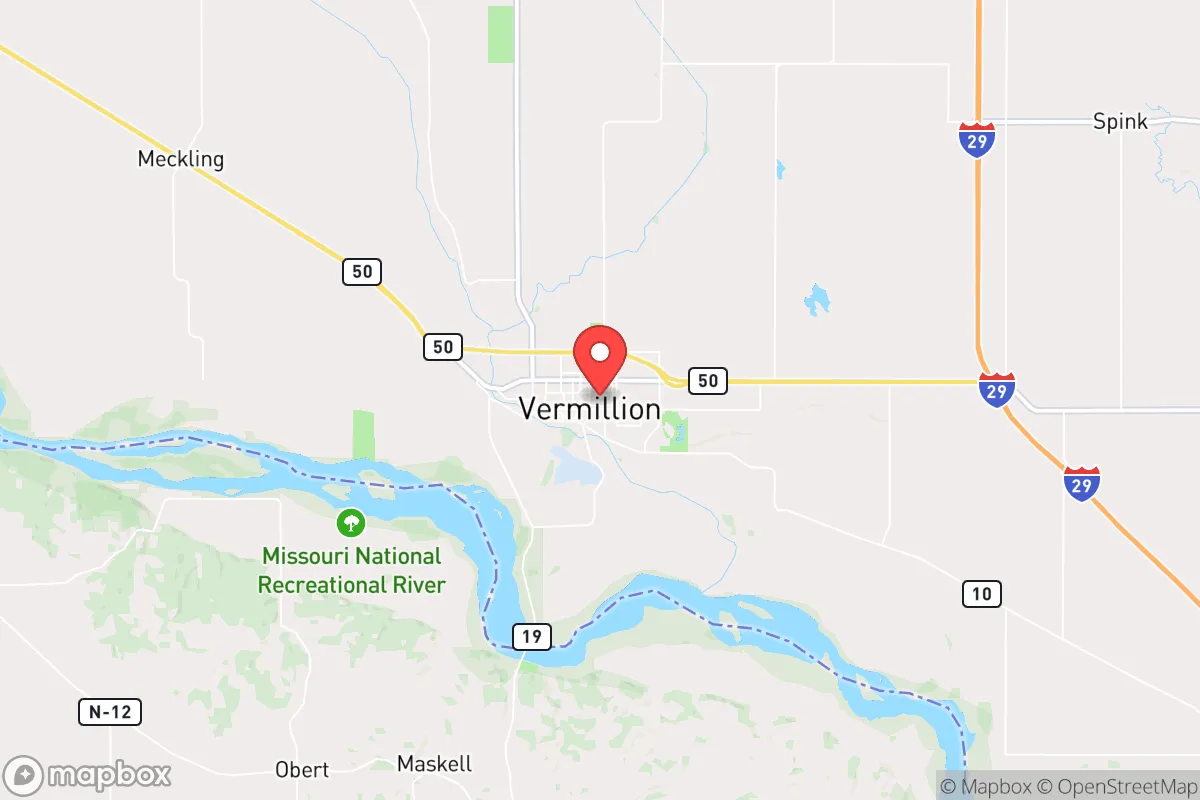
Vermillion itself is a small college town (home to the University of South Dakota), so within city limits, lots are typically smaller—standard residential lots range from 6,000 to 10,000 square feet—and zoning is conventional. However, the real opportunity lies just outside town. Clay County’s rural areas offer acreages from 1 to 40 acres at prices significantly lower than national averages (raw land can be found for $3,000–$8,000 per acre). Zoning in unincorporated areas is minimal; there are no county-wide building codes, and agricultural uses are broadly permitted. Off-grid feasibility is high: South Dakota has no state-level restrictions on rainwater collection, solar panel installation, or composting toilets, though you will need to comply with local well and septic regulations (which are straightforward). The Missouri River runs through the county, providing a reliable water source for those with access. For a prepper, the ability to raise livestock, grow food, and generate your own power without a thicket of permits is a major draw. The main limitation is the harsh winter climate, which demands serious preparation for heating and water storage, but that is a logistical challenge, not a regulatory one.
Personal liberties: Parental rights, medical autonomy, speech, and property protections
South Dakota has been a battleground for parental rights, and the state has consistently sided with family autonomy. Parental rights are explicitly protected in state law, including the right to direct a child’s education, medical care, and religious upbringing. Homeschooling is deregulated—no notification, testing, or curriculum approval is required—and the state has a robust school choice program, including education savings accounts. On medical autonomy, South Dakota has some of the strongest protections against vaccine mandates in the country, with a 2023 law prohibiting employers and government entities from requiring COVID-19 vaccines as a condition of employment or service. The state also has a broad religious exemption statute. Free speech is protected by both the U.S. and state constitutions, and there are no hate speech laws or local ordinances that chill expression. Property rights are strong: South Dakota has a right-to-farm law that protects agricultural operations from nuisance lawsuits, and eminent domain is restricted primarily to public utilities and roads. For those wary of federal overreach, the state’s Tenth Amendment sovereignty resolutions and refusal to implement certain federal programs (like Real ID compliance until recently) signal a culture of resistance to centralized control.
In the broader landscape of personal sovereignty, Vermillion and South Dakota rank among the top tier for those prioritizing autonomy. The combination of no income tax, constitutional carry, minimal zoning, strong parental rights, and a state government that actively pushes back against federal mandates creates an environment where an individual can live largely unmolested. Compared to states like California, New York, or even Minnesota, the difference is night and day. The trade-offs are real—limited economic diversity, harsh winters, and a small-town pace—but for a survivalist or conservative family seeking to build a self-reliant life with minimal government interference, Vermillion is a strong contender. The key is to act before the area becomes more discovered and prices rise, as the window for affordable, high-sovereignty living is narrowing nationwide.

* Values derived from national, state, county, city and local statistics and may differ in a specific area. Last updated: 2026-04-23T09:55:26.000Z
Narrative content on this page is AI-generated and may contain mistakes. Verify any details that matter before acting on them.
ReloMaps may earn a commission from affiliate links at no extra cost to you.

