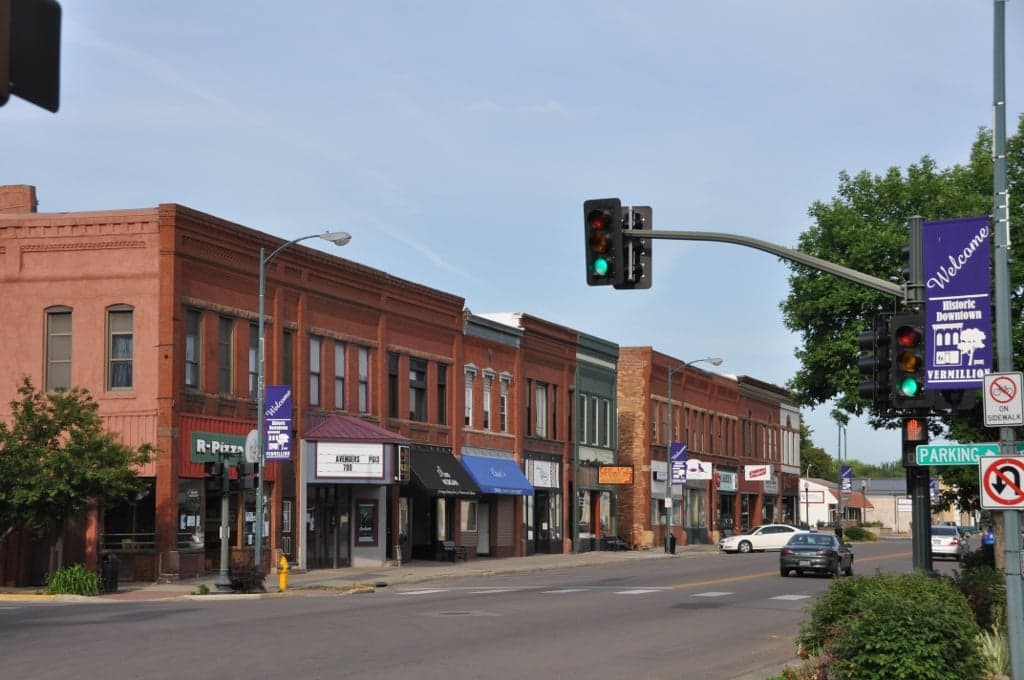
Photo: Wikipedia
Strategic Assessment of Vermillion, SD
Strong survivability profile. Good buffer from population centers, with manageable environmental and tactical risks.
What does the Strategic Assessment tell us?
Our Strategic Assessment grades tactical survivability of an area. Major population centers, military targets, fallout zones, natural disasters, and border exposure all drive risk — lower exposure means a more defensible position in a crisis.
This is heavily inspired by Joel Skousen's Strategic Relocation book. Highly recommended you checkout the book ($)What does this tell us?
Our Strategic Assessment grades tactical survivability of an area. Major population centers, military targets, fallout zones, natural disasters, and border exposure all drive risk — lower exposure means a more defensible position in a crisis.
This is heavily inspired by Joel Skousen's Strategic Relocation book. Highly recommended you checkout the book ($)Strategic Pillars

Key Distances
Regional Safe Places
Below is our recommended "safe zones" in South Dakota and the surrounding area based on our strategic heuristics. For most people, it's unrealistic to live in a “safe zone” full-time due to work, family or other personal reasons. They tend to be more rural. However, many of these areas are perfect for second homes and retreat properties that double as a vacation home or even a short-term rental.
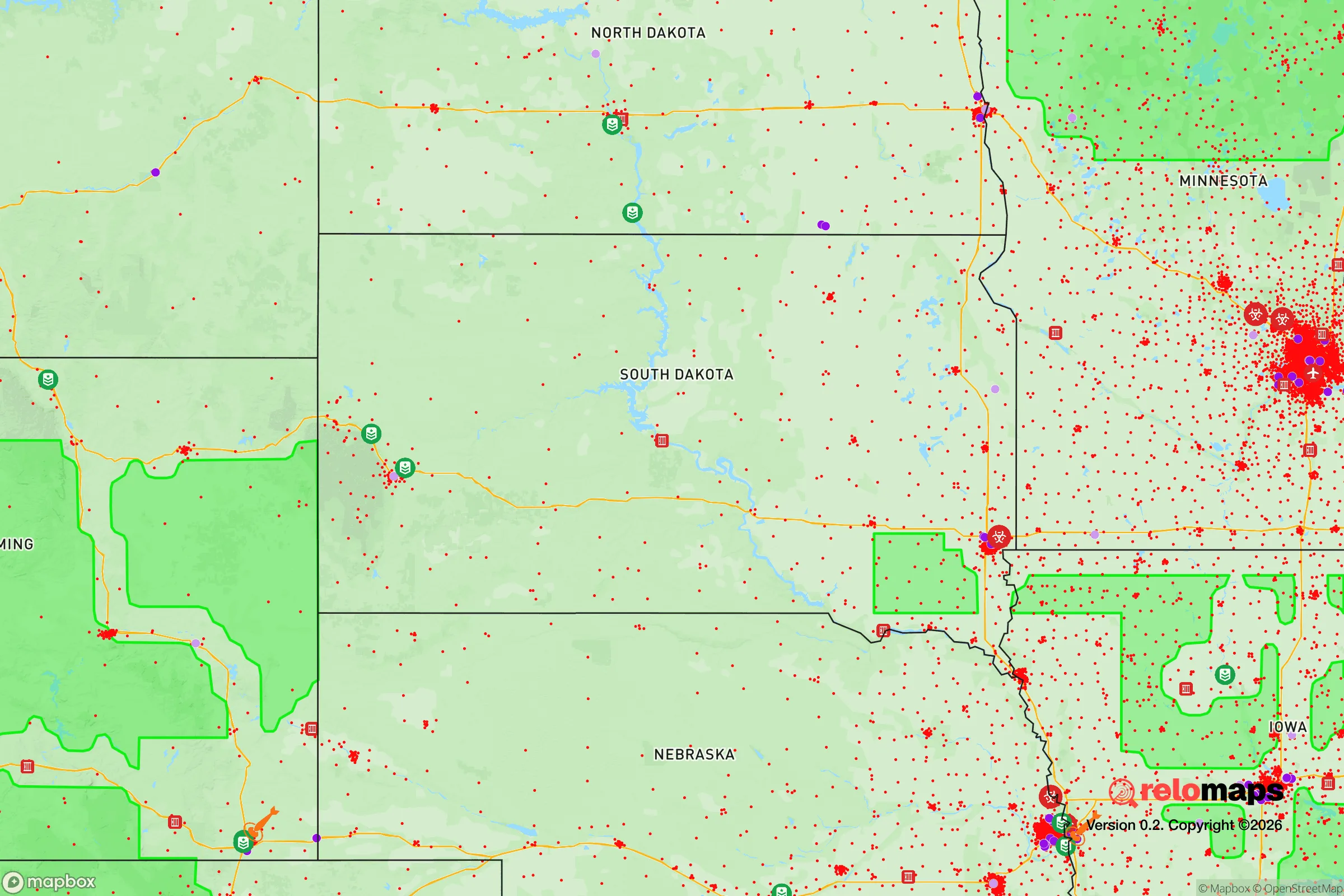


Important Note: For informational purposes only. This does not mean nothing bad ever happens in the green zones. Please use common sense. This is based on public data and modeled with AI. We tried to take a conservative approach but mistakes happen. We update this regularly as new information becomes available.
Solar Generator Recommendations
Backup power matters more here than in safer locations. We've picked three solar generators across budgets and capacity tiers — start with the budget unit if you only need a few essentials, or step up if you want to run a fridge and HVAC for days at a time.

Jackery Portable Power Station Explorer 300
Budget OptionPower on the Go: Weighing only 11 lbs, it's convenient to set up and store with book-sized foldable solar panels

BLUETTI Portable Power Station AC180
Designed for both indoor and outdoor scenarios, AC180 is highly capable as it has a robost capacity and continuous output power.

EF ECOFLOW DELTA Pro Ultra Power Station
Upgraded PickEcoFlow DELTA Pro Ultra is a whole-home energy system designed to grow with your family. Integrated with the Smart Home Panel 2, it scales to meet your evolving energy needs — keeping your home powered, intelligent, and secure through every stage of life.
We earn a commission, at no additional cost to you.
Strategic Assessment Analysis
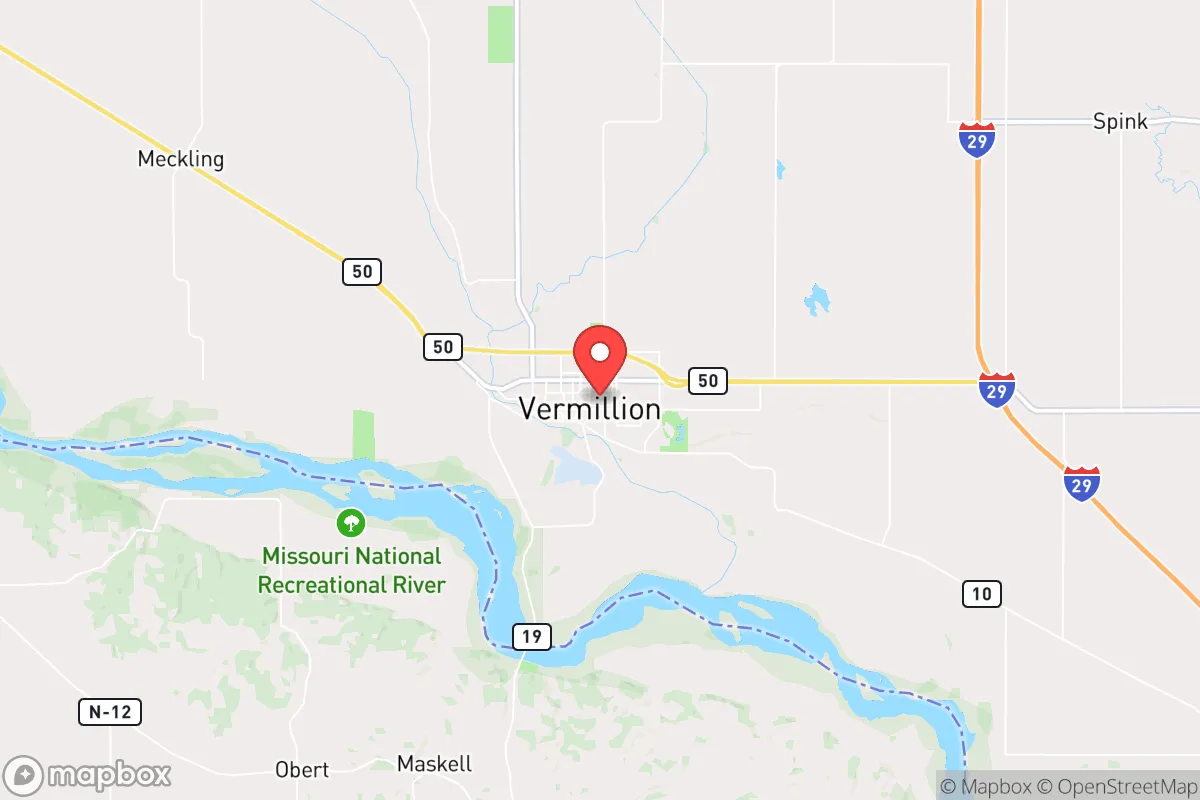
Vermillion, South Dakota, offers a surprisingly resilient strategic position for those prioritizing long-term security and self-sufficiency, particularly when measured against the vulnerabilities of the coastal and metropolitan corridors. Its location along the Missouri River provides a critical water and transportation asset, while its distance from major population centers—roughly 60 miles from Sioux Falls and 40 miles from Sioux City, Iowa—places it outside the immediate blast and fallout zones of any high-value target. For the conservative prepper or survivalist, this small college town represents a viable balance between access to regional resources and the physical buffer needed to weather civic unrest or a major disaster.
Geographic position and natural advantages for long-term security
Vermillion sits in the southeast corner of South Dakota, nestled against the bluffs of the Missouri River. This geography provides two distinct defensive advantages. First, the river itself is a reliable water source—critical for any extended grid-down scenario—and the surrounding floodplain offers fertile soil for small-scale agriculture. Second, the bluffs and rolling hills to the east and south create natural chokepoints and observation points, making the area more defensible than the flat, open plains further west. The town's population hovers around 11,000, but that number swells slightly with the University of South Dakota (USD) student body. For a relocator, this means a small, manageable community where you can know your neighbors and build a trusted network—something that becomes invaluable when law enforcement resources are stretched thin. The nearest major military installation is Ellsworth Air Force Base near Rapid City, over 300 miles away, which is far enough to avoid secondary fallout from a strike but close enough to suggest the region isn't entirely ignored by strategic planners.
Risks, exposures, and proximity to fallout-relevant landmarks
No location is without risk, and Vermillion has several exposures that a serious prepper must weigh. The most obvious is the Missouri River itself: while it provides water, it also poses a flood risk. The 2011 and 2019 floods demonstrated that the river can rise dramatically, threatening low-lying areas and infrastructure. A relocator should secure property above the 500-year floodplain, ideally on the bluffs east of town. More concerning from a strategic perspective is the proximity to the Dakota Access Pipeline corridor, which runs roughly 30 miles west of Vermillion. Pipeline infrastructure—whether oil or natural gas—is a potential target for sabotage or civil unrest, and a rupture could contaminate groundwater or create a fire hazard. Additionally, the town lies within 100 miles of the Fort Randall Dam and Gavins Point Dam on the Missouri. While these dams provide hydroelectric power, they also represent a catastrophic failure risk if targeted or neglected. The nearest nuclear power plant is the Fort Calhoun plant near Omaha, about 120 miles south—close enough to warrant concern for fallout in a worst-case scenario, but far enough that prevailing winds (typically from the northwest) would push contamination away from Vermillion. On the plus side, there are no major military bases, missile silos, or government command centers within 150 miles, which significantly reduces the likelihood of a direct kinetic strike.
Practical resilience for a relocator: food, water, energy, and defensibility
For a relocator focused on practical self-sufficiency, Vermillion offers a solid foundation. The Missouri River provides an almost limitless water source, but treatment will be necessary—invest in a high-quality gravity-fed filter or a UV purification system, as municipal treatment plants could fail during a prolonged grid outage. The surrounding agricultural land is predominantly corn and soybeans, but there are also smaller livestock operations and a growing number of hobby farms within a 20-minute drive. The local climate is continental, with cold winters and hot summers, so a well-insulated home with a wood-burning stove or a propane backup heating system is non-negotiable. Energy resilience is moderate: the area is served by the Missouri River Energy Services grid, which includes hydroelectric, coal, and natural gas sources. A grid-down scenario would likely mean a multi-day outage, but the presence of hydro means restoration could be faster than in purely coal-dependent regions. Solar panels are viable, though winter cloud cover can reduce output; a small wind turbine paired with battery storage would be a better bet for year-round reliability. Defensibility is where Vermillion shines. The town's layout—with the river to the west and bluffs to the east—means that any approach from the west is funneled through a few bridges and roads. A determined group could effectively control access points, and the surrounding rural areas offer numerous retreat properties with good line of sight. The local law enforcement presence is small (Clay County Sheriff's Office and USD campus police), but the community is tight-knit and generally armed—South Dakota is a constitutional carry state with a strong gun culture. For a relocator, this means you won't be the only one prepared, and mutual aid networks are easier to establish than in more transient or urban areas.
The overall strategic picture for Vermillion is one of cautious optimism for the conservative prepper. It is not a hardened bunker location, nor is it completely isolated from the risks of the modern world—the pipeline corridor, dam infrastructure, and floodplain are real concerns that require mitigation. However, its distance from major cities, its access to the Missouri River, its agricultural base, and its low population density make it a far more resilient choice than most suburban or exurban alternatives. For a single individual or a family looking to plant roots in a place where you can actually prepare without being surrounded by millions of unprepared people, Vermillion deserves a serious look. The key is to buy on high ground, invest in water purification and backup power, and start building relationships with the local farming and ranching community before you need them. In a world where the cracks are showing, this small river town offers a quiet, defensible corner to ride out the storm.

* Values derived from national, state, county, city and local statistics and may differ in a specific area. Last updated: 2026-04-23T09:55:26.000Z
Narrative content on this page is AI-generated and may contain mistakes. Verify any details that matter before acting on them.
ReloMaps may earn a commission from affiliate links at no extra cost to you.

