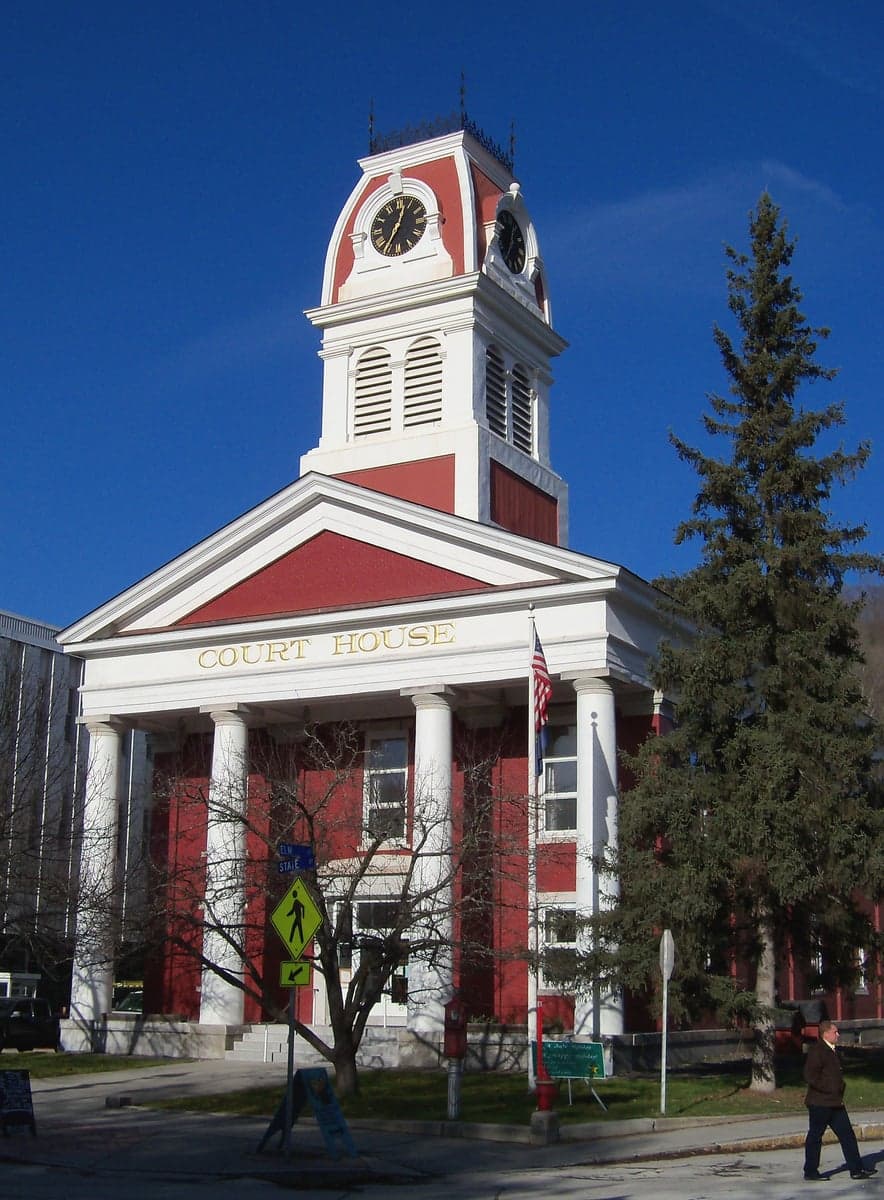
Photo: Wikipedia
Political ClimatePolitical Climate in Washington County
Showing state-level results — no local-only data available.
Local Political AnalysisPolitical Analysis of Washington County
Washington County, Vermont, leans heavily Democratic with a Cook PVI of D+17, putting it in lockstep with the state's overall D+17 rating. But don't let that uniform number fool you—this county has real political fault lines that have shifted over the past decade, and not in a direction that sits well with folks who value personal freedoms. The county's trajectory is toward a more progressive, centralized agenda, and that's something worth keeping an eye on if you're considering a move here.
How it compares
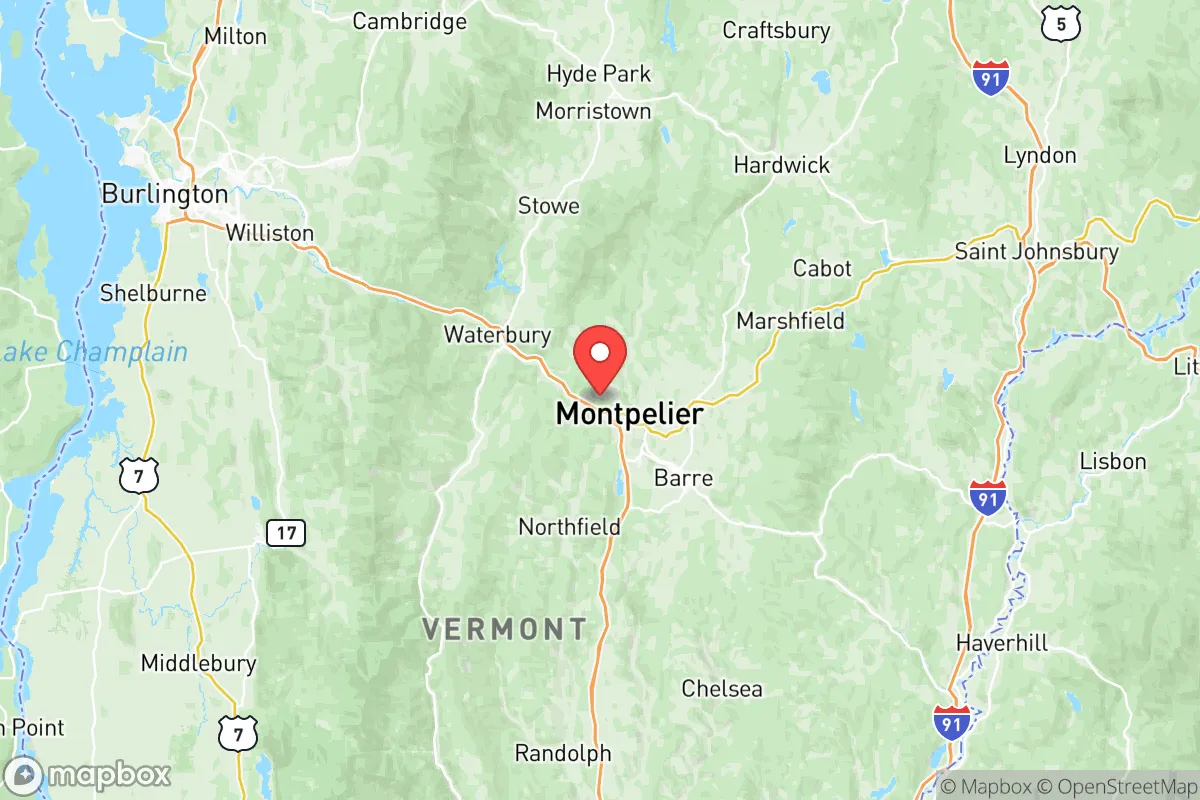
On paper, Washington County and Vermont as a whole are identical—both D+17. But the devil's in the details. The county's political weight is concentrated in Montpelier and Burlington's orbit, where progressive policies on land use, taxation, and education are pushed hard. Meanwhile, towns like Barre City and Northfield have historically been more moderate, with Barre even showing some Republican lean in local races. Waterbury and Stowe are solidly blue, driven by out-of-state transplants and a tourism economy that favors green regulations. The swing precincts? Look at Berlin and Middlesex—they've flipped between parties in recent state house races, but the trend is toward the left. Compared to the rest of Vermont, Washington County is the epicenter of the state's progressive push, not a outlier.
What this means for residents
For a conservative-leaning resident, living here means watching government creep into daily life more each year. Property taxes are among the highest in the nation, funding school systems that push curriculum you might not agree with. The state's Act 250 land-use law gives bureaucrats veto power over what you can build on your own land, and Montpelier's recent push for mandatory paid family leave and carbon taxes feels like a direct hit on personal choice. Gun rights are under constant pressure—magazine bans and waiting periods passed in 2018 were just the start. If you value keeping government out of your wallet and your life, this county is becoming a tougher place to call home.
There's also a cultural divide that's hard to ignore. The old Vermont—where neighbors helped each other without a state mandate—is fading. In places like Cabot or Plainfield, you still find that independent streak, but the political machine in Montpelier is pushing a one-size-fits-all model that doesn't respect local differences. The long-term trend is concerning: more regulations, higher costs, and less room for dissent. If you're thinking of relocating here, understand that the political climate is not neutral—it's actively moving toward a progressive ideal that may clash with your values on freedom and limited government.

State Political ClimatePolitical Climate in Vermont
State Political AnalysisPolitical Environment in the State
Vermont is one of the most reliably Democratic states in the nation, with a Cook Partisan Voting Index of D+17, meaning it votes about 17 points more Democratic than the national average in presidential elections. Over the past 20 years, the state has shifted from a quirky, independent-minded place that often split its tickets to a solidly blue stronghold, driven largely by an influx of out-of-state transplants and the consolidation of progressive power in Chittenden County. While the state still elects the occasional moderate Republican governor—Phil Scott has won five terms—the legislature is overwhelmingly controlled by Democrats and Progressives, and the policy agenda has moved steadily leftward.
Urban vs. rural divide
The political map of Vermont is a tale of two landscapes. The entire political gravity of the state is centered on Burlington and the surrounding Chittenden County metro area, which houses roughly a quarter of the state’s population and votes about 75-80% Democratic. This region drives the state’s blue lean, with Montpelier and Middlebury (home to the state capital and Middlebury College) adding to the progressive base. In contrast, the rural Northeast Kingdom—counties like Essex, Orleans, and Caledonia—votes more Republican, often by 10-20 points, but these areas have too few people to offset the urban centers. The Rutland area and Bennington County are more mixed, often swinging between parties depending on the candidate. A notable shift: in 2016, Essex County flipped from Obama to Trump and has stayed red since, but its population is so small (around 6,000) that it barely registers in statewide totals. The divide isn’t just about population—it’s about culture. Rural towns feel increasingly ignored by Montpelier, which has fueled a quiet but persistent resentment.
Policy environment
Vermont’s policy environment is among the most progressive in the country, and it shows in the tax code and regulatory structure. The state has a progressive income tax with a top marginal rate of 8.75% on income over $213,150, and property taxes are among the highest in the nation—averaging about 1.8% of home value, funding a generous school system. There is no sales tax on most goods, but the state levies a 6% sales tax on prepared foods and certain items, plus a 9.6% rooms and meals tax. Act 250, the state’s landmark land-use law, imposes strict environmental review on almost any development, making it notoriously difficult to build housing or expand businesses—a major driver of the state’s housing shortage. Education policy is dominated by the Vermont Agency of Education, which has pushed progressive curricula including social-emotional learning and diversity, equity, and inclusion (DEI) mandates. Healthcare is heavily regulated, with the state operating a single-payer-like system through Green Mountain Care and imposing an individual mandate for health insurance. Election laws are among the most accessible in the nation: Vermont has automatic voter registration, same-day registration, no-excuse absentee voting, and universal mail-in ballots for all elections—a system that was made permanent in 2021. For a conservative, the policy environment feels like a constant expansion of government into daily life, from what you can build on your land to how your children are educated.
Trajectory & freedom
Vermont is becoming less free by almost any measure of personal liberty, especially for those who value gun rights, parental rights, and economic freedom. The state has passed some of the strictest gun laws in the nation: Act 69 (2018) banned magazines over 10 rounds, raised the purchase age to 21, and instituted universal background checks. Act 45 (2023) banned carrying firearms in public buildings, hospitals, and schools, and allowed municipalities to ban guns in municipal buildings. In 2024, the legislature passed a bill requiring a 72-hour waiting period for all firearm purchases. On parental rights, Act 1 (2024) removed the requirement for schools to notify parents if a child changes their gender identity or pronouns, overriding parental authority. The state also passed Act 76 (2023), which expanded the definition of “child abuse” to include failure to affirm a child’s gender identity—a move that has alarmed many conservative families. On the economic front, Act 250 continues to strangle property rights, and the state’s paid family leave program (Act 47, 2023) imposes a new payroll tax on all workers. The only area where freedom has expanded is in medical autonomy: Vermont legalized recreational marijuana in 2018 and has a robust medical cannabis program. But for a conservative, the trajectory is clear—more regulation, more taxation, and less control over your own children and property.
Civil unrest & political movements
Vermont has seen relatively little civil unrest compared to larger states, but the political movements are active and visible. The left is dominated by the Vermont Progressive Party, which holds seats in the legislature and pushes for rent control, single-payer healthcare, and defunding police. The Burlington City Council has been a flashpoint, with progressive members calling for police budget cuts and the city’s Community Justice Center program diverting low-level offenders from prosecution. In 2020, Burlington saw protests over the death of George Floyd, with some property damage, but nothing on the scale of Portland or Seattle. On the right, the Vermont Republican Party is small but active, with groups like the Vermont Federation of Sportsmen’s Clubs organizing around gun rights. The Rutland area has seen a growing libertarian streak, with some residents advocating for nullification of federal gun laws. Immigration politics are relatively quiet—Vermont has a sanctuary state law (Act 59, 2017) that limits cooperation with federal immigration enforcement, but the state’s small immigrant population means it rarely becomes a flashpoint. Election integrity has been a minor issue: Vermont’s universal mail-in voting system has been criticized by some conservatives for lacking voter ID requirements, but no major fraud scandals have emerged. The most visible flashpoint for a new resident would be the constant presence of political signage and activism in Burlington and Montpelier, where progressive causes dominate public discourse.
Projection
Over the next 5-10 years, Vermont will likely become more progressive and less affordable. The demographic trends are clear: the state has one of the oldest populations in the nation (median age 43), and young people are leaving for lower-cost states. In-migration is driven by remote workers from New York and Boston, who bring progressive politics and high housing demand, pricing out locals. The legislature is unlikely to moderate—if anything, the Progressive caucus is growing. Expect more gun control, more environmental regulation, and more mandates on schools and businesses. The housing crisis will worsen as Act 250 remains in place, and property taxes will continue to rise to fund schools and pensions. The only wildcard is Governor Phil Scott, who has vetoed some of the most extreme bills, but the legislature has overridden him on major issues like the gun waiting period and the parental notification law. If Scott retires in 2026, the next governor will likely be a Democrat or Progressive, accelerating the leftward shift. For a conservative moving in now, the state will feel increasingly hostile to traditional values and economic freedom within a decade.
For a new resident, the bottom line is this: Vermont offers stunning natural beauty and a slow pace of life, but it comes at the cost of high taxes, heavy regulation, and a government that is actively expanding its reach into your family and property. If you value personal liberty, gun rights, and parental control, you will find yourself fighting an uphill battle against a legislature that sees those things as obstacles to its vision. The state is beautiful, but the political climate is not friendly to conservatives, and it’s only getting worse.
* Values derived from national, state, county, city and local statistics and may differ in a specific area. Last updated: 2026-05-14T12:19:19.000Z
Narrative content on this page is AI-generated and may contain mistakes. Verify any details that matter before acting on them.
ReloMaps may earn a commission from affiliate links at no extra cost to you.

