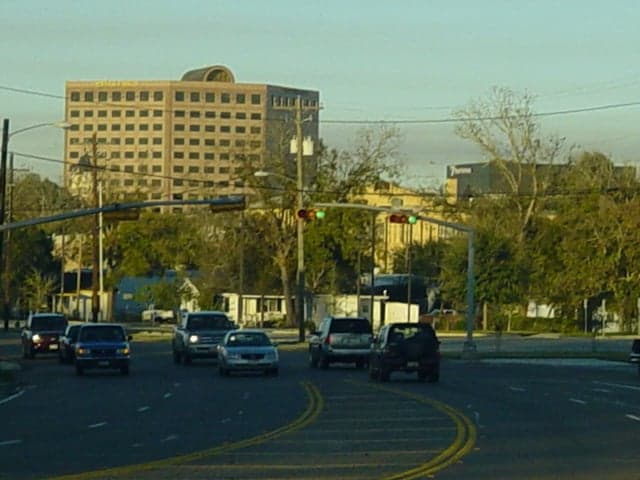
Photo: Wikipedia
Strategic Assessment of Victoria, TX
Meaningful friction. Expect exposure to either population pressure, blast zones, or natural disaster risk. Consider buying a retreat property.
What does the Strategic Assessment tell us?
Our Strategic Assessment grades tactical survivability of an area. Major population centers, military targets, fallout zones, natural disasters, and border exposure all drive risk — lower exposure means a more defensible position in a crisis.
This is heavily inspired by Joel Skousen's Strategic Relocation book. Highly recommended you checkout the book ($)What does this tell us?
Our Strategic Assessment grades tactical survivability of an area. Major population centers, military targets, fallout zones, natural disasters, and border exposure all drive risk — lower exposure means a more defensible position in a crisis.
This is heavily inspired by Joel Skousen's Strategic Relocation book. Highly recommended you checkout the book ($)Strategic Pillars

Key Distances
Regional Safe Places
Below is our recommended "safe zones" in Texas and the surrounding area based on our strategic heuristics. For most people, it's unrealistic to live in a “safe zone” full-time due to work, family or other personal reasons. They tend to be more rural. However, many of these areas are perfect for second homes and retreat properties that double as a vacation home or even a short-term rental.

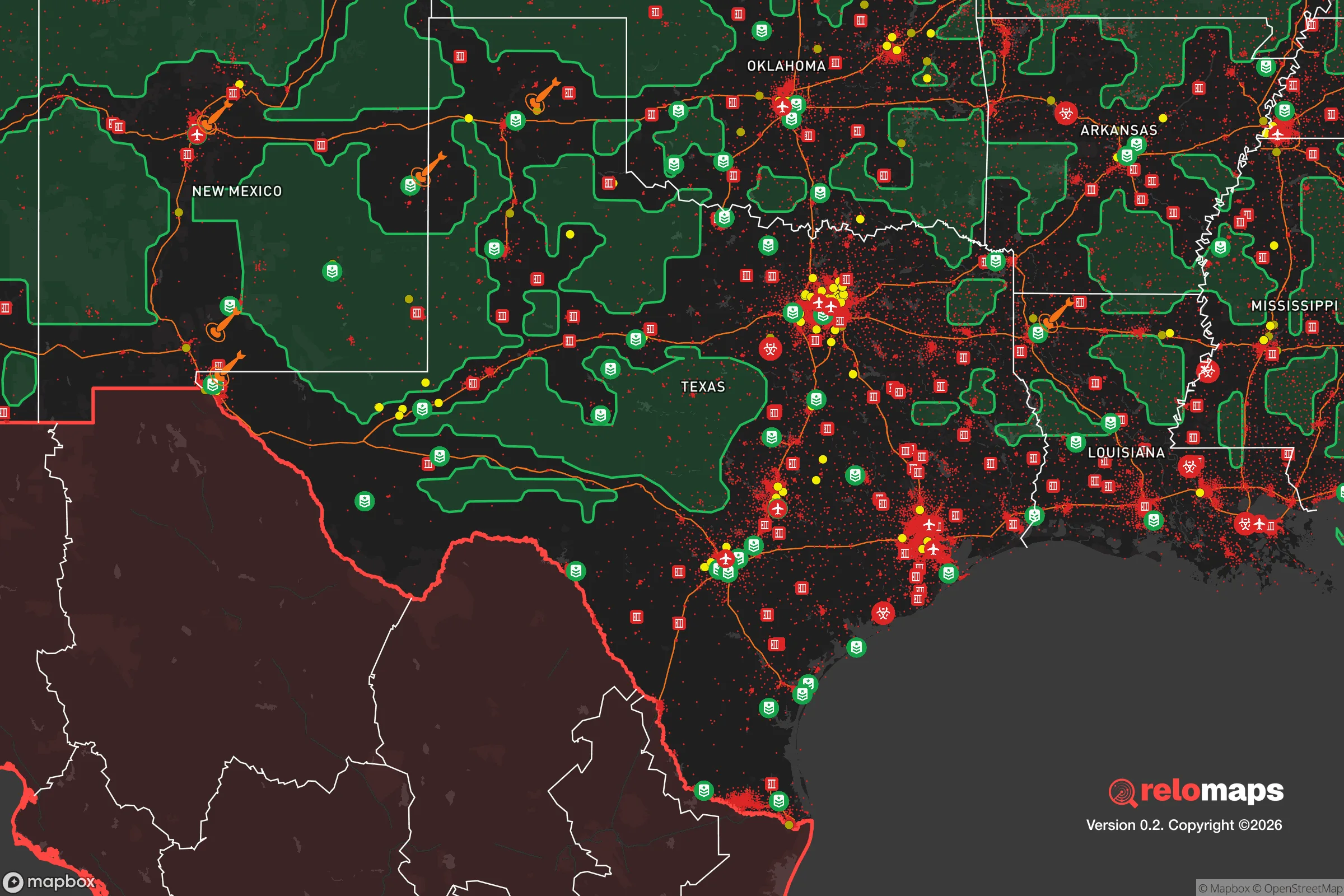


Important Note: For informational purposes only. This does not mean nothing bad ever happens in the green zones. Please use common sense. This is based on public data and modeled with AI. We tried to take a conservative approach but mistakes happen. We update this regularly as new information becomes available.
Solar Generator Recommendations
Backup power matters more here than in safer locations. We've picked three solar generators across budgets and capacity tiers — start with the budget unit if you only need a few essentials, or step up if you want to run a fridge and HVAC for days at a time.

Jackery Portable Power Station Explorer 300
Budget OptionPower on the Go: Weighing only 11 lbs, it's convenient to set up and store with book-sized foldable solar panels

BLUETTI Portable Power Station AC180
Designed for both indoor and outdoor scenarios, AC180 is highly capable as it has a robost capacity and continuous output power.

EF ECOFLOW DELTA Pro Ultra Power Station
Upgraded PickEcoFlow DELTA Pro Ultra is a whole-home energy system designed to grow with your family. Integrated with the Smart Home Panel 2, it scales to meet your evolving energy needs — keeping your home powered, intelligent, and secure through every stage of life.
We earn a commission, at no additional cost to you.
Strategic Assessment Analysis
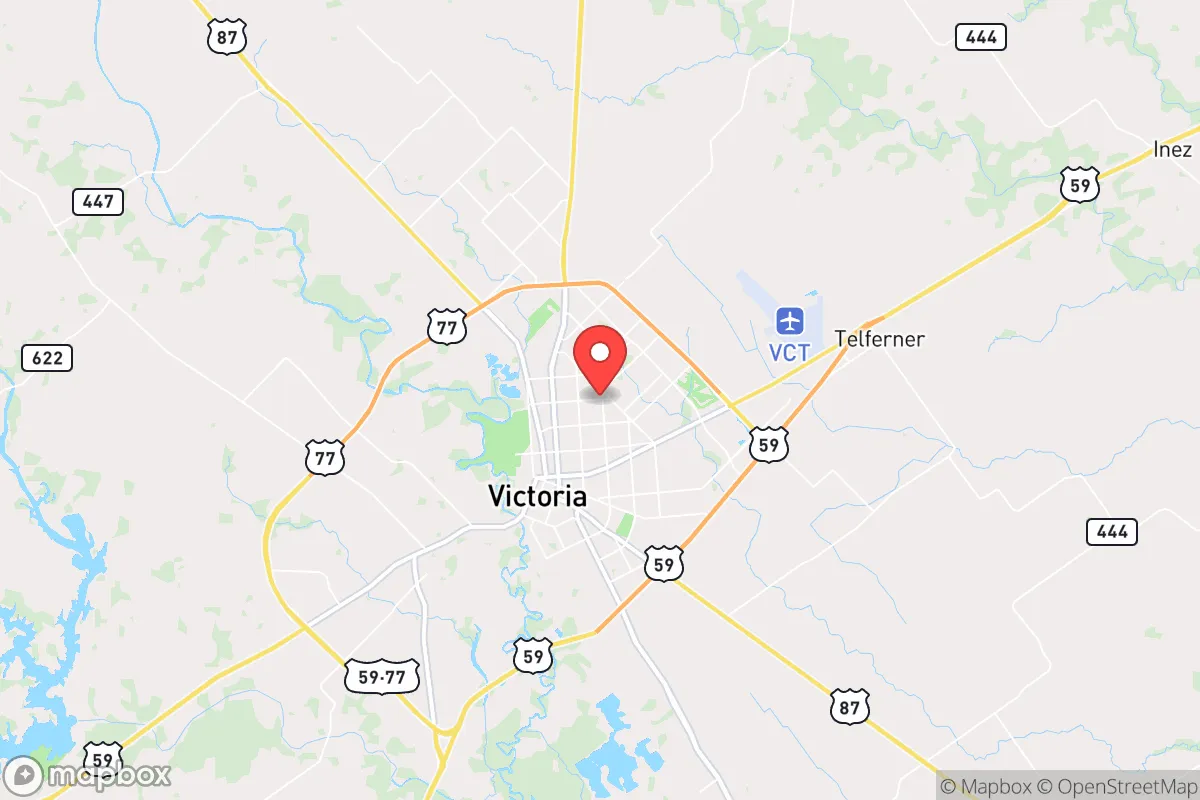
Victoria, Texas, sits in a strategic sweet spot that few relocation analysts fully appreciate. Roughly 90 miles from the Gulf Coast and 120 miles from San Antonio, it offers enough distance from major metropolitan blast zones and population centers to avoid the worst of any cascading collapse, while remaining close enough to access critical infrastructure and supply lines. The city’s position along the Guadalupe River and its status as a regional hub for agriculture, petrochemicals, and healthcare give it a built-in resilience that many inland towns lack. For a conservative-leaning individual or family thinking about long-term preparedness, Victoria represents a defensible, resource-rich base of operations in a state that still values property rights and self-reliance.
Geographic position and natural advantages for long-term security
Victoria’s location is its primary strategic asset. It sits at the intersection of U.S. Highway 59 and U.S. Highway 77, two major north-south and east-west corridors that provide redundant evacuation routes and supply chain access. The city is far enough from Houston (about 130 miles) and San Antonio to avoid the immediate fallout of a major urban disaster—whether that’s a nuclear detonation, a coordinated cyberattack on the grid, or widespread civil unrest. The surrounding Crossroads region is flat, agricultural, and sparsely populated, meaning you have room to maneuver and fewer people competing for resources in a crisis. The Guadalupe River provides a reliable freshwater source, and the area’s aquifer system supports deep wells for those who invest in them. The climate is humid subtropical, with mild winters and long growing seasons—ideal for sustainable food production if supply chains falter. Victoria also sits outside the primary hurricane strike zone of the Texas coast, reducing the risk of catastrophic storm surge while still benefiting from Gulf moisture for agriculture.
Risks, exposures, and proximity to fallout-relevant landmarks
No location is without vulnerabilities, and Victoria has a few that demand attention. The most obvious is its proximity to the Gulf Coast’s petrochemical infrastructure. The Port of Victoria and the nearby Formosa Plastics complex in Point Comfort are potential targets for sabotage or accidental release, though they are not in the same league as the Houston Ship Channel. A major chemical spill or fire could disrupt local air quality and water supplies temporarily, but the prevailing winds and flat terrain disperse contaminants relatively quickly. More concerning is the city’s location along the Texas Gulf Coast hurricane belt. While Victoria is inland enough to avoid storm surge, it is still vulnerable to hurricane-force winds and flooding from the Guadalupe River. Hurricane Harvey in 2017 dropped over 30 inches of rain in some parts of Victoria County, causing widespread flooding. For a prepper, this means elevation and drainage are critical factors when choosing a property. On the security front, Victoria is about 60 miles from the U.S.-Mexico border at its closest point (Laredo is roughly 150 miles southwest). While the border itself is not an immediate threat, the smuggling corridors that run through the region—particularly along Highway 59—can bring cartel-related violence and human trafficking into the area. Local law enforcement is competent but underfunded, so personal security measures are advisable. There are no major military bases or nuclear facilities within a 100-mile radius, which is a net positive for fallout avoidance, but it also means no nearby federal response assets in a major crisis.
Practical resilience for a relocator: food, water, energy, and defensibility
For a family or individual serious about self-sufficiency, Victoria offers a strong foundation. The local economy is anchored by agriculture (cotton, corn, sorghum, and cattle), healthcare (Citizens Medical Center and DeTar Hospital), and energy (oil and gas services). This means that even in a prolonged downturn, the area produces food and has medical infrastructure that won’t disappear overnight. The city’s water supply comes from the Guadalupe River and the Gulf Coast Aquifer, both of which are managed by the Guadalupe-Blanco River Authority. For a relocator, investing in a property with a private well and rainwater catchment is straightforward here—the water table is high, and drilling costs are reasonable. The electric grid is part of the Texas Interconnection (ERCOT), which is notoriously fragile during extreme weather. Winter Storm Uri in 2021 exposed this vulnerability, with Victoria experiencing rolling blackouts and water pressure failures. A backup generator, solar panels with battery storage, or a propane system is not optional here—it’s a necessity. The terrain is flat and open, which makes long-range visibility excellent for security but offers little natural cover. Defensible properties should prioritize perimeter fencing, clear sightlines, and a location away from major highways. The local gun culture is strong, with multiple gun shops and ranges, and Texas law is favorable for concealed carry and castle doctrine. The county sheriff’s office is generally pro-Second Amendment, and the community is overwhelmingly conservative, meaning you’re unlikely to face hostility for your preparedness efforts. Food storage is easy to maintain because the climate is dry enough to avoid mold issues in sealed containers, and local farmers’ markets and co-ops provide fresh produce even in off-seasons.
Overall, Victoria presents a balanced strategic picture for the conservative relocator who wants to be prepared without going full off-grid. It’s not a remote mountain redoubt, but it doesn’t need to be. The city offers a functioning economy, a reliable water source, arable land, and a like-minded community that values independence and self-defense. The trade-offs are real—hurricane risk, grid fragility, and proximity to border-related crime—but these are manageable with proper planning and investment. For someone looking to escape the chaos of coastal cities or the vulnerability of suburban sprawl, Victoria provides a solid, defensible base in a region that still respects property rights, local control, and the right to keep and bear arms. It’s a place where you can build a life that doesn’t depend on the federal government or fragile supply chains, and that’s exactly the kind of resilience that matters when the world starts to wobble.

* Values derived from national, state, county, city and local statistics and may differ in a specific area. Last updated: 2026-05-12T00:14:43.000Z
Narrative content on this page is AI-generated and may contain mistakes. Verify any details that matter before acting on them.
ReloMaps may earn a commission from affiliate links at no extra cost to you.

