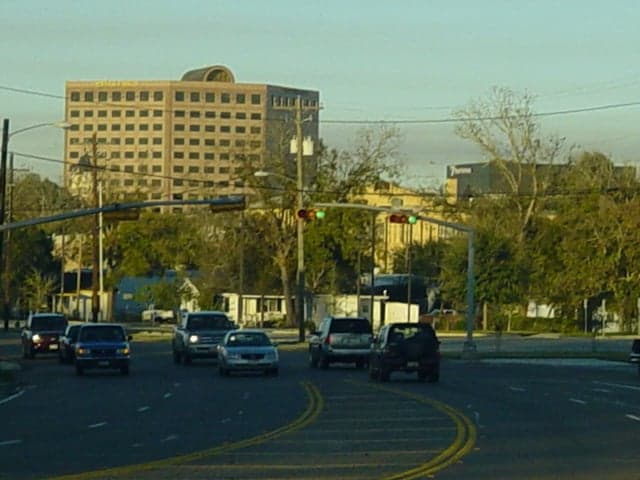

Photo: Wikipedia
Political ClimatePolitical Climate in Victoria, TX
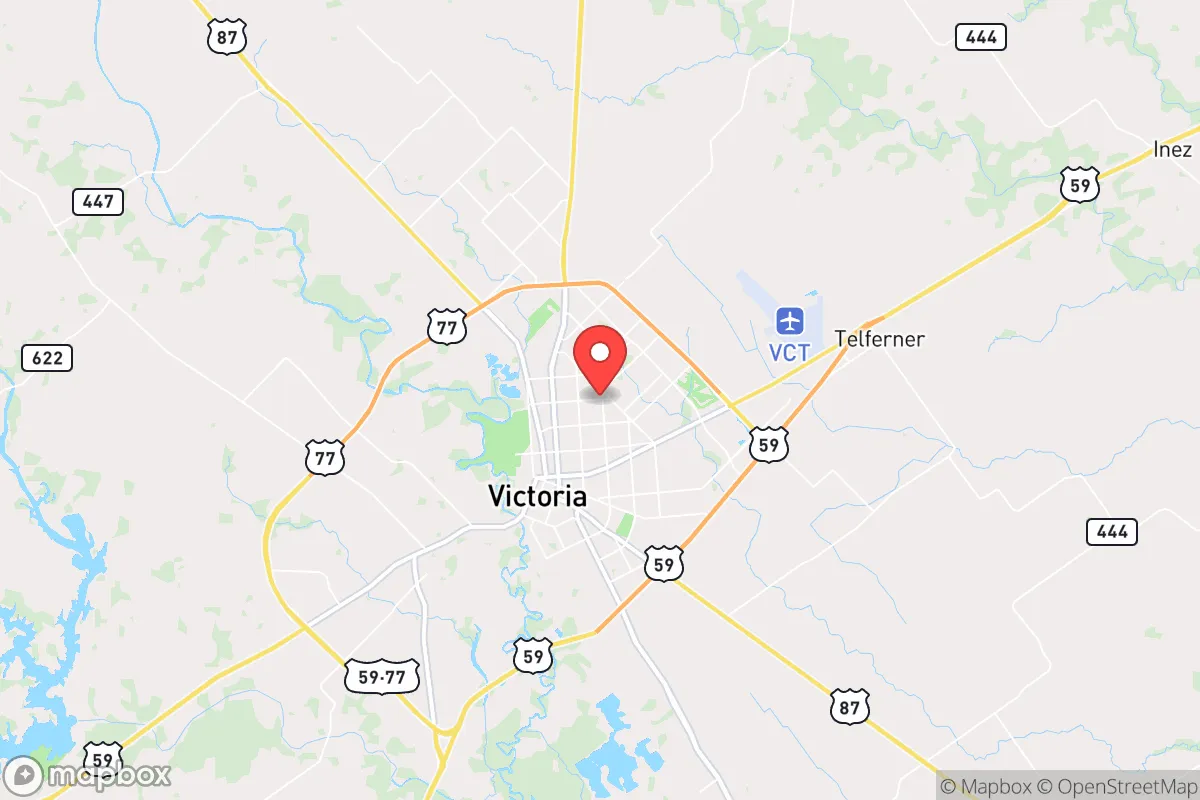
District shown is the primary district for this city’s centroid. Cities may span multiple districts.
Local Political AnalysisPolitical Analysis of Victoria, TX
Victoria, Texas, is about as solidly conservative as a city can get, and it’s been that way for as long as anyone around here can remember. The Cook Partisan Voting Index (PVI) sits at R+14, which is a full ten points more Republican than the state of Texas as a whole (R+4). That’s not just a number—it means in presidential elections, Victoria votes red by a margin that’s nearly double the state average. You won’t find much hand-wringing over progressive policies here; the local culture is rooted in traditional values, limited government, and a healthy skepticism of federal overreach. If you’re looking for a place where your rights and freedoms aren’t constantly under the microscope, this is it.
How it compares
Compared to the rest of Texas, Victoria is a conservative stronghold in a state that’s already leaning right. While Texas as a whole has a PVI of R+4—meaning it’s reliably Republican but with enough urban and suburban swing to keep things interesting—Victoria’s R+14 rating puts it in a different league. Drive an hour north to San Antonio, and you’ll hit a city that’s trending bluer by the year, with a PVI of D+3 and a city council that’s increasingly cozy with progressive agendas. Head east to Houston, and you’re in a D+15 environment where property rights and school choice are constant battlegrounds. Even nearby towns like Cuero (R+12) and Port Lavaca (R+11) lean conservative, but Victoria is the anchor—a place where the local government still respects the Second Amendment, keeps taxes low, and doesn’t try to micromanage how you live your life. The contrast is stark: in Victoria, you’re not fighting city hall over mask mandates or zoning ordinances that tell you what you can do with your own land.
What this means for residents
For folks living here, the political climate translates into a daily life that’s refreshingly free from the kind of government overreach you see in bigger cities. You won’t find the city council pushing for sanctuary city policies or trying to defund the police—Victoria’s law enforcement is well-supported, and public safety is a priority. Property taxes are reasonable compared to the state average, and there’s no talk of implementing new income taxes or wealth redistribution schemes. The school board focuses on academic excellence and parental rights, not woke curriculum or critical race theory. If you’re concerned about the direction of the country—where federal agencies seem to have a hand in everything from your healthcare to your energy choices—Victoria feels like a refuge. The long-term trajectory here is stable: as long as the oil and gas industry remains strong and the agricultural community stays rooted, the conservative majority isn’t going anywhere. You might see a slow trickle of newcomers from blue states, but they tend to adapt to the local culture rather than change it.
Culturally, Victoria stands apart from the rest of Texas in a few key ways. There’s a strong sense of self-reliance here—people don’t look to the government for handouts or solutions. The local economy is driven by energy, ranching, and small business, not tech startups or government contracts. You’ll see more pickup trucks than Teslas, and the conversation at the coffee shop is more likely about hunting season or the price of cattle than about the latest climate regulation from Washington. That’s not to say Victoria is stuck in the past—it’s just that the people here value their independence and aren’t interested in trading it for the promise of a progressive utopia. If you’re tired of feeling like your rights are being chipped away one ordinance at a time, Victoria offers a place where the government still remembers its place.

State Political ClimatePolitical Climate in Texas
State Political AnalysisPolitical Environment in the State
Texas has been a reliably Republican state for decades, with a Cook PVI of R+4 reflecting its consistent lean in presidential elections. The dominant coalition is a mix of suburban conservatives, rural voters, and a growing number of fiscally-minded transplants, but the last 10-20 years have seen a slow but steady shift toward competitive two-party politics, driven largely by explosive growth in the urban corridors of Dallas-Fort Worth, Houston, Austin, and San Antonio. While the state hasn’t flipped blue, the margins have tightened—from a 16-point win for Romney in 2012 to a 9-point win for Trump in 2020—and the 2024 results showed a similar pattern, with the GOP still winning statewide but losing ground in the suburbs.
Urban vs. rural divide
The political map of Texas is a stark study in contrasts. The major metros—Houston, Dallas, Austin, San Antonio, and El Paso—are Democratic strongholds, with Harris County (Houston) and Dallas County regularly voting blue by double digits. Austin’s Travis County is the most liberal in the state, often voting 70%+ Democratic. Meanwhile, rural West Texas, the Panhandle, and East Texas are deeply red—places like Lubbock, Amarillo, and Tyler routinely deliver 70-80% Republican margins. The real battleground is the suburbs: counties like Collin (north of Dallas), Denton, Fort Bend (southwest of Houston), and Williamson (north of Austin) have been trending leftward as transplants and younger families move in. In 2020, Collin County voted for Trump by only 4 points after giving him 16 points in 2016—a massive swing that signals the GOP’s suburban erosion. Conversely, rural counties like Kerr County (near San Antonio) and Gillespie County (Fredericksburg) have only gotten redder, with some precincts hitting 85%+ Republican.
Policy environment
Texas’s policy environment is a mixed bag for conservatives. On the plus side, there’s no state income tax, a strong right-to-work law, and a regulatory climate that generally favors business and property rights. The state’s constitutional carry law (permitless carry, effective 2021) and abortion trigger law (effectively banning the procedure after Roe fell) are clear wins for limited-government and pro-life advocates. However, the state’s property tax burden is among the highest in the nation—due to the lack of income tax—and local school districts often push for bond measures that raise rates. Education policy has seen a tug-of-war: the Texas Education Agency under Governor Abbott has pushed for school choice and charter expansion, but rural Republicans have blocked universal vouchers. Healthcare is a sore spot—Texas has the highest uninsured rate in the country, and the state has refused Medicaid expansion, which keeps costs high for the uninsured but aligns with fiscal conservatism. Election laws tightened after 2020 with SB 1, which restricted mail-in voting and added ID requirements—a move that drew national criticism but was popular among conservatives who wanted election integrity.
Trajectory & freedom
On balance, Texas has become more free in several key areas over the last decade, but there are worrying signs of government overreach. The Second Amendment saw a major expansion with constitutional carry in 2021, and the state has preempted local gun ordinances, preventing cities like Austin from enacting their own restrictions. Parental rights were strengthened with HB 4549 (2023), which banned gender-transition procedures for minors and gave parents more say in medical decisions. Medical freedom took a hit during COVID, however—Governor Abbott’s executive orders mandating masks and later banning vaccine mandates created confusion, and local health departments in blue cities imposed restrictions that many conservatives saw as overreach. Property rights remain strong, with no statewide zoning and limited eminent domain abuse, but homeowner association (HOA) rules in suburban subdivisions can be restrictive. The biggest freedom concern is taxation: while there’s no income tax, the state’s reliance on property taxes means that as home values skyrocket in places like Austin and Dallas, longtime residents face crushing tax bills—a de facto government seizure of wealth that feels anything but free.
Civil unrest & political movements
Texas has seen its share of political flashpoints. The 2020 Black Lives Matter protests in Austin, Dallas, and Houston were large and occasionally violent, with Austin seeing property damage and a police budget cut that later led to a surge in violent crime—a cautionary tale for conservatives. On the right, the Texas Nationalist Movement (TEXIT) has gained some traction, pushing for secession rhetoric, though it remains a fringe idea with no real legislative path. Immigration politics are front and center: Governor Abbott’s Operation Lone Star has deployed state troopers and National Guard to the border, and the state has bused migrants to blue cities like New York and Chicago—a move popular with the base but criticized as performative. The 2022 Uvalde school shooting sparked a renewed debate on gun laws, but the GOP-controlled legislature resisted any new restrictions, instead passing a bill to raise the age to buy certain rifles to 21—a rare compromise. Election integrity remains a hot-button issue: after the 2020 election, Harris County faced lawsuits over voting machine glitches and mail-in ballot irregularities, leading to SB 1 and ongoing distrust among conservatives. You’ll see “Keep Texas Red” signs in rural areas and “Beto” stickers in Austin—the divide is visible and real.
Projection
Over the next 5-10 years, Texas is likely to become more purple but not blue. In-migration from California, New York, and Illinois is accelerating—about 1,000 people move to Texas per day—and many of these transplants are moderate or left-leaning, especially in the suburbs. The 2024 election showed that while Trump still won Texas, the margins in Collin, Denton, and Fort Bend counties continue to shrink. If this trend holds, by 2030 a Democrat could win statewide in a wave year—but the GOP’s structural advantages (gerrymandered congressional maps, voter ID laws, and a rural-heavy state Senate) will keep the legislature red for longer. The biggest wildcard is Hispanic voters: traditionally Democratic, they’ve been shifting rightward, especially in border counties like Zapata and Starr, which flipped to Trump in 2020. If that trend continues, Texas could stay red longer than pundits expect. For a conservative moving in now, expect a state that remains broadly friendly to your values but where you’ll need to be politically engaged in local elections to keep the suburbs from drifting left.
Bottom line for a new resident: Texas is still a solid bet for conservatives who value low taxes, gun rights, and a business-friendly climate, but the political landscape is shifting. If you’re moving to a red suburb like Keller (north of Fort Worth) or New Braunfels (between Austin and San Antonio), you’ll find like-minded neighbors and a local government that respects your freedoms. If you land in a blue city like Austin or a purple suburb like Frisco, expect to fight for your values at the ballot box and in school board meetings. The state’s trajectory is uncertain, but for now, it remains one of the last bastions of conservative governance in a rapidly changing America.
* Values derived from national, state, county, city and local statistics and may differ in a specific area. Last updated: 2026-05-12T00:14:43.000Z
Narrative content on this page is AI-generated and may contain mistakes. Verify any details that matter before acting on them.
ReloMaps may earn a commission from affiliate links at no extra cost to you.

