Political ClimatePolitical Climate in Vienna, WV
District shown is the primary district for this city’s centroid. Cities may span multiple districts.
Local Political AnalysisPolitical Analysis of Vienna, WV
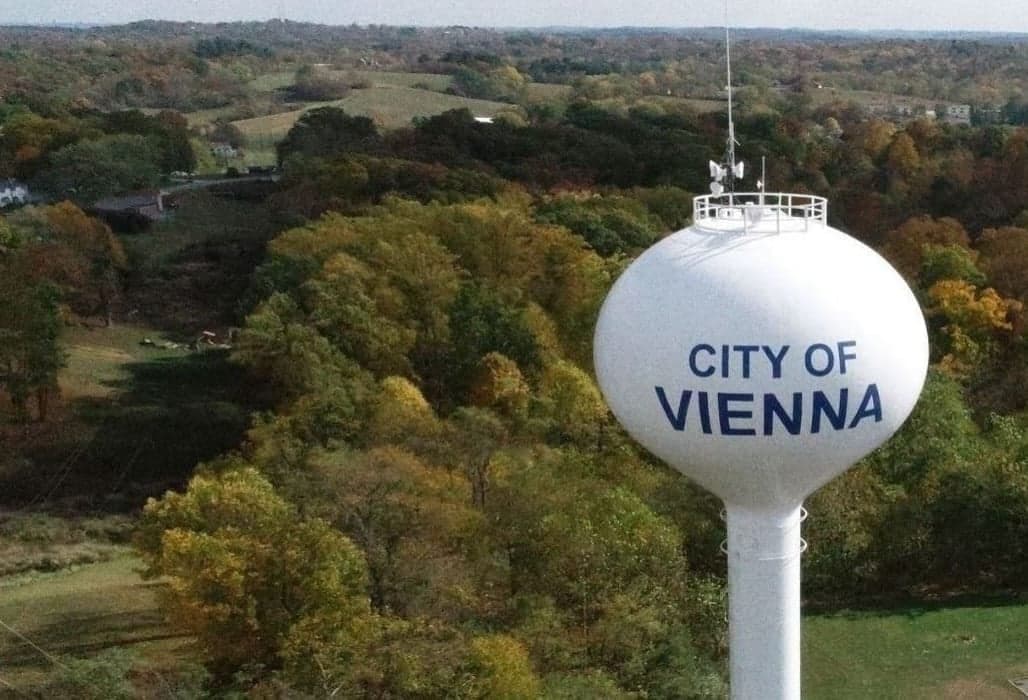
Vienna, West Virginia, has long been a reliably conservative community, and the numbers back that up with a Cook PVI of R+20, meaning it votes about 20 points more Republican than the national average. This isn't a new trend; it's a deep-rooted political identity that's held steady for decades. You can feel it in the local elections, the conversations at the grocery store, and the general attitude toward government—people here value their personal freedoms and are skeptical of any authority that tries to chip away at them. That said, like a lot of small towns, there's a quiet unease about the direction of the country, and some folks worry that the progressive shifts we see in bigger cities might start creeping in if we're not careful.
How it compares
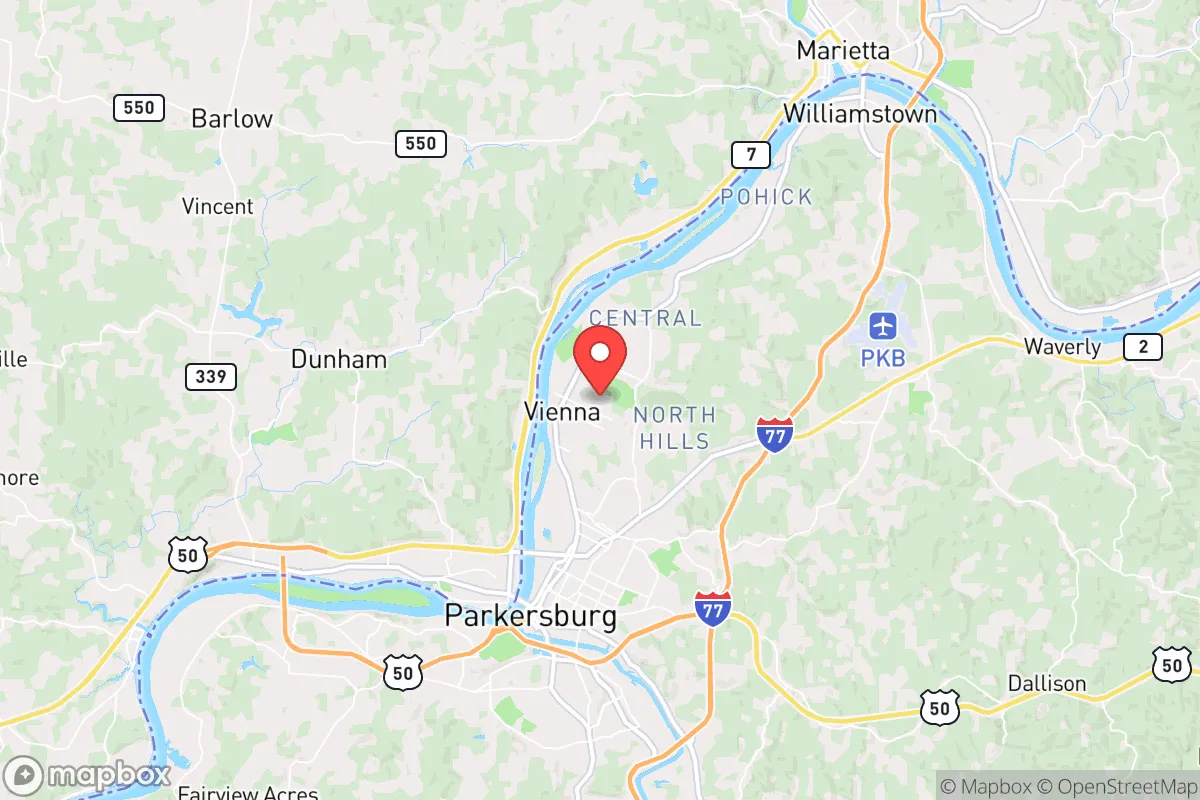
When you look at the surrounding area, Vienna sits in a bit of a conservative bubble compared to some nearby spots. Head just a few miles south to Parkersburg, and you'll find a similar Republican lean, but it's not as pronounced—Parkersburg has a more mixed political history, with some pockets of union influence and a slightly more moderate streak. Drive east toward Mineral Wells or north toward Williamstown, and the conservative tilt gets even stronger, with those areas feeling more rural and even more resistant to government overreach. The real contrast, though, is if you go across the Ohio River to Belpre, Ohio—that town has seen a bit more political fluctuation, with some local races getting surprisingly competitive in recent years. Vienna, by comparison, feels like a rock of stability: the same values, the same voting patterns, and a general consensus that the less government interference in our lives, the better.
What this means for residents
For the people living here, the political climate translates into a pretty straightforward daily reality. You're not going to see the kind of heavy-handed local ordinances or progressive social experiments that you'd find in, say, Morgantown or Charleston. Property taxes stay reasonable, zoning laws are minimal, and there's a strong sense that your personal choices—whether it's how you raise your kids, what you do on your land, or how you run your small business—are your own business. The downside, if you can call it that, is that the community can feel a bit insular. If you're someone who leans left, you might feel like an outsider, and there's not much appetite for the kind of cultural or political change that's reshaping other parts of the country. For most residents, though, that's a feature, not a bug.
One thing that really sets Vienna apart is the local culture around personal responsibility and community self-reliance. You don't see a lot of hand-wringing about national politics here; instead, people focus on what they can control—their families, their jobs, and their neighbors. The city council and county commission tend to take a hands-off approach, which is exactly how most folks want it. There's a real wariness of any new regulations or programs that sound like they're coming from D.C. or even the state capital, because the attitude is, "We've been doing fine on our own, thanks." That said, there's a growing concern among longtime residents that the younger generation, exposed to more national media and online influences, might start drifting toward progressive ideas. It's not a panic, but it's a quiet worry—a sense that the political stability Vienna has enjoyed for so long might not be guaranteed forever if we don't stay engaged and keep pushing back against the overreach that's becoming so common elsewhere.

State Political ClimatePolitical Climate in West Virginia
State Political AnalysisPolitical Environment in the State
West Virginia has long been one of the most reliably Republican states in the nation, but its political identity is more complex than a simple red-state label suggests. The state voted for Donald Trump by nearly 39 points in 2020, and by a similar margin in 2024, making it one of the most GOP-friendly landscapes in the country. However, this wasn’t always the case—as recently as 2000, West Virginia was a swing state that voted for George W. Bush by just 6 points, and before that, it was a Democratic stronghold for decades. The shift has been driven by a collapse of the old coal-country Democratic machine, a cultural realignment toward conservative values, and a steady exodus of younger, more liberal-leaning residents. Today, the state’s politics are dominated by a coalition of rural conservatives, evangelical Christians, and working-class voters who prioritize gun rights, energy independence, and limited government.
Urban vs. rural divide
The political map of West Virginia is a study in contrast between its few small cities and its vast rural expanse. The state’s largest metro area, Charleston (Kanawha County), leans Republican but is more moderate than the rest of the state—Trump won Kanawha by about 18 points in 2020, compared to 39 points statewide. Morgantown (Monongalia County), home to West Virginia University, is the state’s most liberal enclave, with Trump winning it by just 6 points in 2020, and it has a visible progressive activist scene. Huntington (Cabell County) and Wheeling (Ohio County) are reliably red but with pockets of Democratic holdouts, particularly among union households. The real engine of the GOP’s dominance is the rural countryside: counties like Mingo, McDowell, and Wyoming routinely deliver 70-80% of their votes to Republican candidates. The divide isn’t just about population density—it’s about economic identity. The urban areas have diversified economies (healthcare, education, government), while rural counties are still deeply tied to coal, natural gas, and timber, industries that have become culturally and politically aligned with the GOP.
Policy environment
West Virginia’s policy environment is aggressively conservative, with a focus on reducing taxes, limiting regulation, and protecting traditional values. The state has no personal income tax on Social Security benefits, and in 2023, the legislature passed a bill to phase out the state income tax entirely over time, though it remains at 4.82% for top earners. The corporate net income tax is a flat 6.5%, and the state has a right-to-work law, meaning no one can be forced to join a union as a condition of employment. On education, West Virginia has one of the strongest school choice landscapes in the region: the Hope Scholarship program, enacted in 2021, provides state-funded education savings accounts (ESAs) worth roughly $4,400 per student per year, usable for private school tuition, homeschooling materials, or tutoring. This program has been a flashpoint, with teachers’ unions and progressive groups challenging it in court, but it remains in place. Healthcare policy is mixed—the state expanded Medicaid under the Affordable Care Act in 2014, a decision that has been criticized by some conservatives, but there is no state-level individual mandate. Election laws are moderately restrictive: voters must show a photo ID at the polls, and early voting is available for 10 days, but no-excuse absentee voting is allowed. The state does not have a “sanctuary city” policy anywhere, and local law enforcement cooperates fully with federal immigration authorities.
Trajectory & freedom
West Virginia has been moving decisively toward greater personal freedom in several key areas, particularly on gun rights and parental rights. In 2023, the legislature passed a constitutional carry law, allowing any adult who can legally possess a firearm to carry it concealed without a permit. This was a major victory for Second Amendment advocates. On parental rights, the state passed the “Parental Bill of Rights” in 2021, which requires schools to notify parents of any medical or mental health services offered to their children and to obtain parental consent before administering any survey or questionnaire about sexual behavior or family life. The state also banned transgender athletes from competing in girls’ sports in 2021, and in 2023, passed a law prohibiting gender-affirming care for minors. However, there are areas where freedom has been constrained. The state’s medical marijuana program, legalized in 2017, is tightly controlled and has been slow to roll out, with only a handful of dispensaries operating as of 2025. Recreational marijuana remains illegal, and possession can still lead to jail time. Property rights are generally strong, but the state’s heavy reliance on the coal and gas industries means that mineral rights often trump surface rights, a source of ongoing tension for landowners. On taxation, the trajectory is positive: the income tax phase-down is real, and the state has no estate or inheritance tax.
Civil unrest & political movements
West Virginia has a history of labor activism, but in recent years, political movements have been dominated by conservative and libertarian-leaning groups. The 2018 teachers’ strike, which shut down schools across the state for nine days, was a rare moment of left-leaning mobilization, but it was driven more by pay and benefits than by progressive ideology. Since then, the energy has shifted to the right. The “Take Back West Virginia” movement, a coalition of conservative activists, has been effective in pushing for school choice and gun rights. There have been no significant sanctuary city movements or immigration-related protests, as the state’s foreign-born population is less than 2%. Election integrity has been a hot topic: in 2020, the state’s Republican secretary of state, Mac Warner, implemented strict ballot security measures, including signature verification and chain-of-custody tracking, which were praised by conservatives but criticized by Democrats as voter suppression. There has been no serious secession or nullification rhetoric, though some rural counties have floated the idea of joining neighboring states (e.g., the “West Virginia secession” movement in the Eastern Panhandle, which is more culturally aligned with Virginia). The most visible flashpoint for a new resident would be the culture war around education: school board meetings in counties like Berkeley and Jefferson have seen heated debates over library books, curriculum content, and transgender policies.
Projection
Over the next 5-10 years, West Virginia is likely to become even more conservative, but with some important caveats. The state’s population is aging and shrinking—it lost 3.2% of its population between 2010 and 2020, the second-highest rate in the nation. The young and educated are leaving for places like North Carolina, Texas, and Tennessee, which means the electorate is becoming older, whiter, and more rural. This demographic trend will likely push the state further to the right on cultural issues, but it also creates economic headwinds that could moderate some policy positions. In-migration is minimal, but there is a small but growing influx of remote workers and retirees from the Northeast and Mid-Atlantic, drawn by low housing costs and the state’s natural beauty. These newcomers tend to be more moderate or even libertarian, and they may push back against the most extreme cultural policies. The biggest wildcard is the energy transition: as coal continues to decline, the state will need to diversify its economy, and that could shift the political calculus. For now, the trajectory is clear: expect more school choice expansion, further tax cuts, and continued resistance to federal overreach on environmental and health mandates. A new resident moving in today should expect to find a state that is deeply conservative, but also one where individual liberty is taken seriously—at least for those who share the dominant cultural values.
For someone considering a move to West Virginia, the bottom line is this: you’ll find a state that respects your right to own guns, educate your kids as you see fit, and keep more of your money. But you’ll also find a place where the economy is fragile, the population is aging, and the political culture can feel insular. If you’re looking for a low-tax, low-regulation environment with strong Second Amendment protections and a community that values traditional family structures, West Virginia is a solid bet. Just be prepared for the trade-offs: limited job opportunities outside of energy and healthcare, a healthcare system that struggles with rural access, and a social scene that can be cliquish. It’s a state for people who want to be left alone, but who also understand that freedom comes with responsibility—and sometimes, with a long drive to the nearest grocery store.
* Values derived from national, state, county, city and local statistics and may differ in a specific area. Last updated: 2026-04-23T05:47:28.000Z
Narrative content on this page is AI-generated and may contain mistakes. Verify any details that matter before acting on them.
ReloMaps may earn a commission from affiliate links at no extra cost to you.

