Quality of Life in Waynesboro City County
A livable area that tracks near national norms for affordability, walkability, and neighborhood health.
What does Quality of Life tell us?
Quality of Life measures an area by evaluating factors like cost of living, nearby amenities, country club access, airport proximity, socioeconomic signals and neighborhood character. For large states, this is a general average — quality of life can vary dramatically between metro areas, suburbs, and rural communities within the same state.
What does this tell us?
Quality of Life measures an area by evaluating factors like cost of living, nearby amenities, country club access, airport proximity, socioeconomic signals and neighborhood character. For large states, this is a general average — quality of life can vary dramatically between metro areas, suburbs, and rural communities within the same state.
Cost of Living
16% below national average
83%
The Real Cost of Living in Waynesboro City County for 2026
| Tier | Individual | Family (4) |
|---|---|---|
| Survival | $16k | $29k |
| Comfortable | $46k | $68k |
| Luxury | $95k+ | $147k+ |
| Elite (Top 5%) | $111k+ | $173k+ |
Quality-of-Life Analysis
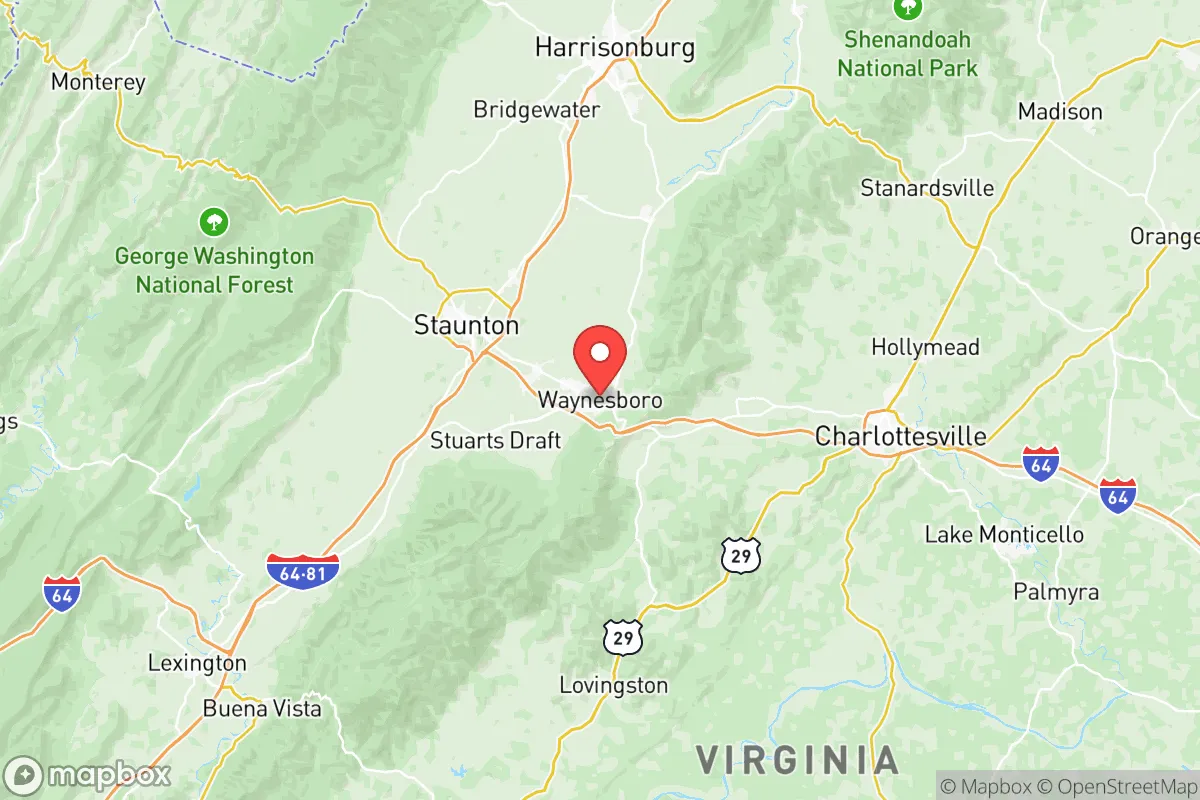
Waynesboro City County—anchored by the independent city of Waynesboro but encompassing a broad sweep of the Shenandoah Valley—offers a quality-of-life spectrum that ranges from compact, walkable downtown living to quiet rural homesteads along the Blue Ridge foothills. The county draws retirees and remote workers who want the lowest cost of living in the region, along with commuters heading to Staunton or Charlottesville, and families seeking affordable homeownership within an hour of outdoor recreation. Understanding the distinct character of each pocket helps newcomers match their lifestyle priorities to the right area.
Largest town(s) & population centers
Waynesboro (population roughly 22,000) is the county’s clear urban core and the only incorporated city. Daily life here revolves around a revitalized Main Street with local breweries, the Shenandoah Valley Art Center, and the P. Buckley Moss Museum. The city’s compact layout—roughly five square miles—makes errands quick: most grocery stores, healthcare providers, and schools are within a 10-minute drive. Housing stock includes prewar bungalows near Ridgeview Park and newer subdivisions on the south side. The average commute of 21 minutes reflects the area’s manageable scale, with many residents working at the county’s largest employers: Invista (textile manufacturing), Hollister Inc. (medical devices), and the Waynesboro School District. The city also serves as a retail and dining hub for surrounding Augusta County communities.
Smaller towns & rural pockets
Just east of Waynesboro, Stuarts Draft (population ~9,000) feels like a small town with its own schools, a Food Lion, and access to the Blue Ridge Parkway. It draws families who want a quieter, more spread-out setting but still a 15-minute drive to Waynesboro’s amenities. Fishersville (population ~7,500) is the county’s medical and retail gateway: it hosts Augusta Health hospital, the region’s largest employer, along with big-box stores along US-250. Many newcomers with healthcare jobs live in Fishersville’s newer subdivisions or rent apartments near the hospital corridor. Further west, Crimora (unincorporated, ~2,000 residents) offers deep rural living with older homes on acreage, zero curb-and-gutter sidewalks, and strong ties to the South River fishing spots. Tiny hamlets like Lyndhurst and Sherando consist of little more than a general store and clusters of single-wide trailers and farmhouses, where residents often heat with wood and rely on well water—a sharp contrast to Waynesboro’s city services.
Cost & lifestyle range
The county’s overall cost-of-living index of 84 (16% below the U.S. average) masks considerable variation. In Waynesboro proper, the median home value of $236,600 and median rent of $972 place homeownership within reach for moderate-income households, especially compared to Charlottesville (30 miles east, where median home values top $400,000). At the cheaper end, rural Crimora and Lyndhurst have home values often below $200,000, with some fixer-uppers under $150,000—but buyers must factor in septic system costs, longer drives to groceries (15–20 minutes), and limited internet options in the hollows. At the higher end, Fishersville’s newer subdivisions (e.g., Stoney Creek) can list from $300,000 to $400,000, offering sidewalks, HOA-maintained common areas, and split-level floor plans popular with medical professionals. For renters, Waynesboro’s $972 median rent is the most practical option; rural rentals are scarce and often limited to single-family homes advertised by word-of-mouth. Commute times stay near 21 minutes countywide because most employment is concentrated along the US-250/I-64 corridor, but residents in Sherando face a 30-minute drive to the nearest supermarket.
The county suits a broad range of people—but not everyone equally. Remote workers and retirees who value walkable access to coffee shops and art galleries will gravitate to Waynesboro’s historic core. Commuters and hospital staff often prefer Fishersville’s suburban convenience. Homesteaders, hunters, and those on the tightest budgets find the widest land-to-dollar ratio in Crimora and Lyndhurst. The common thread across all areas is an outdoor orientation: the Blue Ridge Parkway, Shenandoah National Park, and the South River are never more than a 25-minute drive, regardless of which pocket you choose.

Crime in Waynesboro City County
Generally safer than 61% of comparable U.S. locations.
Violent CrimeViolent Crime Analysis
Property CrimeProperty Crime Analysis
Crime Analysis
Waynesboro, an independent city in Virginia’s Shenandoah Valley, reports a violent crime rate of 206.6 incidents per 100,000 residents and a property crime rate of 1,364.1 per 100,000 — figures that place the city below national averages but slightly above the statewide median for violent offenses. Property crime, however, remains the more pressing concern for residents, with theft and vehicle break-ins concentrated along the city’s main commercial corridors and near Interstate 64. Neighborhood-level safety varies significantly, and the local criminal justice approach under a progressive-leaning commonwealth’s attorney office has drawn scrutiny from residents who feel offender-first policies weaken deterrence.
Crime in context
When compared to the 2024 national violent crime rate of roughly 380 per 100,000, Waynesboro’s 206.6 rate is about 46% lower. Property crime in Waynesboro, at 1,364.1 per 100,000, stands well below the national figure of 1,950 but is slightly above Virginia’s state rate of 1,200. The city’s crime composition mirrors that of smaller independent cities in the commonwealth: aggravated assault makes up the bulk of violent incidents, while larceny-theft dominates property offenses. Waynesboro’s proximity to Staunton and the larger city of Harrisonburg can inflate comparative statistics, as some property crimes are travel-related. Critics point out that Waynesboro’s public safety resources are stretched thin, and the liberal policies of the 25th Judicial District — which includes Waynesboro, Staunton, and Augusta County — have resulted in pretrial release programs and reduced bond amounts that critics say allow repeat offenders to cycle back onto streets quickly.
What residents experience
Day-to-day safety concerns in Waynesboro are shaped by geography. The corridor along Route 250 (Broad Street) and the Dupont community near the industrial park report the highest concentrations of shoplifting, vehicle break-ins, and vandalism. In contrast, the Sherando area on the western edge and the Pleasant View neighborhoods near the South River see far fewer incidents, particularly violent ones. Residents in the North Wayne district express frustration that a modest police force of about 35 sworn officers cannot effectively patrol all zones simultaneously. Property crime numbers have ticked up since 2022, and a common complaint is that the city’s diversion programs — championed by the commonwealth’s attorney’s office — place a low priority on prosecuting nonviolent property offenders. While overall violent crime has not spiked, the perception of rising disorder along commercial strips undercuts confidence in the justice system’s willingness to hold offenders accountable.
Waynesboro’s crime geography is not uniform. The Lyndhurst and Dooms areas, both unincorporated pockets near the city limits, experience lower crime rates due to smaller populations and less commercial activity. Conversely, the Basic City neighborhood, a historic industrial district now undergoing redevelopment, has seen a recent uptick in reported thefts from vehicles. No ward or precinct in Waynesboro is dangerous by big-city standards, but the compounding effect of a progressive judicial philosophy — including court-ordered treatment in lieu of jail for drug-related theft — means that chronic offenders rarely face meaningful detention. For families and retirees considering a move to Waynesboro, the safest bet is to look at the residential streets west of Delphine Avenue or south of the river, where crime logs show long stretches with no incidents. The overall safety picture is adequate but fragile, and local advocacy groups continue to push for a tougher-on-crime stance in the 2025 judicial elections.
* Values derived from national, state, county, city and local statistics and may differ in a specific area. Last updated: 2026-06-01T13:46:42.000Z
Narrative content on this page is AI-generated and may contain mistakes. Verify any details that matter before acting on them.
ReloMaps may earn a commission from affiliate links at no extra cost to you.

