Personal Sovereignty in Waynesboro City County
Viable for self-reliance. Generally workable, though some barriers may limit total independence.
What does Personal Sovereignty tell us?
Personal Sovereignty measures your capacity for self-reliance and independence with minimal government friction. Higher scores mean fewer barriers between you and the way you want to live... but it assumes you have the space you need and good neighbors.
What does this tell us?
Personal Sovereignty measures your capacity for self-reliance and independence with minimal government friction. Higher scores mean fewer barriers between you and the way you want to live... but it assumes you have the space you need and good neighbors.
State Policy
Energy independence: Importer (20% of energy produced in-state)
Personal Liberty
Homesteading

Personal Liberty Analysis
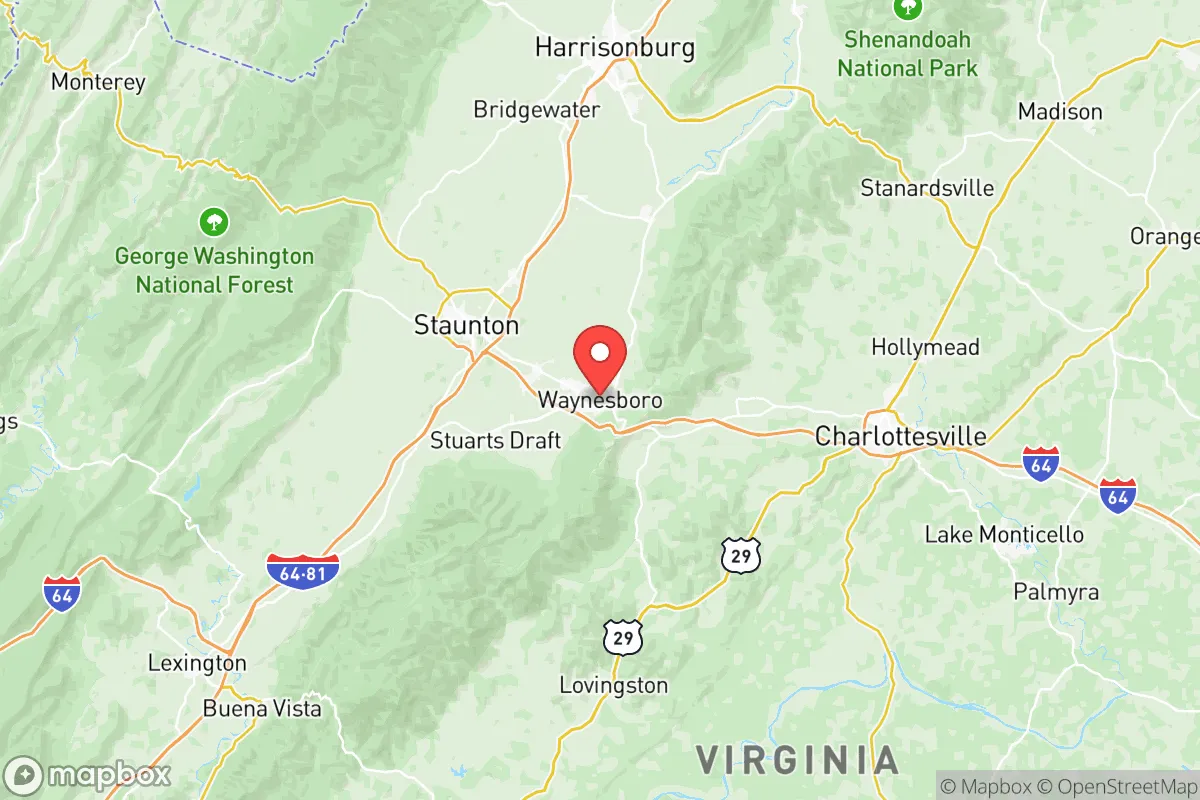
Waynesboro City County, Virginia, offers a notably higher degree of personal sovereignty than much of the urbanized Northeast corridor, but it is not a libertarian free zone. Nestled in the Shenandoah Valley, the area provides a practical balance of low-density living and access to essential services, though residents must navigate a state-level regulatory environment that leans moderately interventionist. For those prioritizing autonomy—whether from government overreach, economic volatility, or social instability—Waynesboro presents a viable but conditional option, where individual freedoms are exercised more through local culture and geography than through explicit legal protections.
Tax burden and regulatory posture: How Waynesboro compares to surrounding areas
Waynesboro’s tax burden is moderate by Virginia standards, which is a mixed bag for sovereignty-minded individuals. The city levies a real estate tax rate of $0.84 per $100 of assessed value (2025), lower than nearby Charlottesville ($1.08) but higher than rural Augusta County ($0.52). Personal property tax on vehicles is assessed at 100% of value, with a rate of $4.00 per $100, which is standard for the region but a recurring cost that preppers must budget for. Virginia’s state income tax is flat at 5.75% on all income over $17,000, a burden that feels heavier when compared to no-income-tax states like Tennessee or Florida. Regulatory posture is mixed: the city enforces standard building codes and zoning, but the county-level approach in adjacent areas like Fishersville and Stuarts Draft is notably more permissive, with fewer inspections and faster permitting for outbuildings and workshops. For those seeking to minimize government entanglement, the unincorporated areas just outside Waynesboro’s city limits—such as Lyndhurst and Sherando—offer a lighter regulatory touch, though they still fall under Augusta County’s jurisdiction, which is generally pro-business but not lax on environmental or health codes.
Self-defense and gun law specifics: What the Second Sanctuary movement means here
Waynesboro sits in a region that has embraced the Second Amendment Sanctuary movement, with Augusta County and the city itself passing resolutions affirming gun rights. Virginia is a shall-issue state for concealed carry permits, meaning no subjective discretion by local officials—a critical safeguard. Open carry is legal without a permit for anyone 18 or older who can legally possess a firearm. However, state-level restrictions exist: one handgun per month purchase limit (with exceptions for concealed carry holders) and a red flag law (Emergency Substantial Risk Order) that allows temporary seizure of firearms based on a court petition. In practice, enforcement of these laws varies. In Waynesboro proper, police are generally respectful of gun owners, but the city’s proximity to Charlottesville—a liberal enclave—means occasional political friction. For a more gun-friendly environment, look to Greenville or Mount Solon, where sheriff’s deputies are known to be proactive in opposing state overreach and where private ranges and shooting clubs are common. The NRA-affiliated Shenandoah Valley Gun Club near Stuarts Draft offers a 600-yard range, a resource for serious marksmen. The key takeaway: your ability to defend yourself is legally protected, but you must stay informed on shifting state legislation, as Virginia’s General Assembly has shown a tendency to tighten restrictions in recent sessions.
Self-reliance and homesteading viability: Lot sizes, zoning, and off-grid feasibility
Homesteading in Waynesboro City County is feasible but requires careful location selection. Within the city limits, minimum lot sizes are typically 0.25 to 0.5 acres, and zoning restricts livestock to chickens only (no roosters) and limits outbuilding square footage. This makes true self-sufficiency difficult inside town. However, cross into Augusta County—just a five-minute drive from downtown—and the rules change dramatically. In Fishersville and Stuarts Draft, agricultural zoning allows minimum lot sizes of 2 to 5 acres, with no restrictions on goats, pigs, or even cattle. Off-grid feasibility is realistic but not automatic: Virginia law requires connection to public water and sewer if available within 500 feet, but in rural pockets like Sherando and Lyndhurst, where municipal services don’t reach, private wells and septic systems are standard. Solar panels are permitted without special permits in most of Augusta County, though the city of Waynesboro requires an electrical inspection. Rainwater collection is legal for non-potable uses, but the state has no explicit exemption for potable rainwater harvesting—a gray area that preppers should research. For serious homesteaders, Mount Solon offers the best combination of large parcels (10+ acres common), lax enforcement, and a community of like-minded individuals who share resources and knowledge through local Facebook groups and the Shenandoah Valley Permaculture Guild.
Personal liberties: Parental rights, medical autonomy, speech, and property
Parental rights in Virginia are statutorily protected under § 1-240.1, which affirms parents’ “fundamental right to make decisions concerning the upbringing, education, and care of their children.” In practice, Waynesboro schools have been responsive to parental concerns, with a conservative-majority school board that has resisted controversial curriculum mandates from Richmond. Medical autonomy is more constrained: Virginia has no religious or philosophical exemption for vaccine mandates for school attendance, though medical exemptions are available. This is a significant concern for families prioritizing medical choice. The Waynesboro Community Health Center offers standard care, but for alternative medicine or direct-primary-care arrangements, residents often drive to Harrisonburg or Staunton, where more holistic practitioners operate. Free speech is robustly protected in public spaces, and the city has not enacted any special event permit requirements that would restrict spontaneous assembly—a contrast to more restrictive cities like Richmond. Property rights are strong: eminent domain is rarely used, and zoning variances are generally granted if you can show no negative impact on neighbors. However, the Virginia Department of Environmental Quality has authority over wetlands and stream buffers, which can complicate building near the South River. Overall, personal liberties in Waynesboro are above average for Virginia, but the state’s preemption laws limit local innovation—meaning you’re still subject to Richmond’s whims on issues like firearm preemption and health mandates.
Compared to other regions in the Mid-Atlantic, Waynesboro City County offers a solid foundation for personal sovereignty, but it is not a haven. The tax burden is moderate, the regulatory environment is manageable if you choose the right location, and the gun culture is strong. However, Virginia’s state-level red flag law, vaccine mandates, and income tax are real constraints that preppers and liberty-minded individuals must factor into their relocation calculus. For those willing to live just outside the city limits—in Fishersville, Stuarts Draft, or Mount Solon—the autonomy-to-cost ratio improves significantly. If your priority is maximum freedom with minimal government interference, you may find better options in West Virginia or Tennessee. But if you need proximity to employment in the Shenandoah Valley while maintaining a self-reliant lifestyle, Waynesboro and its surrounding communities represent a pragmatic middle ground—one where you can build a resilient life, provided you stay vigilant and engaged.

* Values derived from national, state, county, city and local statistics and may differ in a specific area. Last updated: 2026-06-01T13:46:42.000Z
Narrative content on this page is AI-generated and may contain mistakes. Verify any details that matter before acting on them.
ReloMaps may earn a commission from affiliate links at no extra cost to you.

