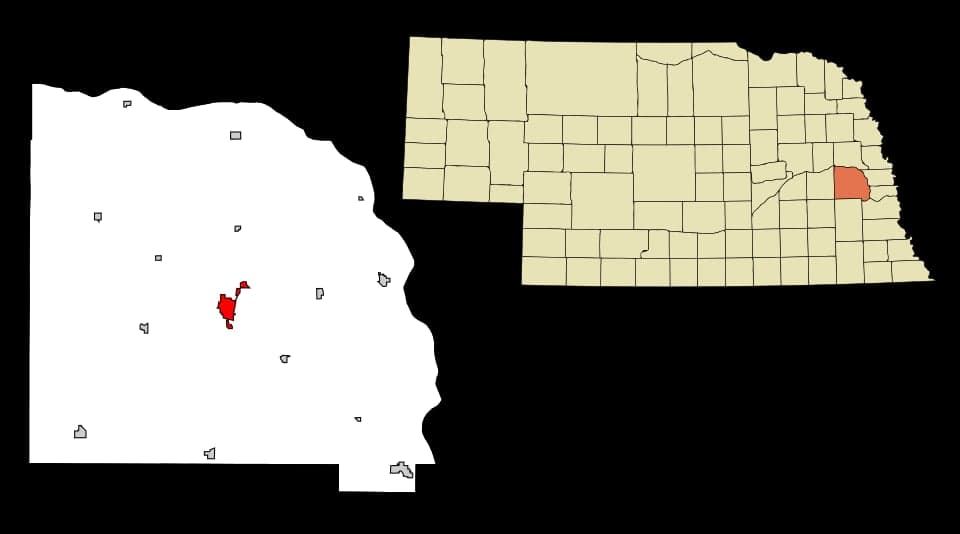
Photo: Wikipedia
Political ClimatePolitical Climate in Wahoo, NE
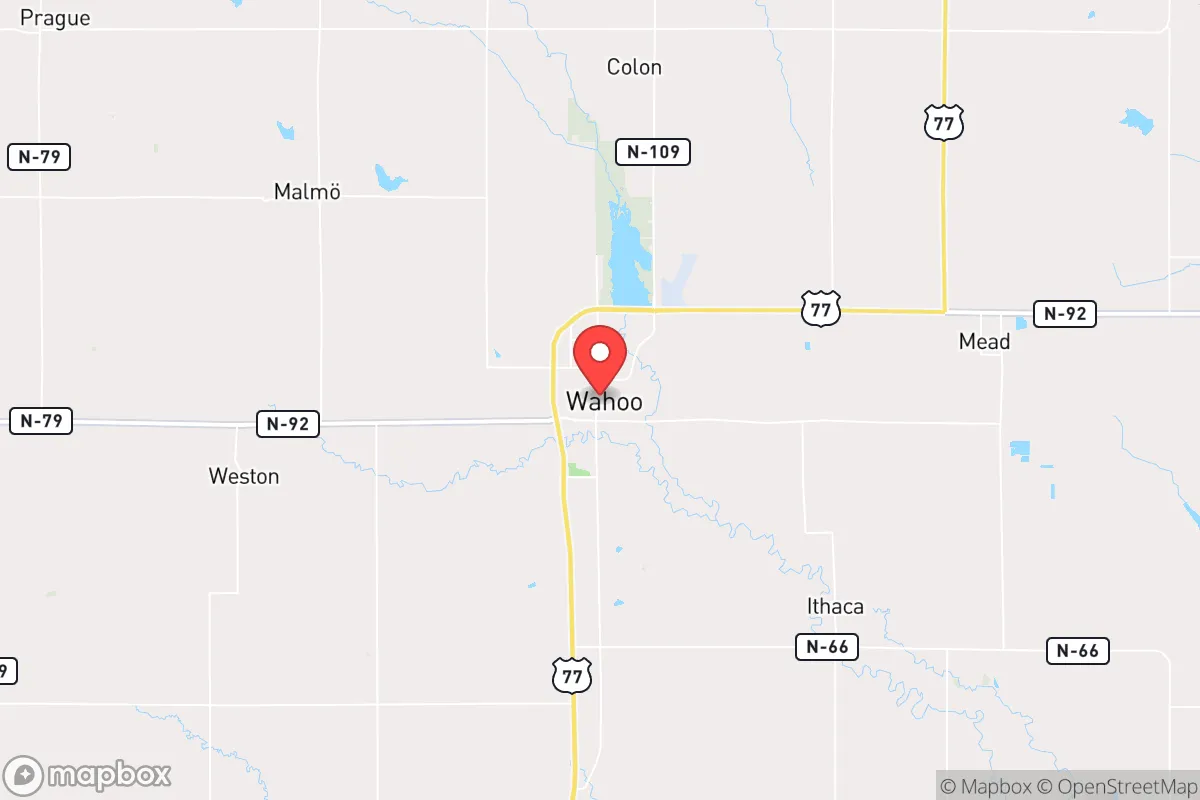
District shown is the primary district for this city’s centroid. Cities may span multiple districts.
Local Political AnalysisPolitical Analysis of Wahoo, NE
Wahoo, Nebraska, sits in a bit of a political bubble compared to the rest of Saunders County and much of rural Nebraska. While the county itself has historically leaned conservative, the city of Wahoo is a notable outlier, carrying a Cook PVI of D+3. That means it’s slightly more Democratic than the nation as a whole, which is a real shift from what you’d expect in a town of about 4,500 people. I’ve seen this place change over the years, and while it used to be a quiet, live-and-let-live kind of community, there’s been a noticeable push toward progressive policies that feel out of step with the values most of us grew up with. The trajectory here is concerning—what was once a place where folks minded their own business is now seeing more government involvement in daily life, from local ordinances to school board decisions.
How it compares
Drive just 15 minutes west to Fremont, and you’ll find a much more conservative vibe—that city leans Republican by a solid margin, with a Cook PVI of R+12. Head east toward Lincoln, about 30 miles away, and you’re in a deep blue stronghold (D+14), so Wahoo sits right in the middle of that political spectrum. But here’s the thing: even compared to other small towns in Saunders County like Ceresco or Mead, Wahoo stands out for its progressive tilt. Local elections here have increasingly favored candidates who push for expanded government programs, higher spending, and what I’d call overreach into personal freedoms. For example, the city council has debated things like stricter rental regulations and zoning changes that make it harder for property owners to do what they want with their land. That’s a far cry from the hands-off approach you’ll find in nearby Ashland, where folks still believe in limited government and individual responsibility.
What this means for residents
For those of us who value personal liberty and minimal government interference, the political climate in Wahoo is starting to feel a bit suffocating. The D+3 rating isn’t just a number—it shows up in real ways. You’ve got local leaders who seem more interested in following state or national progressive trends than listening to what the community actually wants. Property taxes have crept up as the city funds new initiatives, and there’s been talk of adding more regulations on small businesses, which is a red flag for anyone who’s worked hard to build something here. The school board has also gotten tangled up in ideological debates that distract from education, like pushing diversity programs that feel more like social engineering than teaching kids to read and do math. If you’re a conservative or even a moderate who just wants to be left alone, you might find yourself butting heads with local officials more often than you’d like.
On the cultural side, Wahoo still has its charms—the Wahoo State Bank building downtown and the Saunders County Fair are reminders of a simpler time. But the political drift is real, and it’s accelerating. Long-term, I worry that if this progressive momentum keeps up, we’ll see more folks moving to places like Yutan or Prague where the government stays out of your business. For now, it’s a town worth keeping an eye on—but if you value your freedoms, you might want to think twice before settling down here.

State Political ClimatePolitical Climate in Nebraska
State Political AnalysisPolitical Environment in the State
Nebraska has long been a reliably conservative state, but it’s not the monolithic red block outsiders often assume. The state’s political center of gravity is firmly right-of-center, with Republicans holding a trifecta in state government and a 2-1 registration advantage over Democrats. However, the last 15 years have seen a slow but steady shift: the Omaha metro area has become more competitive, while the rest of the state has hardened its conservative stance. The 2024 presidential race saw Nebraska’s 2nd Congressional District (Omaha) flip back to the Democratic column, while the rest of the state voted for Donald Trump by margins exceeding 30 points. This isn’t a purple state, but it’s a state with a growing blue island in a deep red sea.
Urban vs. rural divide
The political map of Nebraska is starkly divided between its two major population centers and everything else. Omaha (Douglas County) is the engine of Democratic strength, consistently voting blue in presidential elections and holding down the state’s only competitive congressional seat. The city’s suburbs, particularly Elkhorn and Papillion, are more moderate but still lean Republican, though they’ve shifted leftward since 2016 as college-educated professionals move in. Lincoln (Lancaster County) is a blue dot in a red state, driven by the University of Nebraska-Lincoln and state government workers. Outside of these two corridors, the state is deeply Republican. Grand Island, Kearney, and Norfolk are reliably red, with rural counties like Banner County and McPherson County routinely delivering 85%+ margins for GOP candidates. The divide isn’t just about population density—it’s cultural. Omaha and Lincoln are increasingly cosmopolitan, while the rest of the state holds to traditional agrarian and small-town values. This tension plays out in the unicameral legislature, where urban senators often clash with rural colleagues over property taxes, school funding, and land use.
Policy environment
Nebraska’s policy environment is broadly conservative, but with some notable wrinkles. The state has no income tax on Social Security benefits and a flat individual income tax rate of 5.58% (set to drop to 3.99% by 2027 under LB 754). Property taxes are a perennial headache—among the highest in the region as a percentage of home value—which fuels constant legislative battles. The state is a right-to-work state, and its regulatory posture is business-friendly, with no state-level minimum wage above the federal floor (though a 2022 ballot measure raised it to $15 by 2026). On education, Nebraska has a robust school choice movement: LB 753 (2023) created a state income tax credit for donations to scholarship-granting organizations, effectively a backdoor voucher program. The state also passed LB 1084 (2023), which bans gender-affirming care for minors and restricts abortion to 12 weeks—one of the strictest such laws in the Midwest. Election laws are moderately restrictive: voter ID is required (passed in 2021), and the state has no same-day registration. However, Nebraska is unique in splitting its electoral votes by congressional district, a system that gives Omaha’s 2nd District outsized national attention.
Trajectory & freedom
On balance, Nebraska is becoming more free in several key areas, but there are warning signs. The 2023 legislative session was a watershed for conservative priorities: LB 77 eliminated the requirement for a permit to carry a concealed handgun (constitutional carry), and LB 574 banned abortion after 12 weeks and restricted gender-affirming care for minors. These moves expanded personal liberty in the traditional sense—less government interference in gun ownership and medical decisions for children. However, the same session saw LB 626, which banned abortion after 12 weeks with limited exceptions, a restriction that some conservatives see as a necessary protection of life but others view as government overreach into private medical decisions. On parental rights, Nebraska passed LB 1084, which requires schools to notify parents of any “sexuality” or “gender identity” instruction—a win for transparency but a flashpoint for local control battles. The state’s tax trajectory is positive: the flat tax reduction is real, and property tax relief remains a top legislative priority. But the unicameral’s nonpartisan structure means that conservative bills often require coalition-building with moderate Republicans and even a few Democrats, slowing the pace of change.
Civil unrest & political movements
Nebraska is not a hotbed of civil unrest, but it has its flashpoints. The 2020 George Floyd protests in Omaha were significant, with several nights of clashes between demonstrators and police, and the subsequent defund-the-police movement fizzled but left a residue of distrust. The state’s immigrant communities, particularly in South Omaha and Grand Island, have been at the center of sanctuary city debates. Omaha’s city council voted down a sanctuary city ordinance in 2019, but the issue resurfaces regularly. On the right, the Nebraska Republican Party has seen internal strife between establishment conservatives and more populist, Trump-aligned factions. The 2022 gubernatorial primary was a proxy war, with Jim Pillen (the establishment pick) defeating a more hardline challenger. Election integrity remains a live issue: the 2020 election saw no major fraud in Nebraska, but the legislature passed voter ID and tightened absentee ballot rules anyway. There’s no serious secession movement, but rural counties have occasionally floated the idea of joining South Dakota or Wyoming in protest of Omaha-Lincoln dominance. A new resident would notice the relative calm—political arguments happen at the state capitol and in letters to the editor, not in the streets.
Projection
Over the next 5-10 years, Nebraska is likely to remain a solidly conservative state, but the urban-rural divide will deepen. Omaha’s 2nd District will continue to be competitive, possibly flipping back and forth, while the rest of the state stays deep red. The biggest wildcard is in-migration: Nebraska is not a fast-growing state, but it is attracting remote workers and retirees from higher-tax states like California and Illinois. These newcomers tend to be more moderate, which could slowly shift the suburbs of Omaha and Lincoln leftward. However, the rural exodus—young people leaving for college and not returning—will make the remaining rural population even more conservative. The unicameral legislature will likely pass more school choice expansion, further property tax reform, and possibly a flat income tax rate below 4%. The abortion debate will continue, but the 12-week ban is likely here to stay unless a statewide ballot measure challenges it. The biggest risk to freedom is the growing property tax burden, which could drive out middle-class homeowners and small farmers. If the state fails to deliver meaningful relief, expect more rural counties to consider drastic measures like secession talk or tax revolts.
For a new resident, the bottom line is this: Nebraska offers a stable, conservative environment with low crime, good schools in the suburbs, and a government that generally respects personal liberty—especially on guns and parental rights. The trade-offs are high property taxes, a cold climate, and a cultural divide between the urban islands and the rural heartland. If you’re moving here, you’ll find a state that’s politically predictable but not stagnant, where your vote matters more in Omaha than in the Panhandle, and where the biggest fights are about taxes, not culture wars. It’s a good place to raise a family if you value tradition and don’t mind a long winter.
* Values derived from national, state, county, city and local statistics and may differ in a specific area. Last updated: 2026-05-03T20:32:13.000Z
Narrative content on this page is AI-generated and may contain mistakes. Verify any details that matter before acting on them.
ReloMaps may earn a commission from affiliate links at no extra cost to you.

