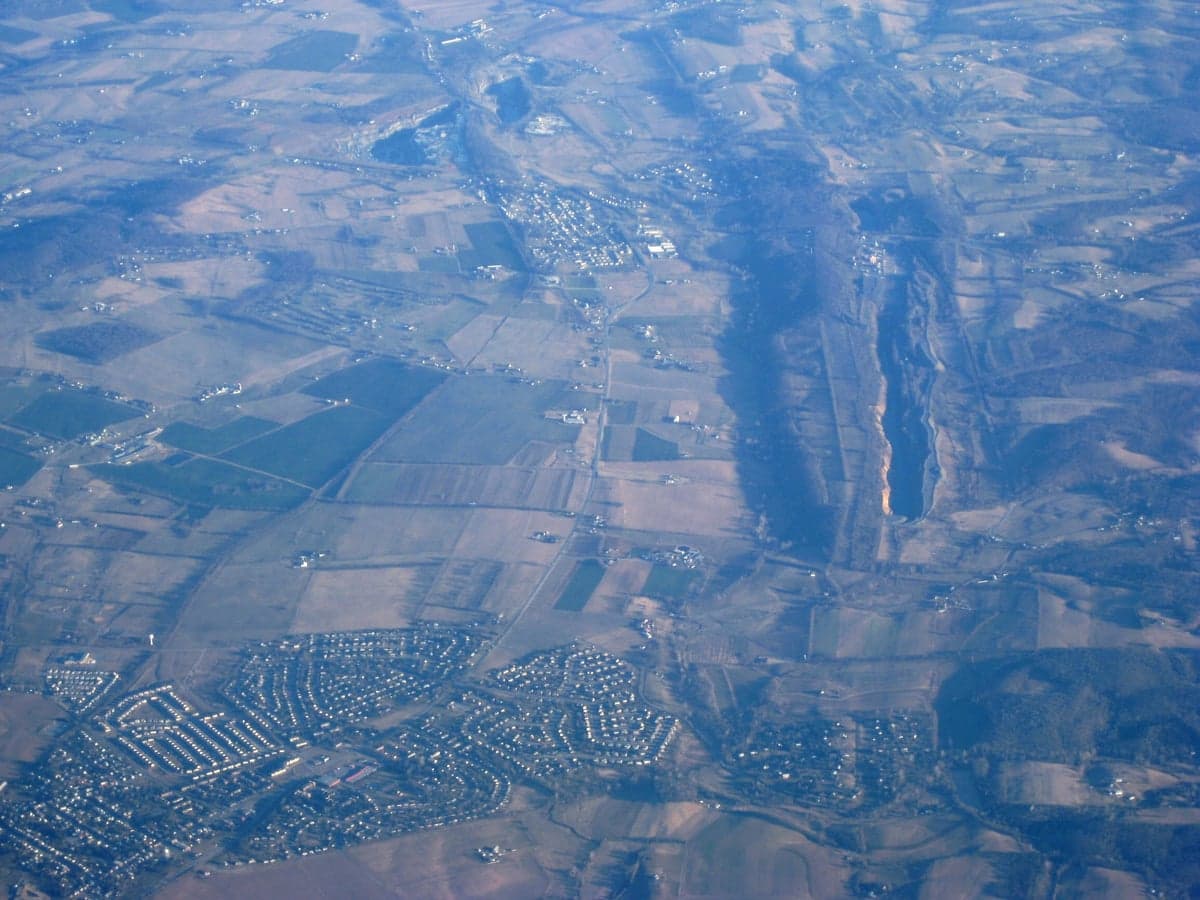
Photo: Wikipedia
Demographics of Walkersville, MD
Affluence Level in Walkersville, MD
An upper-middle-class area. Household wealth, education levels, and homeownership run ahead of national benchmarks.
People of Walkersville, MD
The people of Walkersville, Maryland, today form a predominantly white, family-oriented community of 6,352 residents, with a notably low foreign-born population of just 1.1%. The city is characterized by its strong sense of local identity, a high proportion of college-educated adults (44.7%), and a demographic profile that is less diverse than Frederick County as a whole. While the population is overwhelmingly white (74.7%), the largest minority groups are Hispanic residents (9.3%) and Black residents (5.5%), with a smaller but notable Indian subcontinent community (3.9%) and a very small East/Southeast Asian population (1.0%).
How the city was settled and grew
Walkersville’s human history begins with its founding as a farming and milling hub in the mid-18th century, drawing German and English settlers who were granted land along the Monocacy River and its tributaries. The town was officially laid out in 1790 by John Walker, a local landowner, and its early population was almost entirely of German and British descent, working the fertile limestone soils. The arrival of the Baltimore and Ohio Railroad in the 1870s spurred a second wave of growth, bringing Irish and a smaller number of Italian laborers who built homes in the Old Town district, centered around Main Street and the railroad depot. These early settlers established the town’s agricultural character, with the Glade Valley area to the north becoming a center for dairy farming and the Monocacy Meadows area to the south supporting grain and livestock operations. The population remained small and ethnically homogeneous through the early 20th century, with the 1930 census recording just over 700 residents, nearly all of whom were native-born whites of German or English ancestry.
Modern era (post-1965)
The post-1965 period brought gradual suburbanization as Walkersville became a bedroom community for Frederick and Washington, D.C. The 1970s and 1980s saw the development of the Heritage Farm subdivision, which attracted middle-class white families moving from the Baltimore-Washington corridor for larger lots and lower taxes. This wave reinforced the town’s white majority, as the new arrivals were overwhelmingly non-Hispanic white. The 1990s and 2000s introduced modest diversification, with Hispanic families settling in the Woodsboro Pike corridor and the Wisteria Drive area, often working in construction, landscaping, and the poultry processing plants in nearby Thurmont. The Black population, which grew from less than 1% in 1990 to 5.5% by 2020, is concentrated in the Old National Pike neighborhood and the newer Spring Garden development. The Indian subcontinent community (3.9%) is a more recent arrival, largely professionals employed in Frederick’s biotechnology and healthcare sectors, and they are dispersed across newer subdivisions like Heritage Farm and Monocacy Village, rather than forming a distinct ethnic enclave. The East/Southeast Asian population remains very small (1.0%), with no identifiable neighborhood concentration.
The future
Walkersville’s population is projected to grow slowly, with the town’s comprehensive plan anticipating an additional 500-700 residents by 2040, largely through infill development and small subdivisions on the town’s eastern edge. The white share is likely to decline gradually as the existing population ages and younger, more diverse families move in, but the pace of change will be slow due to the high cost of housing (median home value over $400,000) and limited rental stock. The Hispanic and Indian subcontinent communities are expected to grow modestly, driven by family reunification and job growth in Frederick’s life sciences sector, but the foreign-born share will likely remain below 3%. The town is not tribalizing into distinct ethnic enclaves; rather, new residents of all backgrounds are integrating into the same subdivisions, with Heritage Farm and Monocacy Village becoming the most diverse neighborhoods. The biggest demographic shift may be the aging of the white population, with the 65+ cohort projected to rise from 18% to 25% by 2040, potentially reshaping local politics and services toward senior needs.
For a conservative-leaning individual or family moving to Walkersville now, the town offers a stable, predominantly white, and family-oriented community with low crime and strong schools, but with limited racial or ethnic diversity. The population is slowly diversifying, but the pace is gradual enough that the town’s character will remain largely unchanged for the next decade. New arrivals will find a place where the German and English agricultural roots are still visible in the town’s layout and festivals, and where the biggest cultural shift is the aging of the existing population rather than a rapid influx of newcomers.

* Values derived from national, state, county, city and local statistics and may differ in a specific area. Last updated: 2026-10-10T16:29:18.000Z
Narrative content on this page is AI-generated and may contain mistakes. Verify any details that matter before acting on them.
ReloMaps may earn a commission from affiliate links at no extra cost to you.

