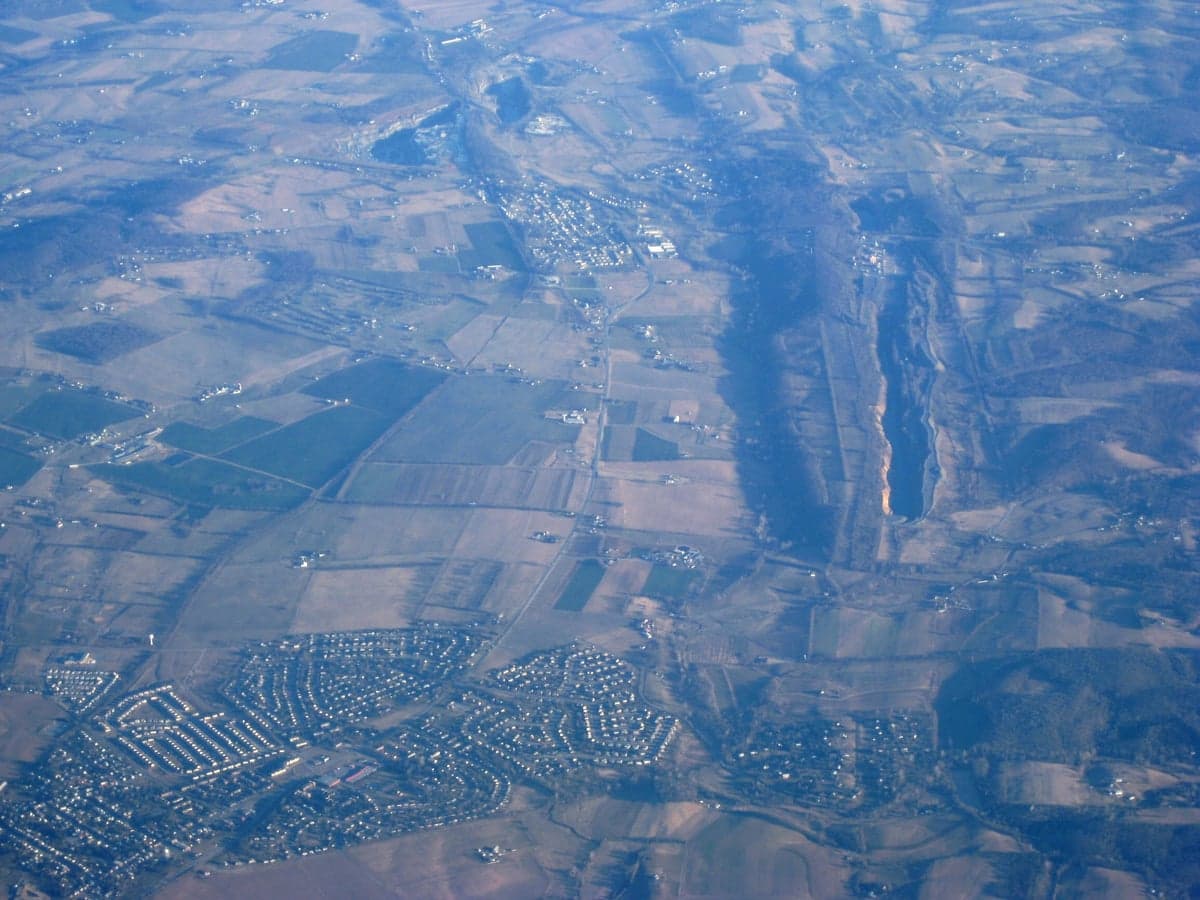
Photo: Wikipedia
Personal Sovereignty in Walkersville, MD
Viable for self-reliance. Generally workable, though some barriers may limit total independence.
What does Personal Sovereignty tell us?
Personal Sovereignty measures your capacity for self-reliance and independence with minimal government friction. Higher scores mean fewer barriers between you and the way you want to live... but it assumes you have the space you need and good neighbors.
What does this tell us?
Personal Sovereignty measures your capacity for self-reliance and independence with minimal government friction. Higher scores mean fewer barriers between you and the way you want to live... but it assumes you have the space you need and good neighbors.
State Policy
Energy independence: Importer (8% of energy produced in-state)
Personal Liberty
Homesteading

Personal Liberty Analysis
Walkersville, Maryland, offers a mixed but workable environment for personal sovereignty, where the state's progressive tilt at the top is tempered by a more grounded, rural-minded local culture in Frederick County. For a survivalist or prepper, the key takeaway is that while Annapolis imposes a heavy hand on taxes and firearms, the day-to-day reality in Walkersville allows for a degree of self-reliance that is increasingly rare along the I-270 corridor. The town's small-town character and proximity to farmland create pockets of autonomy, but anyone serious about minimizing government overreach must navigate Maryland's regulatory landscape with eyes wide open.
Tax burden and regulatory posture in Frederick County
Maryland ranks among the highest in the nation for combined state and local tax burden, and Walkersville residents feel that squeeze. The state's income tax ranges from 2% to 5.75%, and Frederick County adds a local income tax of 2.96%, bringing the effective top rate to around 8.71%. Property taxes are also notable: Frederick County's rate is approximately $1.06 per $100 of assessed value, with Walkersville's municipal tax adding roughly $0.24 per $100. For a $400,000 home, that's about $5,200 annually in property taxes alone. The regulatory posture is similarly heavy. Maryland's business climate is burdened by extensive licensing requirements, environmental regulations, and a state-level minimum wage that reached $15.00 per hour in 2024. For a prepper looking to run a small-scale operation—say, a farm stand or a home-based repair business—the paperwork and fees can feel like a second mortgage. However, Frederick County's government is notably more business-friendly than Montgomery or Prince George's counties, with a faster permitting process and a lower overall regulatory density. The county's comprehensive plan does encourage agricultural preservation, which can be a double-edged sword: it protects farmland from overdevelopment but also restricts how landowners can use their property.
Self-defense and gun law specifics in Walkersville
This is the most significant sovereignty concern in Walkersville. Maryland is a "may-issue" state for concealed carry, meaning the state police have discretion to deny permits even after the Bruen decision. In practice, Frederick County has been more permissive than Baltimore or Montgomery counties, but the process remains costly and time-consuming—expect a $75 application fee, a 16-hour training course, and a wait of 90 days or more. The state also bans "assault weapons" by name, including AR-15s and AK-pattern rifles, and magazines over 10 rounds are illegal to manufacture or sell (though possession of pre-ban magazines is grandfathered). Handgun purchases require a license (the HQL), which involves fingerprinting, a background check, and a 7-day waiting period. For a prepper, this means building a defensive arsenal requires careful planning and legal compliance. On the positive side, Frederick County's sheriff has historically been supportive of Second Amendment rights, and the local gun culture is strong—there are multiple gun shops and ranges within a 20-minute drive, including the Frederick County Rifle and Pistol Club. Stand-your-ground laws do not exist in Maryland; there is a duty to retreat in public spaces before using deadly force, though the castle doctrine applies inside one's home. For those willing to navigate the bureaucracy, self-defense is possible, but it is not the free exercise of rights found in states like West Virginia or Pennsylvania.
Self-reliance and homesteading viability in Walkersville
Walkersville's zoning and lot sizes offer real potential for self-reliance, especially compared to suburban sprawl. The town's zoning code allows for residential lots as small as 0.25 acres in denser neighborhoods, but many properties in the surrounding agricultural-residential zone sit on 1 to 5 acres. This is enough space for a substantial vegetable garden, a small orchard, and a few chickens (hens are permitted without a special permit, though roosters are not). For larger livestock like goats or sheep, you'll need at least 2 acres and a zoning variance in most residential areas. Off-grid feasibility is limited: Maryland requires connection to the electrical grid for new construction, and solar panels must be grid-tied unless you obtain a special exemption. Rainwater harvesting is legal but restricted—you can collect up to 5,000 gallons without a permit, but any system used for potable water must meet state health standards. Composting toilets are allowed with a septic system permit, but incinerating toilets are not recognized by the state health department. The biggest hurdle is water: most rural properties rely on wells, which are generally reliable in Frederick County's aquifer, but drilling a new well costs $10,000–$15,000. For a prepper, the ideal setup is a 2+ acre parcel with an existing well, a south-facing roof for solar, and enough cleared land for a garden. Properties like this exist in the Walkersville area, but they command a premium—expect $400,000–$600,000 for a fixer-upper with acreage.
Personal liberties in Walkersville: parental rights, medical autonomy, and property
Parental rights in Maryland are under increasing pressure. The state passed a law in 2023 requiring school districts to adopt policies that allow students to use names and pronouns without parental consent, and Frederick County Public Schools has implemented this. For parents concerned about government overreach into family matters, this is a red flag. However, Walkersville's local school board has been more responsive to conservative parents than districts in the D.C. suburbs, and there is an active homeschool community—about 5% of Frederick County students are homeschooled, and the requirements are relatively light: you must submit a notice of intent and provide a portfolio review once a year. Medical autonomy is similarly constrained. Maryland has a vaccine mandate for school attendance (with medical and religious exemptions), and the state's health department has broad powers during public health emergencies. For a prepper, this means stocking up on essential medications and building relationships with independent-minded healthcare providers is wise. Property rights are generally respected in Frederick County, but the state's environmental regulations can be intrusive. The Chesapeake Bay Preservation Act restricts development near waterways, and the county's forest conservation ordinance requires replanting if you clear more than 40,000 square feet of woodland. For a survivalist looking to build a bunker or a secure retreat, these rules can be a nuisance but not a dealbreaker—most projects can be designed to comply with a little creativity.
Overall, Walkersville offers a moderate level of personal sovereignty compared to other areas in the Mid-Atlantic. It is far more free than Montgomery County or Northern Virginia, where taxes are higher and regulations are tighter, but it falls short of the autonomy found in rural Pennsylvania or West Virginia, where gun laws are looser, taxes are lower, and off-grid living is more feasible. For a prepper or survivalist who needs to stay within commuting distance of a job in the D.C.-Baltimore corridor, Walkersville is a reasonable compromise—you get enough land to garden and raise chickens, a supportive local gun culture, and a community that values self-reliance. But you must accept that Annapolis will always have a hand in your pocket and a say in your defensive choices. If you can live with that trade-off, Walkersville can be a solid base for building a resilient, independent life.

* Values derived from national, state, county, city and local statistics and may differ in a specific area. Last updated: 2026-10-10T16:29:18.000Z
Narrative content on this page is AI-generated and may contain mistakes. Verify any details that matter before acting on them.
ReloMaps may earn a commission from affiliate links at no extra cost to you.

