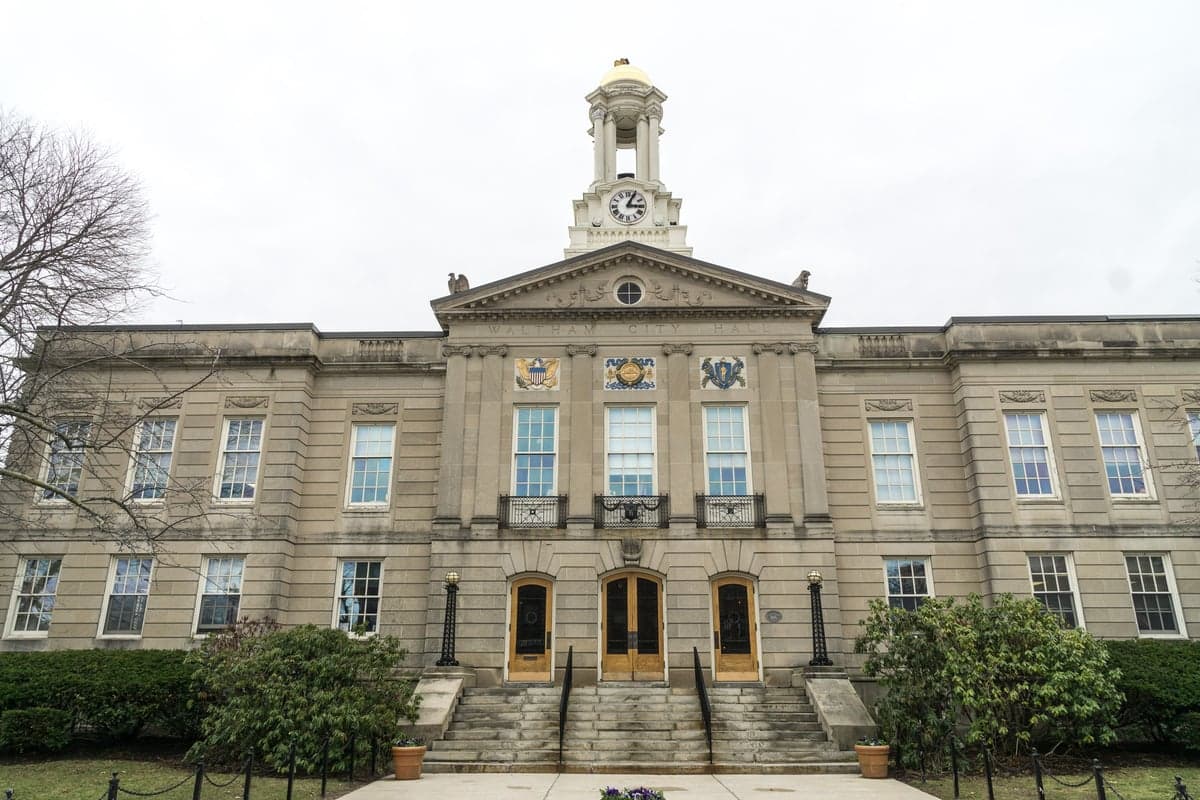
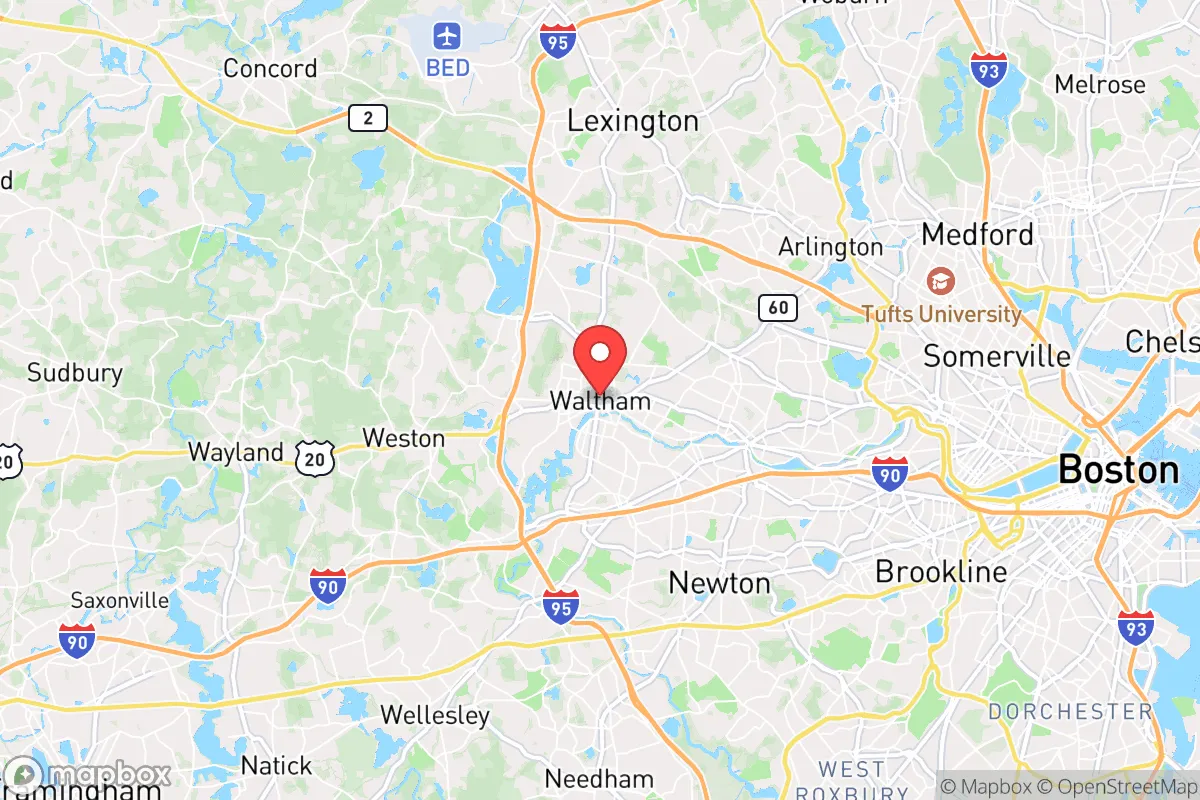
Photo: Wikipedia
Personal Sovereignty in Waltham, MA
Viable for self-reliance. Generally workable, though some barriers may limit total independence.
What does Personal Sovereignty tell us?
Personal Sovereignty measures your capacity for self-reliance and independence with minimal government friction. Higher scores mean fewer barriers between you and the way you want to live... but it assumes you have the space you need and good neighbors.
What does this tell us?
Personal Sovereignty measures your capacity for self-reliance and independence with minimal government friction. Higher scores mean fewer barriers between you and the way you want to live... but it assumes you have the space you need and good neighbors.
State Policy
Energy independence: Importer (5% of energy produced in-state)
Personal Liberty
Homesteading

Personal Liberty Analysis
Waltham, Massachusetts, presents a challenging environment for those prioritizing personal sovereignty, particularly from a survivalist or prepper perspective. The city operates under a dense web of state-level mandates that significantly constrain individual autonomy, from strict firearm regulations to high tax burdens that fund expansive government programs. While Waltham offers proximity to economic opportunities and some natural resources, its regulatory posture and political culture make it a location where self-reliance is heavily taxed—literally and figuratively—and where government overreach into personal freedoms is a constant reality. For a conservative-leaning individual or family weighing relocation, Waltham represents a trade-off: access to infrastructure and community at the cost of substantial personal liberty.
Tax burden and regulatory posture in Waltham
Massachusetts is a high-tax state, and Waltham residents feel this acutely. The state's income tax is a flat 5.0% on all earned income, with no deductions for federal taxes paid, and the sales tax is 6.25%. Property taxes in Waltham are moderate for the region, with a rate of approximately $10.50 per $1,000 of assessed value, but home values are high—median home prices exceed $700,000—meaning annual property tax bills often top $7,000. This fiscal environment funds a state government that aggressively regulates everything from vehicle emissions to building codes. For preppers, this means any attempt to modify property for self-sufficiency—installing solar panels, rainwater collection, or even a large garden—runs into strict permitting and zoning laws. The state's Mass Save program mandates energy efficiency upgrades, but these are often costly and require state-approved contractors, limiting DIY autonomy. Waltham's regulatory posture is one of active oversight, not laissez-faire, making it a location where government permission is needed for many personal projects.
Self-defense and gun law specifics in Waltham
Massachusetts has some of the most restrictive gun laws in the nation, and Waltham enforces them strictly. The state requires a License to Carry (LTC) for both open and concealed carry, which involves a background check, fingerprinting, a firearms safety course, and a "suitable person" determination by local police. Waltham's police department has a reputation for being cautious in issuing LTCs, often requiring a demonstrated need beyond self-defense. The state bans "assault weapons" by name and feature, limits magazine capacity to 10 rounds, and mandates a 10-day waiting period for all firearm purchases. Private firearm sales must go through a licensed dealer, and there is no "stand your ground" law; instead, Massachusetts has a "duty to retreat" if safely possible before using deadly force. For preppers, this means building a defensive arsenal is legally complex and expensive, and self-defense in a home invasion scenario could lead to criminal charges if retreat was deemed possible. The state's red flag law allows for temporary firearm seizure based on a complaint, further eroding the right to keep and bear arms. Waltham is not a place where gun ownership is treated as a fundamental right; it is a heavily regulated privilege.
Self-reliance and homesteading viability in Waltham
Waltham's suburban density and zoning codes make traditional homesteading nearly impossible. The city is largely built out, with typical lot sizes of 0.1 to 0.25 acres in residential areas. Zoning restricts livestock—no chickens, goats, or bees are permitted on standard residential lots—and even large vegetable gardens may be subject to setback and height restrictions. Rainwater collection is not explicitly banned but is discouraged by state water rights laws, and off-grid living is effectively illegal because the city requires connection to municipal water and sewer systems. Solar panels are allowed but must meet strict building codes and often require homeowner association approval in planned communities. For a prepper seeking self-reliance, Waltham offers little: you cannot raise your own food, collect your own water, or generate your own power without navigating a thicket of regulations. The city's Community Preservation Act funds open space but prioritizes parks over agricultural use. True homesteading is not viable here; Waltham is a place for those who rely on the grid and the grocery store, not on their own land.
Personal liberties in Waltham: parental rights, medical autonomy, speech, and property
Massachusetts law heavily curtails personal liberties in several key areas. Parental rights are limited by state mandates: the state has a comprehensive sex education law that requires teaching LGBTQ+ topics in public schools, and parents cannot opt their children out of these lessons. Vaccine mandates for school attendance are strict, with no philosophical exemptions, and medical decisions for minors can be overridden by state authorities in cases of "medical neglect." Medical autonomy is further constrained by the state's health insurance mandate, which requires all residents to carry coverage or face a tax penalty, and by strict regulations on alternative medicine and supplements. Free speech is protected under the First Amendment, but Massachusetts has a strong anti-SLAPP law that can be used to silence critics, and local ordinances in Waltham restrict signs and political displays on private property. Property rights are limited by the state's Chapter 40B law, which allows developers to bypass local zoning for affordable housing projects, and by the Community Preservation Act, which imposes a surcharge on property taxes for open space and historic preservation—funding that can be used to acquire private land through eminent domain. In Waltham, the government's reach into family, health, speech, and property is pervasive, leaving little room for individual discretion.
Overall, personal sovereignty in Waltham is severely constrained compared to states like New Hampshire, Texas, or Florida. The combination of high taxes, restrictive gun laws, impossible homesteading conditions, and limited parental and medical autonomy creates an environment where the individual is subordinate to the state. For a survivalist or prepper, Waltham is a place to work and earn, but not to build a self-reliant life. The city's strengths—proximity to Boston, good schools, and a stable economy—come at the cost of personal freedom. If your priority is autonomy, look elsewhere; if you must be in Massachusetts, consider rural towns in the western part of the state where zoning is looser and local governments are less intrusive. Waltham is a managed community, not a sovereign one.

* Values derived from national, state, county, city and local statistics and may differ in a specific area. Last updated: 2026-04-19T08:50:44.000Z
Narrative content on this page is AI-generated and may contain mistakes. Verify any details that matter before acting on them.
ReloMaps may earn a commission from affiliate links at no extra cost to you.

