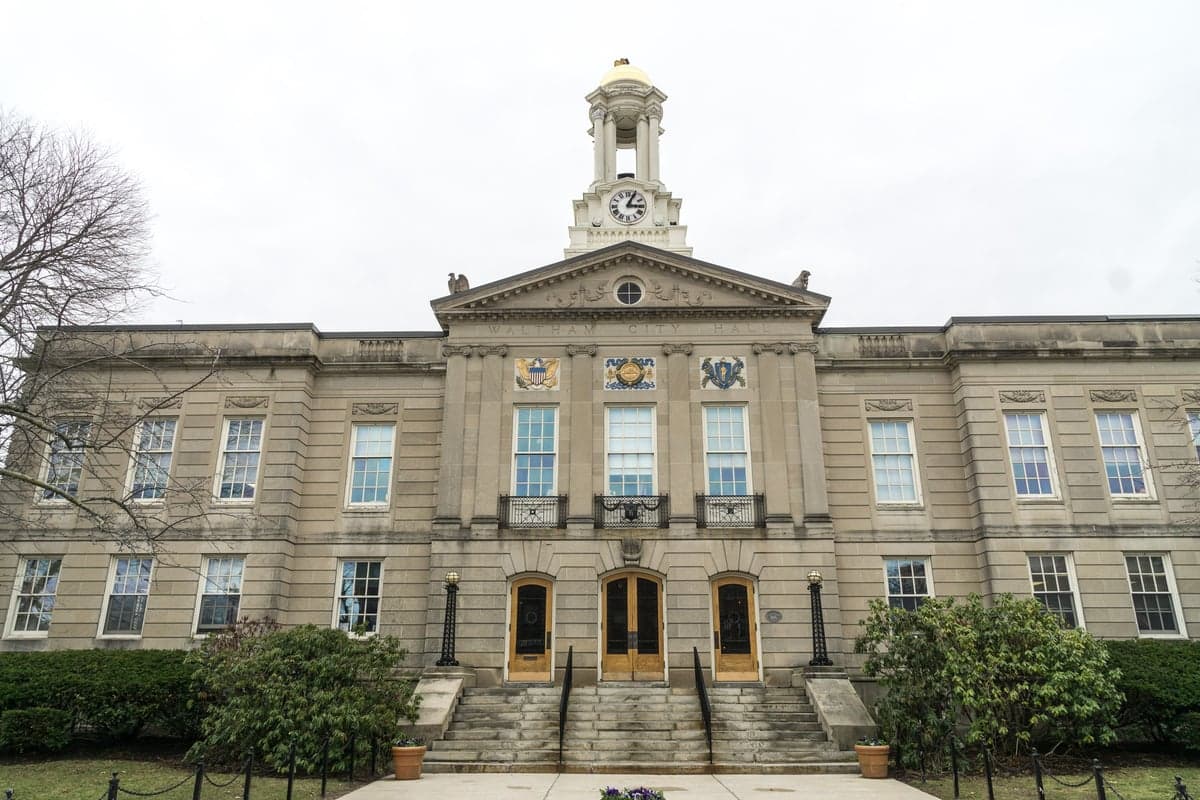
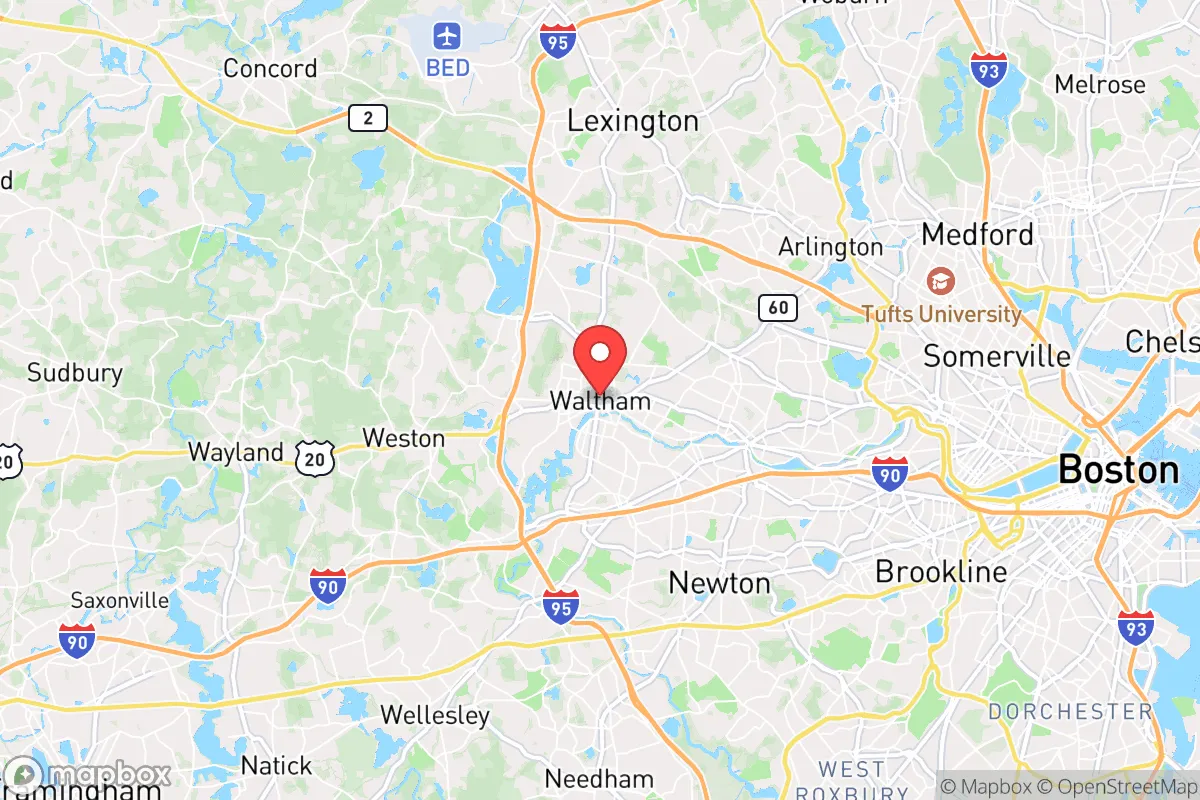
Photo: Wikipedia
Quality of Life in Waltham, MA
A high quality of life with strong walkability, manageable living costs, healthy neighborhood signals, and solid amenity access.
What does Quality of Life tell us?
Quality of Life blends cost of living, nearby amenities, socioeconomic signals, and neighborhood character. City-level scores represent the whole municipality; individual neighborhoods can differ.
What does this tell us?
Quality of Life blends cost of living, nearby amenities, socioeconomic signals, and neighborhood character. City-level scores represent the whole municipality; individual neighborhoods can differ.
Cost of Living
115% above national average
The Real Cost of Living in Waltham, MA for 2026
| Tier | Individual | Family (4) |
|---|---|---|
| Survival | $36k | $67k |
| Comfortable | $125k | $184k |
| Luxury | $184k+ | $285k+ |
| Elite (Top 5%) | $216k+ | $335k+ |
63%
The Area Signal
A metric tracking the socioeconomic signals of the area.


Hobbies
Explore the areaGroceries
4 within 10 miles
Gas
0 within 10 miles
Hospital
3 within 20 miles
Airport
BOS — Boston Logan International
Post Office
USPS — Boston, MA
Critical Amenities
Quality-of-Life Analysis
Waltham, Massachusetts, presents a classic Boston-suburb paradox: it is undeniably affluent, with a cost-of-living index of 215 (more than double the national average), yet it retains a distinctly grounded, family-oriented character that sets it apart from the more rarefied enclaves of the western suburbs. The city draws a mix of young professionals working in the Route 128 tech corridor, academics and staff from nearby Brandeis and Bentley universities, and long-standing multi-generational families, particularly from its historically strong Italian and Irish communities. This blend creates a daily life that feels more like a small city than a bedroom community, with a lively downtown and a palpable sense of local identity.
Cost of living, housing prices, and how Waltham compares to nearby suburbs
Waltham’s housing market is expensive but notably more accessible than its immediate neighbors. The median home value sits at $705,700, which is roughly $100,000 to $200,000 less than comparable homes in Lexington, Weston, or Newton. For renters, the median monthly rent of $2,232 is a significant premium over the national average but is often $300–$500 cheaper than a similar apartment in Cambridge or Somerville. This relative affordability is a key driver for families and professionals who want proximity to Boston (a 24.6-minute average commute) without the eye-watering price tags of the inner suburbs. However, the overall cost-of-living index of 215 means that everyday expenses—groceries, utilities, and transportation—are all elevated, making a comfortable household income of $120,000+ a practical baseline for homeownership.
What daily life is like for families: schools, parks, and local amenities
Daily life in Waltham is defined by a robust public school system and an unusually high density of parks and conservation land for a suburban city. The Waltham Public Schools serve roughly 4,500 students, with Waltham High School offering a strong array of Advanced Placement courses and a well-regarded vocational-technical program. For younger families, the city’s 20+ parks—including the sprawling Prospect Hill Park and the Charles River waterfront—provide ample space for recreation. The downtown area along Moody Street is the social and commercial heart, packed with independent restaurants, breweries, and coffee shops that give the city a walkable, urban feel. The presence of Brandeis University and Bentley University adds cultural events, lecture series, and a youthful energy that many similarly sized suburbs lack. Commuting is straightforward via the commuter rail (Waltham and Waverley stations) or direct bus routes to Harvard Square, though most residents still drive to the Route 128 job centers.
Waltham is best suited for professionals and families who want an authentic, walkable community with strong schools and a reasonable commute, but who are priced out of Newton or Lexington. It is less ideal for those seeking a quiet, low-density suburb or for households on a tight budget, as the cost of living is unyielding. The city rewards residents who engage with its local businesses and civic life, offering a quality of life that balances urban convenience with suburban space—a rare combination in Greater Boston.

Crime in Waltham, MA
Lower crime rates than 80% of comparable U.S. locations.
Violent CrimeViolent Crime Analysis
Property CrimeProperty Crime Analysis
Crime Analysis
Waltham, Massachusetts, presents a mixed safety profile for prospective residents. The city’s violent crime rate of 222.4 incidents per 100,000 residents is notably lower than the national average, but its property crime rate of 741.4 per 100,000 exceeds both the state and national benchmarks. As a small city within the Boston metropolitan area, Waltham’s crime dynamics are heavily influenced by the broader regional justice system, which leans progressive and prioritizes rehabilitation over incarceration—a philosophy that, while sympathetic to offenders, can lead to higher recidivism and more criminals on the street, negatively impacting public safety and justice for victims.
Crime in context
Waltham’s violent crime rate sits well below the U.S. average of roughly 380 per 100,000, placing it in a safer tier for personal safety compared to many similarly sized cities. However, the property crime rate of 741.4 per 100,000 is significantly higher than the Massachusetts average of about 500 per 100,000 and the national average of approximately 1,950 per 100,000. This means residents face a nearly 50% higher risk of property crime than the typical Massachusetts resident. The gap between low violent crime and elevated property crime is a common pattern in suburbs of progressive metro areas, where lenient sentencing for non-violent offenses can embolden repeat offenders. Middlesex County, which includes Waltham, has district attorneys and judges who often favor diversion programs and reduced bail, a trend that critics argue undermines deterrence and prolongs cycles of theft and burglary.
What residents experience
Daily life in Waltham is generally safe in terms of personal harm, but property crime is a tangible concern. Residents commonly report package thefts, bicycle thefts, and break-ins from unlocked cars, particularly in denser neighborhoods near the city’s two universities (Brandeis and Bentley). The property crime rate translates to roughly 2 incidents per day across the city, with larceny-theft accounting for the majority. Violent incidents like assault or robbery are rare but not unheard of, often concentrated near commercial corridors like Moody Street or Main Street late at night. The progressive justice policies in Massachusetts—such as the 2018 criminal justice reform law that reduced mandatory minimums and expanded parole eligibility—mean that even arrested offenders may face minimal jail time, a factor that can reduce the perceived risk of committing property crimes.
Neighborhood-level variation
Safety in Waltham varies noticeably by area. The South Side, near the Newton border and along the Charles River, consistently reports the lowest crime rates, with many blocks seeing zero incidents annually. In contrast, the North Side, particularly around the intersection of Main Street and Lexington Street, and the area near the Waltham Commons shopping plaza, see higher concentrations of property crime. The city’s downtown and the area around Brandeis University experience moderate crime, driven by student-related thefts and occasional disturbances. For those prioritizing safety, the South Side and the quiet residential streets off Trapelo Road offer the most secure environment, while renters near commercial hubs should invest in strong locks, security cameras, and renter’s insurance.
* Values derived from national, state, county, city and local statistics and may differ in a specific area. Last updated: 2026-04-19T08:50:44.000Z
Narrative content on this page is AI-generated and may contain mistakes. Verify any details that matter before acting on them.
ReloMaps may earn a commission from affiliate links at no extra cost to you.

