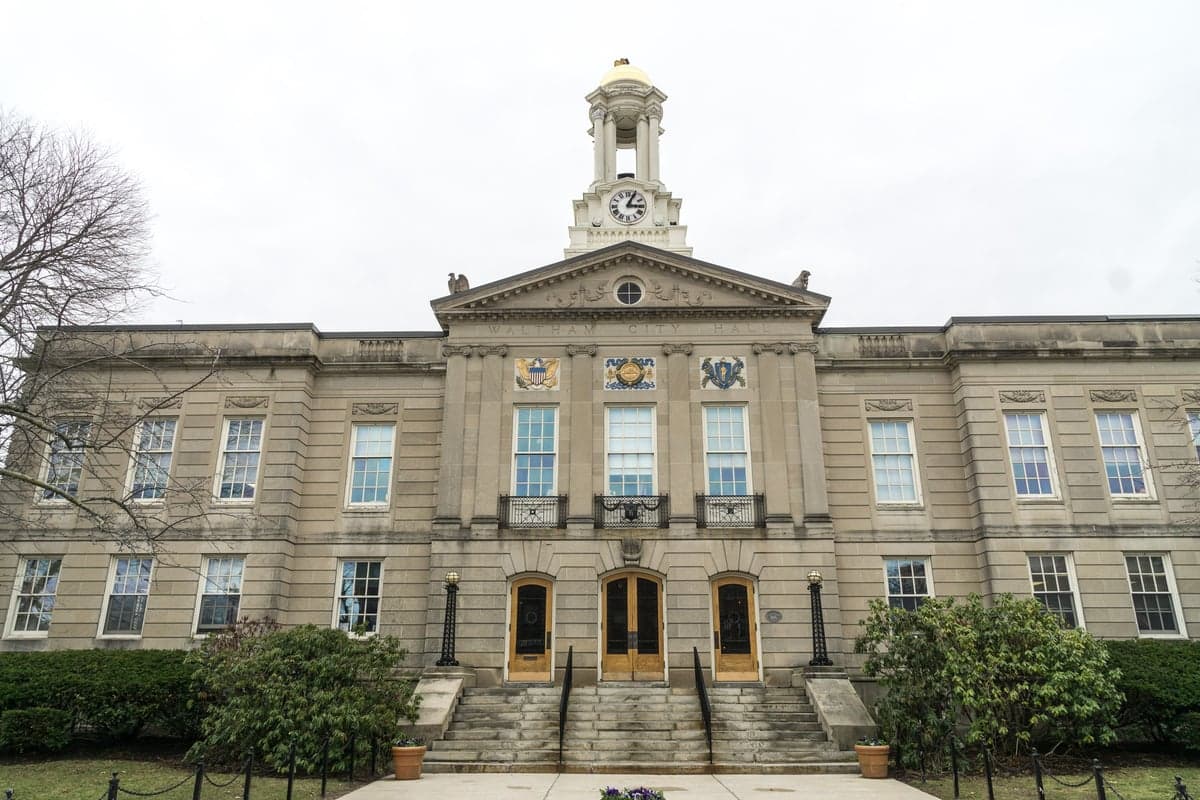
Photo: Wikipedia
Political ClimatePolitical Climate in Waltham, MA
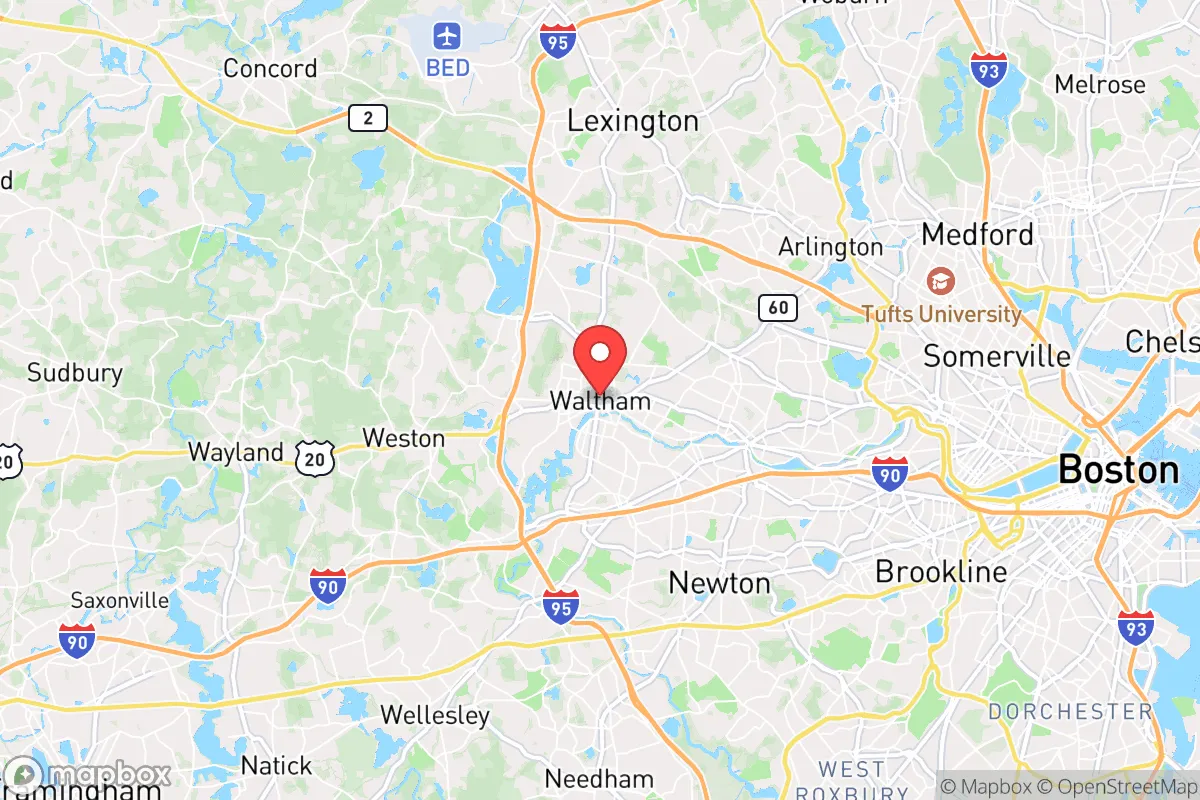
District shown is the primary district for this city’s centroid. Cities may span multiple districts.
Local Political AnalysisPolitical Analysis of Waltham, MA
Waltham’s political climate has shifted hard to the left over the past decade, and if you’ve lived here as long as I have, you’ve felt it in everything from town meetings to how the local cops operate. The Cook PVI sits at D+24, which means the city votes about 24 points more Democratic than the national average—and that number has been climbing steadily since 2016. It wasn’t always this way; Waltham used to be a classic blue-collar, union-heavy town where a lot of folks kept their politics to themselves and voted for the person, not the party. Now, it’s a place where progressive activism is the baseline, and anyone who leans right or even moderate can feel like they’re walking on eggshells.
How it compares
Drive ten minutes west to Weston or Lincoln, and you’ll find towns that are just as blue, but in a quieter, more establishment-Republican-lite kind of way—think high property taxes but low drama. Head south to Newton, and you’re in the epicenter of Massachusetts progressivism, where even the local school board debates get national attention. Waltham sits right in the middle of this corridor, but it’s actually become more reliably Democratic than many of its neighbors. For example, while nearby Watertown and Arlington have their own progressive streaks, Waltham’s D+24 is a full 10 points bluer than the state average. The real contrast is if you go north to Lexington or Bedford—those towns still have a few old-school fiscal conservatives who’ll grumble about spending, but in Waltham, that voice has all but disappeared. The city council and school committee are now dominated by folks who see government as the first answer to every problem, not the last resort.
What this means for residents
For someone who values personal freedom and limited government, the day-to-day reality in Waltham can be frustrating. The city has embraced a “we know best” attitude on everything from zoning to public health mandates. During the pandemic, Waltham was one of the first in the area to impose strict business closures and mask mandates that lingered long after the science had moved on. That same impulse shows up in local policy: there’s a push to make the city a “sanctuary” for undocumented immigrants, which sounds noble until you realize it means local police are handcuffed from cooperating with federal immigration authorities—even when it involves violent offenders. Property taxes are high and rising, and the city’s response to any complaint about spending is usually to propose a new fee or tax, not to cut waste. If you’re a small business owner, you’ve probably noticed the permitting process getting slower and more expensive, with new layers of environmental and social equity reviews that have nothing to do with whether your shop can actually serve customers.
The cultural shift is the hardest part for a lot of longtime residents. Waltham used to be a place where you could disagree with your neighbor over a beer and still help him shovel his driveway. Now, political differences are treated like moral failings. The local schools have embraced critical social justice curricula that emphasize group identity over individual merit, and parent complaints are often dismissed as “resistance to change.” Looking ahead, I don’t see this reversing—if anything, the next generation is being raised to see government as the solution to every personal and social problem. If you’re thinking of moving here, just know that your vote won’t matter much in local elections, and your voice on issues like school choice, property rights, or public safety will be a lonely one. It’s still a great place to live if you keep your head down and focus on your own family, but the political climate is something you’ll have to navigate carefully.

State Political ClimatePolitical Climate in Massachusetts
State Political AnalysisPolitical Environment in the State
Massachusetts has long been one of the most reliably Democratic states in the nation, with a partisan lean that has only deepened over the past two decades. In the 2024 presidential election, the state delivered roughly 62% of its vote to the Democratic candidate, a margin that has held steady or grown since 2004, when John Kerry (a Massachusetts senator) won his home state by about 25 points. The dominant coalition is a mix of urban progressives, suburban moderates, and a shrinking but vocal conservative minority concentrated in the central and southeastern parts of the state. The 10-20 year trajectory has been a steady march leftward on cultural and economic issues, driven by in-migration to Boston and its affluent suburbs, while rural and exurban areas have grown more Republican in response.
Urban vs. rural divide
The political map of Massachusetts is a textbook study in the urban-rural split. Greater Boston, including Boston proper, Cambridge, Somerville, and the inner-ring suburbs like Newton and Brookline, is the engine of the state’s Democratic dominance. These areas vote 70-85% Democratic and are home to the state’s most progressive activists and policymakers. The western part of the state, including cities like Springfield and Pittsfield, also leans Democratic but with a more working-class, union-driven flavor. The real Republican strongholds are in the southeastern corner—towns like Plymouth, Middleborough, and the Cape Cod communities—and in the central and western rural areas, such as the Berkshires and the hill towns of Franklin and Hampshire counties. A notable flip occurred in 2016 when many working-class towns in Bristol and Plymouth counties that had voted for Obama in 2008 and 2012 swung hard for Trump, a shift that has largely held. The suburbs of Worcester, like Shrewsbury and Westborough, are classic swing areas, often deciding state legislative races.
Policy environment
Massachusetts has a high-tax, high-regulation policy environment that is a major factor for anyone considering relocation. The state has a flat income tax rate of 5% (recently reduced from 5.15% via a 2022 ballot question), but a 2022 surtax on income over $1 million—the so-called "Millionaire’s Tax"—added an extra 4% on top, making the top marginal rate 9%. Property taxes are moderate compared to national averages but vary wildly by town; a home in Boston’s Beacon Hill will carry a far higher bill than one in rural Charlemont. The regulatory posture is among the most aggressive in the country, particularly in housing, environmental permitting, and business licensing. Education policy is dominated by the state’s powerful teachers’ unions, and Massachusetts consistently ranks first in K-12 outcomes, but parental rights have become a flashpoint. In 2023, the state passed a law requiring school districts to adopt policies supporting transgender students, including allowing them to use preferred names and pronouns without parental notification—a move that alarmed many conservative families. Election laws are among the most liberal: no-excuse mail-in voting, same-day registration, and early voting are all permanent fixtures. The state also has a sanctuary policy that limits local cooperation with federal immigration enforcement, a stance that has drawn both praise and criticism.
Trajectory & freedom
Over the past five years, Massachusetts has moved decisively toward expanding government power in areas of personal liberty, which is a red flag for those who value individual freedom. On gun rights, the state already had some of the strictest laws in the nation, but in 2024, Governor Maura Healey signed a sweeping gun control package that banned "ghost guns," expanded the state’s assault weapons ban, and created a new licensing system for firearm owners. This was a clear contraction of Second Amendment rights. On medical autonomy, the state has maintained broad abortion access and in 2022 passed a law protecting providers from out-of-state lawsuits, but it has also imposed vaccine mandates for healthcare workers and schoolchildren that remain in place. Parental rights took a hit with the 2023 school policy mentioned above, and there is ongoing debate about a proposed "right to shelter" law that would guarantee housing for homeless families, which critics argue would create an unsustainable entitlement. Property rights are constrained by the state’s powerful zoning boards and the Community Preservation Act, which adds a surcharge on property taxes to fund open space and affordable housing. The overall trajectory is toward more regulation, higher taxes, and less individual autonomy, especially for those who hold traditional values.
Civil unrest & political movements
Massachusetts has a history of organized political activism, but it is overwhelmingly dominated by the left. The 2020 Black Lives Matter protests in Boston were large and occasionally violent, leading to property damage in the Downtown Crossing area. More recently, pro-Palestinian protests at Harvard and MIT have been a recurring feature, with encampments and clashes with police. On the right, the state has a small but active network of conservative groups, such as the Massachusetts Fiscal Alliance and the Massachusetts Republican Party, but they struggle to gain traction in a state where Democrats hold a supermajority in the legislature. Immigration politics are a constant flashpoint: the state’s sanctuary policy has led to tensions in towns like Attleboro and Taunton, where local officials have tried to push back against state mandates. Election integrity controversies have been minimal, as the state’s mail-in voting system has been widely accepted, though some conservatives have raised concerns about the lack of voter ID requirements. A notable flashpoint for new residents would be the annual "Boston Free Speech" rally, which draws counter-protests and often results in a heavy police presence.
Projection
Looking ahead 5-10 years, Massachusetts is likely to become even more progressive, driven by demographic trends and in-migration. The Boston metro area continues to attract young, educated professionals from across the country and the world, who tend to vote Democratic. The state’s rural and exurban areas will continue to lose population, further concentrating political power in the urban core. The Republican Party in Massachusetts is in a state of near-collapse, with no statewide elected officials and a shrinking legislative caucus. A new resident moving in now should expect to find a state where taxes will likely rise further—there is talk of expanding the Millionaire’s Tax to cover capital gains—and where regulations on housing, energy, and personal behavior will tighten. The one wild card is the cost of living: if the state’s housing crisis worsens, it could drive out the very young professionals who fuel the progressive majority, potentially slowing the leftward shift. But for now, the trend is clear.
For a conservative-leaning individual or family considering a move to Massachusetts, the bottom line is this: you will be living in a state where your political views are in the minority, where taxes are high, and where government intervention in daily life is the norm. The trade-off is access to world-class schools, a strong economy, and beautiful natural landscapes, but those come at the cost of personal freedom in many areas. If you value low taxes, gun rights, and parental control over education, Massachusetts is likely a poor fit. If you can tolerate the political climate for the economic and educational opportunities, you will find pockets of like-minded people in the rural towns and southeastern suburbs, but you will be swimming against a strong tide.
* Values derived from national, state, county, city and local statistics and may differ in a specific area. Last updated: 2026-04-19T08:50:44.000Z
Narrative content on this page is AI-generated and may contain mistakes. Verify any details that matter before acting on them.
ReloMaps may earn a commission from affiliate links at no extra cost to you.

