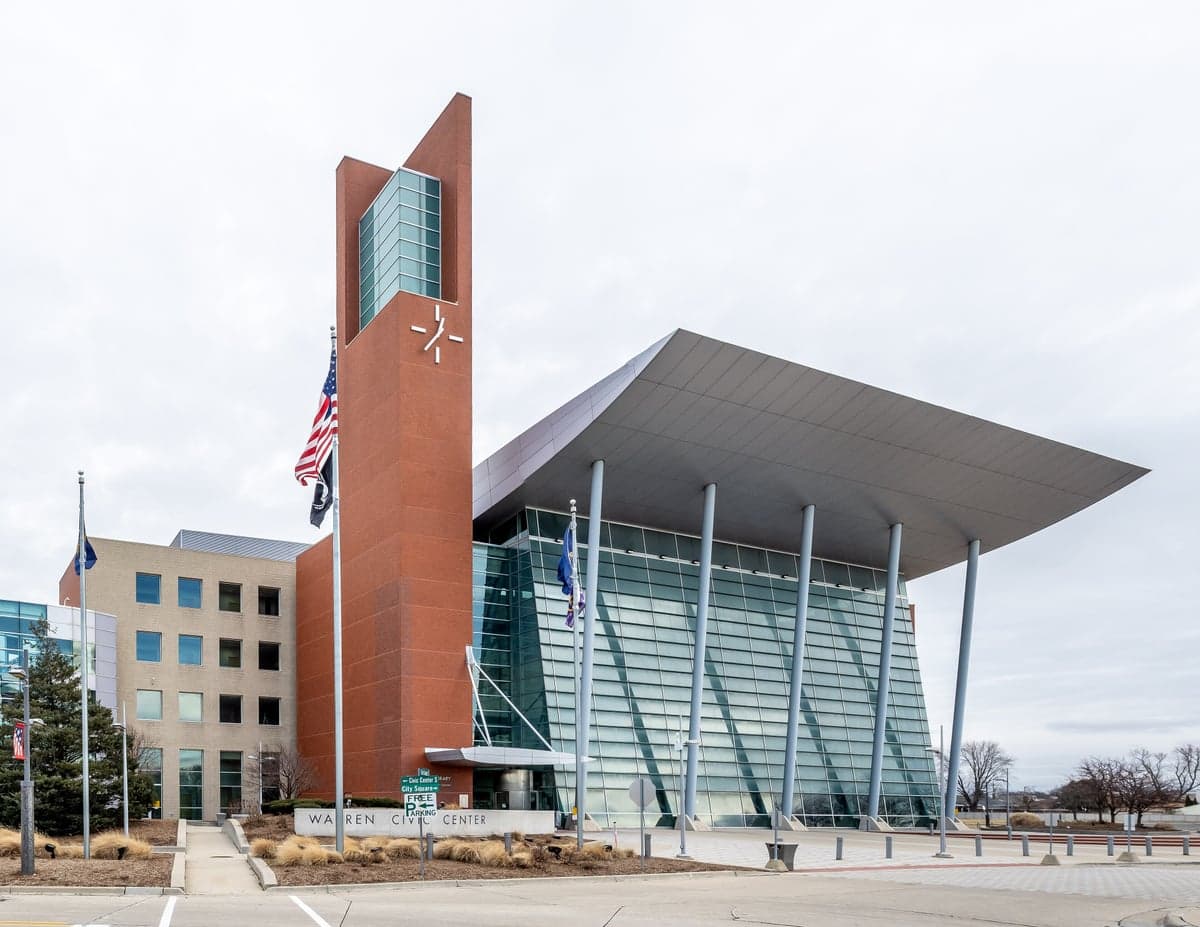
Photo: Wikipedia
Strategic Assessment of Warren, MI
Multiple tactical vulnerabilities. Population density, target proximity, or disaster risk are likely compounding. A retreat property and exit planning is required.
What does the Strategic Assessment tell us?
Our Strategic Assessment grades tactical survivability of an area. Major population centers, military targets, fallout zones, natural disasters, and border exposure all drive risk — lower exposure means a more defensible position in a crisis.
This is heavily inspired by Joel Skousen's Strategic Relocation book. Highly recommended you checkout the book ($)What does this tell us?
Our Strategic Assessment grades tactical survivability of an area. Major population centers, military targets, fallout zones, natural disasters, and border exposure all drive risk — lower exposure means a more defensible position in a crisis.
This is heavily inspired by Joel Skousen's Strategic Relocation book. Highly recommended you checkout the book ($)Strategic Pillars

Key Distances
Regional Safe Places
Below is our recommended "safe zones" in Michigan and the surrounding area based on our strategic heuristics. For most people, it's unrealistic to live in a “safe zone” full-time due to work, family or other personal reasons. They tend to be more rural. However, many of these areas are perfect for second homes and retreat properties that double as a vacation home or even a short-term rental.


Important Note: For informational purposes only. This does not mean nothing bad ever happens in the green zones. Please use common sense. This is based on public data and modeled with AI. We tried to take a conservative approach but mistakes happen. We update this regularly as new information becomes available.
Solar Generator Recommendations
Backup power matters more here than in safer locations. We've picked three solar generators across budgets and capacity tiers — start with the budget unit if you only need a few essentials, or step up if you want to run a fridge and HVAC for days at a time.

Jackery Portable Power Station Explorer 300
Budget OptionPower on the Go: Weighing only 11 lbs, it's convenient to set up and store with book-sized foldable solar panels

BLUETTI Portable Power Station AC180
Designed for both indoor and outdoor scenarios, AC180 is highly capable as it has a robost capacity and continuous output power.

EF ECOFLOW DELTA Pro Ultra Power Station
Upgraded PickEcoFlow DELTA Pro Ultra is a whole-home energy system designed to grow with your family. Integrated with the Smart Home Panel 2, it scales to meet your evolving energy needs — keeping your home powered, intelligent, and secure through every stage of life.
We earn a commission, at no additional cost to you.
Strategic Assessment Analysis
Warren, Michigan, presents a complex strategic picture for the conservative prepper or survivalist. While its location within the dense, politically volatile southeastern Michigan corridor introduces significant risk factors, the city’s industrial backbone, robust infrastructure, and proximity to the Great Lakes offer a set of resilience advantages that are rare in a major suburban setting. The key is understanding that Warren is not a retreat—it is a forward-operating base with unique logistical strengths and equally unique vulnerabilities that demand a clear-eyed, layered preparedness strategy.
Geographic position and natural advantages for long-term survival
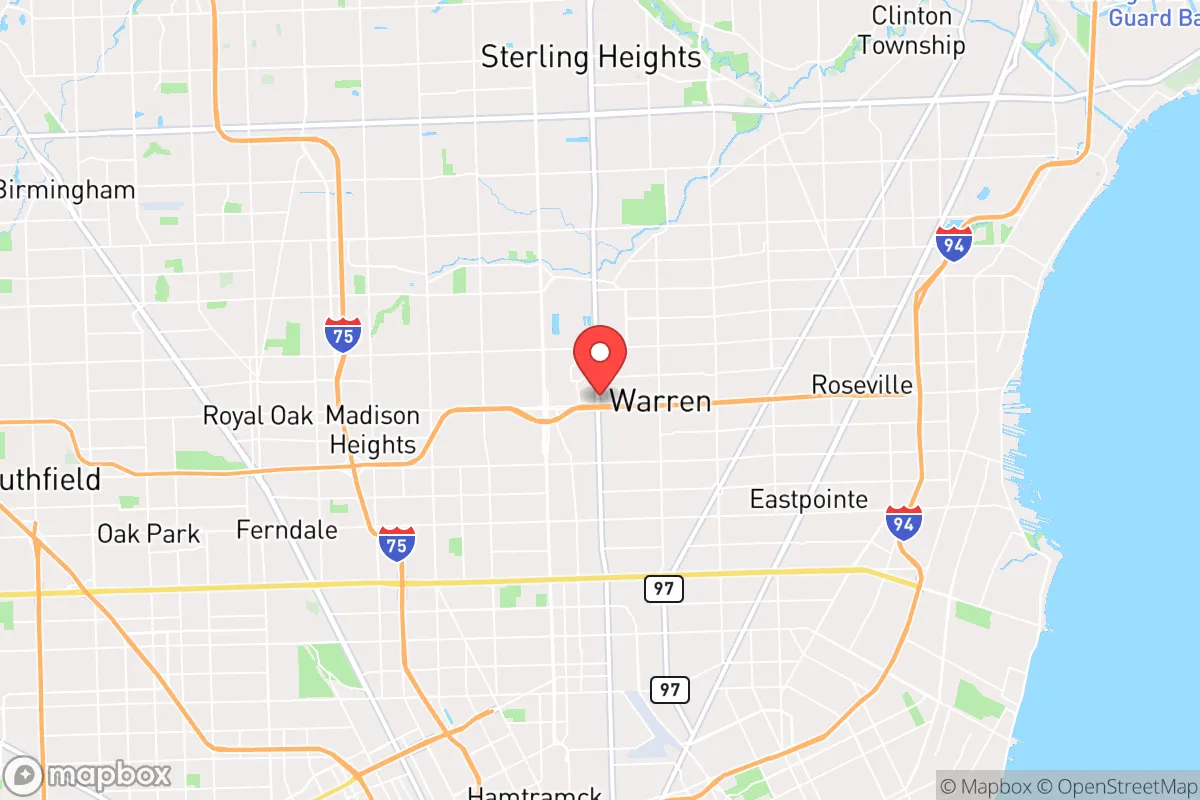
Warren sits roughly 13 miles north of Detroit and 10 miles west of Lake St. Clair, placing it in the heart of the region’s industrial and transportation network. The city’s most significant natural advantage is its access to the Great Lakes water system. Lake St. Clair and the Detroit River are within a short drive, providing a virtually unlimited freshwater source for filtration and transport, assuming one can secure and defend a collection point. The area’s flat terrain and clay-heavy soils are poor for large-scale agriculture but support hardy crops like potatoes, beans, and squash with raised beds and proper amendment. The local climate offers four distinct seasons, with cold winters that can act as a natural barrier to movement and disease transmission, but also demand serious cold-weather gear and fuel storage. Warren’s position along major rail lines and interstates (I-696, I-94, M-53) is a double-edged sword: it facilitates resupply and trade in stable times, but in a collapse scenario, those same arteries become chokepoints and vectors for hostile movement. The city’s grid layout, with wide boulevards and industrial zones, offers decent lines of sight and multiple egress routes, but the lack of natural cover (hills, forests) means defensible positions are limited to built structures.
Risks, exposures, and proximity to fallout-relevant landmarks
Warren’s greatest strategic liability is its proximity to high-value, high-risk targets. The city is within 20 miles of the Detroit Metropolitan Airport (DTW), a major international hub that would be a primary target in any conflict or terror event. It is also adjacent to the General Dynamics Land Systems plant on Van Dyke Avenue, which produces the U.S. military’s Abrams tanks—a clear Tier 1 target for state actors or sabotage. The nearby Selfridge Air National Guard Base in Harrison Township (roughly 8 miles east) is another obvious military asset. In a nuclear exchange scenario, these sites would likely be primary or secondary targets, placing Warren in a moderate-to-high fallout zone depending on wind patterns. Beyond military threats, the city’s dense population (over 134,000 residents in 21 square miles) creates a cascading risk of civil unrest, resource riots, and disease spread. The 1967 Detroit riots and the 2020 civil unrest demonstrated how quickly instability in Detroit can spill into Warren. The city’s large immigrant and refugee population (including a significant Chaldean community) adds cultural complexity that, while generally peaceful, could become a flashpoint under extreme stress. The presence of multiple chemical plants and industrial facilities along the I-94 corridor also poses a toxic release hazard in the event of an earthquake, accident, or sabotage.
Practical resilience for a relocator: food, water, energy, and defensibility
For the relocator serious about self-sufficiency, Warren offers a mixed bag. Water is the strongest asset: the Great Lakes system is within reach, but you must have a plan for extraction, filtration, and transport. The city’s municipal water comes from the Detroit Water and Sewerage Department, which is vulnerable to contamination, cyberattack, or political disruption. A well is not an option in most of Warren due to urban zoning and groundwater concerns, so rainwater catchment (with proper filtration) and stored water (55-gallon drums or larger) are essential. Food production is challenging but possible. The average lot size is small (0.15–0.25 acres), and many homes have limited yard space. Community gardens exist but are not secure. A serious prepper would need to invest in vertical gardening, hydroponics, or secure greenhouse structures. The city’s zoning laws are generally permissive for backyard chickens but prohibit larger livestock. Energy resilience is a bright spot. Warren is served by DTE Energy, which has a mixed reliability record (outages from storms and grid strain are common). Solar panels are legal and increasingly common, though HOAs may restrict placement. Natural gas is widely available, but a backup generator (preferably dual-fuel) and a stockpile of propane or gasoline are non-negotiable. Defensibility is the weakest link. The city’s flat, open layout and high population density make it difficult to secure a single property against a determined group. A corner lot with a fence and reinforced doors/windows is better than a mid-block house, but no home in Warren is a fortress. The best strategy is to form a neighborhood watch or mutual assistance group with like-minded neighbors—something that is culturally feasible given the city’s blue-collar, veteran-heavy demographic. The Macomb County Sheriff’s Office has a strong presence, but in a prolonged crisis, response times will stretch to hours or days.
The overall strategic picture for Warren is one of calculated risk. It is not a bug-out location or a remote homestead. It is a working-class city with industrial muscle, water access, and a population that, while dense, includes many self-reliant individuals with trade skills and military experience. The conservative prepper who chooses Warren must accept that they are living in a potential blast zone and must prioritize mobility, medical training, and community building over isolation. The city’s advantages—water, industry, transport links—are real but come with the constant threat of being overwhelmed by the chaos of a collapsing Detroit metro. If you are willing to invest in hardening a property, stockpiling supplies for 90+ days, and building a trusted network, Warren can be a viable base for weathering moderate disruptions. For those seeking a true retreat from civilization, look further north. For those who want to stay in the fight with a strategic foothold near the Great Lakes, Warren is a serious, if high-risk, option.

* Values derived from national, state, county, city and local statistics and may differ in a specific area. Last updated: 2026-04-30T03:47:34.000Z
Narrative content on this page is AI-generated and may contain mistakes. Verify any details that matter before acting on them.
ReloMaps may earn a commission from affiliate links at no extra cost to you.

