Photo: Wikipedia
Demographics of Warren, MI
Affluence Level in Warren, MI
A below-average socioeconomic profile. Incomes, home values, and educational attainment trail the U.S., with higher poverty and unemployment.
People of Warren, MI
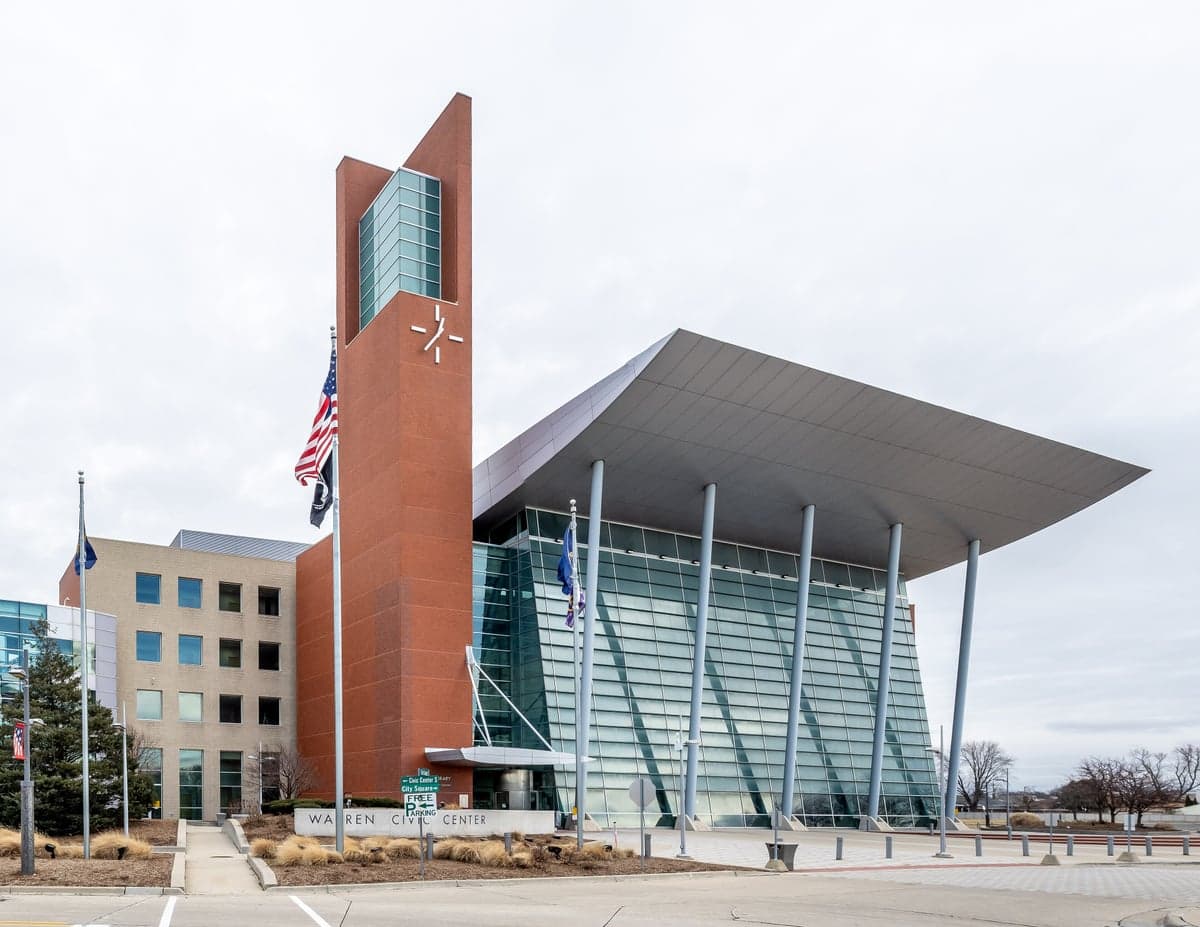
Warren, Michigan, is a densely settled, middle-class industrial suburb of 138,128 residents that retains a distinctly blue-collar character even as its manufacturing base has thinned. The city is predominantly white (59.8%) but has become one of the most ethnically diverse communities in Macomb County, with a significant Black population (20.8%), a growing Indian-subcontinent community (7.1%), and smaller East/Southeast Asian (4.8%) and Hispanic (2.8%) shares. Only 3.6% of residents are foreign-born, indicating that most diversity comes from domestic migration rather than recent immigration, and the college-educated share sits at a modest 20.4%, reflecting the city’s historic reliance on skilled trades and factory work.
How the city was settled and grew
Warren was originally part of a 1785 land grant to a Revolutionary War soldier, but it remained a sparsely populated farming hamlet through the 19th century. The city’s real population story begins with the automobile industry. In the 1910s and 1920s, the Dodge brothers and other auto magnates built massive plants along Mound Road and Van Dyke Avenue, drawing waves of European immigrants — primarily Poles, Germans, and Italians — who settled in the Warren Woods and Briarwood neighborhoods near the factories. These workers built small bungalows and duplexes, creating a dense, walkable street grid that still defines much of central Warren. A second wave arrived during World War II, when the nearby Detroit Arsenal Tank Plant (now the GM Tech Center) employed tens of thousands. This brought Appalachian whites from Kentucky and Tennessee, who clustered in the Eastpointe border area and around Nine Mile Road. By 1950, Warren’s population had exploded from under 10,000 to over 70,000, making it the fastest-growing city in Michigan during the postwar boom.
Modern era (post-1965)
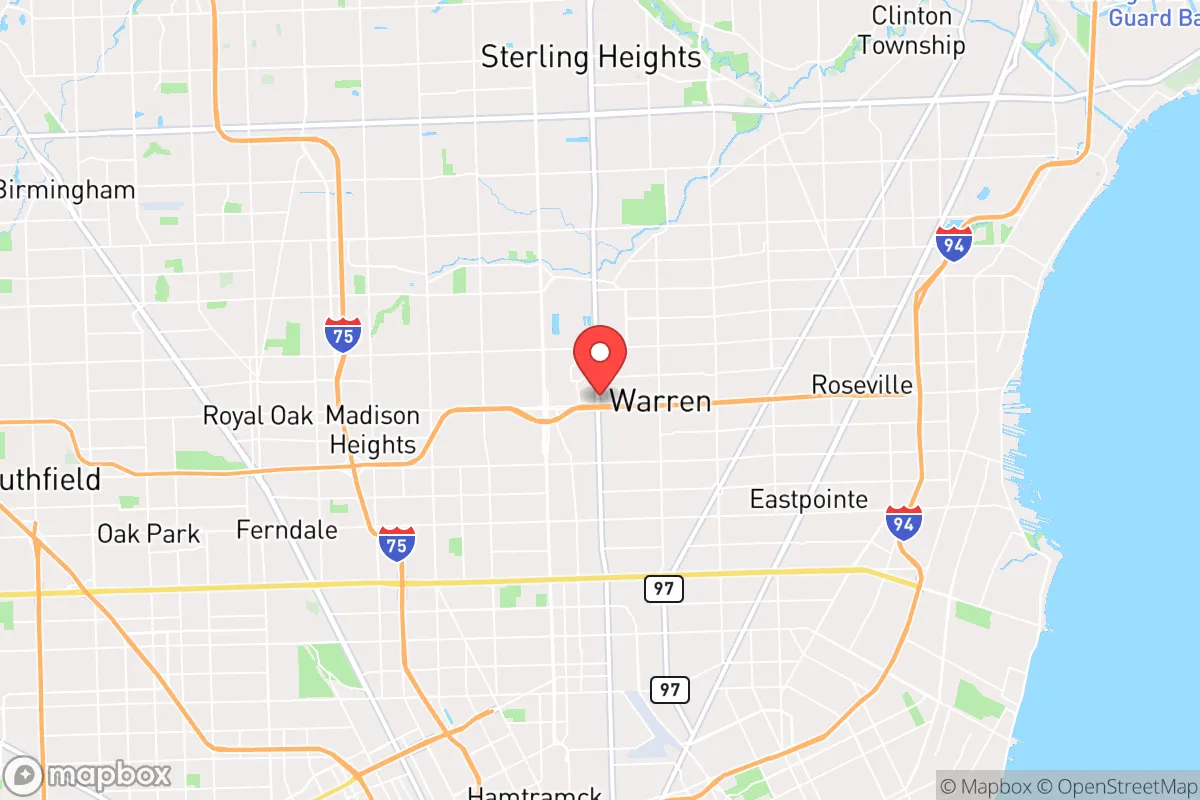
The 1967 Detroit riot and subsequent white flight reshaped Warren dramatically. Between 1970 and 1990, the city absorbed tens of thousands of white families leaving Detroit, solidifying its reputation as a working-class, predominantly white enclave. However, the 1990s and 2000s brought a slow but steady influx of Black families, many moving from Detroit’s north side and the Eight Mile corridor. Today, Black residents are concentrated in the southwest quadrant near Eight Mile Road and in the Campbell Corners area, where older housing stock and lower prices attracted first-time homebuyers. The most striking modern shift has been the growth of the Indian-subcontinent community. Largely professionals and small-business owners drawn to the area’s affordable housing and proximity to the GM Tech Center and Beaumont Hospital, Indian families have concentrated in the northwest Warren neighborhoods near Mound and 13 Mile roads, where a cluster of Indian grocery stores and restaurants now anchors a distinct ethnic enclave. East/Southeast Asian residents — primarily Vietnamese and Filipino — are smaller in number and more dispersed, with a modest concentration near the GM Tech Center campus. The Hispanic population remains thin and scattered, with no single barrio.
The future
Warren’s population is slowly aging and shrinking — down from a peak of 145,000 in 1970 — and the city is not attracting large numbers of new immigrants. The foreign-born share (3.6%) is well below the national average, and the Indian-subcontinent community, while growing, appears to be plateauing as families move to more affluent suburbs like Troy and Novi. The Black population is likely to continue increasing slowly as Detroit’s depopulation pushes more families north, but Warren’s housing stock — dominated by small, older homes — limits appeal for wealthier buyers. The city is not tribalizing into hostile enclaves, but it is sorting by income and ethnicity: the southwest remains majority-Black and lower-income, the northwest is increasingly Indian and middle-class, and the older white population is concentrated in the central and eastern neighborhoods. For a newcomer, Warren offers a stable, affordable, and safe environment with good schools and easy freeway access, but it is a place where demographic change is gradual rather than transformative. The next decade will likely see a continued slow diversification, with the white share dropping below 50% by 2035, but the city will remain a solidly middle-class, family-oriented suburb — not a melting pot, but a place where distinct communities coexist with minimal friction.
For a conservative-leaning individual or family moving to Warren today, the city offers a familiar, orderly, and patriotic character — strong union roots, visible police presence, and a no-nonsense local government. It is not a trendy or hip destination, but a reliable, affordable place to raise a family, with a population that values stability over change. The key trade-off is that Warren’s demographic future is one of slow, managed diversification rather than rapid transformation, meaning newcomers will find a community that is changing but not unsettled.

* Values derived from national, state, county, city and local statistics and may differ in a specific area. Last updated: 2026-04-30T03:47:34.000Z
Narrative content on this page is AI-generated and may contain mistakes. Verify any details that matter before acting on them.
ReloMaps may earn a commission from affiliate links at no extra cost to you.

