 Popular
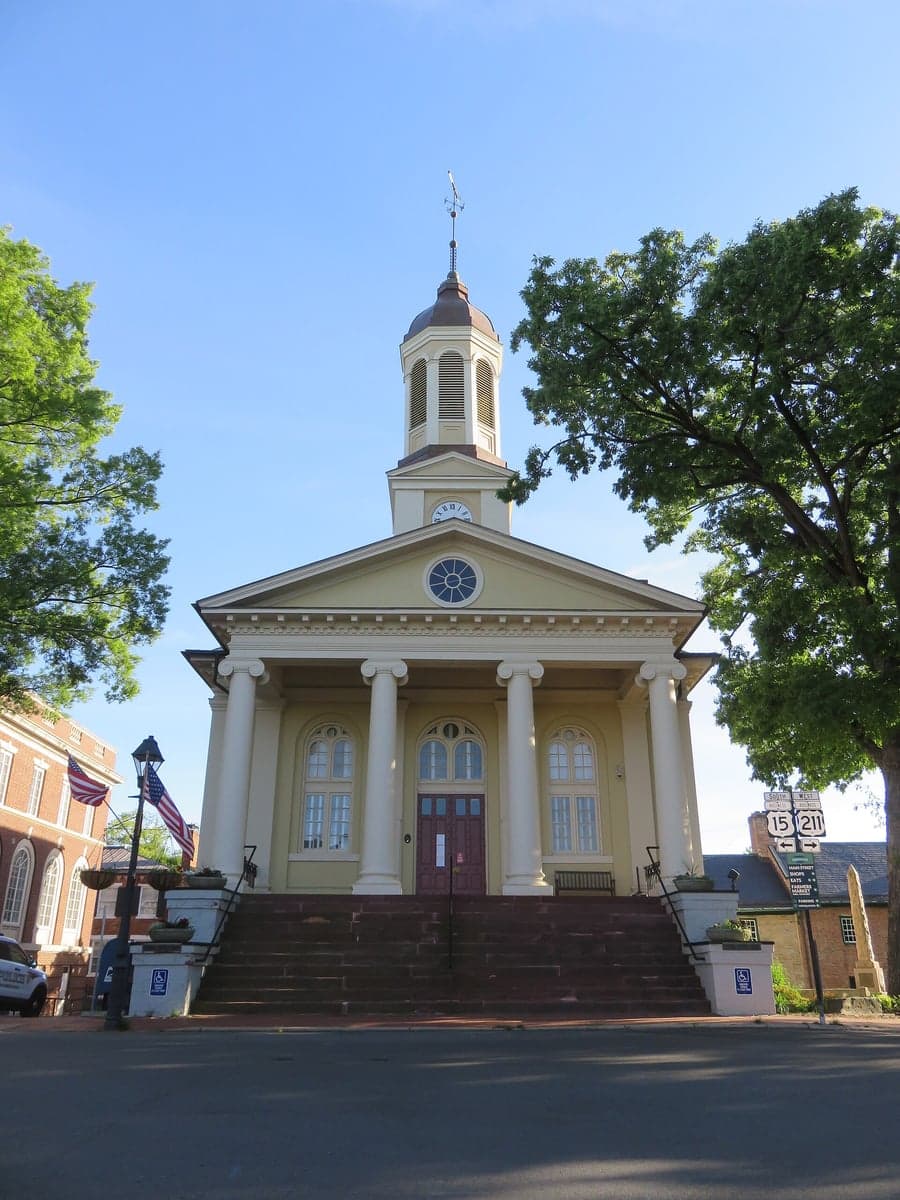
Photo: Wikipedia
Personal Sovereignty in Warrenton, VA
Viable for self-reliance. Generally workable, though some barriers may limit total independence.
What does Personal Sovereignty tell us?
Personal Sovereignty measures your capacity for self-reliance and independence with minimal government friction. Higher scores mean fewer barriers between you and the way you want to live... but it assumes you have the space you need and good neighbors.
What does this tell us?
Personal Sovereignty measures your capacity for self-reliance and independence with minimal government friction. Higher scores mean fewer barriers between you and the way you want to live... but it assumes you have the space you need and good neighbors.
State Policy
Energy independence: Importer (20% of energy produced in-state)
Personal Liberty
Homesteading

Personal Liberty Analysis
Warrenton, Virginia, offers a notably high degree of personal sovereignty compared to many other parts of the Mid-Atlantic, largely due to Virginia’s status as a Dillon Rule state with a strong tradition of local control, combined with a rural-to-suburban character that still permits significant self-reliance. For those with a survivalist or prepper mindset, the key question is whether the local government and state apparatus respect individual autonomy or encroach upon it. The answer is nuanced: while Virginia has seen recent political shifts that threaten certain freedoms, Fauquier County and Warrenton itself have largely resisted the most aggressive forms of government overreach, maintaining a regulatory environment that allows for firearms ownership, property use, and personal decision-making with fewer constraints than in neighboring Northern Virginia jurisdictions. This analysis examines the specific factors that determine whether Warrenton can serve as a viable base for those prioritizing personal liberty, self-defense, and independence from state control.
Tax burden and regulatory posture: How much does the state take and control?
Virginia’s overall tax burden is moderate compared to states like New York or California, but it is not a low-tax haven. The state income tax is a flat 5.75% on all taxable income, which is a significant bite for those with substantial earnings, though it is not progressive. Property taxes in Fauquier County are relatively reasonable, with a current rate around $0.86 per $100 of assessed value, which is lower than in Loudoun or Fairfax counties. However, the regulatory posture is where Warrenton shines for those wary of government overreach. As a Dillon Rule state, Virginia localities only have powers expressly granted by the state legislature, which can limit local experimentation with restrictive ordinances. In practice, Fauquier County has maintained a business-friendly and property-rights-respecting approach. There are no county-level income taxes, and the local government has not imposed the kind of aggressive land-use controls seen in more urbanized areas. For a prepper, this means fewer hurdles for building a workshop, keeping livestock, or storing supplies on your own land, provided you are in the appropriate zoning district. The state’s regulatory climate for firearms and self-defense is also favorable, as discussed below, but the overall message is that Warrenton’s local government is not actively hostile to personal autonomy, though state-level changes remain a concern.
Self-defense and gun law specifics: What are the actual legal constraints?
Virginia’s gun laws have become more restrictive in recent years, but Warrenton and Fauquier County remain strongholds of Second Amendment support. The state now requires a background check for all firearm sales, including private transactions, and has a “one handgun a month” law that limits purchases. However, Virginia is a shall-issue state for concealed carry permits, meaning that if you meet the requirements (including a background check and a safety course), the local circuit court must issue the permit. There is no discretionary denial based on a sheriff’s personal opinion, which is a critical protection against local government overreach. Open carry is legal without a permit for anyone 18 or older who can legally possess a firearm. Importantly, Fauquier County has not adopted any of the “red flag” laws or additional local restrictions that some Northern Virginia counties have enacted. The local sheriff’s office is publicly supportive of Second Amendment rights, and the county has been designated a “Second Amendment Sanctuary” by the Board of Supervisors, a symbolic but meaningful stance against state-level overreach. For preppers, this means you can keep firearms for self-defense and training without fear of local harassment, though you must comply with state-level registration and transfer rules. The practical reality is that Warrenton offers a much more permissive environment for armed self-defense than anywhere in Maryland or the District of Columbia, and even compared to parts of Northern Virginia.
Self-reliance and homesteading viability: Lot sizes, zoning, and off-grid feasibility
For those seeking to reduce dependence on government and infrastructure, Warrenton’s zoning and land-use policies are generally favorable. Within the town limits, lot sizes are typically smaller (quarter-acre to half-acre), which limits large-scale homesteading, but the surrounding Fauquier County offers significant opportunities. Agricultural and rural zoning districts allow for minimum lot sizes of 2 to 10 acres, and many properties in the county are 5 acres or larger, which is sufficient for a substantial garden, small livestock (chickens, goats, or a cow), and even a private well and septic system. The county does not have overly restrictive building codes for outbuildings or sheds, though you will need permits for any permanent structure. Off-grid feasibility is moderate: Virginia’s climate is temperate, so solar panels and rainwater collection are viable, but you must comply with state health department regulations for well water and septic. The county does not prohibit composting toilets or alternative energy systems, but you will need to work with the local building inspector to ensure compliance. The biggest hurdle for a prepper is that Fauquier County does have zoning enforcement, so you cannot simply do whatever you want on your land—for example, operating a commercial business from a home workshop may require a special use permit. However, for personal self-reliance—growing food, raising animals, storing supplies, and maintaining a low profile—the regulatory environment is among the most permissive in Northern Virginia. The key is to buy land in a rural zoning district, not within town limits, to maximize your freedom.
Personal liberties: Parental rights, medical autonomy, speech, and property
Warrenton and Fauquier County have a strong track record of respecting parental rights and local control over education. The Fauquier County Public Schools system has not adopted the kind of controversial curriculum mandates seen in some other Virginia districts, and the school board has been responsive to parent concerns about transparency and content. Medical autonomy is a mixed bag: Virginia has not imposed vaccine mandates for adults, but during the COVID-19 pandemic, the state did require masks in schools and some businesses. For those concerned about medical freedom, Warrenton offers a community with a high proportion of independent-minded residents who are skeptical of government health mandates. Speech and assembly rights are fully protected under the First Amendment, and local law enforcement has not engaged in the kind of surveillance or harassment seen in some urban areas. Property rights are generally respected, with the caveat that Virginia’s eminent domain laws allow for takings for public use with just compensation, but Fauquier County has not been aggressive in using this power. The county’s comprehensive plan emphasizes preserving rural character, which actually protects property owners from overdevelopment and government seizure. For a prepper, the most important liberty is the ability to keep your affairs private and your property secure, and Warrenton’s culture of independence supports that.
Overall, Warrenton offers a strong balance of personal sovereignty relative to other areas in the Mid-Atlantic, particularly for those who prioritize self-defense, property rights, and a lower regulatory burden. It is not a libertarian utopia—Virginia’s state-level taxes and some gun restrictions are real constraints—but compared to the heavily regulated environments of Maryland, New Jersey, or even Northern Virginia’s urban counties, Warrenton stands out as a place where a survivalist or prepper can live with a high degree of autonomy. The local government is not actively hostile to personal freedoms, and the community’s culture supports self-reliance. For those considering relocation, the key is to choose a property in the county’s rural zoning districts, stay informed about state-level legislative changes, and engage with the local community to preserve the liberties that remain. Warrenton is not a fortress of freedom, but it is a defensible position in a region where government overreach is a growing concern.

* Values derived from national, state, county, city and local statistics and may differ in a specific area. Last updated: 2026-05-01T16:56:39.000Z
Narrative content on this page is AI-generated and may contain mistakes. Verify any details that matter before acting on them.
ReloMaps may earn a commission from affiliate links at no extra cost to you.

