 Popular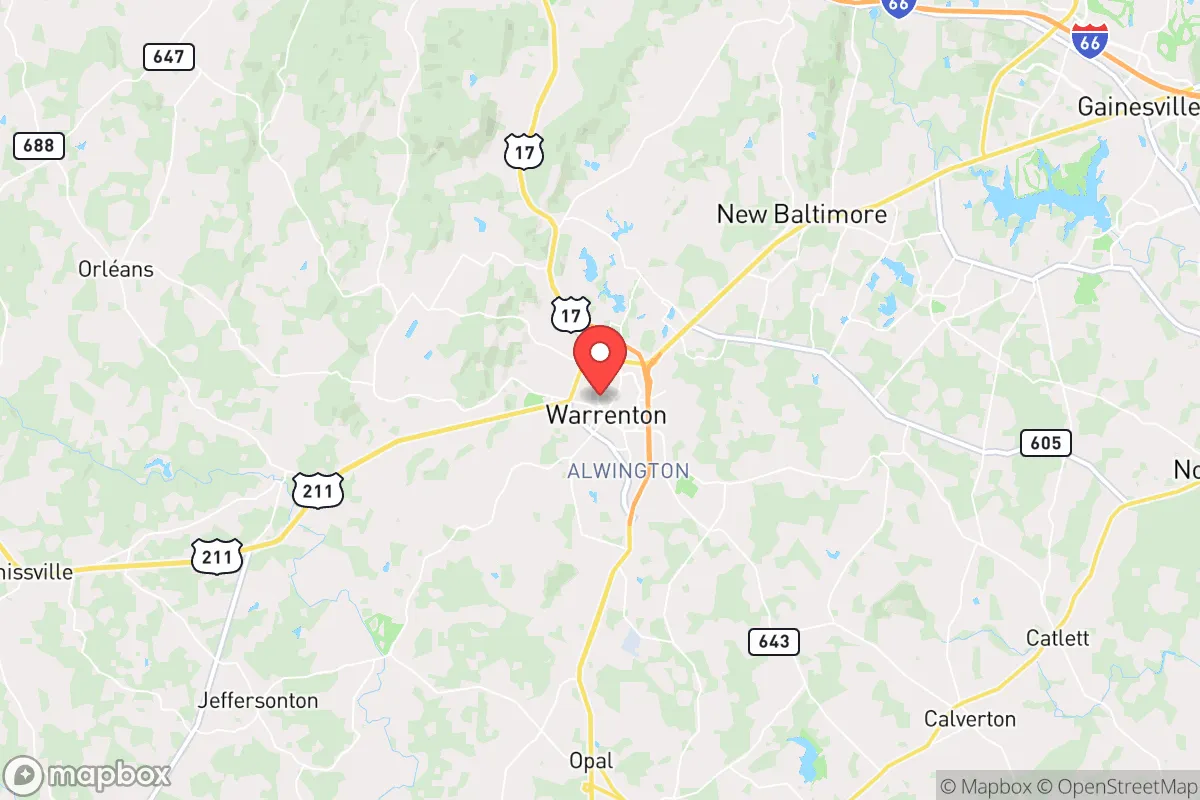
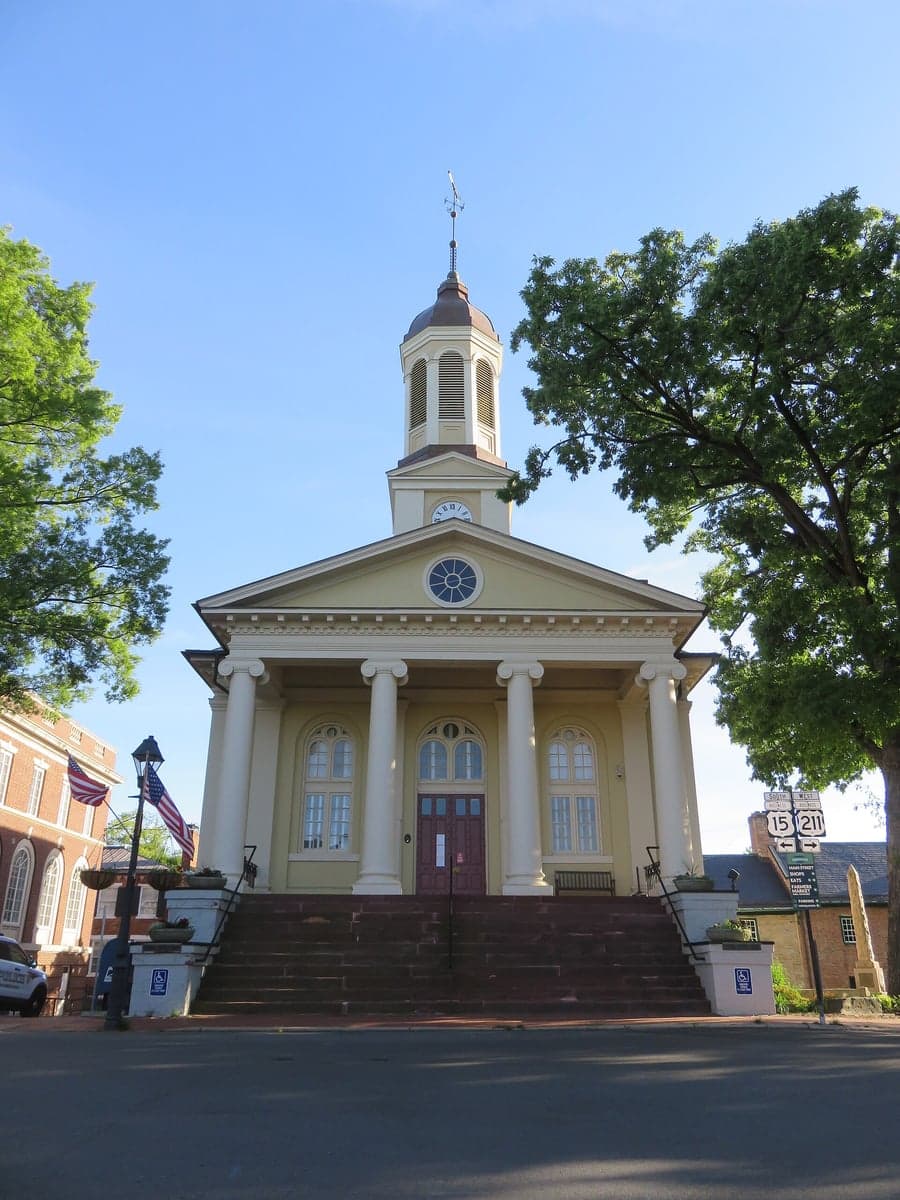
Photo: Wikipedia
Political ClimatePolitical Climate in Warrenton, VA
District shown is the primary district for this city’s centroid. Cities may span multiple districts.
Local Political AnalysisPolitical Analysis of Warrenton, VA
Warrenton, Virginia, sits in a bit of a political tug-of-war these days. The Cook PVI rating of D+6 tells you the official lean is toward the Democrats, but that number doesn't capture the full story on the ground. For a long time, this was a reliably conservative area, a place where folks valued personal responsibility and didn't want the government poking its nose into their business. Over the last decade or so, you've seen a steady influx from Northern Virginia—people moving out from D.C. and its suburbs—and that's shifted the local voting patterns. The trajectory is concerning if you value limited government and traditional freedoms, because the new arrivals tend to bring a more progressive mindset with them.
How it compares
To really understand Warrenton, you have to look at what's around it. Drive 20 minutes west to Marshall or 30 minutes south to Culpeper, and you're in much more conservative territory. Those areas haven't seen the same level of transplant influx, so they still vote solidly red. Head east toward Manassas or Centreville, and you're in deep blue suburbs where government expansion is practically celebrated. Warrenton used to be the conservative anchor of Fauquier County, but now it's becoming a battleground. The county itself still leans right overall, but the town's D+6 rating shows the urban influence creeping in. It's a stark contrast to places like Remington or Bealeton, where you'll still find a lot of folks who believe the best government is the one that stays out of your wallet and your life.
What this means for residents
For someone living here, the political shift isn't just about election results—it's about daily life. You're seeing more local ordinances that feel like overreach, like stricter land-use rules that make it harder to do what you want with your own property. There's been talk of expanding county services and raising taxes to fund them, which is a red flag for anyone who remembers when Fauquier County prided itself on low taxes and minimal bureaucracy. The school board has become a flashpoint too, with debates over curriculum and parental rights that would have been unthinkable 15 years ago. If you're a conservative, you're not necessarily outnumbered yet, but you're definitely on defense. The feeling is that you have to stay engaged at every town council meeting and school board session, or else you'll wake up to policies that chip away at your freedoms one vote at a time.
The cultural distinction here is that Warrenton still has a strong rural backbone, even as the politics shift. You'll find plenty of folks who hunt, own guns, and run small businesses without wanting government handouts or interference. The local farmers' market and the annual Fauquier County Fair are still full of that independent spirit. But the progressive wave is real, and it's brought with it a push for things like more bike lanes, denser housing developments, and "equity" initiatives that sound good on paper but often mean more bureaucracy and less personal choice. The long-term outlook depends on whether the conservative base can hold the line or if the D.C. exodus will eventually turn Warrenton into another Manassas. For now, it's a place where you can still have a conversation with your neighbor about the Second Amendment over a cup of coffee, but you better be ready to defend your views at the next town hall.

State Political ClimatePolitical Climate in Virginia
State Political AnalysisPolitical Environment in the State
Virginia has transformed from a reliably conservative Southern state into a competitive battleground that now leans Democratic at the statewide level, driven by explosive growth in the Washington D.C. suburbs. Over the past 20 years, the state has shifted from voting Republican in every presidential election from 1968 to 2004 to backing Democrats by comfortable margins since 2008, with Joe Biden winning by 10 points in 2020. The dominant coalition is now a mix of Northern Virginia professionals, college-educated suburbanites in Richmond and Hampton Roads, and a growing minority population, while rural and exurban areas have become increasingly Republican strongholds. For a conservative considering relocation, the state offers a tale of two Virginias: a deeply red interior and southwest, and a blue crescent along the I-95 corridor.
Urban vs. rural divide
The political map of Virginia is starkly divided. The "Blue Wall" runs from Arlington and Alexandria through Fairfax County down to Richmond and Norfolk, where Democrats routinely win by 30-50 points. Fairfax County alone, with 1.1 million residents, casts more votes than most rural regions combined. Meanwhile, the "Red Heartland" covers the Shenandoah Valley, Southside, and Southwest Virginia, anchored by Roanoke and Lynchburg, where Republicans win by similar margins. The 2021 gubernatorial race showed the divide perfectly: Glenn Youngkin won by flipping Virginia Beach and exurban Chesterfield County back to red, while losing Fairfax by 30 points. The key battlegrounds are now the outer suburbs of Prince William County and Loudoun County, which have swung hard left since 2016 as D.C. commuters moved in. If you're looking for a conservative community, head west of the Blue Ridge Mountains or south of the James River.
Policy environment
Virginia's policy landscape has shifted dramatically since Democrats took full control in 2019. The state has a flat income tax rate of 5.75% and a sales tax of 5.3% (higher in Northern Virginia for transportation), but property taxes are set locally and can be steep in high-demand areas. The regulatory posture is increasingly progressive: the Clean Economy Act mandates 100% carbon-free electricity by 2050, and the Virginia Clean Economy Act effectively bans new natural gas connections. Education policy is a flashpoint—the state eliminated its charter school cap in 2021 but still has only a handful of charters, and the Virginia Department of Education has pushed critical race theory-adjacent "equity" initiatives. Election laws have been loosened: no-excuse absentee voting, same-day registration, and a 45-day early voting period are now permanent. Gun laws have tightened significantly, with universal background checks, a red flag law, and a one-handgun-per-month limit passed in 2020. For a conservative, the policy environment is increasingly hostile to Second Amendment rights and school choice, though Youngkin's 2021 win showed the state is still competitive.
Trajectory & freedom
Virginia is becoming less free by any objective measure, especially for conservatives. The 2020 General Assembly passed a sweeping gun control package that included a ban on assault weapons (later blocked by courts), a red flag law, and a requirement to report lost or stolen firearms. The state also legalized marijuana in 2021 but then backtracked on retail sales, creating a confusing gray market. Parental rights took a hit with the 2020 law requiring schools to adopt "model policies" for transgender students that allow them to use bathrooms and pronouns matching their identity without parental consent—a law Youngkin tried to roll back with new guidelines in 2022. Medical freedom was curtailed with the 2021 vaccine mandate for state workers and healthcare workers, though many of those mandates have since been rescinded. On the positive side, Virginia remains a right-to-work state, and property rights are generally respected outside of Northern Virginia's zoning battles. The trajectory is clear: the D.C. suburbs are exporting their progressive values statewide, and the 2023 legislative elections saw Democrats retake the House of Delegates, signaling the pendulum swinging back left.
Civil unrest & political movements
Virginia has been a flashpoint for political conflict. The 2017 "Unite the Right" rally in Charlottesville left a lasting scar, with counter-protests and a car attack that killed one person. Since then, the state has seen organized left-wing activism through groups like Indivisible and the Virginia Civic Engagement Table, which helped flip the legislature in 2019. On the right, the Virginia Citizens Defense League remains a powerful gun rights lobby, and the "Parents Matter" movement exploded in 2021-2022, particularly in Loudoun County, where a sexual assault case in a school bathroom galvanized conservative parents. Immigration politics are relatively quiet compared to border states, but Fairfax County and Arlington are sanctuary jurisdictions that limit cooperation with ICE. Election integrity remains a concern for conservatives: the 2020 election saw widespread use of drop boxes and mail-in ballots, and the 2021 gubernatorial race was decided by just 2 points despite Youngkin's win. The state's voter ID law was weakened in 2020, and there are no signature verification requirements for mail ballots—a red flag for those worried about fraud.
Projection
Over the next 5-10 years, Virginia will likely continue its slow drift leftward, driven by demographic trends. Northern Virginia is adding 50,000-70,000 new residents annually, mostly from out-of-state and heavily Democratic. The Hampton Roads region is aging and losing population, which hurts Republican margins. However, the exurban counties of Spotsylvania, Stafford, and Fredericksburg are growing fast with conservative-leaning families fleeing D.C. prices. The wild card is remote work: if the federal government forces a return to office, many of those exurban conservatives will move closer to D.C., accelerating the blue shift. Realistically, Virginia will remain a purple state but with a Democratic lean—think Colorado or New Hampshire. A conservative moving here should expect to live in a red pocket (like Roanoke or the Shenandoah Valley) and accept that statewide elections will likely favor Democrats. The state's constitution is relatively easy to amend, so the progressive agenda will keep advancing on guns, energy, and education.
For a conservative relocating to Virginia, the bottom line is: pick your county carefully. The state offers beautiful landscapes, strong job markets in defense and tech, and a right-to-work economy, but you'll be living under a government that is increasingly hostile to gun rights, parental control, and tax relief. If you can afford the property taxes in a red exurb like Lynchburg or Winchester, you'll find like-minded neighbors and decent schools. But don't expect the state to trend your direction—the D.C. suburbs are the engine, and they're not slowing down.
* Values derived from national, state, county, city and local statistics and may differ in a specific area. Last updated: 2026-05-01T16:56:39.000Z
Narrative content on this page is AI-generated and may contain mistakes. Verify any details that matter before acting on them.
ReloMaps may earn a commission from affiliate links at no extra cost to you.

