Photo: Wikipedia
Political ClimatePolitical Climate in Washburn, ND
District shown is the primary district for this city’s centroid. Cities may span multiple districts.
Inherited from parent state — no local data available.
Local Political AnalysisPolitical Analysis of Washburn, ND
Washburn, North Dakota, is about as solidly conservative as they come, with a Cook PVI of R+18 that tells you exactly where things stand politically. This isn't a place that's been slowly drifting left like some of the bigger towns out west; it's held its ground for decades, and most folks here like it that way. The local elections and county commissions are dominated by folks who believe in small government, low taxes, and keeping the federal government out of your business. If you're looking for a place where your rights to own a firearm, run a small business, or just be left alone are respected, Washburn is still that kind of town.
How it compares
Drive thirty miles south to Bismarck, and you'll start to feel the political difference pretty quick. Bismarck has grown fast, and with that growth has come a more moderate, sometimes even slightly progressive, vibe—especially in the newer neighborhoods and among younger transplants. Washburn, by contrast, has stayed more rural and more traditional. The surrounding McLean County is even more conservative than the state average, and you won't find much of the "woke" energy that's crept into places like Fargo or Grand Forks. Even Mandan, just across the river from Bismarck, has a more mixed political scene than Washburn. Here, it's still common to see Trump signs in yards year-round, and the local school board isn't fighting over critical race theory or gender ideology—they're focused on reading, math, and keeping the budget tight.
What this means for residents
For the people who live here, the political climate means a lot of freedom from the kind of government overreach that's become common in blue states and even some blue cities in the Midwest. You won't see mask mandates, vaccine passports, or heavy-handed business closures in Washburn—the local leaders respect personal choice and don't think it's their job to run your life. Property taxes are reasonable, zoning is minimal, and there's no talk of "equity" initiatives or diversity quotas in local government. The downside? If you're hoping for big government programs or generous social services, you'll be disappointed. But for most residents, that's a feature, not a bug. The community takes care of its own through churches, volunteer fire departments, and neighborly help, not through government checks.
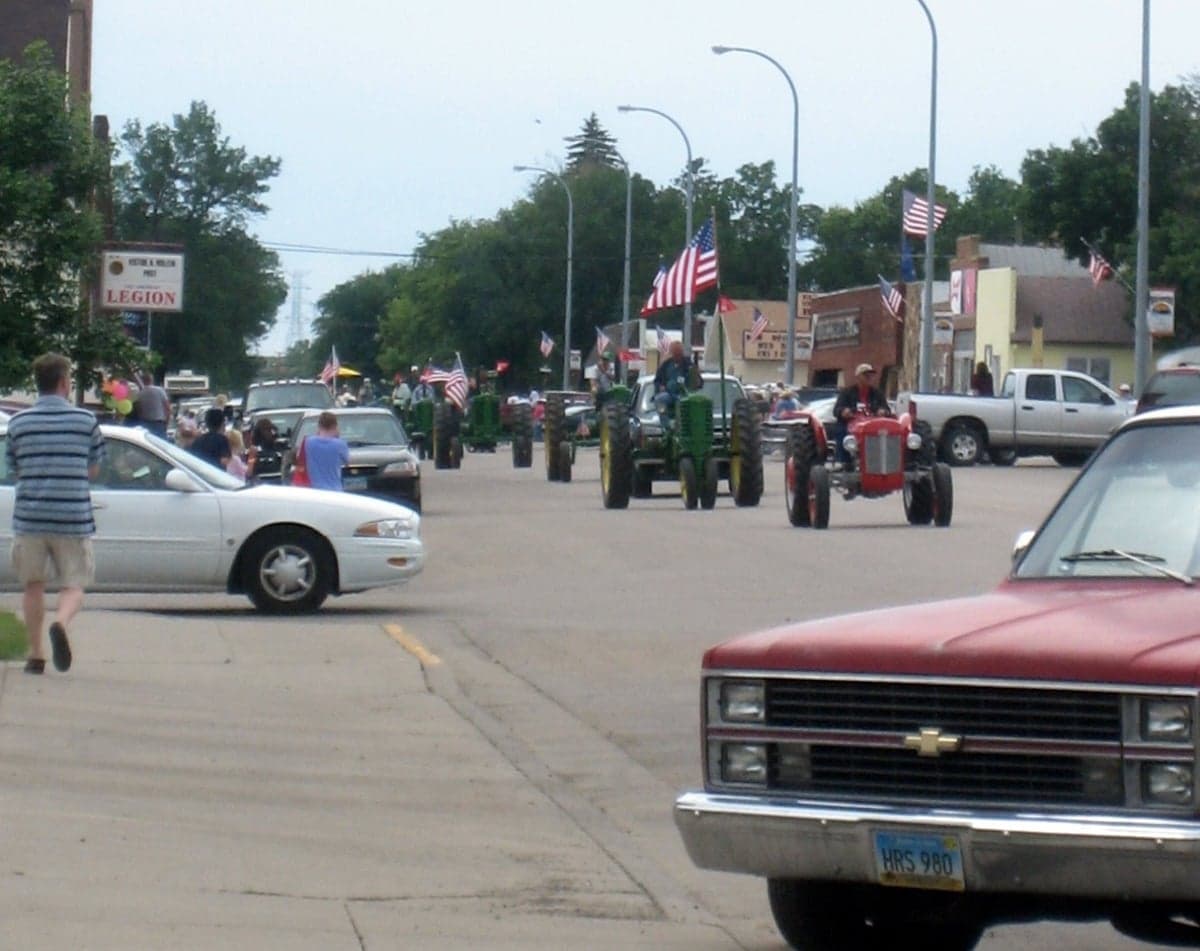
Culturally, Washburn is still a place where the Fourth of July parade is a big deal, where the high school football game is the social event of the week, and where people wave to each other on the street. There's a strong sense of personal responsibility and a healthy skepticism of anyone who tries to tell you what to do. The long-term trend is a little concerning, though—as the state's oil money and population growth push into the region, there's always a risk that outside influences will try to change the character of the town. But for now, Washburn remains a stronghold of conservative values, where your rights are respected and your voice still matters. If you're looking for a place that hasn't sold out to the progressive agenda, this is it.

State Political ClimatePolitical Climate in North Dakota
State Political AnalysisPolitical Environment in the State
North Dakota is about as solidly Republican as a state gets, with a partisan lean that has only deepened over the past two decades. The state hasn’t voted for a Democratic presidential candidate since Lyndon Johnson in 1964, and in 2024, Donald Trump carried it by over 20 points. The dominant coalition is a mix of rural agricultural interests, energy-sector workers from the Bakken oil fields, and a growing population of conservative-leaning transplants fleeing higher-tax states. The trajectory over the last 10-20 years has been a steady march rightward, driven by the oil boom that brought in a younger, more libertarian-leaning workforce and by the collapse of the old Democratic-NPL (Nonpartisan League) coalition that once held sway in the eastern part of the state. If you’re looking for a place where conservative values aren’t just tolerated but are the baseline assumption, this is it.
Urban vs. rural divide
The political map of North Dakota is surprisingly simple: the oil patch counties in the northwest are deep red, the agricultural counties in the central and eastern parts are red, and the only real blue spots are the college towns and the state’s two small metros. Fargo, the largest city, is the most politically competitive area in the state. Cass County, which contains Fargo, has voted Republican in every presidential election since 2000, but the margins have narrowed—Trump won it by only 8 points in 2024, down from 18 in 2016. The city itself has a noticeable progressive undercurrent, driven by North Dakota State University and a growing tech sector. Grand Forks, home to the University of North Dakota, is similar but smaller and less influential. Bismarck and Mandan, the capital region, are reliably conservative, with Burleigh County routinely giving Republicans 65-70% of the vote. The real action is in the northwest, in places like Williston and Watford City, where the oil boom brought in a wave of workers from Texas, Oklahoma, and Colorado who are staunchly conservative and libertarian on energy policy. The rural counties along the Missouri River and the Red River Valley are the backbone of the state’s Republican dominance—places like McLean County and Richland County routinely vote 75-80% Republican. The only county that consistently votes blue is Rolette County in the Turtle Mountain region, which is heavily Native American and reliably Democratic by 30-40 points.
Policy environment
North Dakota’s policy environment is a conservative’s dream, with a state government that has been under unified Republican control for over a decade. There is no state income tax on individuals—a major draw for people fleeing high-tax states like California or Illinois. The corporate income tax rate is a flat 4.31%, and the state has a robust right-to-work law. Property taxes are relatively low, though they vary by county, and there is no inheritance or estate tax. On education, the state has a strong school choice movement, with a new Education Savings Account (ESA) program passed in 2023 that allows parents to use state funds for private school tuition, homeschooling, or tutoring. The state’s healthcare landscape is mixed: there is no Medicaid expansion under the Affordable Care Act (the state legislature has repeatedly rejected it), and the state has some of the most restrictive abortion laws in the country, with a near-total ban that took effect after the Dobbs decision. Election laws are solid: voter ID is required, there is no same-day registration, and the state has a voter ID law that requires a photo ID with a current address. The state legislature passed a law in 2021 banning ballot drop boxes and limiting mail-in voting to those with a valid excuse, which has been praised by election integrity advocates. The regulatory environment is business-friendly, with no state-level minimum wage above the federal $7.25 and a strong tort reform system that caps non-economic damages in medical malpractice cases.
Trajectory & freedom
North Dakota has been on a trajectory of expanding personal freedom over the last decade, particularly in the areas of gun rights, parental rights, and property rights. In 2021, the state passed constitutional carry, allowing any law-abiding adult to carry a concealed firearm without a permit. The state also passed a “Second Amendment Preservation Act” in 2023 that prohibits state and local law enforcement from enforcing federal gun laws that violate the Second Amendment. On parental rights, the state passed a “Parents’ Bill of Rights” in 2023 that requires schools to notify parents of any changes in a student’s health or well-being and prohibits schools from withholding information about a child’s gender identity. The state has also been a leader in property rights, with a strong “private property protection” law that requires the government to compensate landowners for any regulatory taking that reduces property value by more than 50%. However, there are some concerning trends. The state has seen a push for more centralized control over local land use, particularly around the oil fields, where the state government has preempted local zoning in favor of energy development. There’s also been a quiet expansion of the state’s power to seize property for “blight” redevelopment, which has raised eyebrows among property rights advocates. On medical freedom, the state has been mixed: it passed a law in 2021 prohibiting vaccine passports, but it also has some of the strictest pharmacy regulations in the country, which some see as a barrier to medical autonomy.
Civil unrest & political movements
North Dakota has a surprisingly active history of political movements, both left and right. The most famous flashpoint was the Standing Rock protests in 2016-2017, where thousands of activists from across the country descended on the state to protest the Dakota Access Pipeline. The protests turned violent at times, with clashes between protesters and law enforcement, and the state’s response—including the use of tear gas and water cannons in freezing temperatures—was controversial. The legacy of Standing Rock still lingers, with ongoing tensions between the state government and the Standing Rock Sioux Tribe over pipeline safety and environmental justice. On the right, the state has a strong “constitutional sheriff” movement, with several sheriffs in rural counties openly refusing to enforce certain state or federal laws they deem unconstitutional. The state also has a small but vocal secessionist movement in the northwest, where some residents have called for the creation of a new state called “Lincoln” that would include the oil-rich counties of North Dakota and Montana. Election integrity has been a hot topic, with the state’s Republican Secretary of State, Michael Howe, pushing for stricter voter ID laws and purging inactive voters from the rolls. There have been no major election fraud scandals, but the state’s small population means that even a few hundred questionable votes could swing a local election. Immigration politics are relatively quiet, as the state has a very small foreign-born population (about 4%), but there has been some tension in the oil patch over the use of H-2B visa workers for temporary labor.
Projection
Over the next 5-10 years, North Dakota is likely to become even more conservative, but with some interesting wrinkles. The state’s population is aging and slowly declining in rural areas, but the oil patch and the Fargo metro are growing. The in-migration from blue states is accelerating, particularly to Fargo and Bismarck, as remote workers and retirees seek lower taxes and a slower pace of life. These newcomers tend to be conservative, but they are often more libertarian than traditional—they want low taxes and minimal government, but they may be less enthusiastic about social conservatism. This could create a tension between the old-school social conservatives in the rural areas and the new libertarian-leaning transplants in the cities. The state’s energy policy will remain a defining issue, with the state government likely to continue fighting federal environmental regulations and pushing for more oil and gas development. The biggest wild card is the Native American population, which is growing faster than the white population and could become a more significant political force in the next decade, particularly in the western part of the state. If the state’s Democratic Party can rebuild its coalition around Native American voters and the remaining union workers in the oil patch, it could become competitive in a few state legislative districts, but it’s unlikely to flip the state anytime soon. The state’s political culture is deeply rooted in self-reliance and suspicion of federal power, and that’s not going away.
For someone moving to North Dakota, the bottom line is this: you’re coming to a place where the government is generally on your side, taxes are low, and your rights are respected. You’ll find a state that values personal responsibility over government handouts, and where your vote actually matters because the population is small. The downsides are the harsh winters, the lack of diversity in both population and ideas, and the occasional political battles over energy and land use that can get heated. But if you’re looking for a place where you can live your life without the government breathing down your neck, North Dakota is about as good as it gets.
* Values derived from national, state, county, city and local statistics and may differ in a specific area. Last updated: 2026-04-19T08:25:01.000Z
Narrative content on this page is AI-generated and may contain mistakes. Verify any details that matter before acting on them.
ReloMaps may earn a commission from affiliate links at no extra cost to you.

