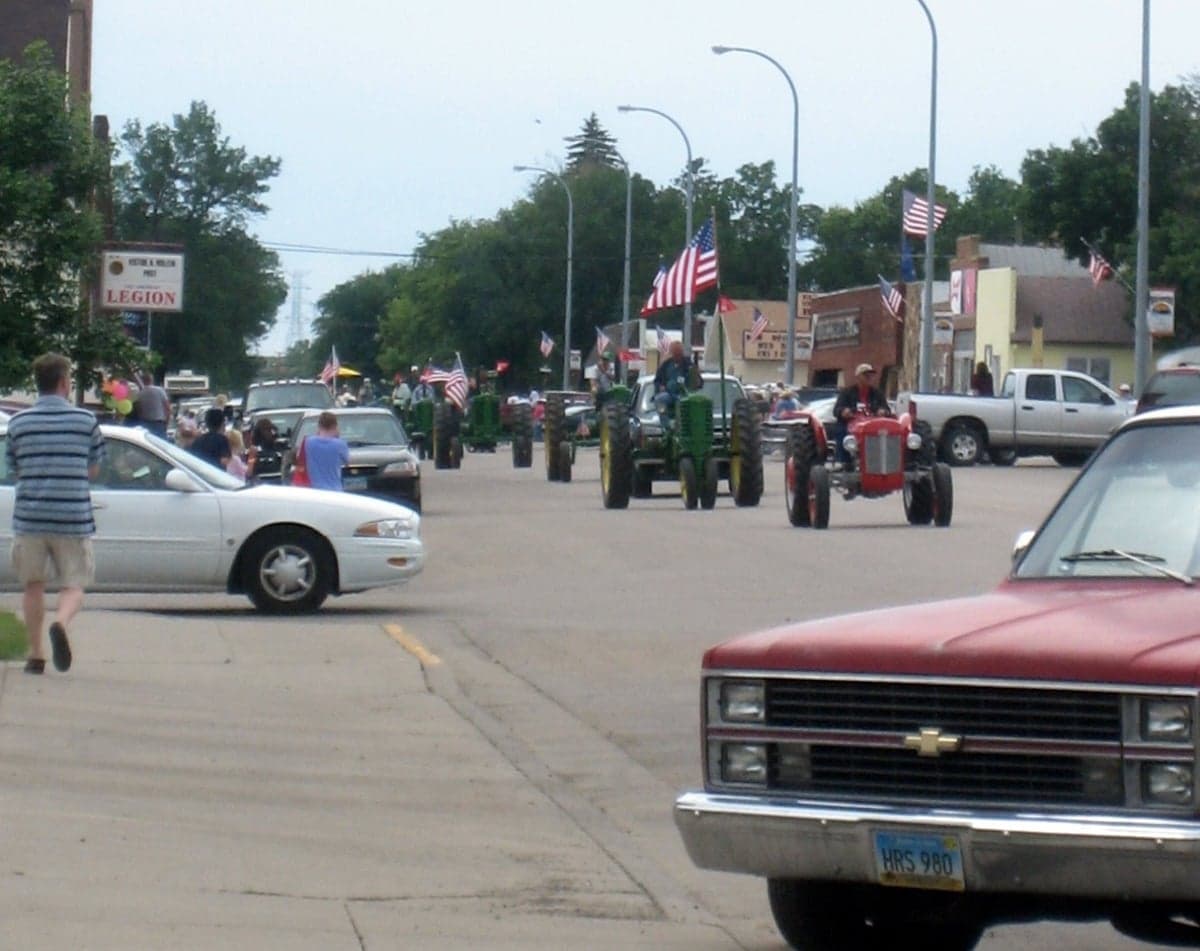
Photo: Wikipedia
Strategic Assessment of Washburn, ND
Workable tactical position. Some exposure to population density or targets, but generally defensible in a crisis.
What does the Strategic Assessment tell us?
Our Strategic Assessment grades tactical survivability of an area. Major population centers, military targets, fallout zones, natural disasters, and border exposure all drive risk — lower exposure means a more defensible position in a crisis.
This is heavily inspired by Joel Skousen's Strategic Relocation book. Highly recommended you checkout the book ($)What does this tell us?
Our Strategic Assessment grades tactical survivability of an area. Major population centers, military targets, fallout zones, natural disasters, and border exposure all drive risk — lower exposure means a more defensible position in a crisis.
This is heavily inspired by Joel Skousen's Strategic Relocation book. Highly recommended you checkout the book ($)Strategic Pillars

Key Distances
Regional Safe Places
Below is our recommended "safe zones" in North Dakota and the surrounding area based on our strategic heuristics. For most people, it's unrealistic to live in a “safe zone” full-time due to work, family or other personal reasons. They tend to be more rural. However, many of these areas are perfect for second homes and retreat properties that double as a vacation home or even a short-term rental.
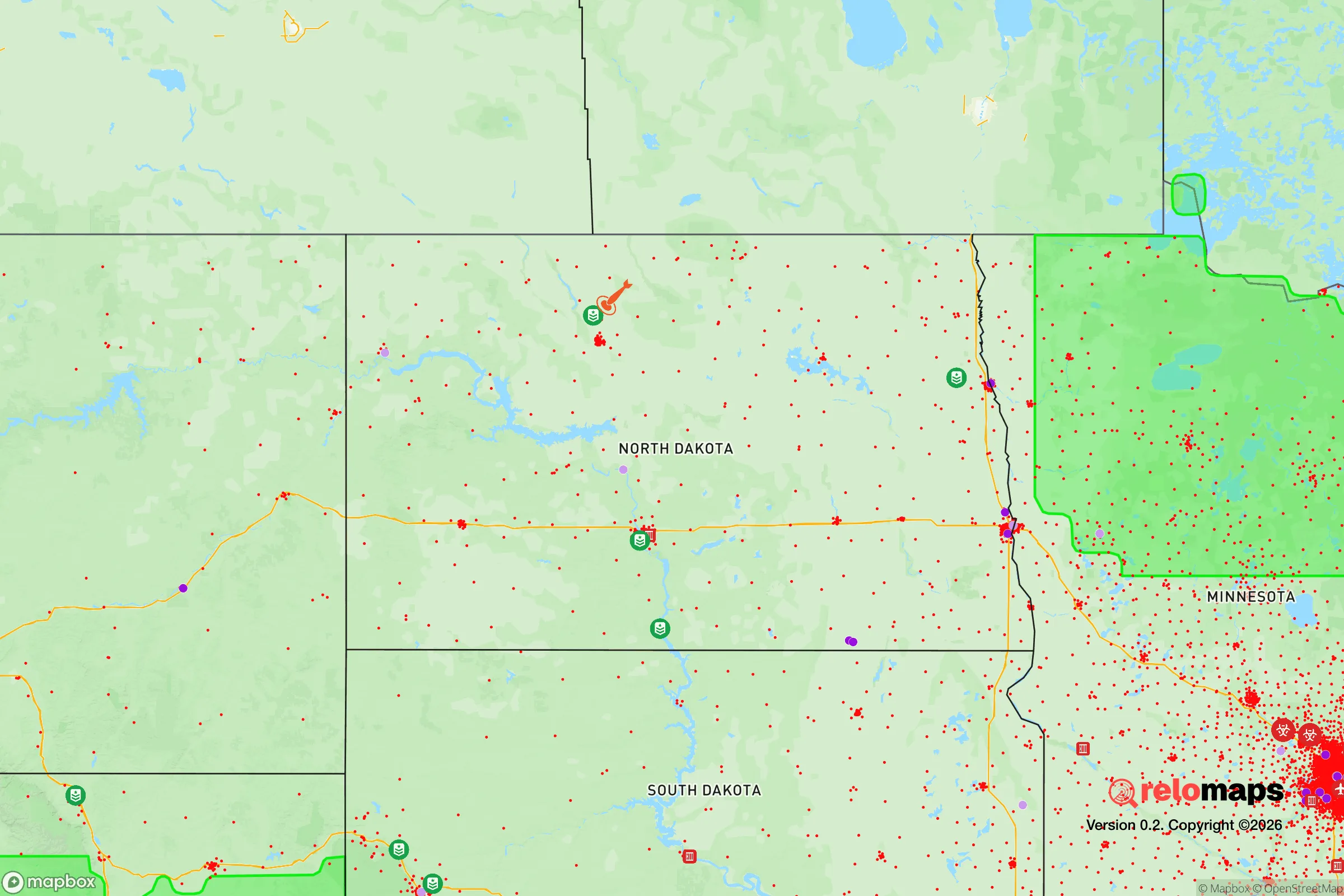
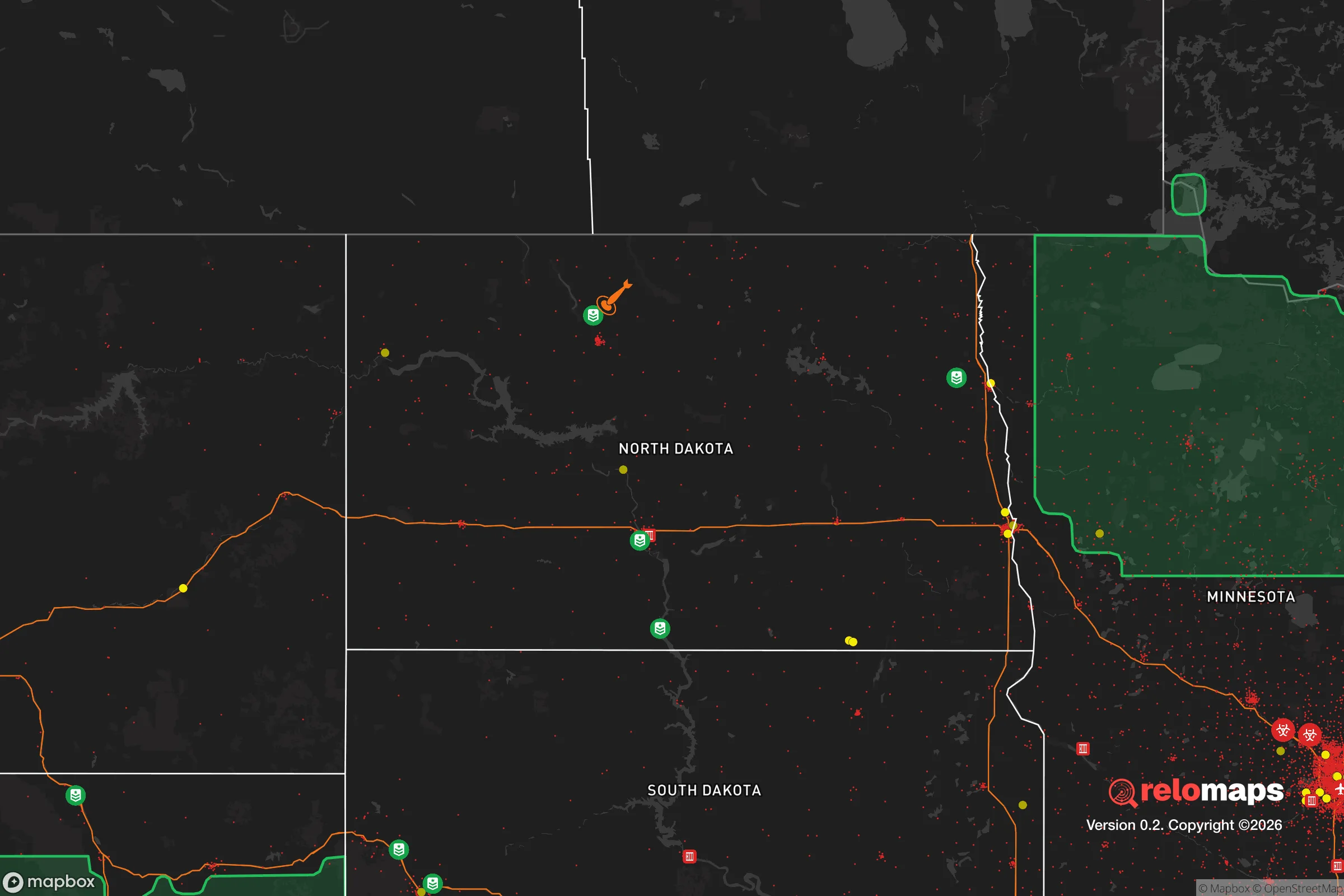


Important Note: For informational purposes only. This does not mean nothing bad ever happens in the green zones. Please use common sense. This is based on public data and modeled with AI. We tried to take a conservative approach but mistakes happen. We update this regularly as new information becomes available.
Solar Generator Recommendations
Backup power matters more here than in safer locations. We've picked three solar generators across budgets and capacity tiers — start with the budget unit if you only need a few essentials, or step up if you want to run a fridge and HVAC for days at a time.

Jackery Portable Power Station Explorer 300
Budget OptionPower on the Go: Weighing only 11 lbs, it's convenient to set up and store with book-sized foldable solar panels

BLUETTI Portable Power Station AC180
Designed for both indoor and outdoor scenarios, AC180 is highly capable as it has a robost capacity and continuous output power.

EF ECOFLOW DELTA Pro Ultra Power Station
Upgraded PickEcoFlow DELTA Pro Ultra is a whole-home energy system designed to grow with your family. Integrated with the Smart Home Panel 2, it scales to meet your evolving energy needs — keeping your home powered, intelligent, and secure through every stage of life.
We earn a commission, at no additional cost to you.
Strategic Assessment Analysis
Washburn, North Dakota, sits as a low-profile but strategically significant location for those prioritizing long-term resilience and distance from major population centers. Its position along the Missouri River, combined with a small population and a location far from any major metropolitan area, offers a rare combination of resource access and isolation that appeals to a survivalist or prepper mindset. For a relocator concerned with civic unrest, mass casualty events, or large-scale disasters, Washburn provides a baseline of security that is increasingly hard to find in the lower 48.
Geographic position and natural advantages for long-term security
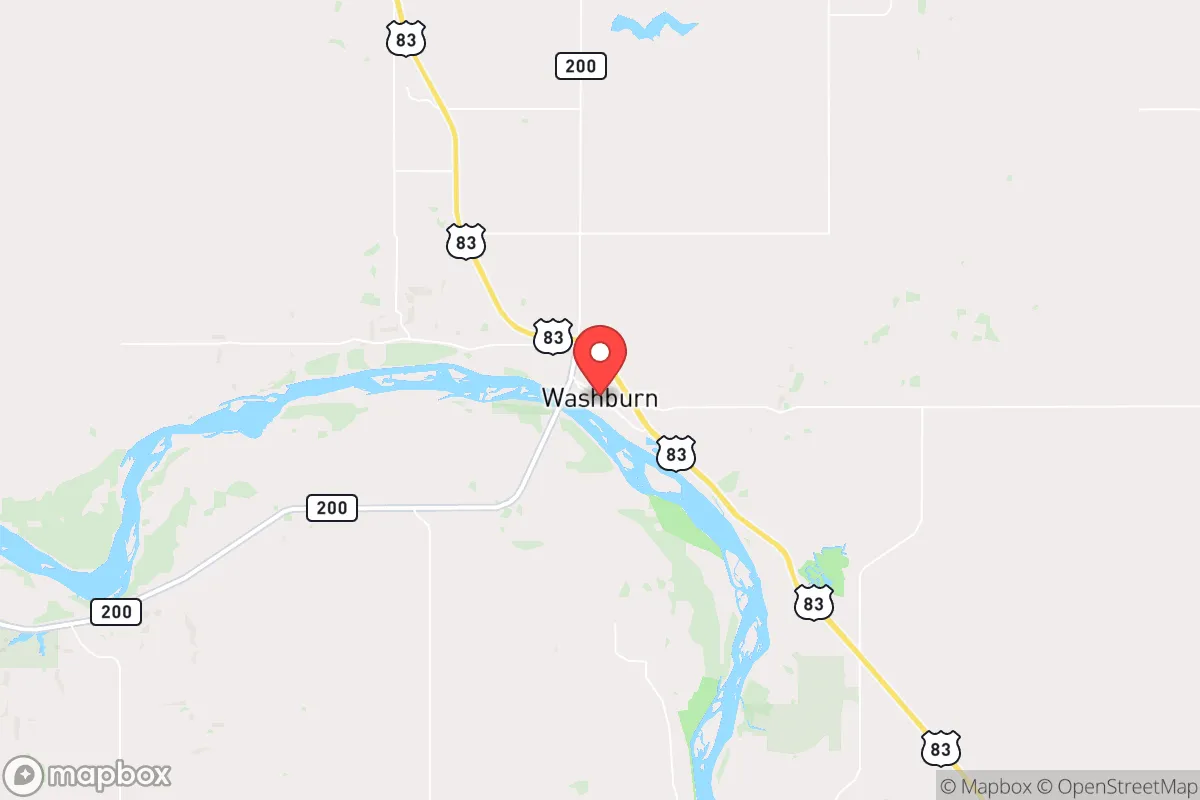
Washburn’s primary strategic asset is its location in central North Dakota, roughly 30 miles north of Bismarck and 50 miles south of Minot. This places it within a comfortable distance of regional medical and supply hubs while remaining far enough away to avoid the immediate fallout of urban unrest or a major disaster. The town itself sits on the eastern bank of the Missouri River, which provides a reliable water source—a critical factor for any extended survival scenario. The surrounding landscape is flat to gently rolling prairie, offering long sightlines that make approach detection easier, a subtle but real defensive advantage. The area’s low population density (Mercer County has roughly 8,000 residents) means that in a crisis, competition for resources would be far less intense than in suburban or urban environments. Additionally, the region’s cold winters and harsh climate act as a natural filter, discouraging casual migration and ensuring that only those genuinely committed to self-reliance will endure. For a relocator, this means a community that is already accustomed to hardship and self-sufficiency, not one that will panic at the first sign of trouble.
Risks, exposures, and proximity to fallout-relevant landmarks
No location is without risk, and Washburn has specific exposures that a strategic relocator must weigh. The most significant is the proximity to the Garrison Dam, located about 20 miles upstream on the Missouri River. While the dam provides hydroelectric power and flood control, it also represents a potential target for sabotage or a catastrophic failure scenario. A dam breach would inundate the river valley, including Washburn, with little warning. That said, the dam is a hardened, federally protected structure, and the likelihood of a deliberate attack is low compared to the risks of urban unrest. Another concern is the nearby oil and gas infrastructure in the Bakken formation to the northwest. While this brings economic activity, it also introduces industrial hazards—pipeline ruptures, well fires, or chemical spills—that could affect air and water quality. On the positive side, Washburn is far from any major military installations, nuclear power plants, or large-scale chemical facilities that would be primary targets in a conflict. The nearest city of any size, Bismarck, is a state capital with a moderate population (around 75,000), but it is not a high-value target for mass casualty events. For a relocator, the calculus is clear: the risks here are manageable and largely natural or industrial, not the cascading societal collapse that would follow a major urban disaster.
Practical resilience for a relocator: food, water, energy, and defensibility
For someone serious about self-reliance, Washburn offers a workable foundation. The Missouri River provides an abundant, year-round water source, but it requires treatment—boiling, filtration, or chemical purification—before consumption, as agricultural runoff and upstream industrial activity are real concerns. A well on private property is a better long-term solution, and the water table in the region is generally accessible. Food security is achievable through gardening and small-scale livestock, though the short growing season (roughly 120 frost-free days) limits crop variety. Hardy vegetables like potatoes, carrots, and squash, along with grains like wheat and barley, are viable. The area’s strong agricultural base means that local farmers and ranchers are a resource, but a relocator should plan to establish relationships well before any crisis. Energy is a mixed bag: the grid is reliable by rural standards, but winter storms can knock out power for days. Solar panels are less effective in the cloudy, short days of winter, so a backup generator with a fuel store (propane or diesel) is essential. Wood heating is a strong option, as the region has ample timber along the river breaks. Defensibility is decent but not fortress-like. The open prairie offers visibility, but it also means that a determined group could approach from any direction. A rural property with a good perimeter, a secure water source, and a defensible structure (e.g., a basement or reinforced outbuilding) would be ideal. The local law enforcement presence is minimal—Mercer County has a small sheriff’s department—so in a prolonged crisis, you are largely on your own. That is a feature, not a bug, for those who prefer not to rely on overstretched systems.
The overall strategic picture for Washburn is one of moderate but real resilience, with trade-offs that favor the prepared individual over the casual relocator. It is not a bug-out location for a weekend warrior; it is a place to build a life that is already oriented toward self-sufficiency, with the Missouri River as a lifeline and the isolation of the northern plains as a buffer. The risks—dam failure, industrial hazards, harsh winters—are knowable and mitigable with planning. The absence of large cities, military targets, and dense populations means that the most likely threats are natural or localized, not the cascading societal collapse that many preppers fear. For a conservative-leaning individual or family who values community, hard work, and distance from the chaos of modern urban life, Washburn represents a solid, if unglamorous, option. It will not make headlines, and that is precisely the point.

* Values derived from national, state, county, city and local statistics and may differ in a specific area. Last updated: 2026-04-19T08:25:01.000Z
Narrative content on this page is AI-generated and may contain mistakes. Verify any details that matter before acting on them.
ReloMaps may earn a commission from affiliate links at no extra cost to you.

