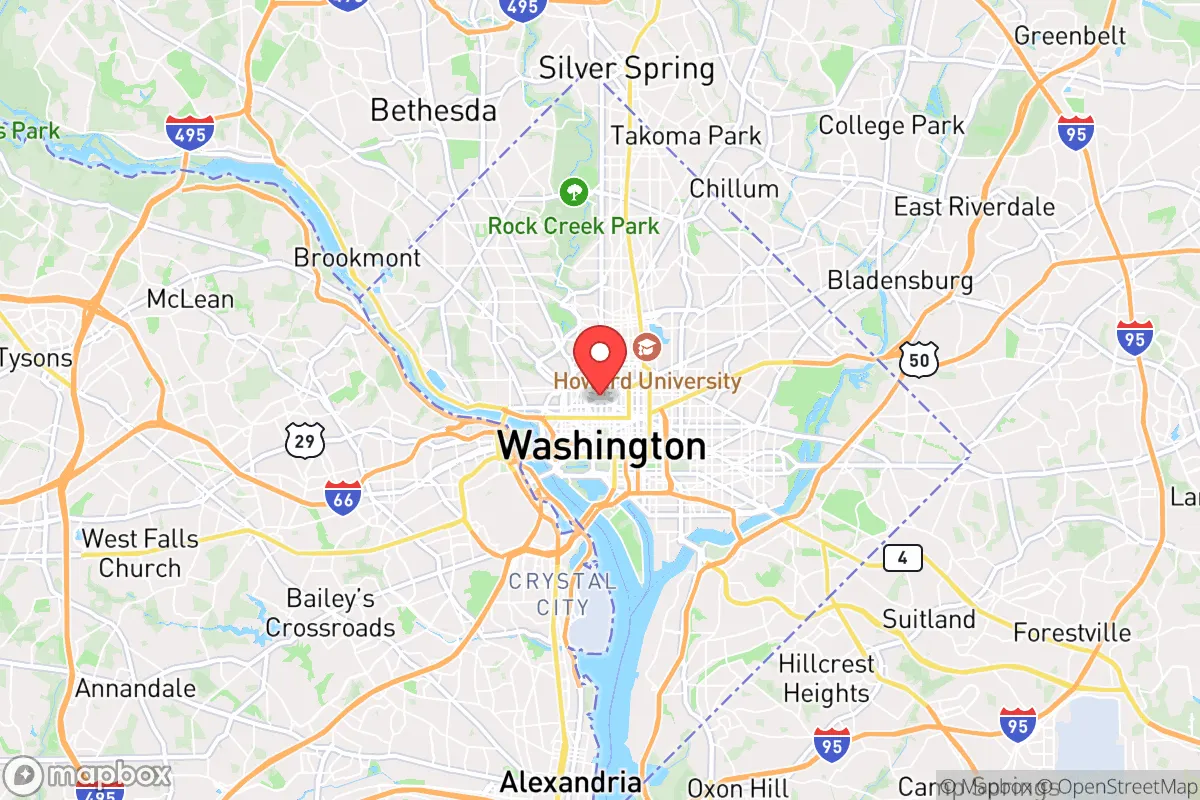
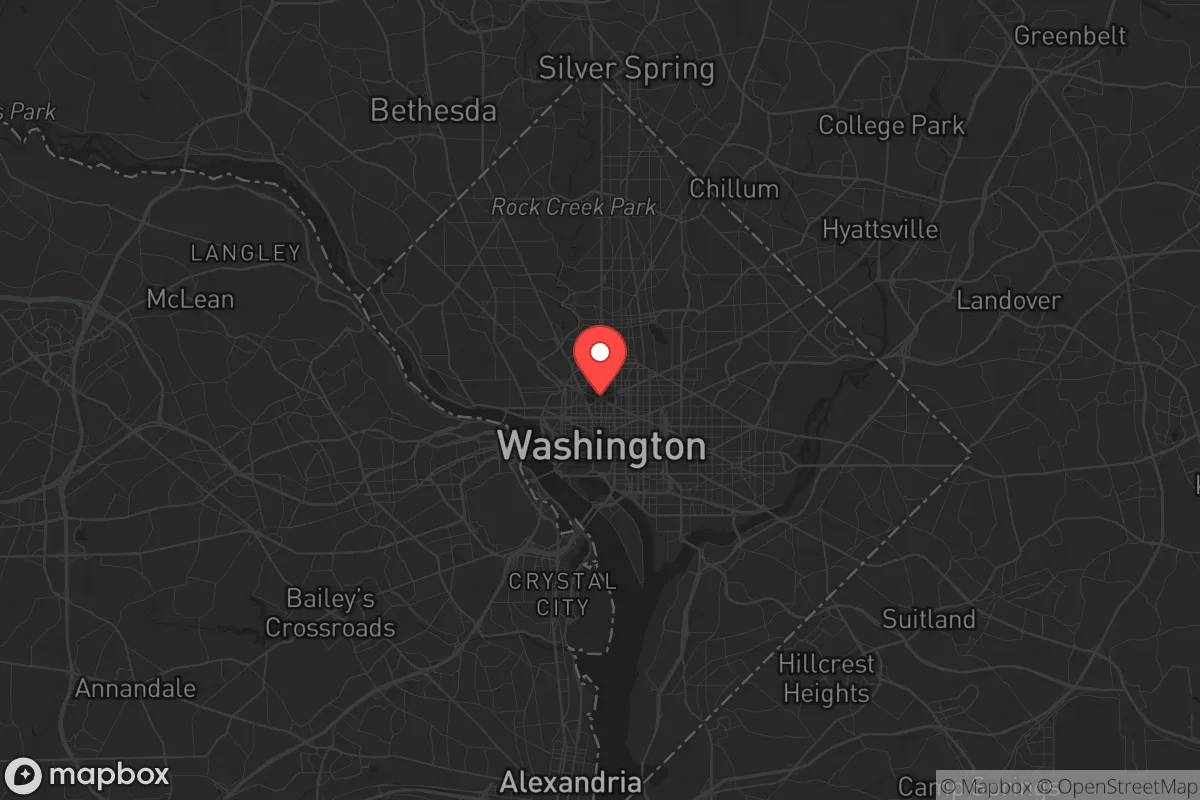
Strategic Assessment of Washington, DC
High tactical risk. This location is likely close to major population centers, strategic targets, or sits in a high-disaster corridor. A retreat property and careful exit planning is required.
What does the Strategic Assessment tell us?
Our Strategic Assessment grades tactical survivability of an area. Major population centers, military targets, fallout zones, natural disasters, and border exposure all drive risk — lower exposure means a more defensible position in a crisis.
This is heavily inspired by Joel Skousen's Strategic Relocation book. Highly recommended you checkout the book ($)What does this tell us?
Our Strategic Assessment grades tactical survivability of an area. Major population centers, military targets, fallout zones, natural disasters, and border exposure all drive risk — lower exposure means a more defensible position in a crisis.
This is heavily inspired by Joel Skousen's Strategic Relocation book. Highly recommended you checkout the book ($)Strategic Pillars

Key Distances
Regional Safe Places
Below is our recommended "safe zones" in District of Columbia and the surrounding area based on our strategic heuristics. For most people, it's unrealistic to live in a “safe zone” full-time due to work, family or other personal reasons. They tend to be more rural. However, many of these areas are perfect for second homes and retreat properties that double as a vacation home or even a short-term rental.
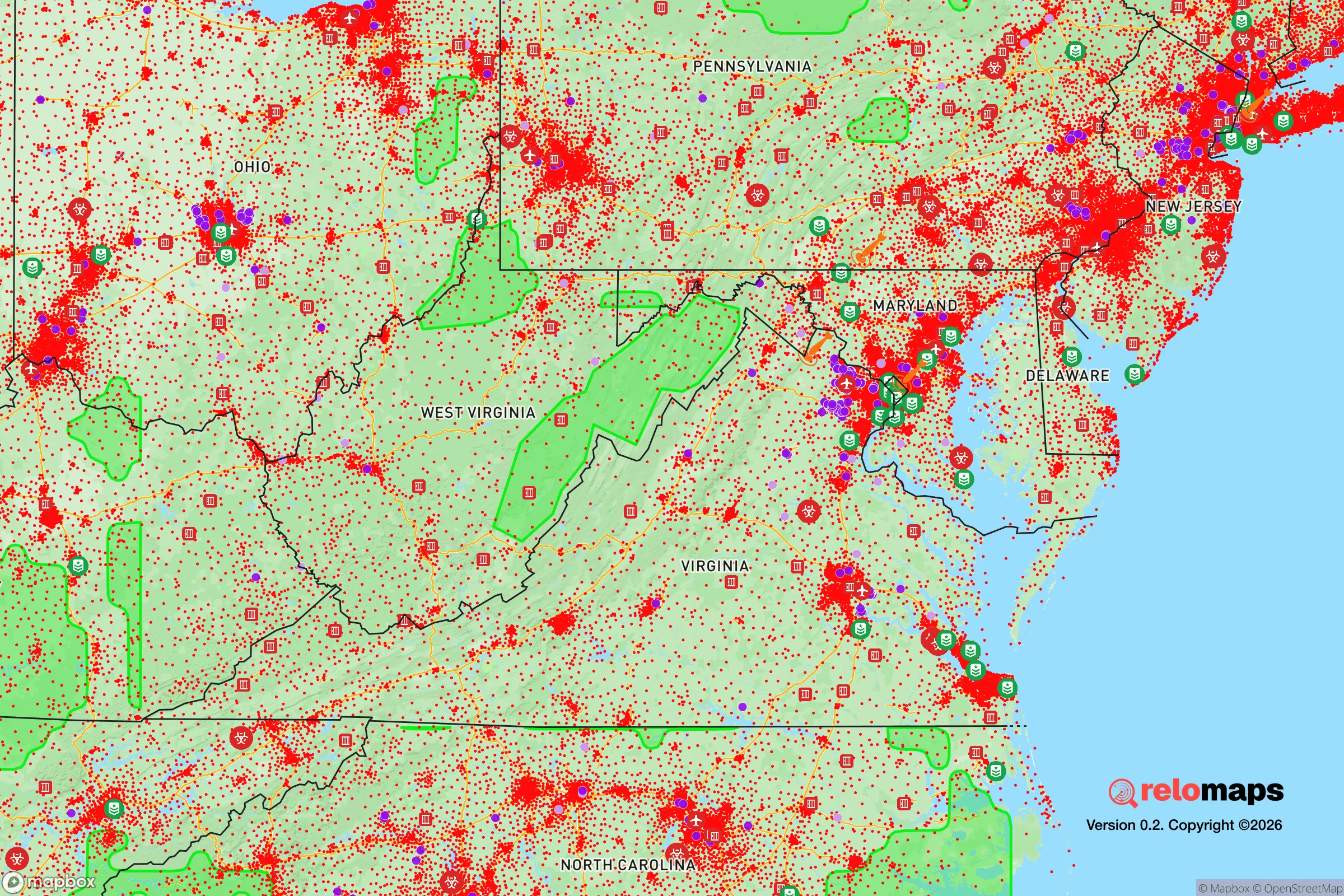
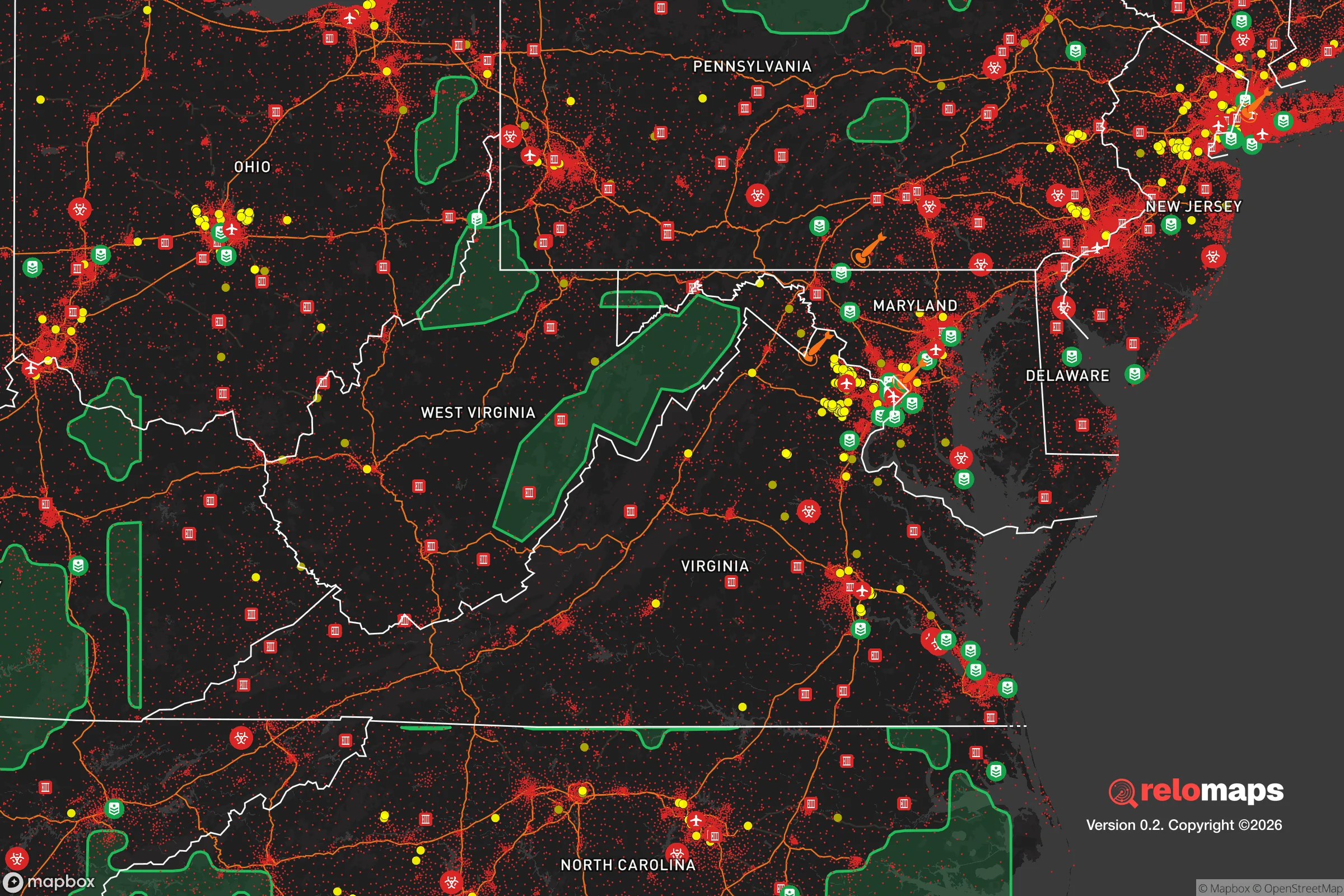


Important Note: For informational purposes only. This does not mean nothing bad ever happens in the green zones. Please use common sense. This is based on public data and modeled with AI. We tried to take a conservative approach but mistakes happen. We update this regularly as new information becomes available.
Solar Generator Recommendations
Backup power matters more here than in safer locations. We've picked three solar generators across budgets and capacity tiers — start with the budget unit if you only need a few essentials, or step up if you want to run a fridge and HVAC for days at a time.

Jackery Portable Power Station Explorer 300
Budget OptionPower on the Go: Weighing only 11 lbs, it's convenient to set up and store with book-sized foldable solar panels

BLUETTI Portable Power Station AC180
Designed for both indoor and outdoor scenarios, AC180 is highly capable as it has a robost capacity and continuous output power.

EF ECOFLOW DELTA Pro Ultra Power Station
Upgraded PickEcoFlow DELTA Pro Ultra is a whole-home energy system designed to grow with your family. Integrated with the Smart Home Panel 2, it scales to meet your evolving energy needs — keeping your home powered, intelligent, and secure through every stage of life.
We earn a commission, at no additional cost to you.
Strategic Assessment Analysis
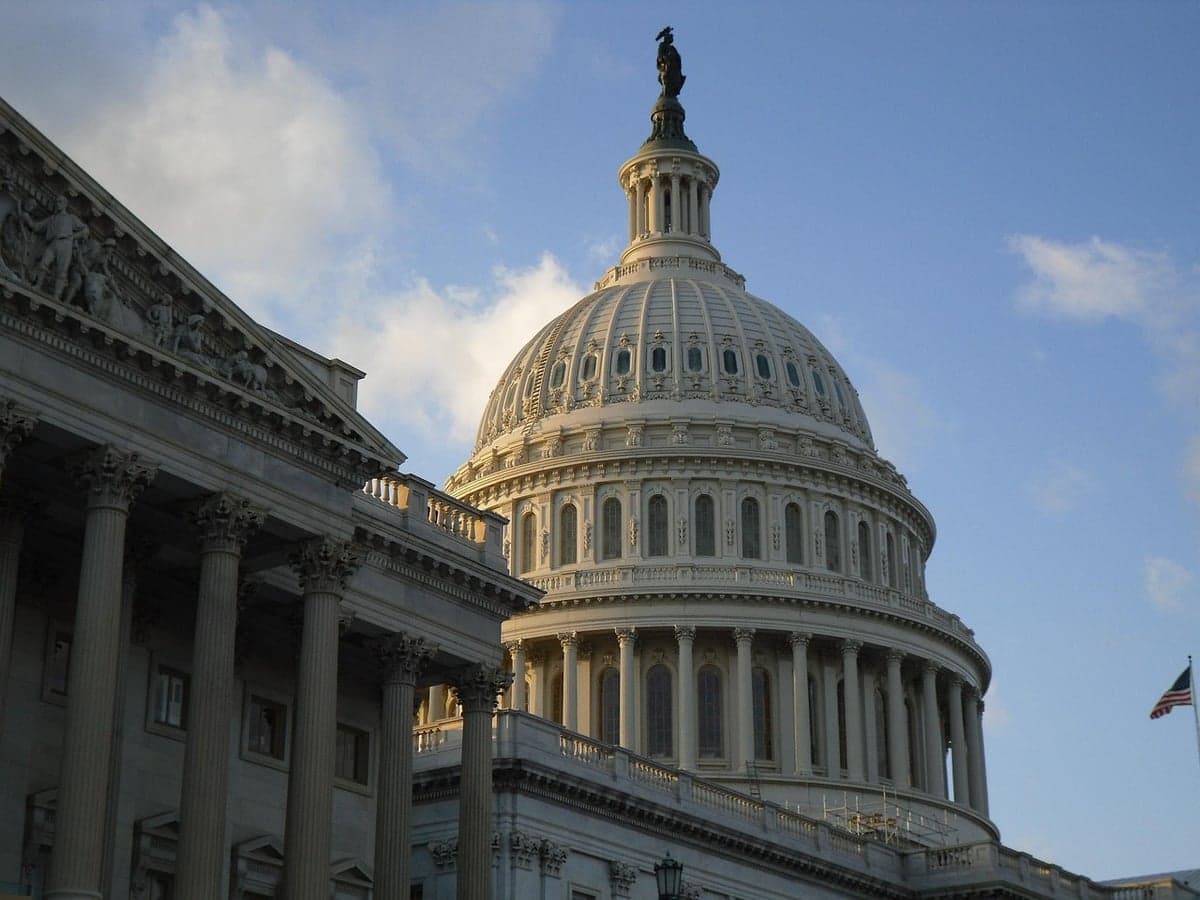
Washington, DC, is a paradox for the strategic relocator: it sits at the center of American power, yet its very location makes it one of the most vulnerable places in the country for long-term survival and security. The District’s resilience is undermined by its extreme population density, political polarization, and proximity to high-value targets that would attract both foreign and domestic threats. For a conservative-leaning individual or family prioritizing self-reliance, civic stability, and escape routes, the nation’s capital presents a series of compounding risks that far outweigh its logistical advantages.
Geographic position and natural advantages for long-term survival
Geographically, Washington, DC, occupies a low-lying floodplain along the Potomac and Anacostia Rivers, which provides abundant freshwater but also creates chronic flooding risks—especially in neighborhoods like Georgetown, Southwest Waterfront, and near the National Mall. The area’s natural defenses are minimal: the terrain is gently rolling, with no significant mountains or natural barriers to slow an advancing threat. The Chesapeake Bay to the east and the Appalachian foothills to the west offer some buffer, but the city itself is a bowl, easily approached from all directions via major interstates (I-95, I-495, I-395, and I-270). For a prepper, this means escape routes are predictable and easily choked. The region’s moderate climate supports four-season gardening, but the heavy clay soil and urban heat island effect make subsistence farming difficult within the District’s 68 square miles. The real natural advantage lies in the surrounding counties—Loudoun, Fauquier, and Rappahannock in Virginia, and Montgomery and Frederick in Maryland—which offer better soil, higher elevation, and more defensible terrain. But getting there from inside the Beltway during a crisis is the problem.
Risks, exposures, and proximity to fallout-relevant landmarks
The single greatest risk for a relocator in DC is its status as the world’s most concentrated target for political violence, terrorism, and civil unrest. The city hosts the White House, Capitol, Pentagon, Supreme Court, and dozens of federal agencies—all of which are high-probability targets for a mass casualty event. In a nuclear scenario, DC sits within the blast and fallout zones of multiple potential targets, including the Pentagon and Joint Base Andrews. The prevailing winds would carry fallout east-northeast toward the Chesapeake Bay, but even a ground burst at the Capitol would contaminate much of the District and inner suburbs. Beyond nuclear threats, the city’s history of civil unrest—from the 1968 riots to the January 6, 2021, Capitol breach and the 2020 protests—demonstrates how quickly order can break down. The District’s police force is stretched thin, and the National Guard is often deployed elsewhere. For a conservative family, the political climate itself is a risk: the city’s leadership is overwhelmingly progressive, and during a crisis, resources like food, water, and medical supplies would be directed first to government personnel and VIPs, not ordinary residents. The proximity to Fort Belvoir, Quantico, and other military installations means that in a martial law scenario, the area would be locked down quickly, making escape nearly impossible.
Practical resilience for a relocator: food, water, energy, and defensibility
For a relocator focused on practical resilience, Washington, DC, scores poorly across the board. Food security is a major concern: the city has less than a three-day supply of food on grocery shelves at any given time, and the supply chain relies on just-in-time delivery from warehouses in Maryland and Virginia. During a crisis, those warehouses would be stripped within hours. Community gardens exist but are small-scale and vulnerable to looting. Water is equally fragile: the city’s drinking water comes from the Potomac River, treated at the Washington Aqueduct. A single attack on the aqueduct or the nearby Blue Plains wastewater treatment plant could cut off clean water for weeks. Bottled water stockpiles are minimal, and the city’s emergency water distribution plans are untested at scale. Energy infrastructure is brittle: the grid is old, with above-ground power lines that fail in storms and are easily sabotaged. Natural gas lines run under densely populated neighborhoods, creating explosion risks. Solar panels are rare, and most homes rely on grid power. Defensibility is the weakest point: the city’s rowhouses and apartments offer no defensible perimeter, and the street grid is a maze of one-way roads and dead ends. A single family cannot secure a block, let alone a neighborhood. The best option for a prepper is to live in a suburban or exurban enclave with a strong homeowners’ association, a community well, and a mutual-aid network—but even then, the proximity to DC means that any major event will draw refugees from the city, overwhelming local resources. For a single individual, a rural retreat in West Virginia or Pennsylvania is a far more viable option than trying to bug in within the Beltway.
The overall strategic picture for Washington, DC, is clear: it is a high-risk, low-resilience location for anyone serious about long-term survival and self-reliance. The city’s political and symbolic importance makes it a magnet for disaster, while its geography, infrastructure, and demographics work against any meaningful preparation. For a conservative-leaning relocator, the calculus is simple: the cost of living, the political hostility, and the vulnerability to both natural and man-made events outweigh any professional or cultural benefits. If you must be in the region for work, the smart play is to live as far out as possible—think Winchester, Virginia, or Frederick, Maryland—and maintain a fully stocked bug-out vehicle and a rural retreat at least two hours from the city center. But for those who can choose freely, the smartest move is to look elsewhere entirely. The nation’s capital is a place to visit, not to stake your family’s future on.

* Values derived from national, state, county, city and local statistics and may differ in a specific area. Last updated: 2026-04-16T00:24:42.000Z
Narrative content on this page is AI-generated and may contain mistakes. Verify any details that matter before acting on them.
ReloMaps may earn a commission from affiliate links at no extra cost to you.

