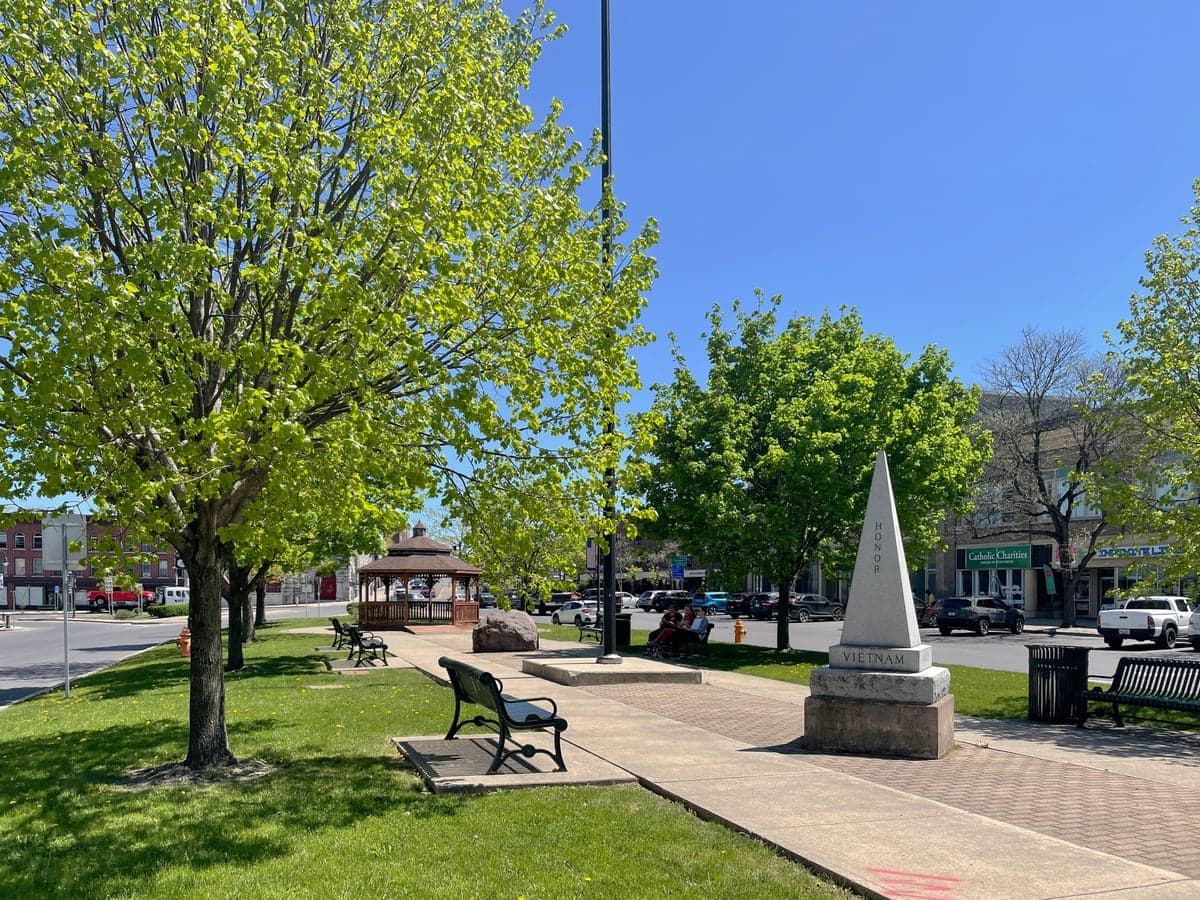
Photo: Wikipedia
Personal Sovereignty in Watertown, NY
Moderate friction. Expect trade-offs in some aspect of personal liberty and independence.
What does Personal Sovereignty tell us?
Personal Sovereignty measures your capacity for self-reliance and independence with minimal government friction. Higher scores mean fewer barriers between you and the way you want to live... but it assumes you have the space you need and good neighbors.
What does this tell us?
Personal Sovereignty measures your capacity for self-reliance and independence with minimal government friction. Higher scores mean fewer barriers between you and the way you want to live... but it assumes you have the space you need and good neighbors.
State Policy
Energy independence: Importer (12% of energy produced in-state)
Personal Liberty
Homesteading

Personal Liberty Analysis
Watertown, New York, offers a mixed bag for those prioritizing personal sovereignty, with its small-city character and rural Jefferson County surroundings providing more breathing room than downstate metros, but the heavy hand of Albany’s progressive governance casts a long shadow over local autonomy. For the survivalist or prepper-minded individual, the area’s lower population density and access to the North Country’s natural resources are genuine assets, yet state-level mandates on everything from vaccine passports to energy policy can feel like a constant encroachment. The key here is understanding that Watertown’s practical sovereignty often depends on how well you can navigate or insulate yourself from state overreach, rather than expecting the locality to fully shield you. For single individuals and parents alike, the calculus involves weighing the tangible freedoms of land and lifestyle against the intangible creep of government control from afar.
Tax burden and regulatory posture in Jefferson County
New York State’s tax burden is among the highest in the nation, and Watertown is not exempt from that reality, though the local property tax rates are somewhat more manageable than in the New York City suburbs. The combined state and local income tax can hit over 8% for middle earners, and property taxes in Jefferson County average around 2.5% of assessed home value, which is steep compared to states like Texas or Florida but lower than in much of the rest of New York. The regulatory posture from Albany is decidedly hostile to individual economic freedom, with strict building codes, environmental review requirements, and a general tilt toward permitting delays that can frustrate anyone trying to develop land or start a home-based business. For the prepper, this means that any significant off-grid infrastructure—like a solar array, rainwater catchment, or a root cellar—may require permits and inspections that invite government scrutiny, though rural enforcement is often lax compared to urban areas. The state’s push for green energy mandates also means that replacing a heating system or vehicle comes with regulatory nudges toward expensive compliance, eating into the financial independence many seek.
Self-defense and gun law specifics in Watertown
New York’s gun laws are among the most restrictive in the country, and Watertown residents must navigate a dense web of regulations that directly impact self-defense capabilities. The SAFE Act, still in effect, bans so-called “assault weapons” and limits magazine capacity to ten rounds, while the 2022 Concealed Carry Improvement Act (CCIA) requires a pistol permit for any concealed carry and mandates a 16-hour training course plus a background check for ammo purchases. For the survivalist, this means that carrying a firearm for personal protection in Watertown is a bureaucratic ordeal, with local pistol permit applications subject to the sheriff’s discretion and often taking months to process. Open carry is effectively illegal without a permit, and the state’s “sensitive locations” law bans firearms in parks, public transportation, and even private businesses unless the owner explicitly posts a sign allowing them. On the positive side, Jefferson County’s sheriff has historically been more supportive of Second Amendment rights than downstate counterparts, and the rural culture means many locals still own firearms for hunting and sport, but the legal climate is a constant reminder that Albany does not trust its citizens with self-defense.
Self-reliance and homesteading viability in the North Country
Watertown’s surrounding rural areas offer genuine opportunities for self-reliance, with vacant lots and acreage available for under $10,000 per acre in many parts of Jefferson County, making it feasible for a family to purchase 5-10 acres for a homestead. Zoning in unincorporated areas is generally permissive, allowing for livestock, gardens, and outbuildings without the strict homeowner association rules found in suburban developments, though you’ll still need to comply with state agricultural regulations. Off-grid feasibility is mixed: the long, harsh winters (averaging 120 inches of snow annually) make solar power a challenge without a robust battery bank and backup generator, and the state’s net metering policies can complicate grid-tied systems. Water rights are generally tied to property ownership, with wells common in rural areas, but Albany’s environmental regulations on septic systems and wetland buffers can limit where you can build. For the prepper, the ability to raise chickens, hunt deer, and grow a substantial garden is real, but the cost of heating a home with wood or propane in a climate that sees subzero temperatures for weeks at a time is a serious logistical and financial consideration.
Personal liberties: parental rights, medical autonomy, speech, and property
Parental rights in New York have been under sustained assault, with the state mandating COVID-19 vaccines for school attendance (though currently not enforced for all ages) and pushing comprehensive sex education that many conservative parents find intrusive. The state’s medical autonomy landscape is similarly troubling: New York has some of the strictest vaccine mandates in the country, and during the pandemic, the governor used executive orders to mandate masks and vaccines in ways that bypassed local control. Free speech is technically protected, but the state’s hate speech laws and social media regulations create a chilling effect for those who express dissenting views on public health or gender ideology. Property rights are constrained by the state’s expansive eminent domain powers and environmental regulations, such as the Freshwater Wetlands Act, which can restrict what you do on your own land if it’s near a marsh or stream. For the parent concerned about government overreach, Watertown’s local school board elections and town meetings offer a venue for pushback, but the state legislature in Albany consistently overrides local control on issues like vaccine mandates and curriculum.
Overall, Watertown provides a moderate level of personal sovereignty compared to many other areas in the Northeast, but it falls short of the freedom found in states like New Hampshire, Idaho, or Texas. The low population density and rural character give you room to live your life with less daily interference, but the state’s tax burden, gun laws, and medical mandates are constant reminders that Albany holds the reins. For the survivalist or prepper who values self-reliance, the area’s affordability and access to land are significant draws, but you’ll need to be prepared to fight for your rights at the local level and accept that some battles—like the right to carry a firearm without a permit—are lost at the state level. If you’re willing to trade some legal freedom for geographic space and a lower cost of entry, Watertown can work, but it’s not a sanctuary from government overreach—it’s a place where you’ll need to be strategic, informed, and ready to adapt.

* Values derived from national, state, county, city and local statistics and may differ in a specific area. Last updated: 2026-05-02T00:02:36.000Z
Narrative content on this page is AI-generated and may contain mistakes. Verify any details that matter before acting on them.
ReloMaps may earn a commission from affiliate links at no extra cost to you.

