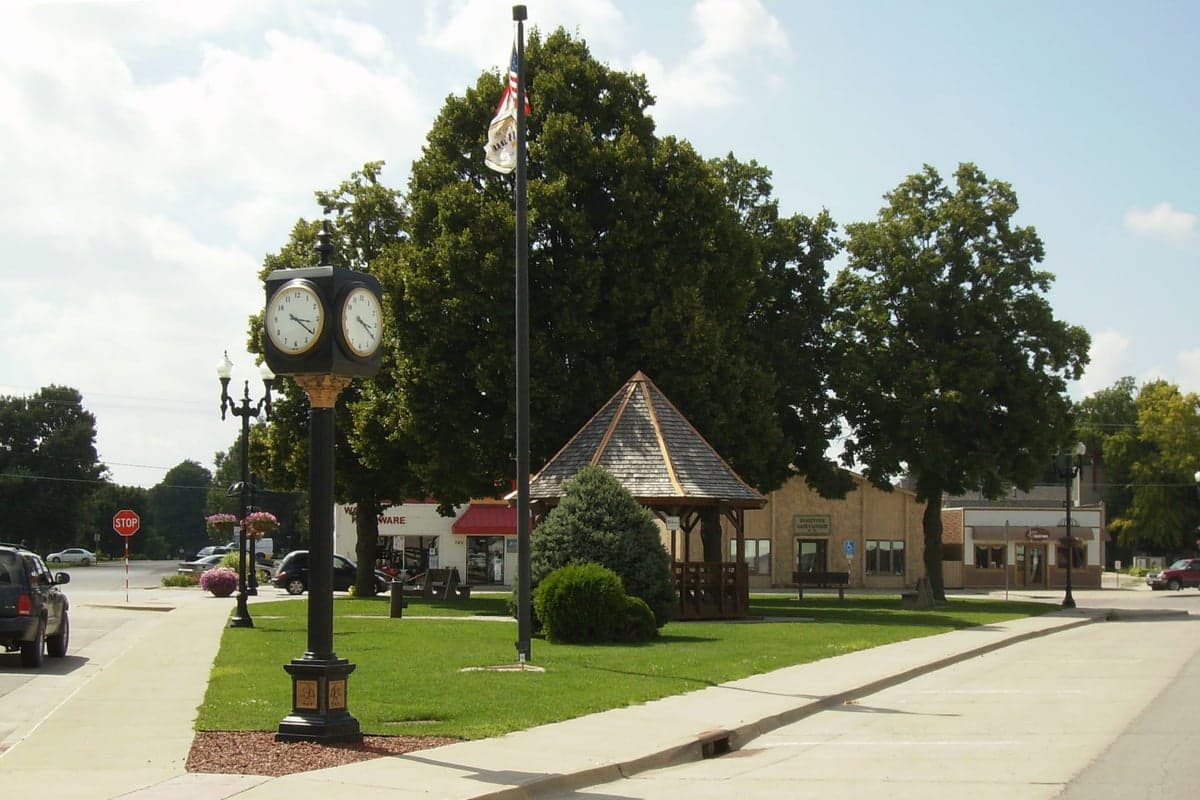
Photo: Wikipedia
Personal Sovereignty in Waukee, IA
Viable for self-reliance. Generally workable, though some barriers may limit total independence.
What does Personal Sovereignty tell us?
Personal Sovereignty measures your capacity for self-reliance and independence with minimal government friction. Higher scores mean fewer barriers between you and the way you want to live... but it assumes you have the space you need and good neighbors.
What does this tell us?
Personal Sovereignty measures your capacity for self-reliance and independence with minimal government friction. Higher scores mean fewer barriers between you and the way you want to live... but it assumes you have the space you need and good neighbors.
State Policy
Energy independence: Importer (50% of energy produced in-state)
Personal Liberty
Homesteading

Personal Liberty Analysis
Waukee, Iowa, offers a notably high degree of personal sovereignty compared to many coastal and Midwestern alternatives, largely due to Iowa’s consistent track record of limiting state-level overreach into daily life. For the survivalist or prepper-minded individual, this translates into a legal environment where self-reliance is not just tolerated but structurally supported. The city’s rapid growth—from roughly 14,000 in 2010 to over 26,000 today—has not yet triggered the kind of heavy-handed regulatory creep seen in larger metros like Des Moines or Cedar Rapids. Instead, Waukee retains a practical, live-and-let-live ethos that aligns with a conservative, self-sufficient worldview, making it a strategic base for those prioritizing autonomy over convenience.
Tax burden and regulatory posture: How Iowa’s policies support self-reliance
Iowa’s tax structure and regulatory climate are a net positive for personal sovereignty. The state’s flat income tax rate of 3.8% (effective 2026, down from a progressive top rate of 8.53% in 2022) directly reduces the government’s claim on your earnings, leaving more capital for private preparedness—whether that’s land acquisition, food storage, or defensive equipment. Property taxes in Waukee hover around 1.6% of assessed value, slightly above the national average but offset by the absence of a state-level property tax and a relatively low sales tax of 7% (6% state, 1% local). More critically, Iowa is a right-to-work state with no state-level occupational licensing mandates for many trades, meaning you can build a workshop, repair equipment, or start a small-scale farming operation without navigating a bureaucratic maze. Zoning in Waukee is generally permissive for residential uses, though the city’s recent annexations have introduced some subdivision-level covenants that can restrict things like livestock or outdoor storage—so buyers should scrutinize HOA rules before committing. Overall, the regulatory posture is one of low friction, not zero friction, but it’s far lighter than states like California, New York, or even neighboring Illinois.
Self-defense and gun law specifics: What the Second Sanctuary means for preppers
Iowa is a constitutional carry state since 2021, meaning no permit is required to carry a concealed firearm for anyone legally allowed to possess one. This is a foundational pillar for personal sovereignty—your ability to defend yourself, your family, and your supplies is not contingent on government permission. Waukee itself is located in Dallas County, which has a strong pro-Second Amendment record; the county sheriff’s office does not engage in “red flag” enforcement beyond state mandates, and there are no local ordinances that restrict magazine capacity, ammunition types, or firearm storage. The state also preempts local gun laws, so Waukee cannot pass its own restrictions. For preppers, this means you can maintain a robust personal armory—including AR-15s, suppressors (with federal NFA compliance), and high-capacity magazines—without fear of sudden local bans. Stand-your-ground laws are in effect, with no duty to retreat in any place you are lawfully present. The only notable caveat is that Iowa requires a permit to purchase handguns from private sellers (though not from FFLs), but this is a minor administrative step. For those coming from restrictive states, the shift in legal posture is dramatic: you are trusted, not suspected.
Self-reliance and homesteading viability: Lot sizes, zoning, and off-grid feasibility
Waukee’s suburban character limits full-scale homesteading within city limits, but the surrounding Dallas County area offers genuine opportunities for self-reliance. Inside Waukee, standard residential lots range from 0.15 to 0.5 acres, with newer developments often featuring HOAs that prohibit chickens, goats, or visible garden structures. However, the city’s agricultural-residential (AR) zoning—found on the outskirts, particularly near the Raccoon River Valley Trail—allows lots of 1 to 5 acres where livestock, beekeeping, and large gardens are permitted. For off-grid feasibility, Iowa is a net-metering state, meaning you can install solar panels and sell excess power back to the grid, though the city requires standard building permits for any electrical work. Rainwater collection is legal without a permit, and composting is unrestricted. The real draw for preppers is the rural land within a 15-minute drive of Waukee: undeveloped parcels in Dallas and Madison counties can be had for $5,000–$10,000 per acre, with no zoning restrictions on wells, septic systems, or alternative energy. The Jordan Aquifer provides reliable groundwater, and the area’s moderate climate (average 35 inches of rain per year) supports year-round food production. For those willing to live outside the city’s utility hookups, a fully off-grid homestead is legally and practically viable within a short commute of Waukee’s amenities.
Personal liberties: Parental rights, medical autonomy, speech, and property
Iowa has been a battleground for parental rights, and the current legal landscape strongly favors family autonomy. The state’s Parental Rights in Education law (2023) requires schools to notify parents of any curriculum involving gender identity or sexual orientation, and prohibits instruction on these topics in grades K-6. This gives parents direct control over what their children are exposed to, a critical consideration for those concerned about government or institutional overreach. Medical autonomy is similarly robust: Iowa does not have a state-level vaccine mandate for adults or children, and the COVID-era emergency powers were sunset in 2023, preventing future governors from unilaterally imposing lockdowns or mask mandates. For speech, Iowa is a First Amendment sanctuary in practice—no hate speech laws, no “misinformation” boards, and no state-level censorship of online content. Property rights are protected by a strong eminent domain statute that requires “public use” (not just “public benefit”), and the state has a private property protection act that compensates landowners for regulatory takings. The only notable friction point is the state’s medical cannabis program, which is limited to low-THC products and requires a doctor’s recommendation—full plant possession remains illegal. For the survivalist, this is a minor inconvenience; the broader picture is one of minimal government intrusion into family, health, and property decisions.
Overall, Waukee ranks among the top-tier locations in the Midwest for personal sovereignty, particularly when compared to the regulatory-heavy environments of the coasts or even nearby Minnesota and Illinois. The combination of constitutional carry, low taxes, permissive zoning on the outskirts, and strong parental rights creates a legal ecosystem where a prepper or conservative-leaning individual can operate with minimal state friction. The trade-off is that Waukee itself is a growing suburb with increasing HOA influence and development pressure, so the highest sovereignty is found just beyond the city limits. For those willing to buy a few acres in Dallas County and commute into Waukee for work or supplies, the area offers a rare balance of economic opportunity and personal freedom—a strategic foothold in an increasingly uncertain national landscape.

* Values derived from national, state, county, city and local statistics and may differ in a specific area. Last updated: 2026-10-10T16:29:20.000Z
Narrative content on this page is AI-generated and may contain mistakes. Verify any details that matter before acting on them.
ReloMaps may earn a commission from affiliate links at no extra cost to you.

