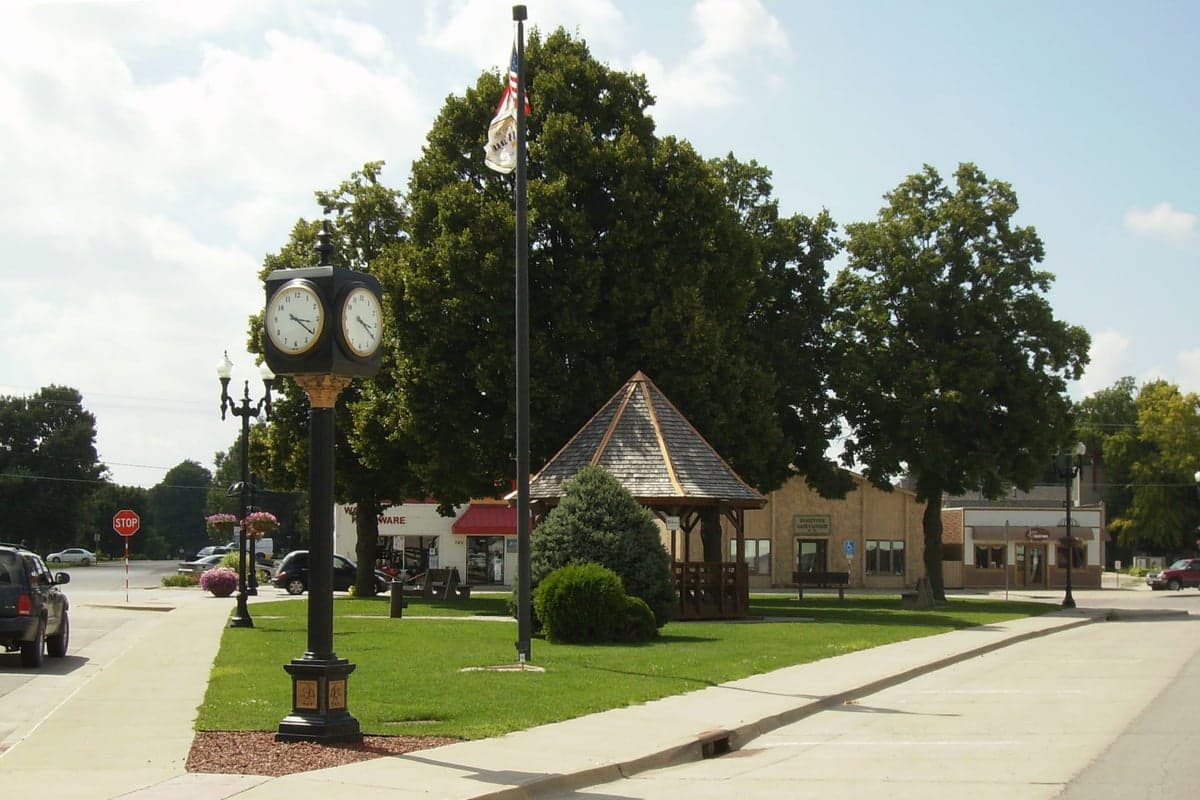
Photo: Wikipedia
Strategic Assessment of Waukee, IA
Workable tactical position. Some exposure to population density or targets, but generally defensible in a crisis.
What does the Strategic Assessment tell us?
Our Strategic Assessment grades tactical survivability of an area. Major population centers, military targets, fallout zones, natural disasters, and border exposure all drive risk — lower exposure means a more defensible position in a crisis.
This is heavily inspired by Joel Skousen's Strategic Relocation book. Highly recommended you checkout the book ($)What does this tell us?
Our Strategic Assessment grades tactical survivability of an area. Major population centers, military targets, fallout zones, natural disasters, and border exposure all drive risk — lower exposure means a more defensible position in a crisis.
This is heavily inspired by Joel Skousen's Strategic Relocation book. Highly recommended you checkout the book ($)Strategic Pillars

Key Distances
Regional Safe Places
Below is our recommended "safe zones" in Iowa and the surrounding area based on our strategic heuristics. For most people, it's unrealistic to live in a “safe zone” full-time due to work, family or other personal reasons. They tend to be more rural. However, many of these areas are perfect for second homes and retreat properties that double as a vacation home or even a short-term rental.
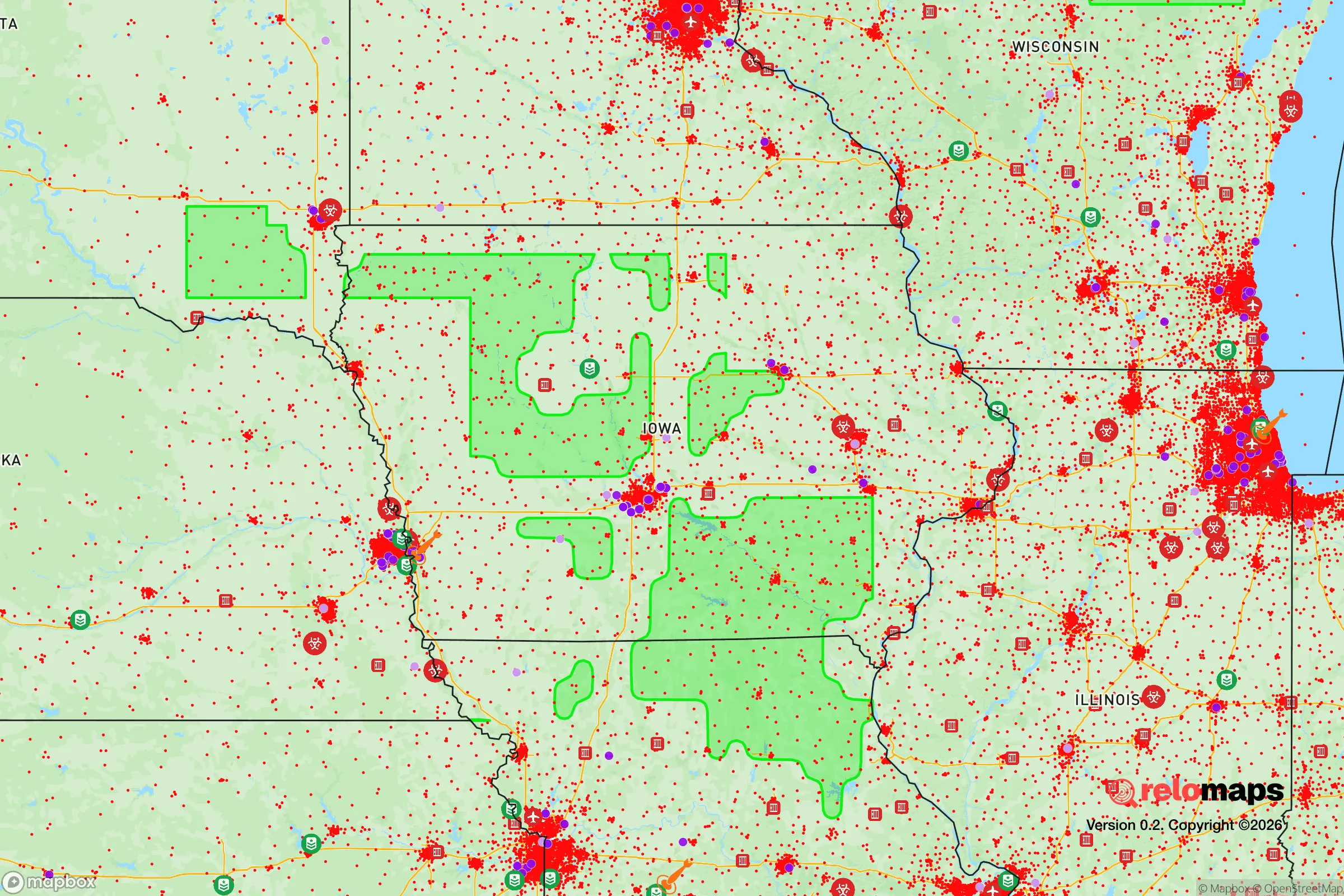
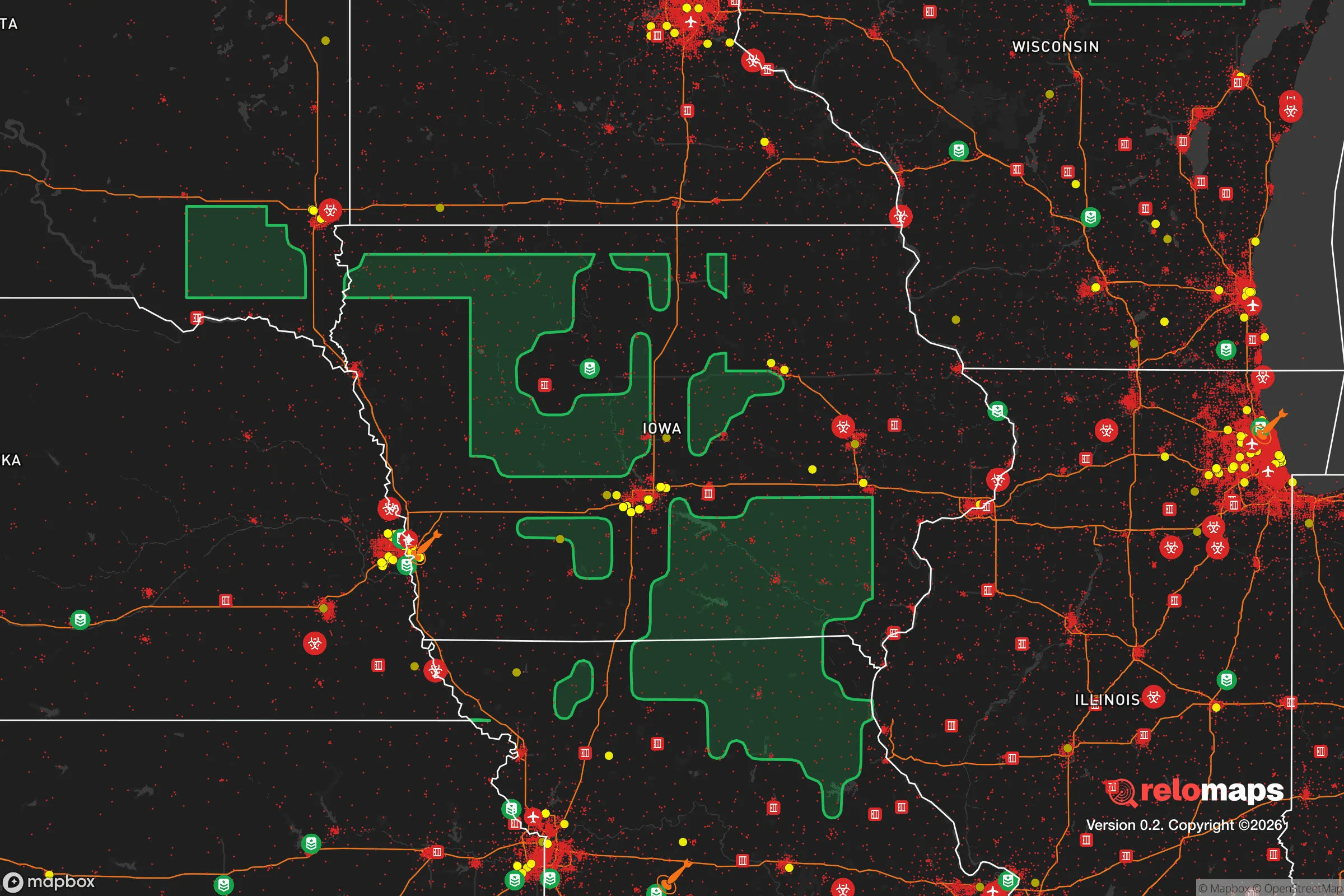


Important Note: For informational purposes only. This does not mean nothing bad ever happens in the green zones. Please use common sense. This is based on public data and modeled with AI. We tried to take a conservative approach but mistakes happen. We update this regularly as new information becomes available.
Solar Generator Recommendations
Backup power matters more here than in safer locations. We've picked three solar generators across budgets and capacity tiers — start with the budget unit if you only need a few essentials, or step up if you want to run a fridge and HVAC for days at a time.

Jackery Portable Power Station Explorer 300
Budget OptionPower on the Go: Weighing only 11 lbs, it's convenient to set up and store with book-sized foldable solar panels

BLUETTI Portable Power Station AC180
Designed for both indoor and outdoor scenarios, AC180 is highly capable as it has a robost capacity and continuous output power.

EF ECOFLOW DELTA Pro Ultra Power Station
Upgraded PickEcoFlow DELTA Pro Ultra is a whole-home energy system designed to grow with your family. Integrated with the Smart Home Panel 2, it scales to meet your evolving energy needs — keeping your home powered, intelligent, and secure through every stage of life.
We earn a commission, at no additional cost to you.
Strategic Assessment Analysis
Waukee, Iowa, sits in a strategic sweet spot that many relocators overlook: close enough to Des Moines for supply runs and employment, but far enough out to avoid the worst of urban collapse scenarios. Its position along the I-80/I-35 corridor gives it logistical advantages for both resupply and evacuation, while the surrounding Dallas County farmland offers a buffer against the kind of cascading failures that hit dense metro areas first. For someone thinking in terms of decades, not just the next election cycle, Waukee’s combination of agricultural self-sufficiency, low population density, and Midwestern infrastructure resilience makes it a serious contender for a long-term base of operations.
Geographic position and natural advantages for long-term stability
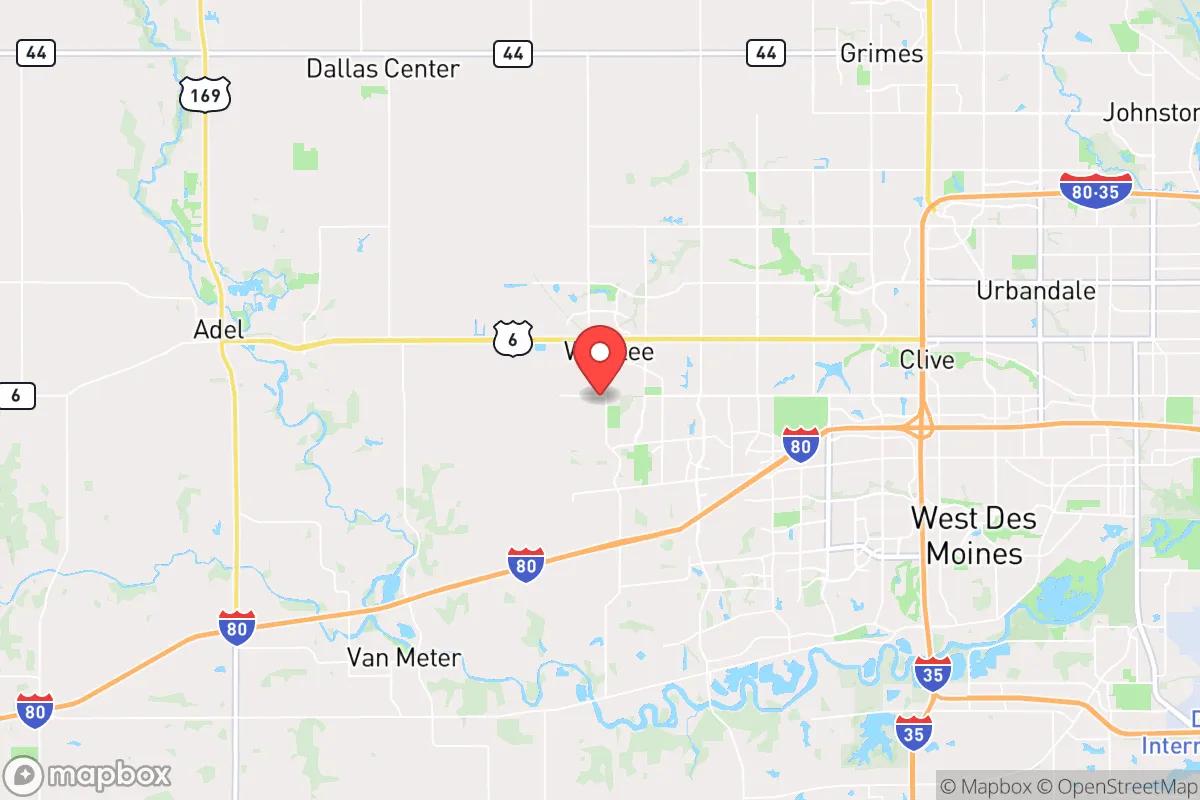
Waukee sits on the western edge of the Des Moines metro, roughly 15 miles from the state capitol, but the sprawl hasn’t yet swallowed the surrounding countryside. The Raccoon River Valley runs just south of town, providing a reliable freshwater source that isn’t dependent on municipal treatment plants—a critical detail if grid water becomes unreliable. The terrain is flat to gently rolling, which means good drainage for gardens and livestock, and the soil is some of the richest in the country. The area sits in USDA Hardiness Zone 5a, with a growing season long enough for corn, beans, squash, and cold-hardy greens. Winters are brutal—average January lows hit 14°F—but that cold acts as a natural pest control and slows the spread of vector-borne diseases that plague warmer regions. The lack of major fault lines, hurricane paths, or wildfire corridors means the natural disaster risk is limited to the occasional derecho or blizzard, both of which are manageable with basic preparation.
Risks, exposures, and proximity to fallout-relevant landmarks
The biggest strategic liability is Waukee’s proximity to Des Moines itself. If civil unrest or a mass casualty event originates in the metro, the I-80 corridor becomes a chokepoint. Des Moines International Airport, the state capitol complex, and the federal building downtown are all potential targets for coordinated attacks or protests that could spill westward. The city also sits within 100 miles of the Neal Smith National Wildlife Refuge and the Iowa Army Ammunition Plant in Middletown—both of which could become secondary fallout zones if targeted. On the plus side, Waukee is far enough from the Mississippi River and the major rail hubs in eastern Iowa to avoid the worst of supply chain disruptions. The area has no nuclear power plants within 50 miles, and the closest major military installation is Camp Dodge in Johnston, about 20 miles northeast—close enough to draw federal attention in a crisis, but not so close that you’re living in a blast radius. The real risk here is being caught between a destabilized Des Moines and the rural counties to the west that may seal their borders during a breakdown. Preppers should plan for a 72-hour window to either bug in or bug out west toward Adair or Guthrie Center if the metro goes hot.
Practical resilience for a relocator: food, water, energy, and defensibility
Waukee’s practical resilience is above average for a town its size, but it requires active preparation. The municipal water supply comes from the Des Moines Water Works, which draws from the Raccoon and Des Moines Rivers—both vulnerable to agricultural runoff and potential contamination events. A well on your property is the gold standard here, and the water table in Dallas County sits at about 30-50 feet, making hand-pump or solar-driven wells feasible. The local power grid is served by MidAmerican Energy, which has a decent reliability record, but ice storms in 2023 and 2024 caused multi-day outages. Solar with battery backup is a smart investment; the area averages 200 sunny days per year, enough to keep a modest system charged year-round. Food resilience is where Waukee shines. The surrounding farmland produces corn, soybeans, and livestock, and the local farmers’ markets in Waukee and nearby Adel offer direct access to growers. The town has a solid network of hardware stores, feed suppliers, and farm co-ops—places like the Dallas County Farm Bureau and Tractor Supply in Waukee itself—that make it easy to stockpile seeds, tools, and animal feed. Defensibility is mixed. The newer subdivisions on the east side are built on a grid with multiple entry points, which is a security nightmare. The older neighborhoods west of Highway 44 and near the Raccoon River Valley Trail offer more natural chokepoints and better line-of-sight. For a relocator serious about security, look for property on the western edge of town, where lots are larger and neighbors are farther apart. The local law enforcement presence is adequate for day-to-day crime—Waukee’s violent crime rate is about 60% below the national average—but in a SHTF scenario, you’re relying on yourself and your immediate neighbors. Start building those relationships before you need them.
The overall strategic picture for Waukee is cautiously optimistic for a relocator with a prepper mindset. It’s not a remote bunker location—you’re still within earshot of Des Moines’ problems—but it offers a rare combination of agricultural abundance, manageable climate risks, and a community that hasn’t yet been hollowed out by coastal migration. The key is to treat it as a base, not a fortress. Stockpile for 90 days, invest in off-grid water and power, and keep a bug-out route west mapped and practiced. If you do that, Waukee gives you the breathing room to ride out the next decade’s turbulence without disappearing into the wilderness. It’s a place where you can live a normal life while quietly preparing for the abnormal one.

* Values derived from national, state, county, city and local statistics and may differ in a specific area. Last updated: 2026-10-10T16:29:20.000Z
Narrative content on this page is AI-generated and may contain mistakes. Verify any details that matter before acting on them.
ReloMaps may earn a commission from affiliate links at no extra cost to you.

