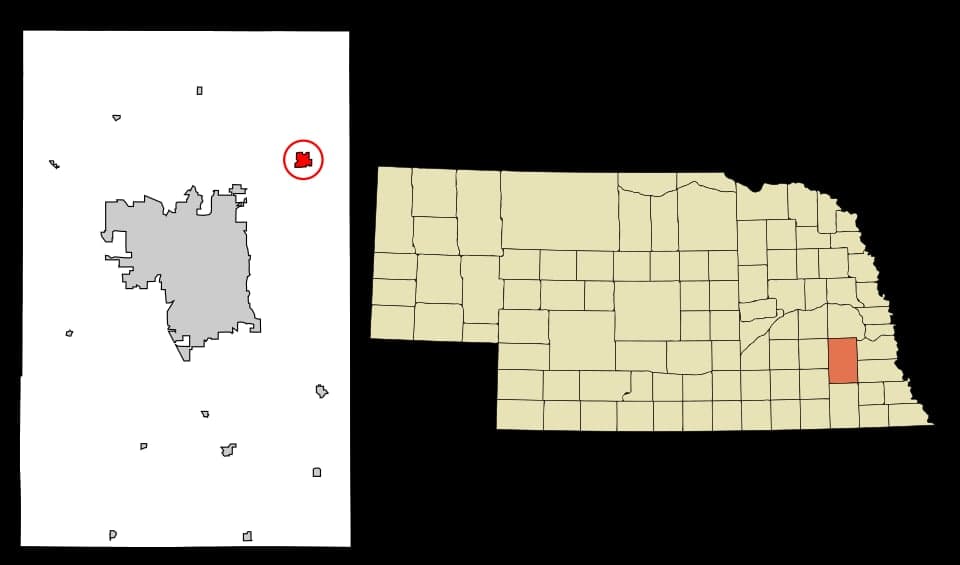
Photo: Wikipedia
Political ClimatePolitical Climate in Waverly, NE
District shown is the primary district for this city’s centroid. Cities may span multiple districts.
Local Political AnalysisPolitical Analysis of Waverly, NE
Waverly, Nebraska, has long been a reliably conservative community, and that hasn't changed much despite some national trends. The area carries a Cook PVI of R+6, meaning it votes about six points more Republican than the country as a whole, and you can feel that in local elections and everyday conversations. But if you've lived here a while, you might notice a subtle shift—not in the voting booth, but in the cultural chatter, especially as Lincoln's influence creeps a little further east each year.
How it compares
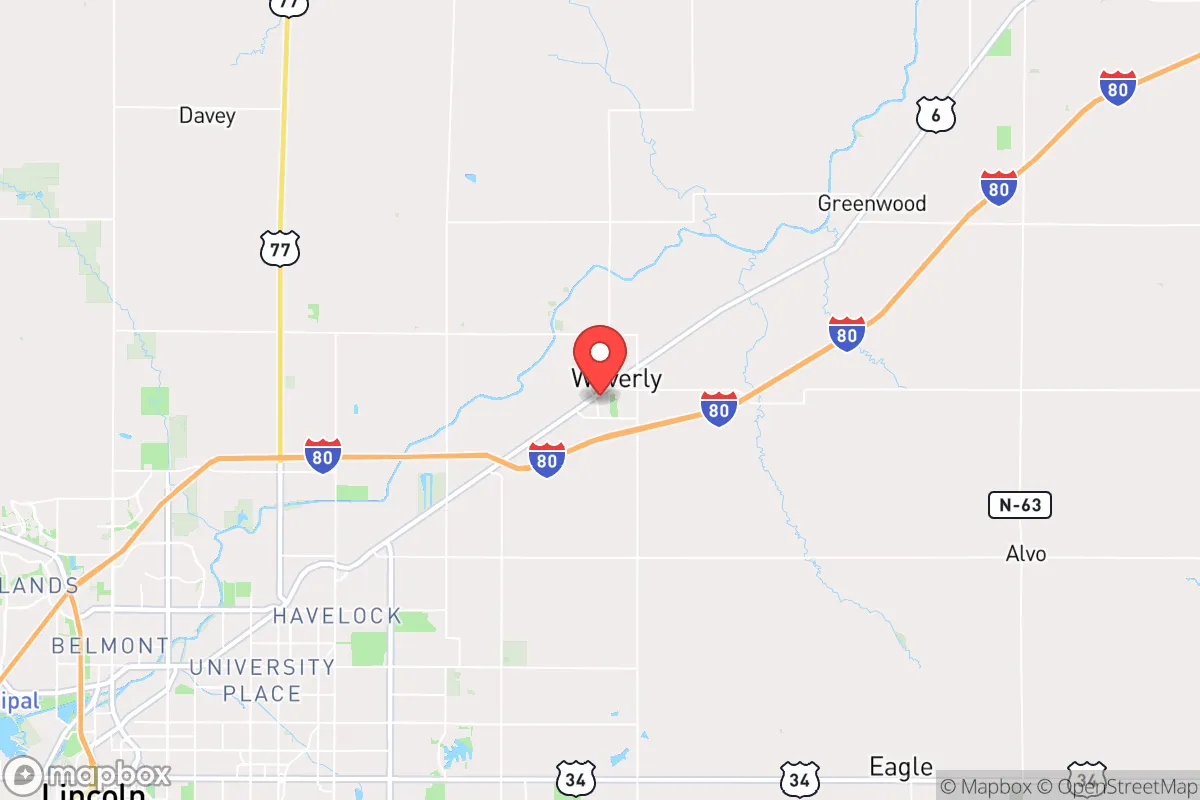
Drive ten minutes west into Lincoln, and you're in a different world politically—Lancaster County as a whole leans blue, and the city itself is solidly Democratic. Waverly sits right on that dividing line, and it's become a bit of a refuge for folks who want good schools and proximity to the capital without the progressive policies that come with living inside city limits. Head east toward Eagle or Elmwood, and you'll find even deeper red territory, places where the R+6 looks almost moderate. The contrast is sharpest during election season: Waverly's precincts reliably turn out for conservative candidates, while Lincoln's precincts are a sea of blue. That split means Waverly residents get the best of both worlds—urban job access and rural values—but it also means we're constantly watching the border for any ideological spillover.
What this means for residents
For the people who live here, the political climate translates into a pretty straightforward daily life. Local government tends to stay out of your business—zoning is minimal, taxes are reasonable, and there's no push for the kind of social engineering you see in bigger cities. The school board has held the line on curriculum issues, keeping things focused on fundamentals rather than the latest cultural trends. But there's a quiet concern among longtime residents that as Waverly grows—and it is growing, fast—some of those Lincoln-style ideas might follow the new arrivals. You see it in small ways: a few more yard signs for progressive candidates each cycle, some chatter about "equity initiatives" at community meetings. Nothing alarming yet, but it's worth keeping an eye on. The R+6 rating is a solid anchor, but anchors can drag if the current gets strong enough.
One thing that sets Waverly apart from some other conservative suburbs is its fierce independence from Lincoln's orbit. We have our own police department, our own water district, and a city council that doesn't take orders from the county. That local control is a big deal—it means decisions about things like mask mandates, business regulations, and property rights stay in the hands of people who actually live here. The biggest cultural distinction is probably the annual Fourth of July parade, which is still unabashedly patriotic, with veterans leading the way and no one apologizing for it. If you're looking for a place where you can raise a family without the government breathing down your neck, Waverly still delivers. Just don't expect it to stay exactly the same forever—nothing does, especially not when you're this close to a blue city.

State Political ClimatePolitical Climate in Nebraska
State Political AnalysisPolitical Environment in the State
Nebraska has long been a reliably conservative state, but it’s a more nuanced place than the national headlines suggest. The state’s overall partisan lean is solidly Republican, with Donald Trump winning the state by 19 points in 2024, but that number masks a deep and growing urban-rural split. Over the past 10-20 years, the state has shifted from a quiet, agrarian conservatism to a more assertive, culturally-focused brand of Republicanism, driven largely by the explosive growth of its two major metro areas—Omaha and Lincoln—and the simultaneous hardening of rural and small-town counties. The result is a state that feels politically bifurcated: the eastern third is a battleground, while the rest is deep red.
Urban vs. rural divide
The political map of Nebraska is a study in contrasts. Douglas County (Omaha) is the state’s most populous and politically competitive area. In 2024, Trump won it by just 1.5 points, a razor-thin margin that reflects the city’s growing suburban and professional-class tilt toward Democrats. Lancaster County (Lincoln) is even more of a swing county, with Trump winning it by only 3 points in 2024, down from a 10-point margin in 2016. These two counties, home to nearly half the state’s population, are the engine of Nebraska’s purple streak. Meanwhile, Sarpy County, a fast-growing suburban area south of Omaha, is reliably red but trending slightly less so as new arrivals from out of state bring more moderate views. The rest of the state—places like Scottsbluff in the Panhandle, Grand Island in the central Platte Valley, and Norfolk in the northeast—vote Republican by 30 to 50 points. The rural counties, especially in the Sandhills and along the Kansas border, are among the most conservative in the nation. This divide means that while the state legislature is supermajority Republican, the governor’s office and the congressional delegation are often forced to balance the demands of Omaha’s business community against the cultural conservatism of the rest of the state.
Policy environment
Nebraska’s policy environment is a mixed bag for conservatives. On the positive side, the state has no income tax on Social Security benefits and a flat state income tax rate of 5.58% (down from 6.84% in 2020), with a scheduled reduction to 4.99% by 2027. Property taxes are high—among the top 10 in the nation—but the state has a property tax credit program and a lid on local levy increases. The regulatory posture is generally business-friendly, with a right-to-work law and no state-level minimum wage above the federal floor (though a 2022 ballot initiative raised it to $15 by 2026). On education, Nebraska has a robust school choice movement: the state passed a tax-credit scholarship program in 2023 (LB 753) that allows individuals and corporations to donate to scholarship-granting organizations for private school tuition. However, the state’s public schools are still heavily unionized and funded by local property taxes, which creates tension. On healthcare, Nebraska expanded Medicaid under the Affordable Care Act in 2020 via a ballot initiative, a move that many conservatives opposed. Election laws are relatively secure: the state requires voter ID (passed in 2021, effective 2024), has no same-day registration, and purges inactive voters regularly. The state also has a unique unicameral, nonpartisan legislature, which often produces more moderate, deal-making outcomes than partisan bodies in other states.
Trajectory & freedom
Nebraska is trending toward more personal freedom in several key areas, but with some worrying counter-currents. On gun rights, the state is a constitutional carry state (permitless carry for adults 21 and over, passed in 2023 via LB 77), and there is no state-level red flag law. On parental rights, the state passed a Parents’ Bill of Rights in 2023 (LB 705), which requires schools to notify parents of any changes to a student’s health or well-being, including gender identity or sexual orientation. This was a major win for conservative families. On medical autonomy, Nebraska banned gender-affirming surgeries for minors in 2023 (LB 574) and restricted abortion to the first 12 weeks of pregnancy (also in 2023). These are clear expansions of what many conservatives see as protecting life and childhood. However, the state’s property rights are under pressure from the TransCanada (now TC Energy) Keystone XL pipeline saga, which saw the state use eminent domain for a private project—a move that angered both libertarians and environmentalists. Additionally, the state’s tax burden, while improving, is still a drag on economic freedom. The trajectory is generally positive for conservatives, but the pace of change is slower than in states like Texas or Florida.
Civil unrest & political movements
Nebraska has seen relatively little civil unrest compared to coastal states, but there have been flashpoints. In 2020, Omaha saw several nights of protests after the death of George Floyd, with some property damage and clashes between demonstrators and police. The city’s police department was criticized for using tear gas, and the event galvanized a local progressive movement that has since pushed for police reform and defunding efforts, though those have largely stalled. On the right, the Nebraska Republican Party has seen a rise of grassroots activist groups, particularly around election integrity and school board politics. In 2022, a group called “Nebraska Freedom Coalition” organized around critical race theory and mask mandates, successfully flipping several school board seats in suburban Omaha (e.g., Millard Public Schools). Immigration politics are less heated than in border states, but the issue flared in 2023 when the state legislature debated a bill (LB 535) that would have required local law enforcement to cooperate with ICE; it failed, but the debate exposed a divide between Omaha’s more welcoming stance and the rest of the state. There is no serious secession or nullification movement, though some rural counties have floated the idea of joining a “Greater Idaho” type of movement, but it’s fringe. Election integrity remains a hot topic: the 2020 and 2022 elections saw no major scandals, but the state’s use of mail-in ballots (expanded during COVID) remains a point of contention among conservatives.
Projection
Over the next 5-10 years, Nebraska is likely to become more politically divided, not less. The Omaha metro area is growing faster than the rest of the state, driven by the University of Nebraska Medical Center, the insurance industry (Mutual of Omaha, TD Ameritrade), and a growing tech sector. This influx of younger, more diverse, and more educated residents will continue to push Douglas and Lancaster counties toward the center or even left. Meanwhile, rural counties will continue to depopulate and become even more conservative. The state’s congressional map, which currently gives Republicans a 3-0 edge in the House, could flip to 2-1 if Omaha’s 2nd district (currently held by Republican Don Bacon) continues to trend blue. The state legislature, while still Republican, will see more moderate Republicans from the Omaha suburbs clashing with hardline conservatives from the rest of the state. On policy, expect continued fights over property tax relief, school funding, and abortion restrictions. The state’s current 12-week abortion ban is likely to face pressure from both sides—pro-life groups want a total ban, while pro-choice groups are pushing to restore pre-2023 access. The most likely outcome is a slow, grinding conservative consolidation on cultural issues, but with a growing libertarian streak on economic matters. A new resident moving in now should expect a state that is still very red, but with a blue-trending urban core that will make state politics more volatile and interesting.
For a conservative individual or family moving to Nebraska, the bottom line is this: you’ll find a state that largely respects your values on life, family, and gun rights, but you’ll need to be strategic about where you settle. If you want a deep-red, low-tax, low-regulation environment, look to the smaller cities like Kearney or Fremont. If you need a job in a professional field, you’ll likely end up in Omaha or Lincoln, where you’ll have to navigate a more politically mixed environment and higher property taxes. The state’s trajectory is generally positive for conservatives, but the urban-rural divide means you’ll need to be engaged at the local level—especially in school board and city council races—to protect the freedoms you value. It’s a good place to raise a family, but it’s not a political utopia; you’ll have to work to keep it that way.
* Values derived from national, state, county, city and local statistics and may differ in a specific area. Last updated: 2026-05-03T20:28:50.000Z
Narrative content on this page is AI-generated and may contain mistakes. Verify any details that matter before acting on them.
ReloMaps may earn a commission from affiliate links at no extra cost to you.

