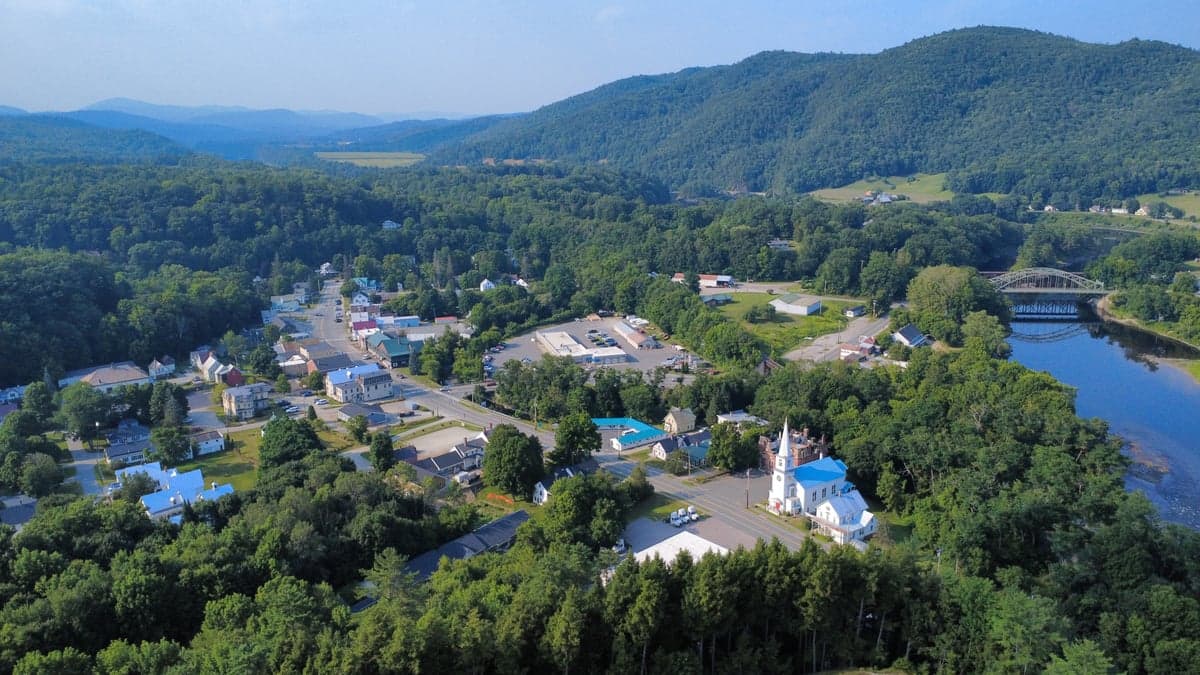
Photo: Wikipedia
Personal Sovereignty in Wells River, VT
Moderate friction. Expect trade-offs in some aspect of personal liberty and independence.
What does Personal Sovereignty tell us?
Personal Sovereignty measures your capacity for self-reliance and independence with minimal government friction. Higher scores mean fewer barriers between you and the way you want to live... but it assumes you have the space you need and good neighbors.
What does this tell us?
Personal Sovereignty measures your capacity for self-reliance and independence with minimal government friction. Higher scores mean fewer barriers between you and the way you want to live... but it assumes you have the space you need and good neighbors.
State Policy
Energy independence: Importer (15% of energy produced in-state)
Personal Liberty
Homesteading

Personal Liberty Analysis
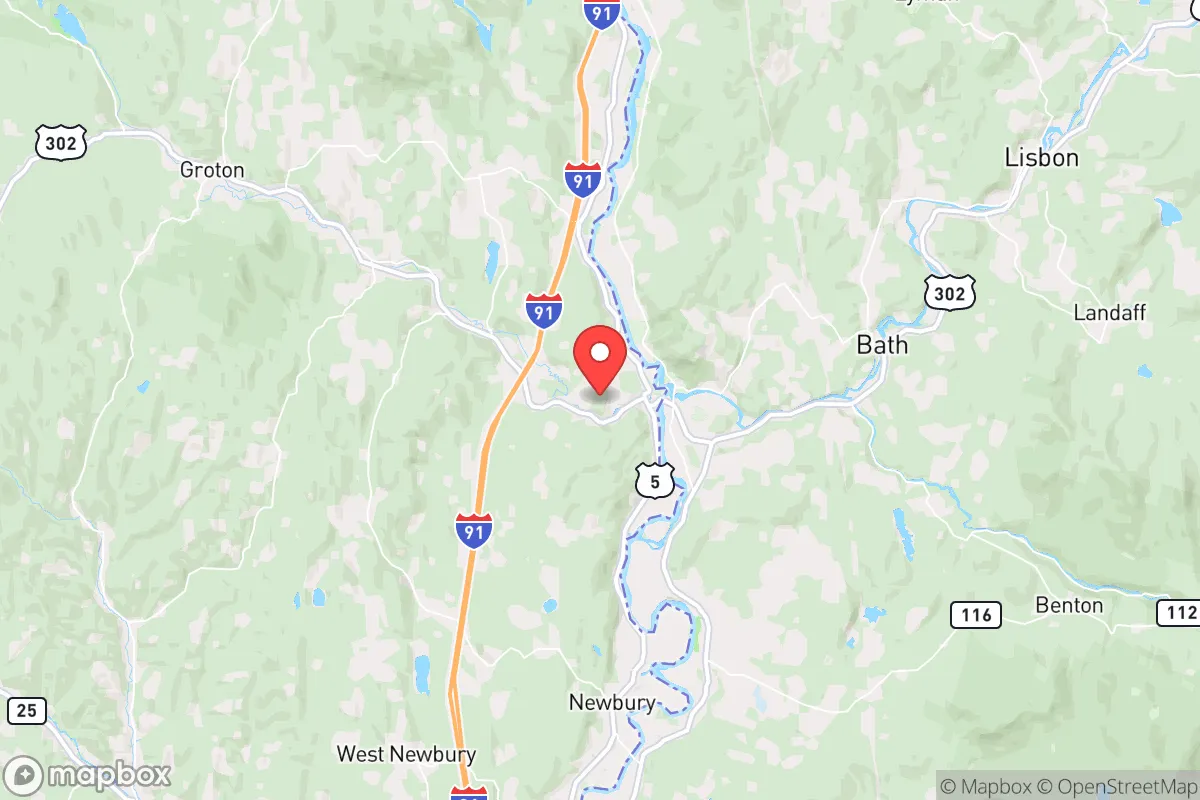
For the individual or family prioritizing maximum personal sovereignty—meaning minimal government intrusion, strong self-defense rights, and the ability to live life on your own terms—Wells River, Vermont, presents a complex but potentially rewarding picture. This small village in Orange County sits in a state with a reputation for live-and-let-live libertarianism, yet it operates under a state government that has increasingly pushed progressive policies on taxes, energy, and health mandates. The key for a survivalist or prepper mindset is understanding that Wells River’s local culture and rural geography can buffer you from some of the worst state-level overreach, but you must be prepared to navigate a regulatory environment that is not uniformly friendly to personal autonomy. The balance here is between a community that largely minds its own business and a state capital that does not.
Tax burden and regulatory posture in Vermont: what it means for your freedom
Vermont’s tax burden is among the highest in the nation, and this directly impacts your financial sovereignty. The state levies a progressive income tax with rates from 3.35% to 8.75%, and property taxes are notoriously high—averaging around 1.8% of assessed value, which can be a shock if you’re coming from a low-tax state. For a prepper focused on self-reliance, this means a significant portion of your income and property value is funneled to state programs you may not support. The regulatory posture is equally aggressive: Vermont has some of the strictest environmental and land-use laws in New England, administered through Act 250, which can complicate even modest construction or land improvement projects. If you plan to build a bunker, a workshop, or a sustainable homestead, expect permitting delays and potential state-level pushback. However, Wells River itself is a small, unincorporated village, meaning local zoning is minimal compared to larger towns. The practical workaround is to buy land with existing structures or in areas where Act 250 exemptions apply, but you cannot escape the high property tax bill. For the sovereignty-minded, this tax burden is a constant drain on resources that could otherwise go toward self-sufficiency.
Self-defense and gun law specifics: what Vermont allows and what it restricts
On the surface, Vermont appears to be a gun owner’s paradise. The state has no permit requirement for concealed carry, no registration of firearms, and no waiting periods for purchases. This is a direct result of Vermont’s strong tradition of individual liberty, and it means you can legally carry a firearm for self-defense without government permission. However, the landscape shifted significantly after 2018, when the state passed S.55, which raised the purchase age for long guns to 21, banned bump stocks, and created a "red flag" law allowing for temporary seizure of firearms based on a court order. For a prepper, this is a red flag in itself: the red flag law can be weaponized by vindictive neighbors or family members, and the burden of proof is low. Additionally, magazine capacity is restricted to 15 rounds for handguns and 10 for long guns, which limits your defensive capability. While Vermont is still far more permissive than states like New York or California, the trend is concerning. The practical reality in Wells River is that local law enforcement is generally supportive of gun rights, and you will find like-minded neighbors. But the state-level legal framework is no longer a reliable fortress for the Second Amendment. You must stay informed and be prepared to legally challenge any overreach.
Self-reliance and homesteading viability: lot sizes, zoning, and off-grid feasibility
This is where Wells River shines for the sovereignty-minded individual. The surrounding area is rural, with large parcels of land available at relatively affordable prices compared to southern Vermont or the Burlington suburbs. You can find 5- to 20-acre lots for under $100,000, and many properties come with existing wells, septic systems, and even old farmhouses that can be renovated. Zoning in the unincorporated village is minimal, and the county’s planning department is generally hands-off for agricultural and residential uses. Off-grid living is feasible, though not without hurdles. Vermont has no statewide ban on rainwater collection, and solar panels are widely used. However, the state’s building codes require that any habitable structure meet modern energy and safety standards, which can complicate a truly off-grid cabin build. You can legally compost human waste with a permit, but the process is bureaucratic. The biggest challenge is the climate: a six-month winter means you need serious heating capacity, and reliance on wood or propane is common. For the prepper, this is manageable with proper planning. The local culture is one of self-reliance—many residents heat with wood, grow gardens, and hunt deer. You will not be viewed as eccentric for living off the grid; you will be viewed as practical. The key is to buy land with good southern exposure for solar and a reliable water source.
Personal liberties: parental rights, medical autonomy, speech, and property
Vermont’s record on personal liberties is mixed, and this is where the conservative prepper must be most vigilant. Parental rights have been eroded by state mandates on vaccination and education. Vermont has one of the lowest vaccine exemption rates in the country, and the state has aggressively pushed for universal vaccination, including COVID-19 mandates for healthcare workers and school staff. While there is no state-level mask or vaccine mandate currently, the legal framework allows for rapid reinstatement during a declared emergency. Medical autonomy is similarly constrained: Vermont has a single-payer healthcare system in all but name, and the state’s health department has broad powers to enforce public health measures. On speech, Vermont is generally protective, but the state has enacted laws against "hate speech" that some legal experts argue could be used to chill political dissent. Property rights are the strongest area: Vermont has strong protections against eminent domain abuse, and the state’s constitution explicitly protects the right to acquire, possess, and protect property. For the prepper, this means your land and your supplies are generally safe from government seizure, provided you are not violating zoning or health codes. The local community in Wells River is small and tight-knit, and people tend to respect each other’s privacy. You will not face the kind of social pressure to conform that you might in a more urban or progressive area.
In the final analysis, Wells River offers a high degree of personal sovereignty relative to the rest of Vermont and much of the Northeast, but it is not a libertarian utopia. The state’s high taxes, red flag law, and vaccine mandates are real constraints on your freedom. However, the rural setting, affordable land, and culture of self-reliance provide a buffer that allows you to live largely as you see fit. If you are willing to navigate the bureaucracy and pay the taxes, you can build a life here that is far more autonomous than what you would find in most of the country. For the survivalist or prepper, Wells River is a viable option if you are prepared to be strategic—buy land with existing infrastructure, stay off the radar of state regulators, and build relationships with like-minded neighbors. It is not a fortress, but it is a defensible position in a state that still remembers what freedom looks like.

* Values derived from national, state, county, city and local statistics and may differ in a specific area. Last updated: 2026-04-21T22:54:52.000Z
Narrative content on this page is AI-generated and may contain mistakes. Verify any details that matter before acting on them.
ReloMaps may earn a commission from affiliate links at no extra cost to you.

