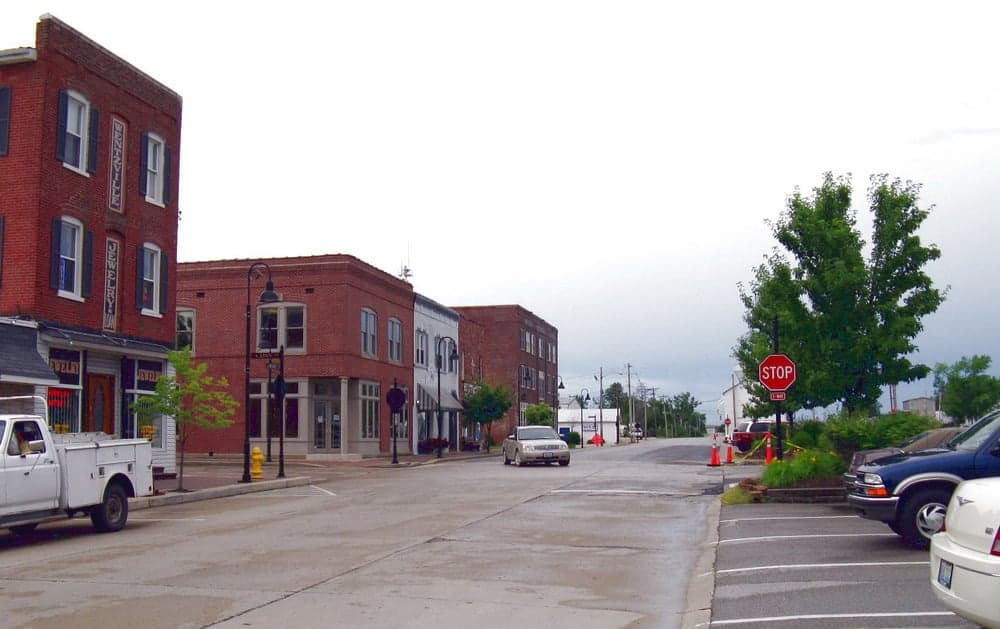
Photo: Wikipedia
Political ClimatePolitical Climate in Wentzville, MO
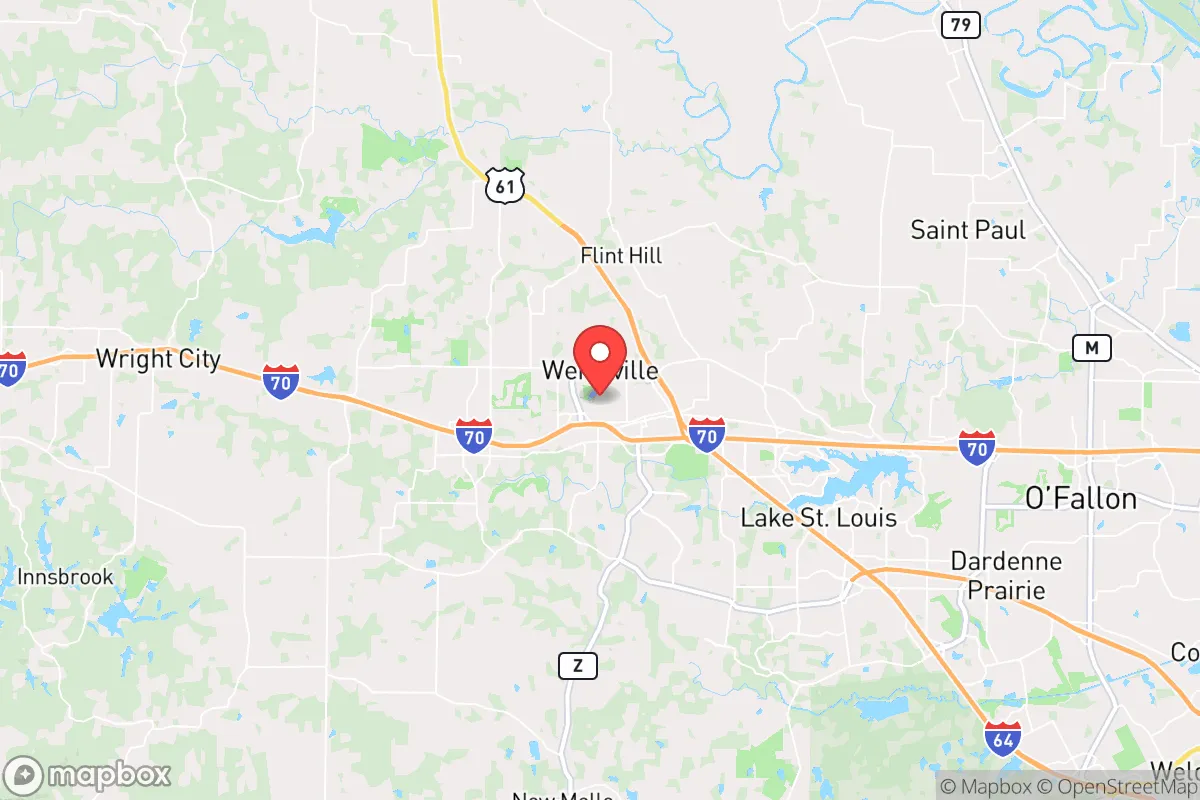
District shown is the primary district for this city’s centroid. Cities may span multiple districts.
Local Political AnalysisPolitical Analysis of Wentzville, MO
Wentzville, Missouri, sits squarely in conservative territory, with a Cook PVI of R+13 that reflects a community that has long valued personal responsibility and limited government. This isn't a place that's suddenly flipped; it's a place that's held steady while the rest of the country has lurched left. The political lean here is deeply rooted in a belief that local control and individual freedoms—from school choices to business operations—shouldn't be overridden by distant bureaucrats. If you're looking for a place where the phrase "keep government out of my life" isn't just a bumper sticker but a lived reality, Wentzville is it.
How it compares
Drive fifteen minutes east to St. Charles, and you'll find a similar conservative vibe, though it's a bit more suburban and polished. Head west toward Warrenton or south to Eureka, and the sentiment stays reliably red. The real contrast comes when you go into St. Louis City or even parts of St. Louis County, like University City or Clayton, where progressive policies on taxes, zoning, and policing are more common. Wentzville feels like a different world—and that's exactly how most folks here want it. The R+13 rating isn't just a number; it's a reflection of a community that consistently votes against tax hikes, supports Second Amendment rights, and pushes back on state-level mandates that feel like overreach. Compared to the surrounding rural areas, Wentzville is a bit more growth-oriented and younger, but the political DNA is the same: skeptical of big government, protective of local autonomy.
What this means for residents
For someone moving here, the political climate means you can expect a school board that prioritizes parental input over federal guidelines, a city council that keeps property taxes low, and a general attitude that your personal choices—whether it's homeschooling, running a small business, or carrying a firearm—are your own business. There's a strong sense that the government's job is to pave roads and keep the lights on, not to dictate how you live. That said, there's a growing unease among long-time residents about the influx of new development and the potential for outside influence to shift things leftward. The concern is real: as more people move in from blue states or urban areas, there's a quiet worry that the local culture of self-reliance could get diluted by progressive ideas about zoning, school curriculum, or even mask mandates. So far, the community has held the line, but it's something to keep an eye on.
One cultural distinction that sets Wentzville apart is its strong sense of community self-determination. You won't find the kind of performative activism you see in bigger cities. Instead, you get a place where people show up to town hall meetings to argue about a new subdivision's traffic impact, not about national political theater. There's a practical, no-nonsense approach to governance that prioritizes what works over what's trendy. If you value that kind of environment—where your vote actually means something and your voice isn't drowned out by a noisy minority—Wentzville is a solid bet. Just don't expect it to stay exactly the same forever; the winds of change are blowing, and it's up to the people who live here to keep the ship steady.

State Political ClimatePolitical Climate in Missouri
State Political AnalysisPolitical Environment in the State
Missouri has long been a bellwether state, but over the past 20 years it has shifted from a classic purple battleground to a solidly red stronghold, with Republicans controlling the governorship, both legislative chambers, and every statewide office. The state voted for Donald Trump by 18.5 points in 2024, a dramatic swing from the razor-thin margins of the 2000s. This rightward march is driven by a powerful coalition of rural conservatives, suburban ex-urbanites fleeing St. Louis and Kansas City, and a growing population of conservative transplants from blue states, particularly in the fast-growing southwest corner of the state.
Urban vs. rural divide
The political map of Missouri is a tale of three distinct regions. The two major metros—St. Louis and Kansas City—are deep blue islands, with St. Louis City and County delivering margins of 70-80% for Democrats. These areas are increasingly out of step with the rest of the state, pushing progressive policies on crime, taxes, and education that have accelerated suburban flight. The real action is in the booming Springfield and Branson corridor, where conservative families and businesses are relocating for lower costs and fewer regulations. The Lake of the Ozarks region has seen a massive influx of remote workers from Illinois and California, turning once-purple counties like Camden and Miller into deep red. Meanwhile, the rural "Bootheel" and northern farm counties remain reliably Republican, though population loss is slowly eroding their electoral weight. The key battleground is the suburban ring around St. Louis—places like St. Charles County and Jefferson County—which have flipped from swing to solid red over the last decade, cementing the state's conservative tilt.
Policy environment
Missouri’s policy environment is a model of limited government, though not without its frustrations. The state has a flat income tax rate of 4.8%, with a path to reduce it further to 4.5% if revenue targets are met—a tangible win for taxpayers. Property taxes are among the lowest in the nation, with no state-level property tax, and the average effective rate hovers around 0.9%. On education, Missouri has a robust school choice landscape, including charter schools in Kansas City and St. Louis, and a growing number of private school scholarship programs. The state is a "right-to-work" state (though the law was repealed by referendum in 2018, the practical effect has been minimal as union density continues to decline). Healthcare policy is mixed: Missouri expanded Medicaid under the 2020 ballot initiative, which conservatives view as a fiscal time bomb, but the state has resisted further Obamacare expansions and maintains a relatively free-market insurance environment. Election laws are solid, with voter ID requirements and no-excuse absentee voting, though the state has not gone as far as Georgia or Florida in tightening procedures. The biggest red flag for liberty-minded residents is the persistent influence of local government overreach in the blue cities, particularly St. Louis, which has its own earnings tax and aggressive business regulations.
Trajectory & freedom
Missouri is on a clear trajectory toward greater personal freedom, especially when compared to neighboring Illinois or Kansas. The most significant recent legislation is the Second Amendment Preservation Act (SAPA), passed in 2021, which declares federal gun laws that infringe on the right to keep and bear arms as "invalid" in Missouri. This law has sparked federal lawsuits but remains a powerful statement of state sovereignty. In 2023, the state enacted a parental rights bill that requires schools to notify parents of any curriculum involving sexual orientation or gender identity and prohibits instruction on these topics in K-3 classrooms. On medical freedom, Missouri passed a law banning COVID-19 vaccine mandates by private employers and government entities, and the state has resisted federal public health overreach. Property rights are strong, with no statewide zoning mandates and a robust "right to farm" constitutional amendment protecting agricultural operations from nuisance lawsuits. The biggest threat to freedom remains the St. Louis earnings tax, a 1% tax on wages earned in the city that traps workers and businesses, and the city's progressive prosecutor, Kim Gardner (who resigned in 2023), whose soft-on-crime policies fueled a suburban exodus. Overall, the state legislature is actively expanding liberty, but local control in blue cities remains a persistent friction point.
Civil unrest & political movements
Missouri has been a flashpoint for political activism, particularly around race and policing. The Ferguson protests of 2014, following the shooting of Michael Brown, were a national watershed moment that exposed deep racial divides in the St. Louis region and sparked the "Black Lives Matter" movement. Since then, the state has seen periodic protests in St. Louis and Kansas City over police shootings and racial justice, though these have diminished in intensity. On the right, the Missouri Freedom Caucus has become a powerful force in the state legislature, pushing for school choice, gun rights, and anti-abortion legislation. The state has also been a battleground for immigration politics: while Missouri has no sanctuary cities, St. Louis and Kansas City have declared themselves "welcoming cities," and the state legislature has repeatedly tried to preempt these policies with a statewide ban on sanctuary ordinances. Election integrity remains a hot-button issue, with the 2020 election sparking calls for audits and tighter security, though no major fraud was found. A new resident would notice the strong presence of conservative media and grassroots organizations, particularly in Springfield and the Lake area, where "Trump 2024" signs and "Don't Tread on Me" flags are common. The cultural divide is palpable: drive 20 minutes outside any major city, and you're in a world of gun shops, churches, and small-town values.
Projection
Over the next 5-10 years, Missouri will likely become more conservative and more Republican. The key demographic driver is the continued exodus from St. Louis and Kansas City to the suburbs and exurbs, as well as the influx of conservative migrants from Illinois, California, and the Northeast. The Springfield-Branson corridor is projected to grow by 15-20% by 2030, while the St. Louis metro continues to stagnate. This shift will further entrench Republican supermajorities in the legislature and make the state a safe red vote in presidential elections. The biggest wildcard is the potential for a Democratic governor in 2028 if the party can find a moderate candidate who appeals to suburban voters, but the structural advantage for Republicans is overwhelming. On policy, expect further tax cuts, expanded school choice (possibly a universal voucher program), and continued resistance to federal overreach on guns and healthcare. The blue cities will likely become even more isolated, with St. Louis potentially facing a state takeover of its police department or school system. For a new resident, the trajectory is clear: Missouri is becoming a freer, more affordable, and more culturally conservative state, but the battles with local progressive enclaves will continue.
Bottom line for a new resident: If you're looking for a state where your tax dollars aren't wasted on progressive social experiments, where your Second Amendment rights are protected by state law, and where your kids won't be subjected to woke curriculum, Missouri is a strong bet. Just be prepared to live outside the major cities—St. Louis and Kansas City are increasingly at odds with the rest of the state. Stick to the suburbs, the Lake area, or the southwest, and you'll find a community that shares your values and a government that respects your freedom. The state is on the right track, but it's not a utopia—keep an eye on local elections and be ready to fight to keep it that way.
* Values derived from national, state, county, city and local statistics and may differ in a specific area. Last updated: 2026-04-22T13:45:13.000Z
Narrative content on this page is AI-generated and may contain mistakes. Verify any details that matter before acting on them.
ReloMaps may earn a commission from affiliate links at no extra cost to you.

