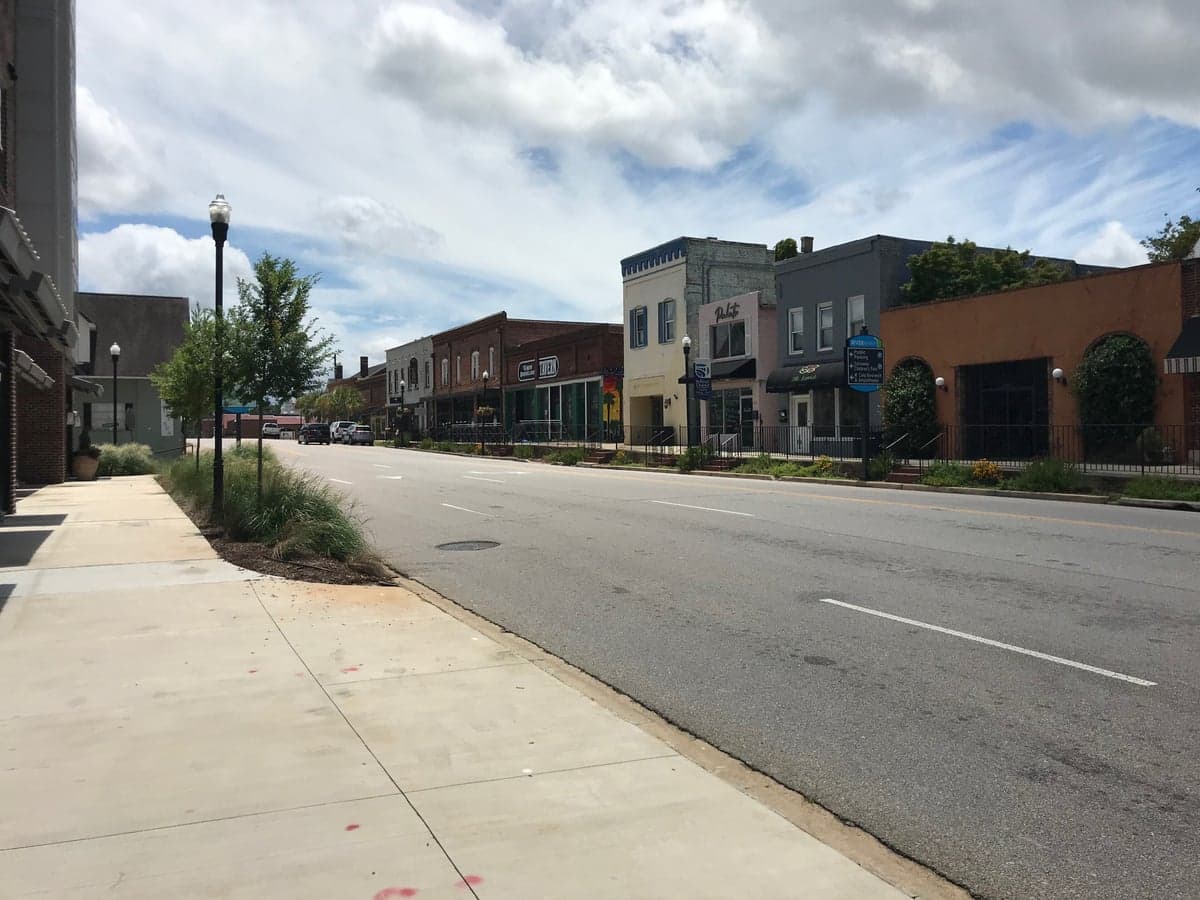
Photo: Wikipedia
Political ClimatePolitical Climate in West Columbia, SC
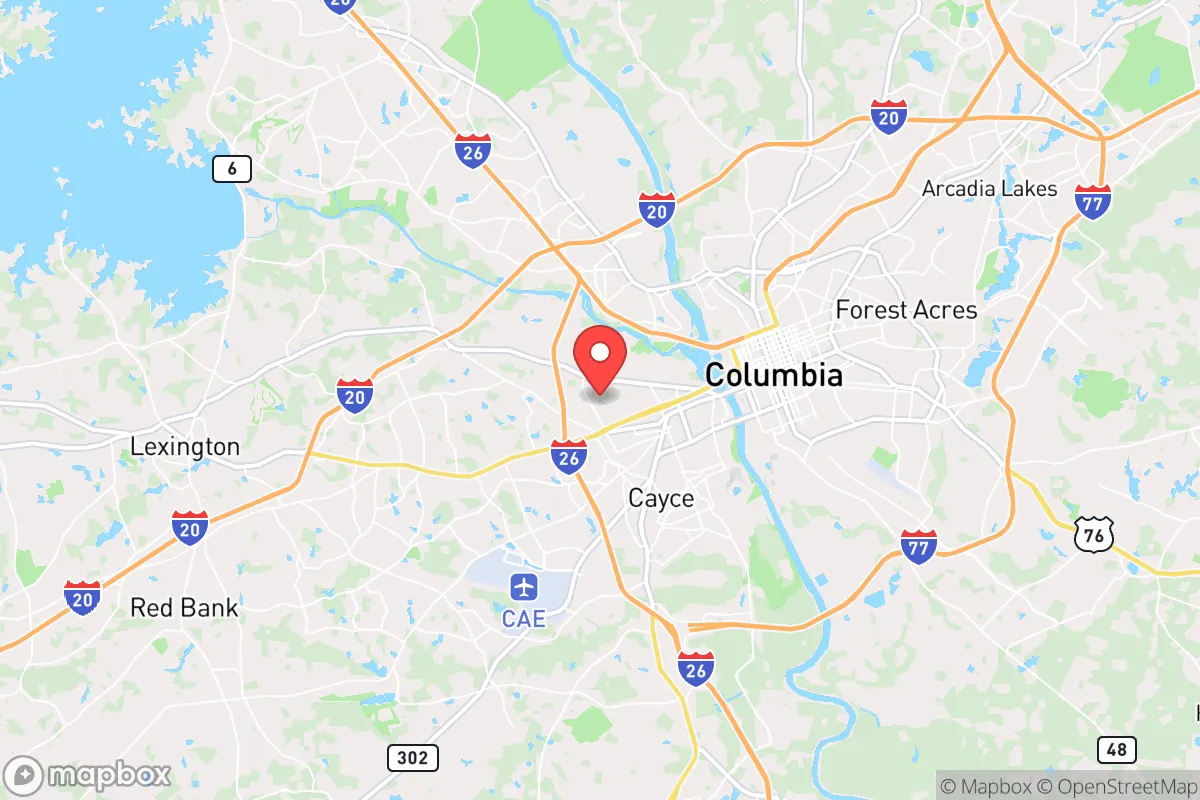
District shown is the primary district for this city’s centroid. Cities may span multiple districts.
Local Political AnalysisPolitical Analysis of West Columbia, SC
West Columbia has long been a reliably conservative community, and that hasn’t changed much even as the broader Columbia metro area has seen some demographic shifts. The Cook PVI rating of R+7 tells you the real story here—this isn’t a swing district, and it’s not trending blue. In presidential elections, Lexington County (which West Columbia calls home) routinely votes Republican by double digits, and local races tend to follow suit. That said, if you’ve lived here as long as I have, you’ve noticed a subtle shift in the air, especially as younger families move in from more progressive parts of the state or from out of state entirely. The core is still solid, but the edges are getting a little more attention than they used to.
How it compares
Drive five miles east across the Congaree River into downtown Columbia, and you’re in a completely different political world—Richland County is reliably Democratic, with a Cook PVI of D+15. That contrast is stark and immediate. Even within Lexington County, you’ll find pockets like the Irmo area or parts of Chapin that lean more moderate, but West Columbia itself remains one of the more conservative anchors in the region. Compared to nearby Cayce, which has a slightly younger and more transient population, West Columbia feels more settled, more family-oriented, and more resistant to the kind of progressive policy experiments you see in bigger cities. The local school board and city council elections here still tend to be won by candidates who prioritize fiscal restraint and local control over state or federal mandates.
What this means for residents
For the most part, it means you can live your life without a lot of government interference. Zoning is straightforward, business regulations are reasonable, and there’s no appetite for the kind of overreach you hear about in places like Portland or even parts of Charleston. Property taxes are manageable, and the local government generally stays out of your business. That said, there’s been a slow creep of progressive ideas into some local conversations—things like equity initiatives in the school district or discussions about “affordable housing mandates” that sound a lot like backdoor rent control. So far, those have been beaten back by common sense and active civic engagement, but it’s something to keep an eye on. If you value personal freedoms—whether it’s the right to keep and bear arms, choose your own healthcare, or send your kids to the school that fits them best—West Columbia is still a place where those are respected, not regulated away.
Culturally, West Columbia has a distinct identity that sets it apart from its neighbors. It’s not as polished as Lexington proper, nor as sleepy as Gaston. There’s a working-class, no-nonsense vibe here that shows up in everything from the local diners to the way people talk about politics at the hardware store. You won’t see a lot of yard signs for progressive candidates, and the local churches still play a meaningful role in community life. The long-term trajectory depends on how well the area can hold the line against the kind of top-down policy changes that are creeping into other parts of the state. If you’re looking for a place where your vote actually counts and your voice isn’t drowned out by out-of-state money or activist agendas, West Columbia is still a solid bet—but don’t take it for granted.

State Political ClimatePolitical Climate in South Carolina
State Political AnalysisPolitical Environment in the State
South Carolina has been a reliably red state for a generation, but the nature of that conservatism is shifting. The state leans Republican by about 8-10 points in presidential elections, with the 2024 cycle seeing Donald Trump win by roughly 18 points. However, the coalition that delivers those wins is changing: the old-school, low-country planter conservatism is being overtaken by a more populist, culturally focused movement driven by explosive growth in the Upstate and along the coast. Over the last 20 years, the state has moved from a "yellow dog Democrat" stronghold to a solid GOP lock, but the internal tensions between traditional business Republicans and the newer, more assertive conservative populists are where the real story lies.
Urban vs. rural divide
The political map of South Carolina is a tale of three distinct regions. The Upstate, anchored by Greenville and Spartanburg, is the engine of the state's conservative majority. These are booming, family-oriented metros where evangelical Christianity and free-market economics blend seamlessly. Greenville County itself is a GOP fortress, routinely delivering 60-65% of the vote for Republicans. The Lowcountry, centered on Charleston, is more complicated. The city of Charleston itself has become a blue island, driven by tourism wealth, tech transplants, and a growing arts scene. But the surrounding suburbs—Mount Pleasant, Summerville, and Goose Creek—remain reliably red, though they're trending slightly more moderate as new arrivals from blue states bring their fiscal conservatism but social liberalism. The Midlands, around Columbia, is the swing region. Richland County (Columbia proper) is deeply blue, but Lexington County just across the river is one of the most conservative suburban counties in the nation. The rural black belt counties along I-95—Allendale, Bamberg, Orangeburg—vote overwhelmingly Democratic, but their populations are shrinking. The real political action is in the exurbs of Charleston and Greenville, where new subdivisions are filling with families fleeing high-tax states.
Policy environment
South Carolina's policy environment is broadly friendly to conservative priorities, but it's not a libertarian free-for-all. The state has a flat income tax rate of 6.2%, which was cut from 7% in 2022 as part of a phased reduction plan that aims to get it to 4% by 2028. Property taxes are low, especially for owner-occupied homes, thanks to a 4% assessment cap. Sales tax is 6% statewide, but counties can add up to 2% more. On education, the state passed a universal school choice program in 2023—the Education Scholarship Trust Fund—which allows any family to use state funds for private school, homeschooling, or tutoring. This was a major win for parental rights. Healthcare is a mixed bag: the state refused Medicaid expansion, which keeps government out of healthcare but leaves a coverage gap for low-income adults. Election integrity is taken seriously here—voter ID is required, and the state purges inactive voters regularly. There's no widespread mail-in voting unless you have a valid excuse. The regulatory environment is business-friendly, with a right-to-work law and no state-level occupational licensing for many trades. However, local zoning in fast-growing areas like Greenville and Mount Pleasant can be surprisingly restrictive, a holdover from the old guard's desire to control growth.
Trajectory & freedom
On the freedom front, South Carolina is moving in a decidedly positive direction for conservatives, but the pace is uneven. The biggest win was the 2023 Constitutional Carry law, which allows any law-abiding adult to carry a concealed firearm without a permit. This was a long-fought victory that puts the state in the top tier for gun rights. Parental rights got a boost with the Parents' Bill of Rights (2023), which requires schools to notify parents of any medical or mental health services and prohibits instruction on sexual orientation or gender identity in K-5. The state also passed a near-total abortion ban in 2023 (the Fetal Heartbeat Act), with exceptions only for rape, incest, and the life of the mother. On the concerning side, the state's Medical Affairs Division has been aggressive in enforcing COVID-era mandates on nursing homes and hospitals, and there's a lingering distrust of the state health department among conservatives. Property rights are generally strong, but the state's Department of Transportation has a history of eminent domain abuse for highway projects, particularly in the Lowcountry. The biggest threat to freedom is the growth machine itself—newcomers from California and New York are bringing their voting habits, and the state's Republican majority is only as strong as its ability to keep those transplants from flipping the suburbs blue.
Civil unrest & political movements
South Carolina has a relatively low level of visible civil unrest compared to other states, but the political movements are real and organized. The Moms for Liberty chapter in Greenville County has been one of the most active in the nation, successfully challenging school board policies on critical race theory and LGBTQ curriculum. The Confederate flag debate, which dominated the state's politics for decades, was largely settled in 2015 when the flag was removed from the Statehouse grounds. That issue still simmers in rural areas, but it's no longer a daily flashpoint. Immigration politics are less heated here than in border states, but the Illegal Immigration Reform Act (2008) remains on the books, allowing local law enforcement to check immigration status during traffic stops. There have been no major sanctuary city movements—Charleston considered it in 2020 but backed down after state threats to withhold funding. The most visible political movement in recent years has been the Stop the Steal rallies in 2020-2021, which drew thousands to the Statehouse in Columbia. Election integrity remains a live issue, with the state GOP pushing for hand-counting of ballots and paper trails. A new resident would notice that political conversations are more civil here than in many states, but the underlying tensions between the old business class and the new populists are real and growing.
Projection
Over the next 5-10 years, South Carolina will likely remain a red state, but the margin of that redness will depend entirely on who moves in and where they settle. The Upstate is the safest bet for conservatives—Greenville and Spartanburg are attracting families from the Northeast and Midwest who are specifically seeking conservative governance. The Lowcountry is more precarious. Charleston County is already blue, and Beaufort County (home to Hilton Head) is trending purple as wealthy retirees from blue states bring their politics with them. The state's demographic future is being written in the exurbs: Berkeley County (north of Charleston) and York County (south of Charlotte) are growing at breakneck speed, and they're currently red, but they're also the most likely to flip if the GOP fails to deliver on school choice and tax cuts. The biggest wildcard is the Hispanic population, which is growing rapidly in the Upstate and could shift the coalition if the GOP doesn't engage them. A conservative moving here now should expect a state that will remain broadly friendly to their values for at least another decade, but they should also be prepared to get involved locally—especially in school board and county council races—to ensure the new arrivals don't shift the balance.
For a conservative family or individual looking to relocate, South Carolina offers a strong foundation: low taxes, school choice, gun rights, and a culture that still values faith and family. The key is picking the right county. Greenville and Spartanburg are the safest bets for a like-minded community. Lexington (outside Columbia) is a solid second choice. Avoid Charleston city limits unless you're prepared for blue politics at the local level. The state is not perfect—the growth machine brings traffic, rising home prices, and the risk of political dilution—but it's one of the few places in the country where conservative values are still the default, not the exception. If you're serious about getting out of a blue state, this is one of the best landing spots left. Just get here before the secret gets out completely.
* Values derived from national, state, county, city and local statistics and may differ in a specific area. Last updated: 2026-04-30T02:47:49.000Z
Narrative content on this page is AI-generated and may contain mistakes. Verify any details that matter before acting on them.
ReloMaps may earn a commission from affiliate links at no extra cost to you.

