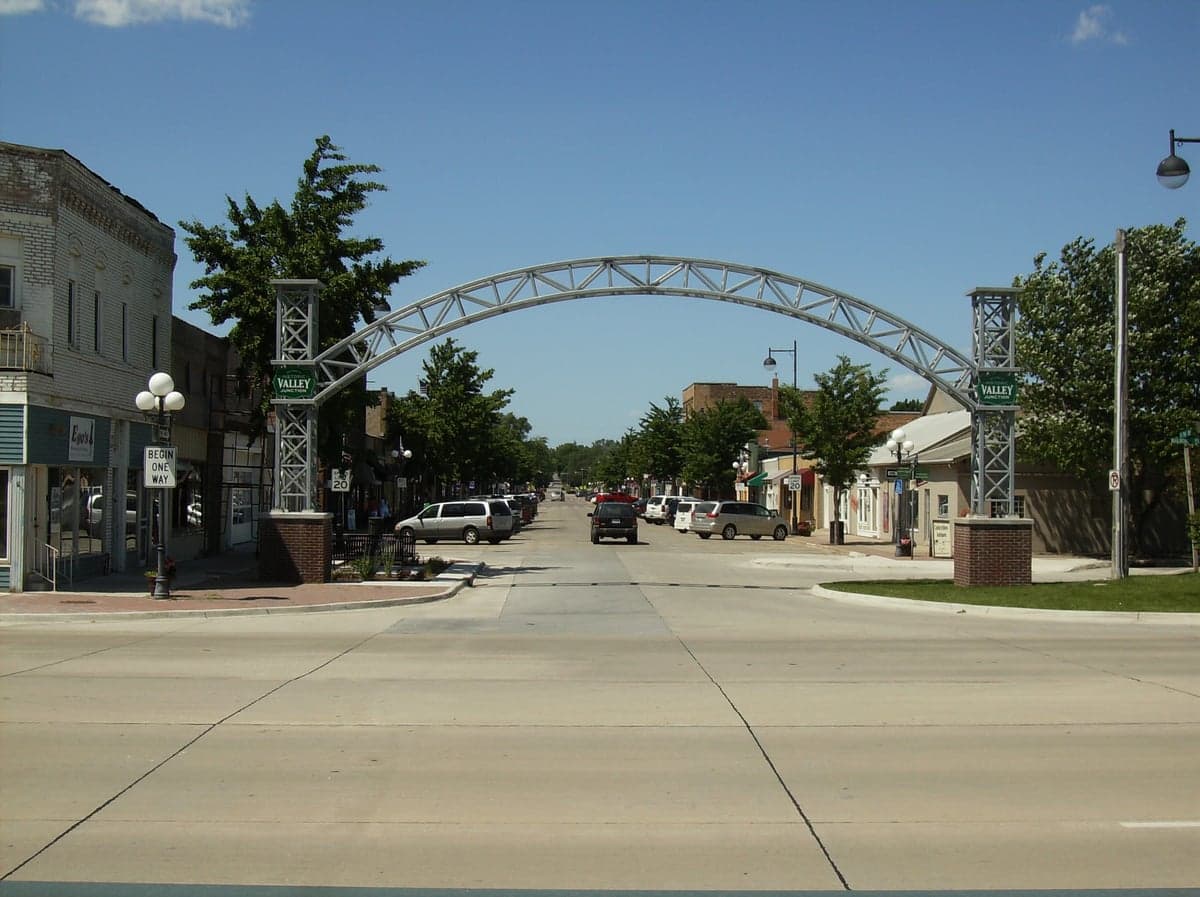
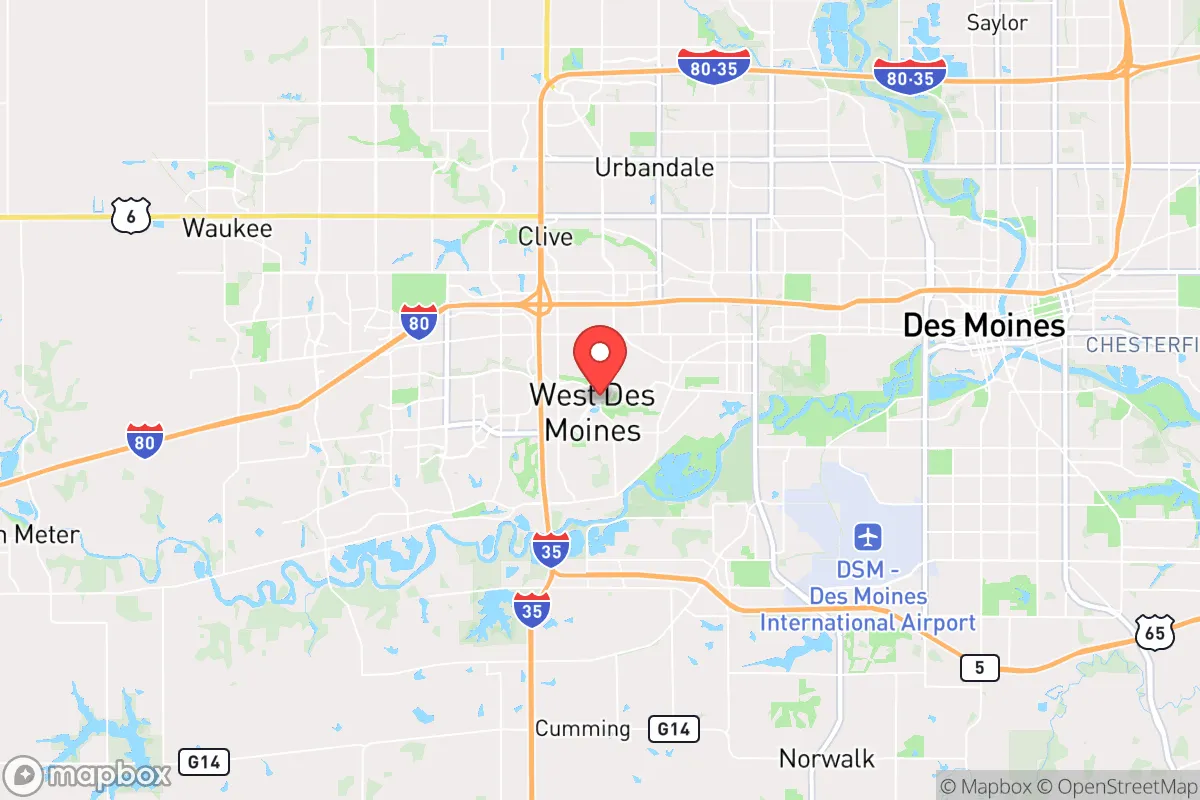
Photo: Wikipedia
Quality of Life in West Des Moines, IA
Above-average quality of iife. The area offers a reasonable cost of living, decent mobility, and a mix of neighborhood amenities.
What does Quality of Life tell us?
Quality of Life blends cost of living, nearby amenities, socioeconomic signals, and neighborhood character. City-level scores represent the whole municipality; individual neighborhoods can differ.
What does this tell us?
Quality of Life blends cost of living, nearby amenities, socioeconomic signals, and neighborhood character. City-level scores represent the whole municipality; individual neighborhoods can differ.
Cost of Living
2% above national average
The Real Cost of Living in West Des Moines, IA for 2026
| Tier | Individual | Family (4) |
|---|---|---|
| Survival | $19k | $36k |
| Comfortable | $56k | $82k |
| Luxury | $153k+ | $238k+ |
| Elite (Top 5%) | $199k+ | $309k+ |
104%
The Area Signal
A metric tracking the socioeconomic signals of the area.


Hobbies
Explore the areaGroceries
4 within 10 miles
Gas
0 within 10 miles
Hospital
3 within 20 miles
Airport
MCI — Kansas City International
Post Office
USPS — Des Moines, IA
Critical Amenities
Quality-of-Life Analysis
West Des Moines is an affluent, fast-growing suburb of Iowa’s capital, home to a mix of corporate professionals, young families, and empty-nesters drawn by its strong schools and low crime rates. With a cost-of-living index of 102 (just 2% above the national average), the city offers a notably high quality of life relative to its cost, attracting residents who value suburban convenience without the premium price tag of larger metros. The median household income hovers well above the state average, reflecting a community anchored by major employers like Hy-Vee’s corporate headquarters and the nearby Wells Fargo campus.
Cost of living, housing affordability, and how it compares to Des Moines and Ankeny
West Des Moines’ overall cost of living sits at 102, meaning everyday expenses are roughly on par with the U.S. average, but housing tells a more nuanced story. The median home value is $286,300, which is about 10% higher than the Des Moines metro median but still significantly cheaper than comparable suburbs like Ankeny ($310,000) or Johnston ($295,000). Renters face a median monthly cost of $1,194, a figure that undercuts the national median rent of $1,400 and makes the city accessible for young professionals and new families. Property taxes in Polk and Dallas counties are moderate, averaging around 1.5% of assessed value, and the city’s strong job market keeps the housing market competitive without the bidding wars seen in coastal suburbs. The average commute of 17.8 minutes is a standout advantage—well below the national average of 26 minutes—allowing residents to reach downtown Des Moines or the Jordan Creek Town Center retail hub quickly, reducing transportation costs and freeing up time for family or recreation.
What daily life is like for families: schools, parks, and local amenities
Daily life in West Des Moines revolves around its top-rated public schools, part of the West Des Moines Community School District, which consistently earns A ratings from Niche and boasts a 93% graduation rate. The district’s Valley High School is a regional powerhouse in academics and athletics, drawing families who prioritize education. Beyond schools, the city maintains over 30 parks, including the sprawling Raccoon River Park with its 105-acre lake, walking trails, and a dog park, which serves as a weekend hub for outdoor recreation. The Jordan Creek Town Center, a 1.2-million-square-foot shopping and dining complex, anchors the retail scene, while the nearby Valley West Mall offers additional options. For daily errands, the city’s walkability is limited—most neighborhoods require a car—but the compact layout and short commute mean residents spend less time in traffic. Healthcare access is strong, with MercyOne West Des Moines Medical Center and several urgent-care clinics within a 10-minute drive. The city also hosts community events like the annual West Des Moines Farmers Market and summer concert series at the City Park, fostering a neighborly feel despite its suburban growth.
Who thrives here? West Des Moines is ideal for professionals and families seeking a safe, well-serviced suburb with excellent schools and a manageable cost of living. It suits those who prioritize short commutes, green space, and a stable housing market over urban nightlife or rural quiet. Retirees may also find it appealing due to the low crime rate and proximity to medical facilities, though the lack of a dense downtown core might disappoint those seeking walkable urban energy. Overall, the city delivers a balanced, high-quality suburban lifestyle at a price that remains accessible compared to peer metros in the Midwest.

Crime in West Des Moines, IA
Lower crime rates than 80% of comparable U.S. locations.
Violent CrimeViolent Crime Analysis
Property CrimeProperty Crime Analysis
Crime Analysis
West Des Moines reports a violent crime rate of 145.5 per 100,000 residents and a property crime rate of 1,524.7 per 100,000, placing it in a middle tier for safety among Des Moines metro suburbs. While these figures are below the national average for violent crime, the property crime rate is elevated compared to smaller, more rural Iowa communities. The city benefits from a well-funded police department and proactive community policing, but its proximity to the larger Des Moines metro area introduces crime pressures typical of a regional economic hub.
Crime in context
West Des Moines’ violent crime rate of 145.5 per 100,000 is roughly 60% lower than the national average of 380 per 100,000, but it is slightly above the Iowa state average of 130 per 100,000. Property crime, at 1,524.7 per 100,000, is about 15% higher than the national average of 1,320 per 100,000 and significantly above the Iowa state average of 1,100 per 100,000. The city’s status as a retail and commercial destination—home to Jordan Creek Town Center and numerous corporate offices—drives a higher volume of theft, shoplifting, and vehicle break-ins than in purely residential suburbs. Readers should note that the broader Polk County justice system, which includes Des Moines, has seen progressive prosecutorial policies in recent years, including reduced charges for certain drug and property offenses. This approach, while intended to reduce incarceration, has been linked by critics to higher recidivism rates and a perception of leniency that can embolden repeat offenders in the metro area.
What residents experience
Most residents report feeling safe in their daily routines, particularly in the city’s western neighborhoods and newer subdivisions. Violent crime is rare and typically concentrated in specific areas, such as apartment complexes near Interstate 235 or the Valley West Mall vicinity. Property crime is the more common concern: vehicle break-ins and package thefts are the most frequent incidents, especially near retail corridors and multi-family housing. The West Des Moines Police Department maintains a strong presence, with response times averaging under 5 minutes for priority calls, and the city funds a dedicated crime prevention unit that conducts neighborhood watch training and security audits. However, the metro-wide trend of progressive district attorneys—Polk County’s current DA has implemented diversion programs for theft and drug possession—means that some property offenders face minimal jail time, a factor that frustrates residents who experience repeat victimization.
Neighborhood-level variation is significant. The area south of Hickman Road and east of 60th Street, including older housing stock and higher-density apartments, sees elevated property crime rates. In contrast, the newer developments west of 80th Street and north of Grand Avenue report violent crime rates near zero and property crime rates roughly half the city average. The Glen Oaks Country Club area and the West Lakes neighborhood are among the safest, while the Valley Junction historic district experiences more petty theft due to foot traffic and commercial density. Prospective residents should review block-level crime maps and consider that the city’s overall safety profile is strong for the metro, but the progressive judicial environment in Polk County warrants caution for those prioritizing strict law enforcement outcomes.
* Values derived from national, state, county, city and local statistics and may differ in a specific area. Last updated: 2026-04-19T08:47:25.000Z
Narrative content on this page is AI-generated and may contain mistakes. Verify any details that matter before acting on them.
ReloMaps may earn a commission from affiliate links at no extra cost to you.

