Photo: Wikipedia
Political ClimatePolitical Climate in West Des Moines, IA
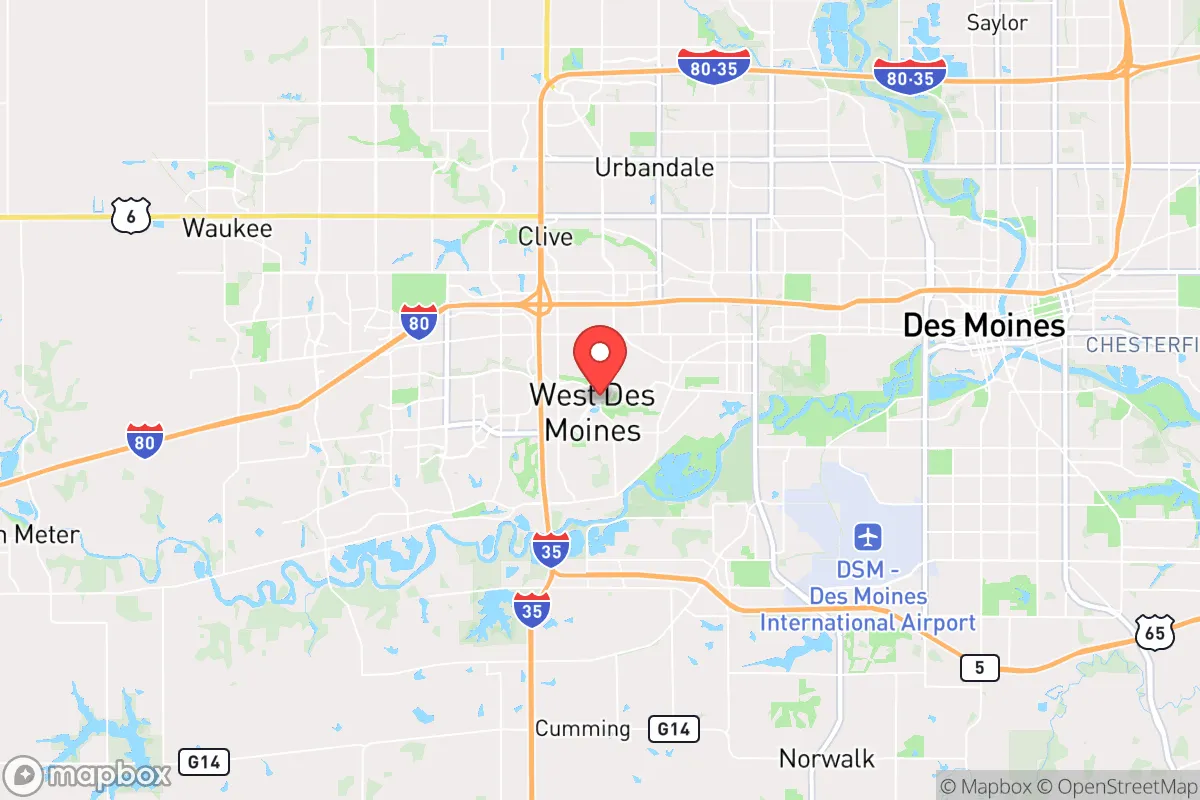
District shown is the primary district for this city’s centroid. Cities may span multiple districts.
Local Political AnalysisPolitical Analysis of West Des Moines, IA
West Des Moines has long been a reliably conservative anchor in central Iowa, but like a lot of suburbs that have seen rapid growth and demographic change, its political lean is getting a little more complicated. The Cook PVI for the area sits at R+2, which means it’s still slightly more Republican than the nation as a whole, but that margin has been shrinking over the last decade. If you’ve lived here as long as I have, you remember when this town was a solid red stronghold—now you’ll see as many Harris yard signs as Trump ones in some neighborhoods, especially around the newer developments near Jordan Creek. The trajectory is clearly toward a purple shade, and that shift is something worth keeping an eye on if you value limited government and local control.
How it compares
To really understand West Des Moines, you have to look at its neighbors. Head south or west to places like Waukee or Adel, and you’ll find communities that still lean heavily Republican—think R+8 or R+10 territory, where school board meetings are still dominated by fiscal conservatism and parental rights talk. Drive east into Des Moines proper, and you’re in a D+15 environment, with all the progressive policy experiments that come with it: higher taxes, more public spending on social programs, and a city council that’s not shy about pushing green mandates. West Des Moines sits right in the middle, and that’s where the tension lives. You get the suburban tax base and family-friendly vibe, but you also see creeping influences from the city—like when the city council debated adding more bike lanes and density bonuses that felt like a nod to Des Moines’ planning philosophy. For a conservative, the contrast is stark: Waukee still feels like the Iowa of 2005, while West Des Moines is starting to feel like a test kitchen for the next wave of progressive governance.
What this means for residents
For folks who moved here to escape the higher taxes and overreach of bigger cities, the political drift is a real concern. The school board, for instance, has seen more contested races in recent years, with candidates pushing for DEI initiatives and curriculum changes that wouldn’t have flown a decade ago. Property taxes have crept up as the city invests in amenities like the new rec center and downtown revitalization—nice to have, but you start wondering where the line is between community improvement and government overreach. If you value personal freedoms—like the right to choose your own healthcare, send your kids to school without ideological indoctrination, or keep more of your paycheck—the trend here is worth watching. The R+2 rating means elections are genuinely competitive now, so every local race matters more than ever. A single city council seat can tip the balance on issues like zoning restrictions, business regulations, or even how the police department is funded.
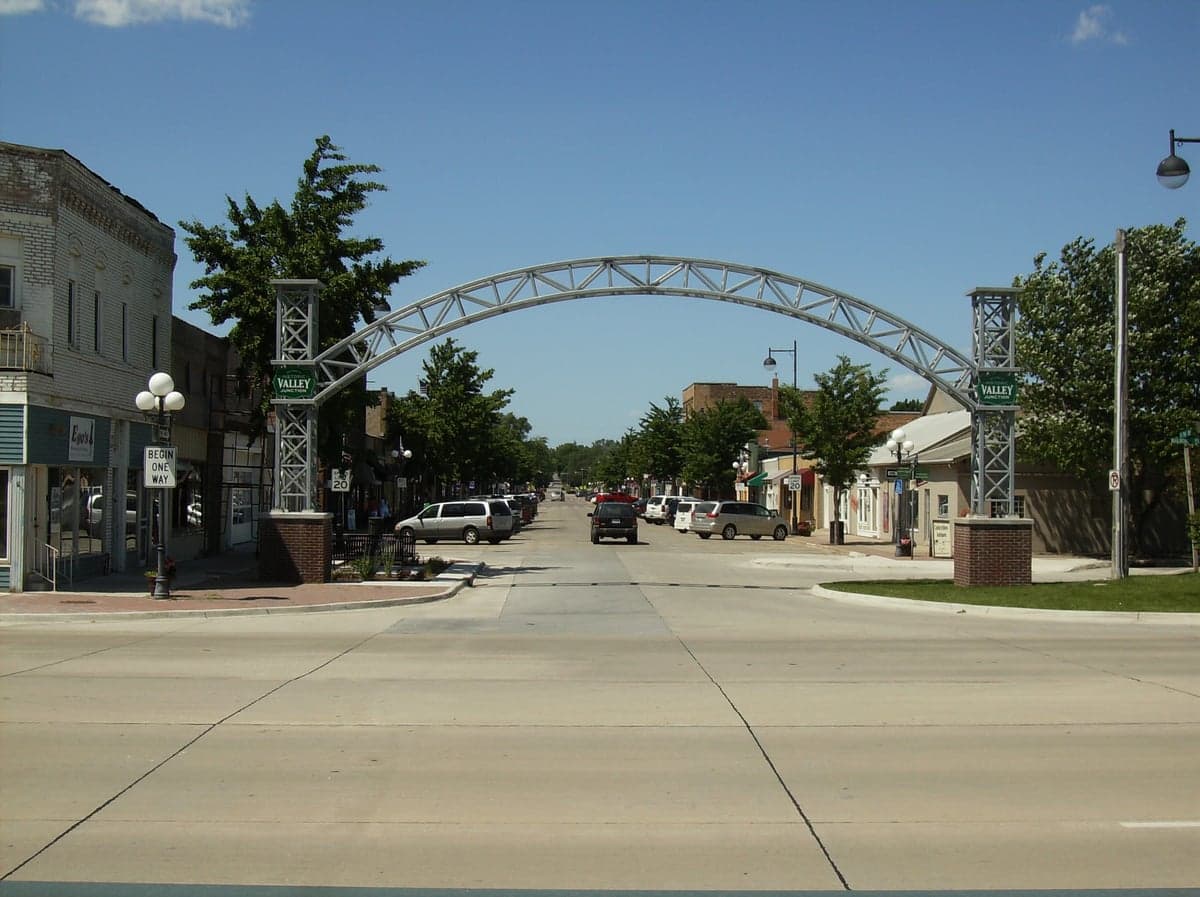
Culturally, West Des Moines still holds onto some conservative touchstones. You’ll find plenty of churches, a strong sense of community in the older neighborhoods like Valley Junction, and a general respect for private property rights. But the new developments—think the luxury apartments and mixed-use plazas near the interstate—bring in a younger, more transient crowd that tends to vote blue. The long-term outlook? If the growth continues at this pace, and if the city keeps courting tech and finance companies that attract out-of-state talent, West Des Moines could easily become a D+1 or D+2 district within a decade. That’s not a disaster, but it means the days of assuming your vote doesn’t matter are over. If you’re considering a move here, just know you’re buying into a community that’s still figuring out its identity—and you’ll want to be part of the conversation to keep it from drifting too far from the principles that made it a great place to raise a family.

State Political ClimatePolitical Climate in Iowa
State Political AnalysisPolitical Environment in the State
Iowa has long been a reliably Republican state in presidential elections, voting for the GOP candidate in six of the last eight cycles, but its internal politics are far more nuanced than a simple red-state label suggests. The state’s overall partisan lean is roughly R+6, driven by a deep red rural and small-town base that has hardened over the past two decades, while the Des Moines metro and a handful of college towns have shifted blue. Over the last 10-20 years, the trajectory has been a steady march rightward on cultural and economic issues, punctuated by a 2020 election where Donald Trump won the state by 8 points, and a 2022 midterm that saw Republicans sweep all statewide offices and expand their legislative supermajorities.
Urban vs. rural divide
The political map of Iowa is a textbook case of the urban-rural chasm. The Des Moines metro, including Polk County and the suburbs of West Des Moines and Ankeny, has become a Democratic stronghold, with Joe Biden winning Polk County by 15 points in 2020. Johnson County, home to Iowa City and the University of Iowa, is the bluest county in the state, voting for Biden by a 2-to-1 margin. Meanwhile, the vast rural expanse—counties like Sioux, Plymouth, and Lyon in the northwest, and Decatur and Ringgold in the south—routinely deliver 70-80% of their votes to Republicans. The shift is most visible in formerly competitive areas like Scott County (Quad Cities), which flipped from Obama in 2012 to Trump in 2016 and 2020, and Dubuque County, a historically blue-collar Catholic stronghold that has trended red as cultural issues overtook economic ones. The divide isn’t just about population density; it’s about worldview—rural Iowans see the state as a bastion of traditional values and self-reliance, while urbanites increasingly align with national progressive trends.
Policy environment
Iowa’s policy environment is aggressively conservative, with a focus on limiting government overreach and protecting individual freedoms. The state has a flat income tax of 3.8% (phasing down to 3.5% by 2026), one of the lowest in the Midwest, and no inheritance or estate tax. Property taxes are relatively low, with a median effective rate of 1.4%, though local levies vary. Governor Kim Reynolds signed a 2023 law eliminating most state regulations on occupational licensing, making it easier for newcomers to work without bureaucratic hurdles. Education policy is a flashpoint: the 2023 Students First Act created a universal Education Savings Account program, allowing parents to use state funds for private or homeschool expenses—a major win for school choice advocates. On healthcare, Iowa has not expanded Medicaid under traditional ACA rules, instead using a waiver program that emphasizes private managed care. Election laws tightened after 2020: a 2021 law reduced early voting days from 29 to 20, closed polls at 8 p.m. instead of 9 p.m., and banned private funding for election administration. Voter ID is now required, with a strict photo ID mandate that has drawn criticism from progressives but is popular among conservatives who see it as election integrity protection.
Trajectory & freedom
Iowa is becoming more free in the sense of limiting government intrusion into personal and economic decisions, especially for law-abiding citizens. The 2021 permitless carry law (HF 756) allows any legal gun owner to carry a concealed firearm without a permit, a clear expansion of Second Amendment rights. Parental rights were strengthened in 2023 with a law requiring schools to notify parents if a child requests a name or pronoun change, and banning instruction on gender identity and sexual orientation through sixth grade. Medical autonomy took a hit for some, but a win for others: the 2023 fetal heartbeat law bans abortion at roughly six weeks, with exceptions for rape, incest, and life of the mother—a move that aligns with the state’s pro-life majority. On property rights, a 2022 law limited eminent domain for carbon capture pipelines, a rare instance of the legislature siding with landowners against corporate interests. The trajectory is clear: Iowa is doubling down on cultural conservatism and economic liberty, with no signs of retreat. The only area of concern is a creeping centralization of power in the governor’s office, with Reynolds using executive orders more aggressively than her predecessors, but this is a minor note in an otherwise freedom-friendly trend.
Civil unrest & political movements
Iowa has seen relatively little civil unrest compared to coastal states, but it hasn’t been immune. The 2020 Black Lives Matter protests in Des Moines and Iowa City were largely peaceful, though a few nights of property damage in downtown Des Moines led to a heavy police presence and curfews. The state’s immigration politics are muted—Iowa has no sanctuary cities, and a 2023 law requires local law enforcement to cooperate with federal immigration authorities. The most visible political movement in recent years has been the parental rights wave, with groups like “Moms for Liberty” gaining traction in suburban school board races, particularly in Ankeny and Waukee. Election integrity remains a live issue: the 2020 election saw Trump’s campaign challenge results in a few counties, but no widespread fraud was found, and the 2021 law was seen as a preemptive measure. There’s a small but vocal secessionist movement in northwest Iowa, where some residents have floated joining South Dakota over cultural and tax differences, but it’s fringe. Overall, the political climate is stable—no riots, no militias, just a steady conservative consolidation that a new resident would find reassuringly orderly.
Projection
Over the next 5-10 years, Iowa will likely become more Republican and more culturally conservative, driven by two demographic trends. First, the rural population is aging and shrinking, but those who remain are voting red at higher margins, offsetting losses. Second, in-migration from blue states like Illinois and California is accelerating, but these newcomers are often conservatives fleeing high taxes and progressive policies—they’re settling in suburbs like Clive and Johnston and reinforcing the GOP base. The Des Moines metro will continue to blue, but not enough to flip the state. Expect further tax cuts, expanded school choice, and more restrictions on abortion and transgender rights. The wildcard is the 2026 gubernatorial race: if Reynolds runs for a third term (she’s term-limited after that), the GOP will hold; if she steps down, a primary could shift the party further right. For a new resident, the Iowa of 2035 will look much like today—stable, affordable, and free from the chaos of coastal states, with a government that mostly stays out of your life unless you’re breaking the law.
For a conservative individual or family considering a move, Iowa offers a rare combination of low taxes, strong gun rights, parental control in education, and a political culture that values self-reliance over government dependency. The trade-off is a cold winter and a lack of big-city amenities, but if you want a place where your vote actually counts and your values aren’t under daily assault, Iowa is a solid bet. Just avoid the college towns and the Des Moines core if you want to live among like-minded neighbors—stick to the suburbs or the small towns, and you’ll feel right at home.
* Values derived from national, state, county, city and local statistics and may differ in a specific area. Last updated: 2026-04-19T08:47:25.000Z
Narrative content on this page is AI-generated and may contain mistakes. Verify any details that matter before acting on them.
ReloMaps may earn a commission from affiliate links at no extra cost to you.

