 Popular
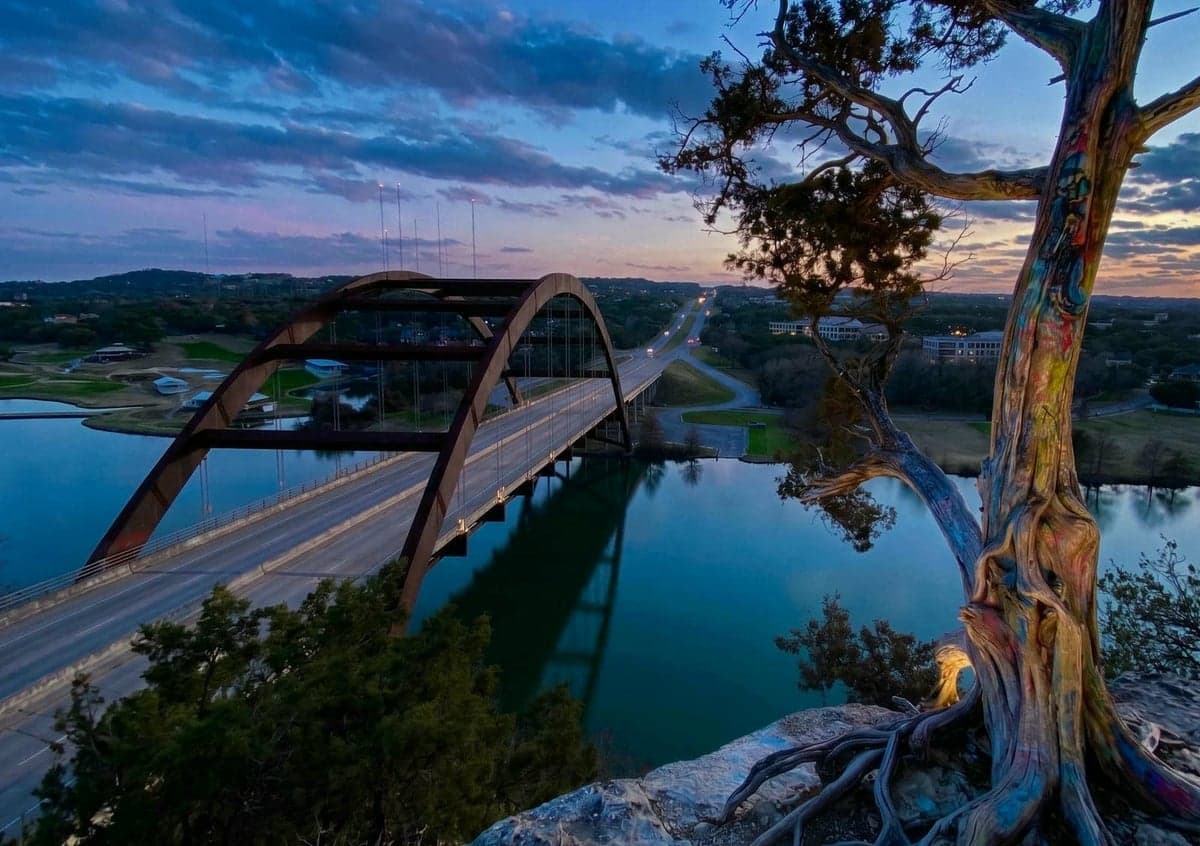
Photo: Made with AI
Demographics of West Lake Hills, TX
Affluence Level in West Lake Hills, TX
A wealthy area with high-earning, well-educated households. Incomes, home values, and educational attainment meaningfully outpace national averages.
People of West Lake Hills, TX
West Lake Hills, Texas, is a small, affluent enclave of 3,315 residents characterized by its overwhelmingly white (82.2%) and highly educated (80.8% college-educated) population. The city’s identity is defined by its zero foreign-born population, a median household income well above the national average, and a reputation as a secluded, family-oriented suburb of Austin. Its residents are overwhelmingly professionals, executives, and entrepreneurs who value privacy, large wooded lots, and proximity to downtown Austin without the urban density.
How the city was settled and grew
West Lake Hills was not a product of 19th-century settlement or land grants. The area was sparsely populated ranchland and hill country until the mid-20th century. The city was incorporated in 1953 as a planned residential community, deliberately designed to attract wealthy white families seeking a rural escape from Austin’s growing urban core. The original wave of settlers were primarily Anglo-American professionals—doctors, lawyers, and business owners—who built custom homes on large, wooded lots. The earliest neighborhoods, such as Westlake Drive and the Redbud Trail corridor, were developed in the 1950s and 1960s, with homes set far back from winding roads to preserve privacy. No significant immigrant or minority populations settled here during this period; the city’s founding covenants and high land costs effectively restricted development to a homogenous, upper-income white demographic.
Modern era (post-1965)
After the 1965 Hart-Cellar Act, West Lake Hills saw no corresponding increase in foreign-born residents—the city’s foreign-born population remains at 0.0% today. Instead, the post-1965 era was defined by domestic in-migration of affluent white families from other parts of Texas and the United States, drawn by the city’s reputation for excellent schools (Eanes Independent School District) and low crime. The 1970s and 1980s saw the development of neighborhoods like Camp Craft Road and Lakewood Drive, which absorbed families moving from Austin’s central neighborhoods as the city grew denser. The Hispanic population, now at 10.0%, is largely composed of long-term residents or domestic migrants from other Texas cities, not recent immigrants. The East/Southeast Asian community (4.6%) is a small but visible presence, concentrated in newer custom homes in areas like Westlake Hills proper and the Scenic Brook subdivision. The Black population (0.8%) and Indian subcontinent population (0.2%) remain negligible, reflecting the city’s persistent homogeneity. No distinct ethnic enclaves formed; instead, these minority groups are dispersed and assimilated into the broader white-majority fabric.
The future
West Lake Hills is homogenizing further, not tribalizing into distinct enclaves. The zero foreign-born rate and high property values (median home prices exceeding $1.5 million) create a high barrier to entry for all but the wealthiest buyers. The population is projected to remain overwhelmingly white and highly educated, with slow growth limited by available land and strict zoning that limits density. The Hispanic and East/Southeast Asian shares may increase slightly as second-generation professionals from Austin’s broader metro area seek the same privacy and school quality, but these groups will likely assimilate into the existing demographic structure rather than forming separate communities. The next 10–20 years will see an aging population as current residents retire, with younger families replacing them only if they can afford the entry price. No significant immigrant influx is expected, and the city will remain a bastion of affluent, predominantly white, family-oriented living.
For a conservative-leaning individual or parent considering relocation, West Lake Hills offers a stable, high-amenity, and demographically predictable environment. It is becoming more expensive and exclusive, not more diverse, and its future trajectory points toward continued homogeneity and wealth concentration. This is a place for those who prioritize privacy, top-tier schools, and a like-minded community over urban diversity or affordability.

* Values derived from national, state, county, city and local statistics and may differ in a specific area. Last updated: 2026-04-24T05:58:57.000Z
Narrative content on this page is AI-generated and may contain mistakes. Verify any details that matter before acting on them.
ReloMaps may earn a commission from affiliate links at no extra cost to you.

