Photo: Wikipedia
Personal Sovereignty in West New York, NJ
Viable for self-reliance. Generally workable, though some barriers may limit total independence.
What does Personal Sovereignty tell us?
Personal Sovereignty measures your capacity for self-reliance and independence with minimal government friction. Higher scores mean fewer barriers between you and the way you want to live... but it assumes you have the space you need and good neighbors.
What does this tell us?
Personal Sovereignty measures your capacity for self-reliance and independence with minimal government friction. Higher scores mean fewer barriers between you and the way you want to live... but it assumes you have the space you need and good neighbors.
State Policy
Energy independence: Importer (8% of energy produced in-state)
Personal Liberty
Homesteading

Personal Liberty Analysis
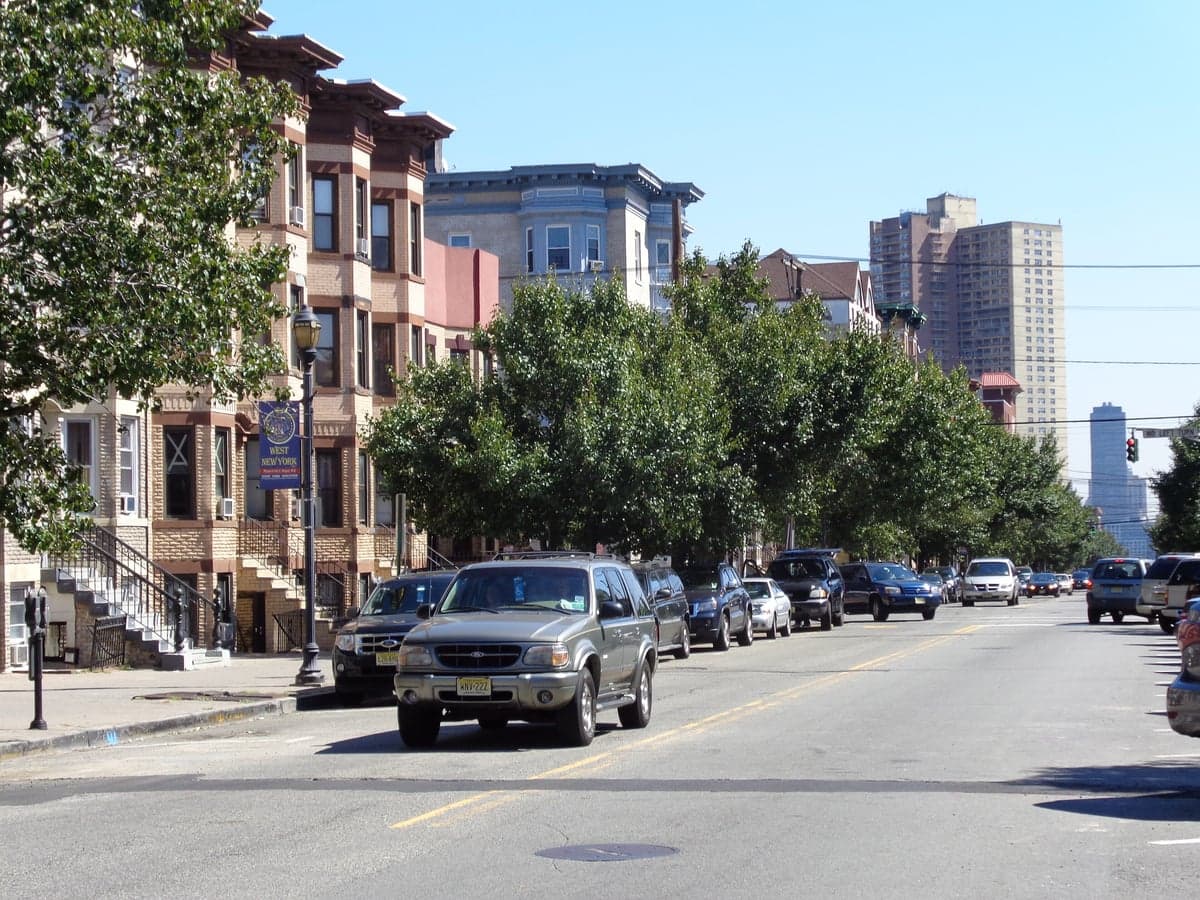
West New York, New Jersey, presents a challenging environment for those prioritizing personal sovereignty, particularly when viewed through a survivalist or prepper lens. The town's dense, urban character—packing over 50,000 residents into roughly one square mile—creates a landscape where individual autonomy is heavily mediated by state and local authority. For conservative-leaning individuals and families concerned with government overreach, the overarching reality is that New Jersey's regulatory apparatus, tax structure, and legal framework consistently prioritize collective compliance over personal discretion, making West New York a location where sovereignty must be actively defended rather than assumed.
Tax burden and regulatory posture: How state policy constrains financial autonomy
New Jersey's tax burden is the highest in the nation, and West New York residents feel this acutely. The state's progressive income tax tops out at 10.75% for high earners, while property taxes in Hudson County average around 2.5% of assessed value annually—among the steepest in the country. For a prepper or self-reliant individual, this means a significant portion of income is redirected to state coffers before you can allocate it to your own preparedness supplies, land purchases, or emergency funds. The regulatory posture extends beyond taxes: New Jersey imposes strict environmental and building codes that limit what you can do with your property. Permits are required for even minor structural changes, and the state's Department of Environmental Protection has broad authority over land use, including wetlands and flood zones that cover much of the area. This creates a climate where personal financial decisions are constantly subject to government approval, eroding the kind of fiscal independence that sovereignty-minded individuals seek.
Self-defense and gun law specifics: Navigating New Jersey's restrictive firearms framework
For those concerned with the right to keep and bear arms, West New York sits within one of the most restrictive legal environments in the United States. New Jersey requires a Firearms Purchaser Identification Card for handgun and long gun purchases, along with a separate permit for each handgun transaction—a process that can take months and involves background checks, references, and a fee. The state's "may-issue" concealed carry regime was effectively replaced by a "shall-issue" system after the Bruen decision, but New Jersey has responded with stringent training requirements, a list of "sensitive places" where carry is prohibited (including parks, public transit, and private property without owner consent), and a requirement to demonstrate "justifiable need" that courts are still litigating. Magazine capacity is capped at 10 rounds, and "assault weapons" are broadly defined, banning many common semi-automatic rifles. For a prepper, this means self-defense options are limited, legally complex, and subject to change with each legislative session. The practical reality is that West New York residents face significant hurdles to maintaining a robust personal defense capability, and the legal risk of non-compliance is severe—New Jersey has some of the harshest penalties for firearms violations in the country.
Self-reliance and homesteading viability: Lot sizes, zoning, and off-grid feasibility
West New York's urban density makes traditional homesteading or off-grid living virtually impossible. The median lot size is a fraction of an acre, with most homes being multi-family rowhouses or apartment buildings. Zoning is strictly residential and commercial, with no agricultural allowances—raising chickens, keeping bees, or maintaining a substantial vegetable garden is often prohibited by municipal codes. The town's water and sewer infrastructure is centralized, and any attempt to go off-grid (solar panels, rainwater collection, composting toilets) would require multiple permits and likely face resistance from the building department. For a survivalist mindset, this lack of land and regulatory flexibility means self-reliance is limited to stockpiling supplies within a small apartment or house, rather than producing your own food, water, or energy. The nearest rural areas with homesteading potential are in Sussex or Warren Counties, over an hour's drive away, making West New York a poor base for those seeking true independence from municipal systems.
Personal liberties: Parental rights, medical autonomy, speech, and property
New Jersey's legal framework generally prioritizes state authority over individual or parental discretion. In education, the state mandates comprehensive sex education and LGBTQ-inclusive curriculum standards, and parents have limited ability to opt their children out of specific lessons. Medical autonomy is similarly constrained: New Jersey has strict vaccine mandates for school attendance, and during the COVID-19 pandemic, the state imposed some of the nation's most prolonged emergency orders, including mask mandates and business closures that were enforced with fines. On property rights, the state's strong eminent domain powers and extensive zoning regulations mean that what you can do with your own land is heavily circumscribed—rent control ordinances in West New York further limit property owners' ability to set terms with tenants. Free speech protections exist under the First Amendment, but New Jersey has laws against "harassment" and "cyber-harassment" that some critics argue can be used to chill political speech. For a conservative-leaning individual, the cumulative effect is a sense that personal and parental decisions are constantly subject to state override, creating an environment where sovereignty is more theoretical than practical.
In the broader context of the United States, West New York ranks low for personal sovereignty. Compared to states like Texas, Florida, or New Hampshire, where tax burdens are lighter, gun laws are more permissive, and zoning is less restrictive, New Jersey's dense regulatory environment feels like a constant negotiation with government authority. For the survivalist or prepper, this town offers little in the way of land, legal flexibility, or self-defense options. The best strategy for those committed to personal autonomy is to view West New York as a temporary base—a place to earn income in the New York metro area while planning a move to a jurisdiction where sovereignty is not just a concept but a practical reality. If relocation is not an option, the focus must shift to legal compliance, careful documentation, and building community networks that can provide mutual aid within the constraints of state law.

* Values derived from national, state, county, city and local statistics and may differ in a specific area. Last updated: 2026-04-30T04:25:26.000Z
Narrative content on this page is AI-generated and may contain mistakes. Verify any details that matter before acting on them.
ReloMaps may earn a commission from affiliate links at no extra cost to you.

