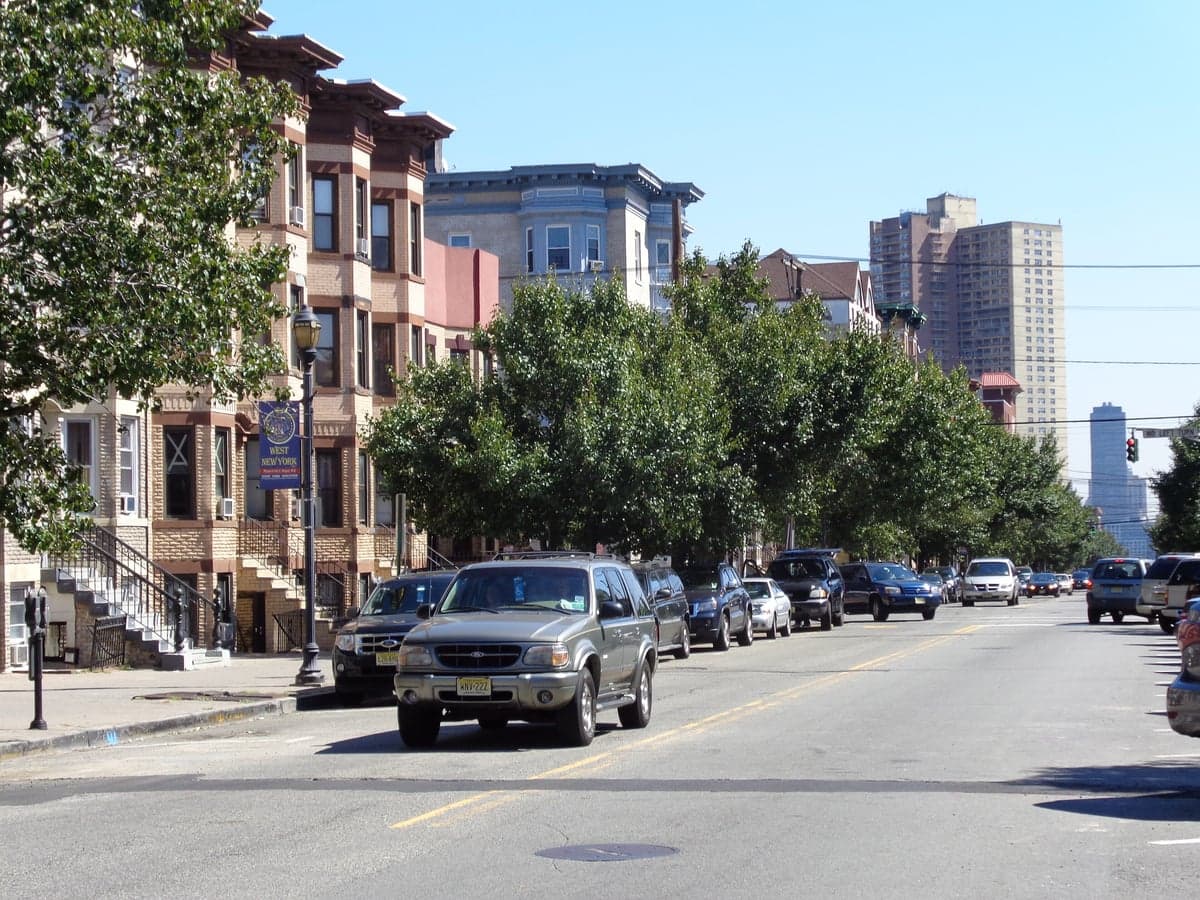
Photo: Wikipedia
Political ClimatePolitical Climate in West New York, NJ
District shown is the primary district for this city’s centroid. Cities may span multiple districts.
Local Political AnalysisPolitical Analysis of West New York, NJ
West New York has been a Democratic stronghold for as long as anyone can remember, and it’s only gotten more lopsided in recent years. The Cook PVI sits at D+15, meaning this town votes about 15 points more Democratic than the national average, and in 2024, that gap felt even wider. If you’re a conservative, you’re definitely in the minority here, and the political trajectory is pretty clear: the local government keeps pushing further left, with little appetite for dissent or fiscal restraint.
How it compares
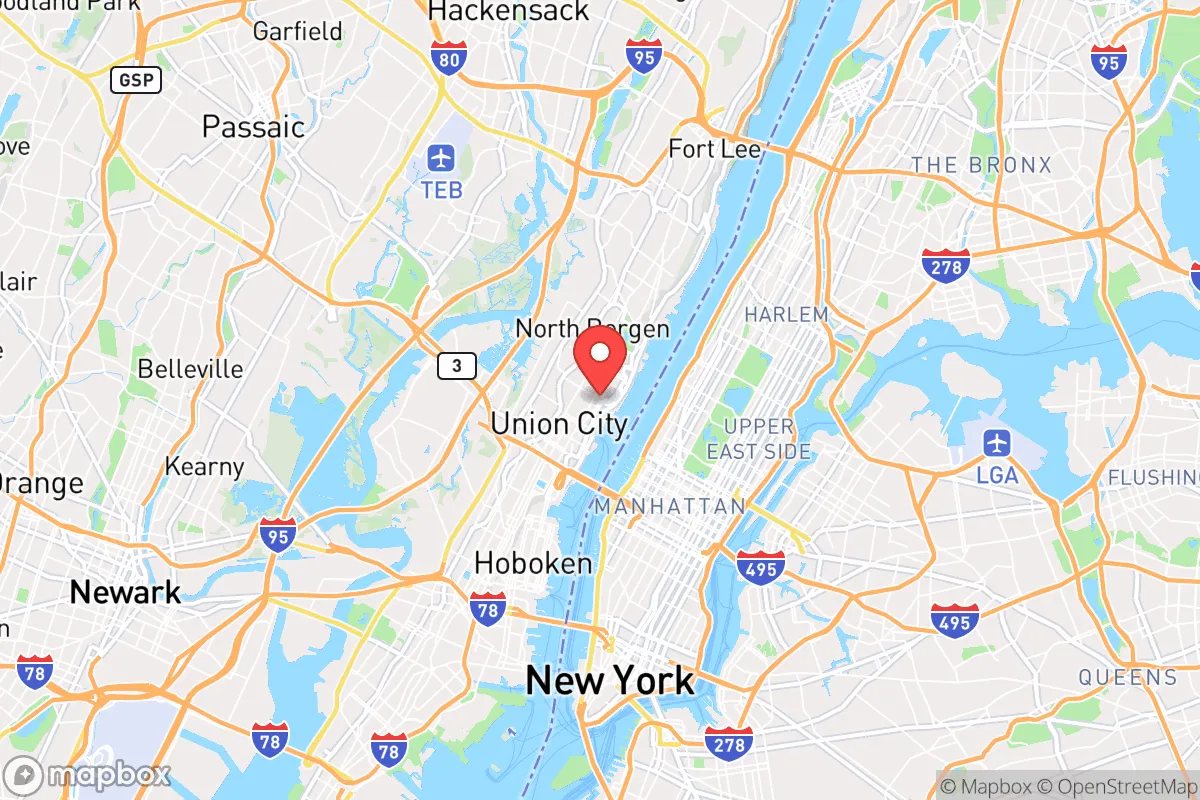
To really understand West New York’s politics, you have to look at the towns around it. Neighboring Union City and North Bergen are also deep blue, with similar Democratic machines that have been running things for decades. But drive just a few miles west to places like Secaucus or Kearny, and you start seeing a more balanced mix—those towns still lean Democratic, but they’re not as reliably progressive, and you’ll find more folks willing to question tax hikes or new regulations. Even closer, Guttenberg is a bit more moderate, though still solidly blue. The contrast is stark: West New York feels like a one-party town where the local leadership rarely faces serious pushback, and that’s concerning if you value having your voice heard on issues like property rights or school choice.
What this means for residents
For a conservative living here, daily life means watching the local government expand its reach into areas that used to be left to families and individuals. The town council has been quick to adopt progressive policies—think stricter rent control measures that actually discourage landlords from maintaining properties, and a push for more government-funded programs that inevitably lead to higher taxes. The school board has also shifted left, with curriculum changes that emphasize social justice over traditional academics, which has some parents worried about what their kids are being taught. If you’re someone who believes in limited government and personal responsibility, you’ll find yourself constantly on the defensive, trying to explain why a new ordinance or tax increase isn’t the answer. The political climate here feels like it’s squeezing out the middle ground, and that’s a real concern for anyone who doesn’t fit the progressive mold.
On the cultural side, West New York has a strong immigrant heritage—lots of Cuban, Dominican, and other Latin American families—and that used to mean a more socially conservative vibe, especially on family values and religious freedom. But over the last decade, the local leadership has pushed hard to align with national progressive trends, from embracing sanctuary city policies to promoting LGBTQ+ initiatives in public spaces. It’s a shift that feels top-down, not organic, and it’s left some longtime residents feeling like their town is being reshaped by outsiders. Looking ahead, I don’t see this changing anytime soon—the political machine is too entrenched, and the demographics keep tilting younger and more liberal. If you’re a conservative thinking about moving here, you’d better be ready to be a lone voice at town hall meetings, because the direction is set, and it’s not turning back.

State Political ClimatePolitical Climate in New Jersey
State Political AnalysisPolitical Environment in the State
New Jersey has long been one of the most reliably Democratic states in the nation, but its political climate is far more nuanced than the simple "blue state" label suggests. Over the past 10-20 years, the state has shifted from a moderate, union-driven Democratic stronghold to a more aggressively progressive one, driven largely by the massive, vote-rich populations of Newark, Jersey City, and Paterson. While the state hasn't voted Republican for president since 1988, the real story is the growing cultural and policy chasm between the dense, liberal urban corridor and the more traditional, rural and suburban areas that still hold onto a different vision of freedom.
Urban vs. rural divide
The political map of New Jersey is a tale of two states. The "Gold Coast" counties—Hudson, Essex, and Bergen—are the engine of the Democratic machine, with Jersey City and Newark producing margins that can overwhelm the rest of the state. In 2020, Joe Biden won Hudson County by over 70 points. Meanwhile, the rural and exurban counties in the northwest and south—Sussex, Hunterdon, Warren, and Cape May—are reliably Republican, often voting +20 to +30 points for the GOP. The real battleground has been the "swing" suburbs like Ocean County and parts of Monmouth and Burlington, which have trended rightward in recent cycles as residents flee the high taxes and progressive policies of the urban core. The divide isn't just about party registration; it's about worldview. In Sussex County, you'll find a strong culture of self-reliance and gun ownership, while in Montclair or Maplewood, the focus is on climate activism and social justice. This geographic split means that a conservative-leaning family moving to New Jersey must choose their town carefully—your experience in Newton will be radically different from one in Hoboken.
Policy environment
New Jersey's policy environment is a textbook case of government overreach, particularly for those who value fiscal conservatism and personal autonomy. The state has the highest property taxes in the nation, averaging over $9,500 annually, and a progressive income tax that tops out at 10.75% for earners over $1 million. The regulatory posture is heavy-handed: the state has some of the strictest gun laws in the country, including a "may-issue" concealed carry regime that was only recently loosened by the Supreme Court's Bruen decision, though the legislature has since passed a restrictive "sensitive places" law that is being challenged in court. On education, the state pours massive funding into its public schools, but parents in towns like Middletown and Randolph have grown increasingly frustrated with curriculum battles over critical race theory and gender ideology, leading to a surge in school board activism. Healthcare is heavily regulated, with a state-run insurance exchange and strict mandates. Election laws are also a concern for conservatives: New Jersey has no-excuse mail-in voting, automatic voter registration, and same-day registration, which critics argue erodes election integrity. The state's sanctuary policies, which limit cooperation between local law enforcement and federal immigration authorities, are another flashpoint, particularly in cities like Newark and Camden.
Trajectory & freedom
Over the past five years, New Jersey has become less free by almost any measure. The state has aggressively expanded its regulatory footprint, particularly in the wake of COVID-19. Governor Phil Murphy's emergency powers during the pandemic were among the most sweeping in the nation, including prolonged business closures, mask mandates, and vaccine requirements that many felt were excessive. On gun rights, the state passed the "Gun Safety Act of 2022," which bans carrying firearms in a vast array of "sensitive places" like parks, libraries, and even private businesses unless the owner explicitly posts a sign allowing it—a clear attempt to nullify the Bruen ruling. On parental rights, the state has moved in the opposite direction of places like Florida: in 2023, Murphy signed a law prohibiting school districts from requiring parental notification when a child changes their gender identity or pronouns. Property rights are also under assault, with the state's affordable housing mandates forcing towns to rezone for high-density development, often overriding local zoning laws. The only bright spot for freedom advocates has been the legalization of recreational cannabis in 2021, though the market is so heavily taxed and regulated that many still prefer the black market.
Civil unrest & political movements
New Jersey has seen its share of political flashpoints. The Black Lives Matter protests in the summer of 2020 were particularly intense in Newark and Trenton, with some demonstrations turning violent and leading to property damage. On the right, the "Reopen NJ" protests in 2020 were a major grassroots movement, drawing thousands to the Statehouse in Trenton to oppose Murphy's lockdown orders. More recently, school board meetings in Westfield and Cherry Hill have become battlegrounds over curriculum and parental rights, with conservative parents organizing through groups like "Moms for Liberty." Immigration politics are a constant source of tension: Newark is a designated "sanctuary city," and the state's "Immigrant Trust Directive" prohibits state law enforcement from asking about immigration status. This has led to friction with federal authorities and concerns among residents about public safety. Election integrity remains a hot-button issue, with many conservatives pointing to the 2020 election's widespread use of mail-in ballots as a source of distrust. There is no serious secessionist movement, but there is a palpable sense of "voting with your feet"—the state has seen a net outflow of residents for years, many heading to Florida, Texas, or Tennessee.
Projection
Looking ahead 5-10 years, the trajectory is clear: New Jersey will continue to become more progressive, more regulated, and more expensive. The demographic trends are working against conservatives—the urban core is growing younger and more diverse, while the rural and exurban areas are aging and shrinking. The state's reliance on high-income earners for tax revenue is a ticking time bomb; if the stock market falters or remote work allows more high-earners to leave, the state could face a fiscal crisis. For a conservative-leaning individual or family moving in now, the realistic expectation is that you will be living in a state where your political views are increasingly marginalized, your taxes will continue to rise, and your personal freedoms—especially regarding guns, education, and medical autonomy—will be under constant pressure. The best-case scenario is that you find a like-minded community in a town like Jackson or Lacey in Ocean County, where the local culture is more aligned with your values, but you will still be subject to state-level policies that you likely oppose.
For a new resident, the bottom line is this: New Jersey offers proximity to world-class job markets, excellent schools in certain suburbs, and beautiful natural areas, but it comes at the cost of high taxes, heavy regulation, and a political climate that is increasingly hostile to conservative values. If you are willing to fight for your rights at the local level—school boards, town councils, and county parties—you can carve out a decent life here. But if you are looking for a state that respects your freedom to live as you see fit, you will find that New Jersey is a tough place to call home. Choose your town carefully, and be prepared for a constant political battle.
* Values derived from national, state, county, city and local statistics and may differ in a specific area. Last updated: 2026-04-30T04:25:26.000Z
Narrative content on this page is AI-generated and may contain mistakes. Verify any details that matter before acting on them.
ReloMaps may earn a commission from affiliate links at no extra cost to you.

