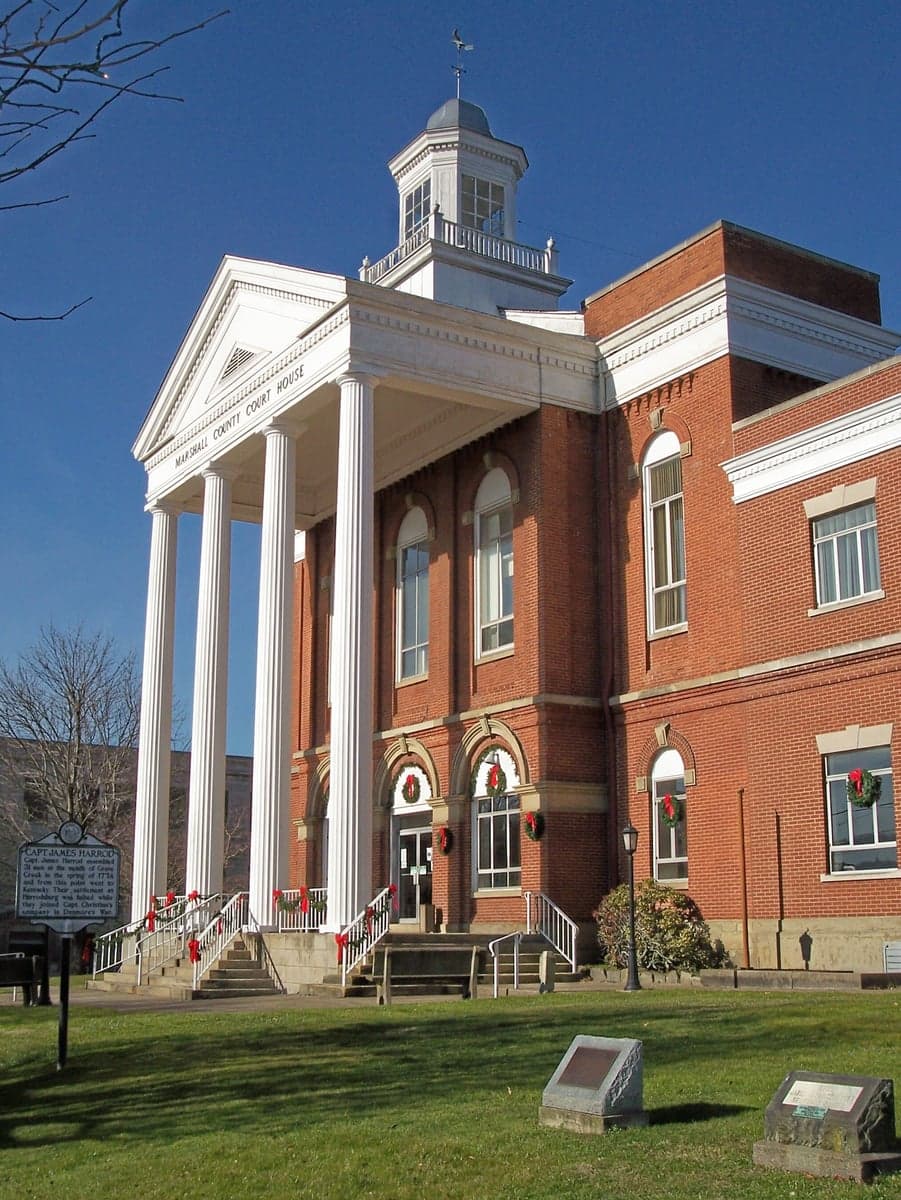
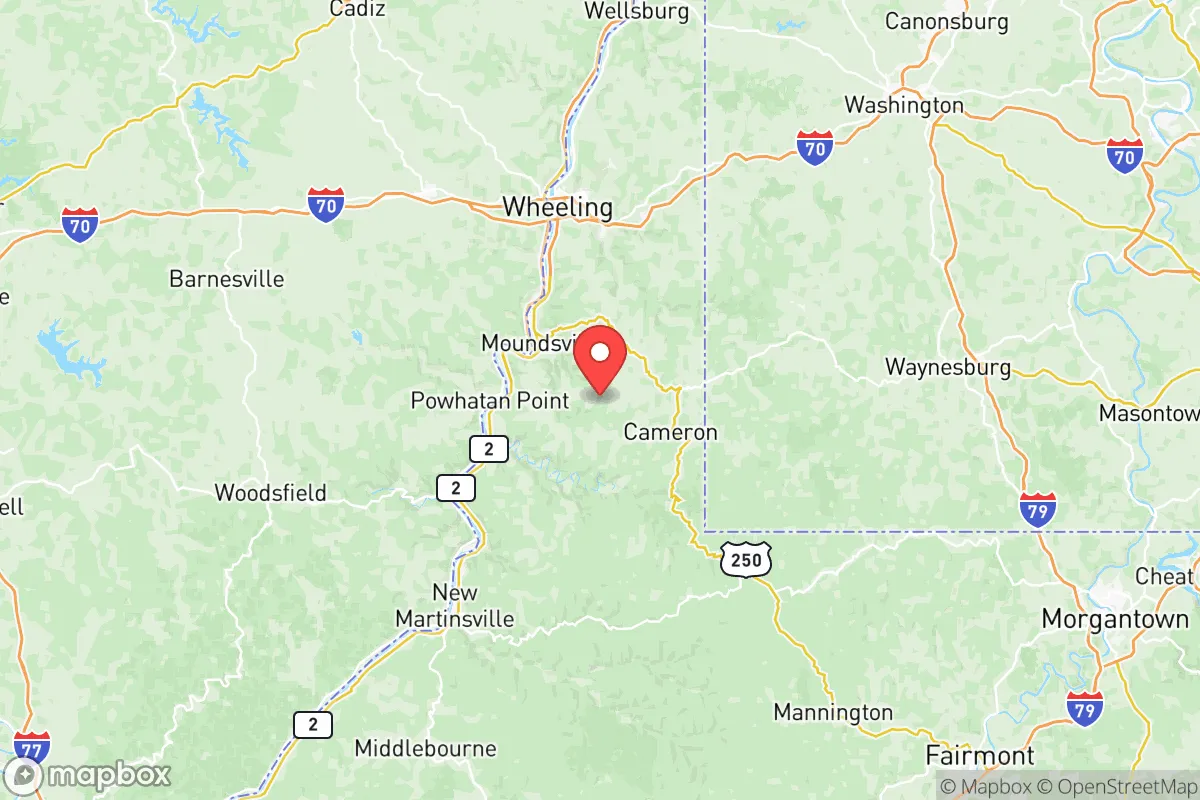
Photo: Wikipedia
Quality of Life in Marshall County
A livable area that tracks near national norms for affordability, walkability, and neighborhood health.
What does Quality of Life tell us?
Quality of Life measures an area by evaluating factors like cost of living, nearby amenities, country club access, airport proximity, socioeconomic signals and neighborhood character. For large states, this is a general average — quality of life can vary dramatically between metro areas, suburbs, and rural communities within the same state.
What does this tell us?
Quality of Life measures an area by evaluating factors like cost of living, nearby amenities, country club access, airport proximity, socioeconomic signals and neighborhood character. For large states, this is a general average — quality of life can vary dramatically between metro areas, suburbs, and rural communities within the same state.
Cost of Living
38% below national average
151%
The Real Cost of Living in Marshall County for 2026
| Tier | Individual | Family (4) |
|---|---|---|
| Survival | $13k | $25k |
| Comfortable | $27k | $40k |
| Luxury | $109k+ | $169k+ |
| Elite (Top 5%) | $129k+ | $200k+ |
Quality-of-Life Analysis
Marshall County, West Virginia, offers a broad quality-of-life spectrum that ranges from the compact, walkable river town of Moundsville to the quiet, unincorporated crossroads of places like Glen Dale and Dallas, with the rest of the county defined by rolling farmland and wooded hollows. The county’s character shifts noticeably within a 15-minute drive: one end of the spectrum draws people who want a historic downtown with sidewalks and local shops, while the other attracts those seeking acreage, privacy, and a slower pace. With a cost-of-living index of 62 (well below the national average of 100), a median home value of $139,800, and a median rent of $823, the county is one of the most affordable places in the upper Ohio Valley, but the experience of living there depends heavily on which specific community you choose.
Largest town(s) & population centers
Moundsville, the county seat and largest municipality (population roughly 8,000), is the clear hub of daily life. Its compact downtown along Jefferson Avenue features a historic courthouse, the former West Virginia Penitentiary (now a tourist attraction), and a handful of locally owned restaurants and shops. Daily life here is walkable for those living near the core, with grocery stores, a hospital (Reynolds Memorial), and basic services within a short drive. The town’s housing stock is a mix of older Victorian-era homes and mid-century ranches, with many properties under $150,000. Glen Dale, just south of Moundsville, functions as a bedroom community with a small commercial strip and easy access to U.S. Route 250. Both towns see a steady stream of commuters heading to Wheeling (about 15 minutes north) or into Pennsylvania for work, contributing to the county’s average commute of roughly 25 minutes. For families, the Marshall County School system operates several elementary schools in these population centers, with John Marshall High School serving the entire county.
Smaller towns & rural pockets
Beyond the main towns, Marshall County is dotted with unincorporated communities and small villages that define its rural character. Dallas, a tiny crossroads near the Ohio River, offers little more than a post office and a few dozen homes, but provides direct river access and a sense of isolation just minutes from Moundsville. Limestone, further inland, is a classic Appalachian hamlet surrounded by farmland and wooded ridges, with no commercial services — residents drive 10-15 minutes for groceries. Sherrard and Wheeling Creek are similarly rural, with scattered houses along winding two-lane roads. These areas attract people who want a few acres for gardening, hunting, or simply space between neighbors. The trade-off is clear: no sidewalks, no streetlights, and a longer drive to any amenity. Benwood, technically a separate city but contiguous with the Moundsville area, straddles the line between small town and rural, with a mix of older homes and newer subdivisions on the outskirts.
Cost & lifestyle range
The cost-of-living spread across Marshall County is narrow in absolute dollars but wide in lifestyle terms. At the low end, a two-bedroom rental in a rural area like Dallas or Limestone can be found for $600-$700 per month, well below the county median of $823. A fixer-upper home in these pockets might sell for under $100,000. At the higher end, newer subdivisions on the outskirts of Moundsville and Glen Dale — such as those near the Moundsville Country Club or along the Ohio River — feature homes in the $200,000-$300,000 range, still far below national averages. The median home value of $139,800 reflects this broad middle ground. Amenities follow the same gradient: Moundsville residents have a public library, a YMCA, and a few dining options within walking distance; rural residents rely on their own wells, septic systems, and a 20-minute drive for a sit-down meal. Property taxes remain low across the county, and West Virginia’s lack of a state income tax on Social Security benefits is a draw for retirees seeking a low-cost, quiet lifestyle.
People who thrive in Marshall County are typically those who value affordability and space over urban amenities. Retirees on fixed incomes, remote workers who need only a reliable internet connection (fiber is available in Moundsville and parts of Glen Dale, but spotty in rural areas), and families who want a house with a yard for under $150,000 are the most common profiles. The county does not offer nightlife, high-end shopping, or cultural density — but for those who find satisfaction in a low-stress, low-cost life within an hour of Pittsburgh or Columbus, it delivers a consistent, predictable quality of life across its varied landscape.

Crime in Marshall County
Generally safer than 69% of comparable U.S. locations.
Violent CrimeViolent Crime Analysis
Property CrimeProperty Crime Analysis
Crime Analysis
Marshall County, West Virginia, presents a mixed safety profile for prospective residents. With a violent crime rate of 224.8 per 100,000 residents and a property crime rate of 937 per 100,000, the county's overall risk is notably lower than the national average but requires careful neighborhood-level consideration. The county seat of Moundsville and the town of Glen Dale anchor the population, while smaller communities like Benwood, McMechen, and Cameron offer distinct safety dynamics shaped by local law enforcement presence and community engagement.
Crime in context
Marshall County's violent crime rate of 224.8 per 100,000 sits roughly 40% below the national average of 380 per 100,000, placing it among the safer counties in West Virginia. Property crime at 937 per 100,000 is also well under the national benchmark of 1,954 per 100,000, reflecting a rural-urban divide where smaller populations and tighter community networks deter opportunistic crime. However, these countywide averages mask variation: Moundsville, as the largest municipality, experiences a slightly elevated property crime rate due to its commercial density and proximity to the Northern Regional Jail, while Cameron and rural unincorporated areas report near-zero violent incidents. The county benefits from a conservative judicial philosophy in the First Judicial Circuit, which covers Marshall County; local prosecutors and judges prioritize public safety over progressive diversion programs, meaning offenders face consistent consequences. This stands in contrast to larger, more liberal jurisdictions in West Virginia's eastern panhandle or Ohio's Cuyahoga County, where soft-on-crime policies have been linked to rising recidivism and community frustration.
What residents experience
Daily life in Marshall County is shaped by low fear of violent confrontation. Aggravated assault accounts for the majority of violent crimes, typically arising from domestic disputes or bar altercations rather than random street attacks. Property crime, while more common, is largely non-confrontational: vehicle break-ins and shed burglaries in Moundsville's older residential districts and along the Ohio River corridor are the primary concerns. Residents in Glen Dale and Benwood report feeling safe walking after dark, a sentiment reinforced by active neighborhood watch programs and a visible sheriff's department presence. The county's drug-related crime, particularly methamphetamine and opioid possession, has declined since 2020 due to targeted enforcement by the Marshall County Drug Task Force, but remains a factor in property crime spikes. Schools in the county, including John Marshall High School and Sherrard Middle School, maintain low incident rates, contributing to a family-friendly environment that contrasts sharply with the higher-crime urban centers of Wheeling (20 miles north) or Pittsburgh (70 miles east).
Neighborhood-level variation
Safety in Marshall County varies distinctly by location. Moundsville's downtown and riverfront areas see the highest property crime, with thefts from vehicles and minor vandalism concentrated near the former West Virginia Penitentiary tourist site and along Jefferson Avenue. In contrast, the rural outskirts of Moundsville—particularly the Dallas Pike and Limestone areas—report crime rates near zero, benefiting from low population density and strong neighborly surveillance. Glen Dale, with its compact residential layout and active police department, consistently logs the lowest crime rates among incorporated towns. Benwood and McMechen, both former industrial hubs, experience moderate property crime tied to vacant properties and transient populations, but violent incidents remain rare. Cameron, the county's northernmost town, is considered exceptionally safe, with fewer than 10 reported crimes annually. For families and retirees, the unincorporated communities of Graysville, Rosbys Rock, and Sand Hill offer the quietest living, while Moundsville's historic district demands standard urban precautions like locking doors and securing valuables. Overall, Marshall County's conservative justice system and community-oriented policing provide a safety net that progressive-leaning metro areas cannot match, making it a sound choice for those prioritizing security.
* Values derived from national, state, county, city and local statistics and may differ in a specific area. Last updated: 2026-05-22T03:43:42.000Z
Narrative content on this page is AI-generated and may contain mistakes. Verify any details that matter before acting on them.
ReloMaps may earn a commission from affiliate links at no extra cost to you.

