Photo: Wikipedia
Quality of Life in Mineral County
A livable area that tracks near national norms for affordability, walkability, and neighborhood health.
What does Quality of Life tell us?
Quality of Life measures an area by evaluating factors like cost of living, nearby amenities, country club access, airport proximity, socioeconomic signals and neighborhood character. For large states, this is a general average — quality of life can vary dramatically between metro areas, suburbs, and rural communities within the same state.
What does this tell us?
Quality of Life measures an area by evaluating factors like cost of living, nearby amenities, country club access, airport proximity, socioeconomic signals and neighborhood character. For large states, this is a general average — quality of life can vary dramatically between metro areas, suburbs, and rural communities within the same state.
Cost of Living
39% below national average
132%
The Real Cost of Living in Mineral County for 2026
| Tier | Individual | Family (4) |
|---|---|---|
| Survival | $11k | $21k |
| Comfortable | $35k | $52k |
| Luxury | $119k+ | $184k+ |
| Elite (Top 5%) | $140k+ | $217k+ |
Quality-of-Life Analysis
Mineral County, West Virginia, offers a quality-of-life spectrum that ranges from the walkable, historic county seat of Keyser to deeply rural hollows and mountain ridgelines, attracting everyone from remote workers and retirees seeking low costs to outdoor enthusiasts and commuters willing to trade amenities for space. With a cost-of-living index of 61—nearly 40 percent below the national average—and a median home value of $180,400, the county consistently draws buyers priced out of the Washington-Baltimore corridor who still want a commute under 30 minutes. The character of daily life shifts noticeably between the railroad-and-college atmosphere of Keyser, the smaller boroughs hugging the Potomac, and the widely scattered farms and forest hamlets inland.
Largest town(s) & population centers
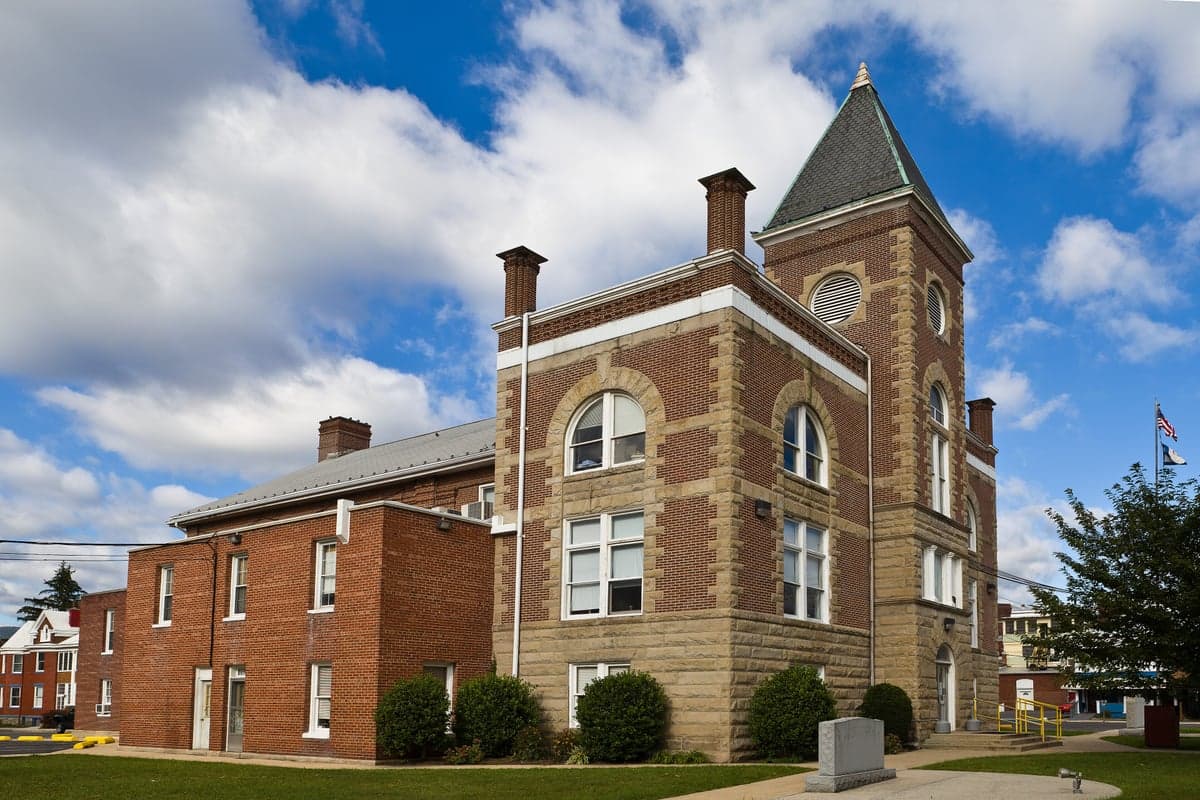
Keyser, the county seat and the only incorporated city with a population near 5,000, sits along the North Branch Potomac River and functions as the commercial, educational, and medical hub of Mineral County. Downtown Keyser centers around a compact grid of brick storefronts, the Mineral County Courthouse, and the campus of Potomac State College of West Virginia University—a two-year and four-year feeder school that brings a steady flow of students and faculty into the town. Daily life here is walkable in the core: residents can reach grocery stores, a small hospital (WVU Medicine Potomac Valley Hospital), restaurants, and the Amtrak station without a car. The town hosts a modest calendar of community events, including the Mineral County Fair and the Keyser Christmas Parade. Housing stock leans toward older single-family homes and row houses, with median rent at $684 making it one of the cheaper seats in the Eastern Panhandle. Alternate population centers include Fort Ashby, an unincorporated census-designated place along U.S. Route 50 with a growing strip of retail and light industry, and Piedmont, a historic railroad town directly south of Keyser that feels quieter but retains its own small retail cluster and direct access to the Potomac riverfront.
Smaller towns & rural pockets
Piedmont, with roughly 850 people, hugs the Maryland state line and offers a mix of well-maintained Victorian-era homes and more affordable fixer-uppers, plus the Piedmont Historic District. Ridgeley, sitting just north of Keyser on the Potomac, is a narrow linear town with limited services—most residents commute into Keyser or across the river to Cumberland, Maryland, for daily needs. Farther west and south, Elk Garden (population 300) is a classic Potomac Highlands village surrounded by hollows and ridgelines; its main street consists of a few churches, a post office, and a volunteer fire department, with the closest grocery 15 minutes away in Keyser. Unincorporated places like Wiley Ford, Short Gap, and Burlington hint at the deeper rural character: one-lane roads, working farms, and wooded tracts with creek frontage. These pockets attract buyers willing to trade convenience for privacy and acreage, with many properties still selling for well under the county median home value.
Cost & lifestyle range
The cost spread within Mineral County is relatively narrow but still distinct. At the upper end, Keyser’s walkable historic core and Fort Ashby’s newer subdivisions command prices closer to the county-median of $180,400, while rental units near Potomac State College can reach $900 for two-bedroom apartments—still affordable by regional standards. At the lower end, rural properties in places like Patterson Creek valley or New Creek often sell for $100,000–$130,000, and rent for under $600, though they come with longer commutes (the county average is 25.9 minutes) and a reliance on personal vehicles for every errand. Amenities follow the same gradient: Keyser offers a public library, a small movie theater, a YMCA-affiliated fitness center, and direct Amtrak service to Washington D.C. (about 3.5 hours by train), while the smaller towns have at most a gas station and a volunteer fire department. Outdoor access is uniform across the county—the Potomac River, the Green Ridge State Forest just over the Maryland line, and numerous creeks and logging roads—but the lifestyle varies from the college-town bustle of Keyser to the total solitude of a hollow off Route 28.
Mineral County suits households that value low housing costs, a quiet pace, and proximity to outdoor recreation but do not need urban nightlife or a dense job market. Remote workers, retirees, WVU Potomac State students, and commuters willing to drive 25–30 minutes to Cumberland or an hour to Martinsburg or Winchester find the county’s balance between town convenience and rural seclusion especially workable. Those who require high-end dining, frequent civic events, or a walkable non-downtown setting may feel constrained, but for a specific segment of the Eastern Panhandle housing market, Mineral County delivers an unusually wide range of cost-light living options within a 30-minute radius.

Crime in Mineral County
Generally safer than 69% of comparable U.S. locations.
Violent CrimeViolent Crime Analysis
Property CrimeProperty Crime Analysis
Crime Analysis
Mineral County, West Virginia, offers a notably safer environment than both the state and national averages, making it an attractive option for those seeking a rural community with lower crime exposure. The county's violent crime rate of 220 incidents per 100,000 residents sits well below the West Virginia average of approximately 309 and the U.S. figure near 380. Property crime, at 923 per 100,000, is roughly half the national rate and significantly lower than the state's typical 1,600 per 100,000. These figures reflect the general stability of towns like Keyser, Piedmont, and Ridgeley, where tight-knit community relationships and responsive local law enforcement help keep crime in check.
Crime in context
By the numbers, Mineral County's crime profile is a clear outlier for the positive. The violent crime rate of 220 per 100,000 is 29% lower than the West Virginia state average and 42% lower than the national median. Property crime, while higher than the county's own violent rate, still underperforms the national norm — a welcome contrast to many rural areas that struggle with theft and burglary. In neighboring Cumberland, Maryland, for instance, property crime rates climb above 1,800 per 100,000, a disparity partly attributable to Cumberland's more progressive prosecutorial climate, which prioritizes diversion and rehabilitation over incarceration. Mineral County's conservative judicial approach in the 43rd Judicial Circuit — covering Mineral and Grant counties — leans toward stricter sentencing and accountability, a factor local officials credit for keeping repeat offenders off the streets. No specific liberal district attorneys or progressive justice reforms have been enacted in Mineral County, ensuring that law enforcement and prosecution remain aligned with victim protection and public safety rather than offender leniency.
What residents experience
In daily life, Mineral County residents encounter crime as a low-frequency but not absent concern. Property crimes — including larceny, vehicle break-ins, and occasional residential burglary — account for the majority of incidents, concentrated mostly in the more populated areas of Keyser and along the U.S. Route 220 corridor. Fort Ashby and Westernport (a Maryland town just across the Potomac with direct influence on Mineral County activity) see some thefts tied to transient populations. Violent crime is rare: an isolated assault or domestic incident may appear in the annual reports, but homicides and armed robberies are infrequent. The Mineral County Sheriff's Office, along with municipal police in Keyser and Piedmont, maintains a visible presence with community policing programs that emphasize response time and neighborhood watch coordination. Residents generally report feeling safe walking in their neighborhoods, using local parks, and leaving doors unlocked during the day — a sentiment increasingly rare in larger, metro-adjacent areas.
Neighborhood-level variation in Mineral County is modest but worth noting. The town of Keyser, as the county seat and largest population center, exhibits slightly higher crime rates than the county average, though still well below state norms. Older residential streets near Main Street and the West Virginia University Keyser campus are considered very safe, while pockets along Mineral Street near rental properties have seen occasional nuisance crimes. Piedmont, a small former railroad town, benefits from a strong historic community fabric and consistently low crime. Elk Garden and Wiley Ford are among the quietest areas, with negligible violent crime and property theft limited to unattended equipment or vehicles. Overall, the rural character and conservative governance of Mineral County create a safety environment that contrasts sharply with the disorder seen in larger, progressive-run jurisdictions — a key consideration for any relocation assessment.
* Values derived from national, state, county, city and local statistics and may differ in a specific area. Last updated: 2026-05-27T20:49:02.000Z
Narrative content on this page is AI-generated and may contain mistakes. Verify any details that matter before acting on them.
ReloMaps may earn a commission from affiliate links at no extra cost to you.

