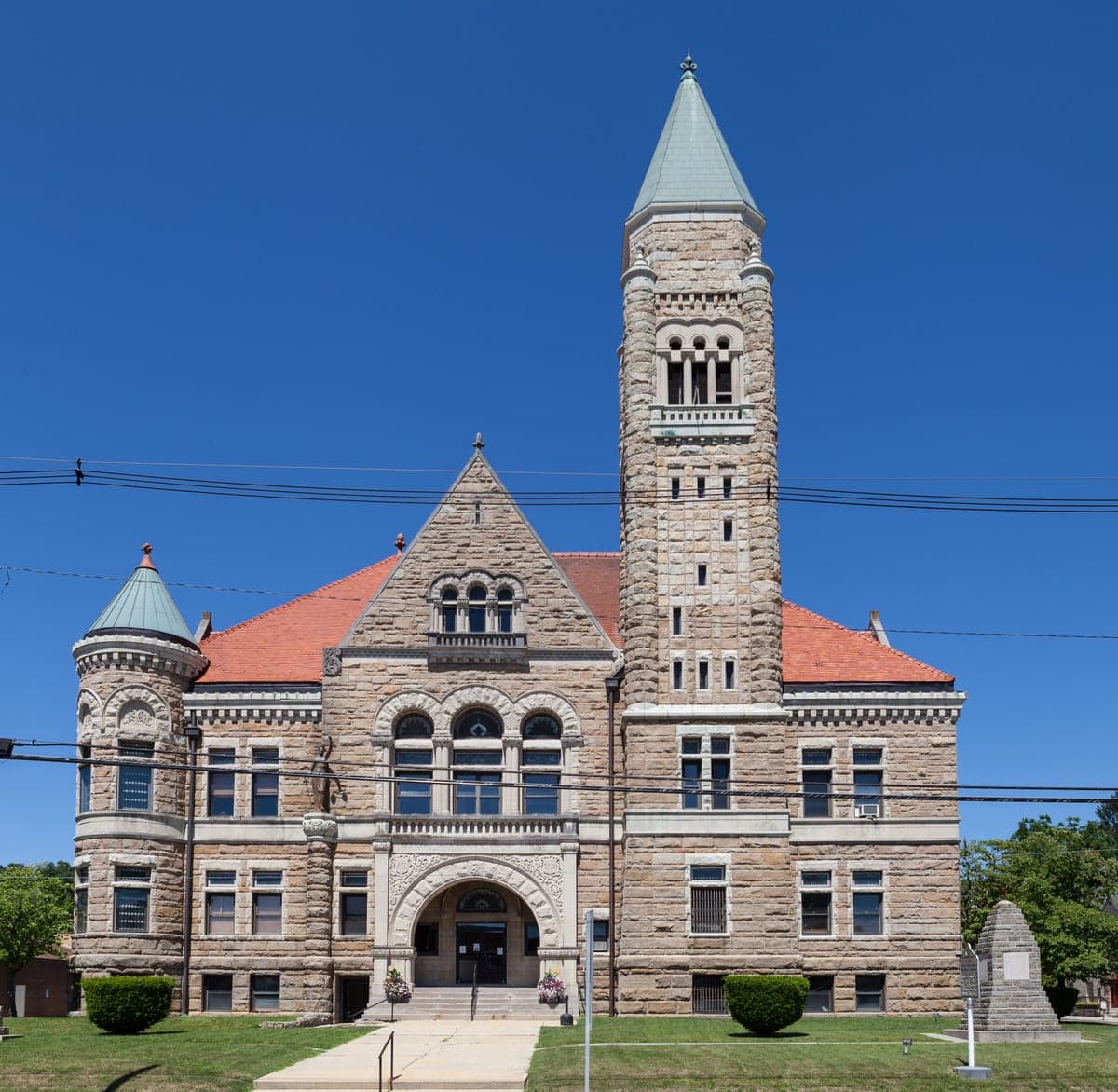
Photo: Wikipedia
Personal Sovereignty in Randolph County
Viable for self-reliance. Generally workable, though some barriers may limit total independence.
What does Personal Sovereignty tell us?
Personal Sovereignty measures your capacity for self-reliance and independence with minimal government friction. Higher scores mean fewer barriers between you and the way you want to live... but it assumes you have the space you need and good neighbors.
What does this tell us?
Personal Sovereignty measures your capacity for self-reliance and independence with minimal government friction. Higher scores mean fewer barriers between you and the way you want to live... but it assumes you have the space you need and good neighbors.
State Policy
Energy independence: Net exporter (200% of energy produced in-state)
Personal Liberty
Homesteading

Personal Liberty Analysis
Randolph County, West Virginia, offers a notably high degree of personal sovereignty, rooted in a state-level legal framework that prioritizes limited government, strong self-defense rights, and minimal interference in daily life. For individuals and families seeking autonomy from overreaching regulation, this rural Appalachian county presents a compelling environment where the state’s constitutional carry law, low property taxes, and permissive land-use policies create a foundation for self-reliance. While the county seat of Elkins provides modest municipal services, the surrounding unincorporated areas—such as Coalton, Beverly, and Huttonsville—operate with far fewer constraints, making Randolph County a standout for those who value personal freedom over bureaucratic oversight.
Tax burden and regulatory posture in Randolph County
West Virginia’s tax structure is among the most favorable in the nation for those seeking to keep more of their earnings. The state imposes a flat personal income tax rate of 4.12% (as of 2026), with no local income tax in Randolph County, meaning residents pay only the state rate. Property taxes are exceptionally low, with the effective rate on owner-occupied homes averaging around 0.55% of assessed value—roughly half the national average. This is due to a state-mandated assessment cap of 60% of market value for residential property, a policy that keeps tax bills predictable and affordable. The regulatory posture in Randolph County is light-touch, particularly outside municipal limits. The county has no county-wide zoning ordinance, a fact that allows property owners in areas like Montrose and Kerens to use their land for a wide range of activities—from small-scale agriculture to home-based businesses—without needing permits or variances. In contrast, the town of Elkins does enforce a zoning code, but it is relatively permissive compared to urban jurisdictions, focusing primarily on commercial districts and leaving residential lots largely unburdened. The absence of a county building code for most rural structures further reduces regulatory friction, though state-level electrical and septic standards still apply. For a relocation audience, this means Randolph County offers a tax and regulatory environment that rewards self-sufficiency without the administrative overhead common in more regulated states.
Self-defense and gun law specifics in Randolph County
West Virginia is a constitutional carry state, meaning no permit is required to carry a concealed firearm for any law-abiding adult 21 or older. Randolph County fully embraces this framework, with local law enforcement in Elkins and the sheriff’s office in Beverly taking a non-intrusive stance on lawful gun ownership. The county has no local ordinances restricting the carrying of firearms in public spaces, and the state preempts any municipal attempts to regulate firearms, ensuring uniform rights across all jurisdictions—including the towns of Huttonsville and Coalton. Stand-your-ground laws are in effect, with no duty to retreat before using deadly force in any place where a person is lawfully present. The state also prohibits employers from banning firearms in personal vehicles parked on company property, a protection that matters for workers commuting to jobs in Elkins or the county’s timber and mining operations. For those interested in hunting or sport shooting, Randolph County’s vast national forest lands—including the Monongahela National Forest—provide ample opportunities, with no county-level restrictions beyond state game laws. The overall environment is one of strong, unambiguous support for the Second Amendment, making it a top-tier destination for those who prioritize self-defense as a core component of personal sovereignty.
Self-reliance and homesteading viability in Randolph County
Randolph County is a prime location for homesteading and off-grid living, thanks to its abundant land, minimal zoning, and supportive state policies. Lot sizes in unincorporated areas commonly range from 1 to 20 acres, with prices often below $5,000 per acre for raw land—far cheaper than in the eastern panhandle or northern Virginia. The absence of county-wide zoning means that building a cabin, installing solar panels, or drilling a well typically requires no local permits, though state-level health department approval is needed for septic systems. Off-grid feasibility is high: the region receives ample sunlight for solar generation, and many properties have access to natural springs or shallow wells for water. The towns of Montrose and Kerens are particularly popular for homesteaders due to their proximity to Elkins (for supplies) while remaining deeply rural. The county also has a strong culture of barter and community self-help, with local Facebook groups and farmers’ markets in Elkins facilitating the exchange of goods and services. However, note that the mountainous terrain can make road access challenging in winter, and internet connectivity is spotty in remote areas—though Starlink has become a reliable option. For those willing to invest in infrastructure, Randolph County offers a low-barrier path to self-reliance that is increasingly rare in the lower 48.
Personal liberties in Randolph County
Personal liberties in Randolph County are broadly protected by West Virginia law, with a strong emphasis on parental rights, medical autonomy, and free speech. The state has a Parents’ Bill of Rights that affirms the right of parents to direct the upbringing, education, and healthcare of their children, including the ability to opt out of school curricula or medical treatments without government interference. In Randolph County, the school board in Elkins has generally deferred to parental authority, with no controversial mandates on masking or vaccination in recent years. Medical autonomy is further supported by the state’s lack of a vaccine passport requirement and its protection of alternative medicine practitioners, though licensing still applies for conventional providers. Free speech is robustly protected, with no local hate speech ordinances or restrictions on public assembly—a fact reflected in the county’s active civic life, from town hall meetings in Beverly to public forums in Huttonsville. Property rights are also strong: West Virginia’s right-to-farm law shields agricultural operations from nuisance lawsuits, and the state’s eminent domain powers are narrowly constrained, requiring a public purpose and just compensation. For a conservative-leaning audience, Randolph County’s legal environment aligns closely with values of individual liberty, limited government, and community self-governance.
Overall, Randolph County ranks among the most sovereignty-friendly areas in the eastern United States, offering a combination of low taxes, permissive gun laws, viable off-grid living, and strong personal liberties that few other regions can match. Compared to the regulatory density of the Washington, D.C., suburbs or the high costs of the Shenandoah Valley, Randolph County provides a tangible alternative where autonomy is not just a legal abstraction but a daily reality. For families and individuals who prioritize freedom over convenience, this county in the West Virginia highlands represents a strategic choice—one where the state’s constitutional framework and the county’s rural character combine to create an environment of genuine self-determination.

* Values derived from national, state, county, city and local statistics and may differ in a specific area. Last updated: 2026-07-30T14:01:10.000Z
Narrative content on this page is AI-generated and may contain mistakes. Verify any details that matter before acting on them.
ReloMaps may earn a commission from affiliate links at no extra cost to you.

