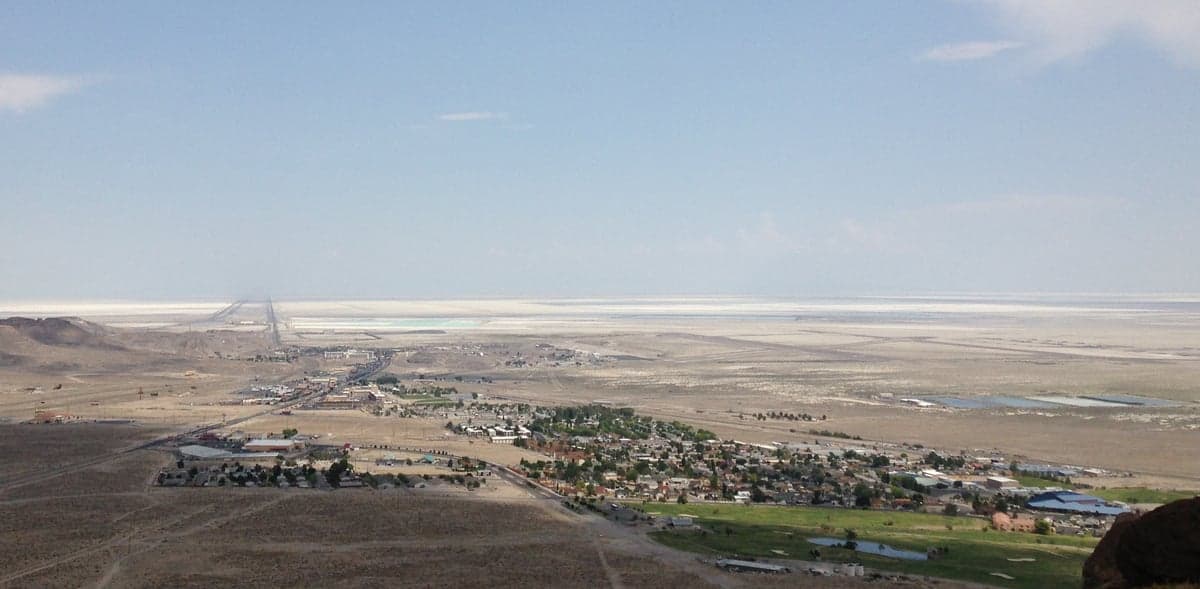
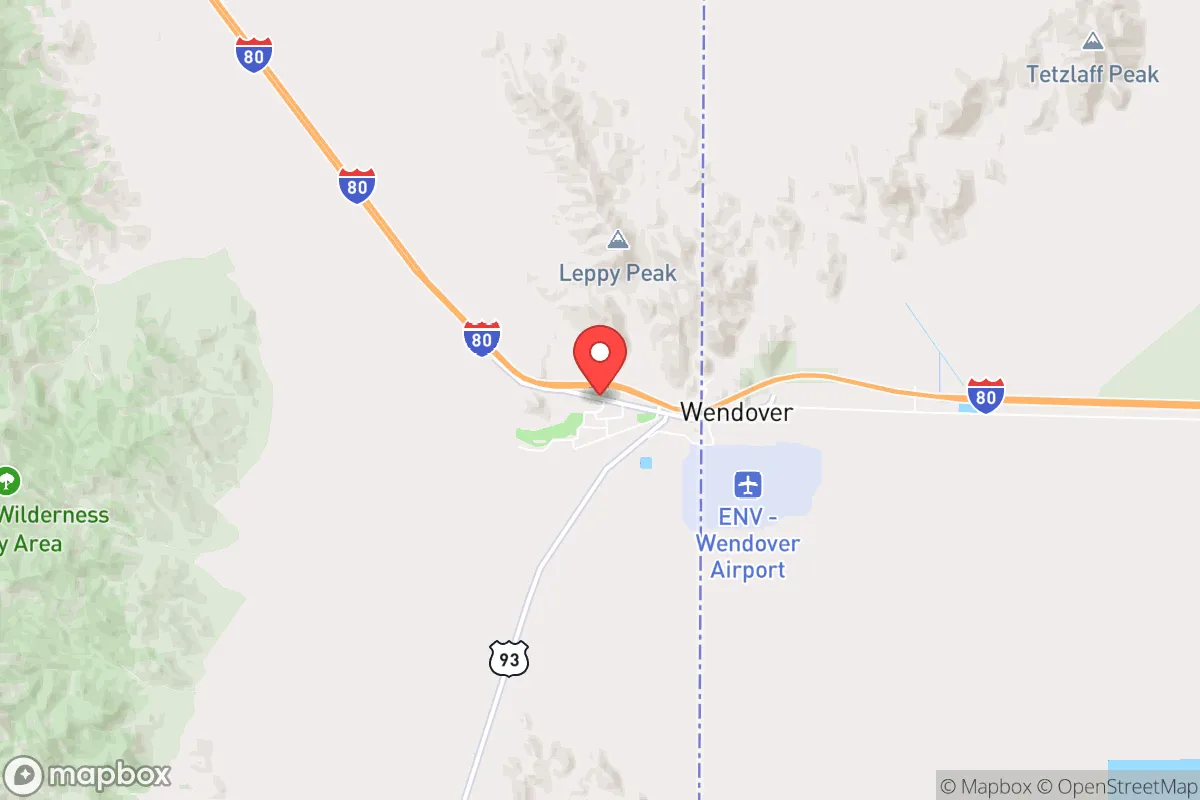
Photo: Wikipedia
Demographics of West Wendover, NV
Affluence Level in West Wendover, NV
A below-average socioeconomic profile. Incomes, home values, and educational attainment trail the U.S., with higher poverty and unemployment.
People of West Wendover, NV
The people of West Wendover, Nevada, today form a compact, predominantly Hispanic community of 4,507 residents, shaped by decades of labor migration and cross-border economic ties. With a population that is 63.7% Hispanic and 32.9% White, the city stands out as a majority-minority enclave in eastern Nevada, where foreign-born residents make up 15.8% of the population. The city’s identity is defined by its casino-driven economy, its role as a gateway to the Bonneville Salt Flats, and a working-class character reflected in an 8.8% college education rate. West Wendover is a place where the rhythms of shift work and tourism dominate daily life, and where the population has remained stable in recent years, with little sign of rapid growth or decline.
How the city was settled and grew
West Wendover’s human history begins not with pioneers or homesteaders, but with the railroad. The original settlement, known simply as Wendover, emerged in the early 1900s as a water stop and maintenance depot for the Western Pacific Railroad. The first residents were railroad workers—primarily White and Mexican laborers—who built the tracks across the Utah-Nevada desert. These early arrivals lived in makeshift camps near the rail yards, an area that later became the core of what is now the Historic Railroad District, centered along Wendover Boulevard. The population remained tiny through the 1930s, with fewer than 100 residents, as the harsh desert climate and lack of water limited growth. The real turning point came in the 1940s, when the U.S. Army Air Forces established the Wendover Air Force Base just east of the Utah state line. The base brought thousands of military personnel and civilian workers to the area, many of whom settled in the Air Base Housing Area, a cluster of temporary barracks and family quarters that later evolved into a residential neighborhood. After the base closed in the 1960s, the population contracted sharply, but the seeds of a service economy had been planted.
Modern era (post-1965)
The modern demographic character of West Wendover was forged after 1965, when the Hart-Cellar Immigration Act opened the door to new waves of migration from Latin America. At the same time, Nevada’s legalization of gambling in 1931 began to pay off for the remote border town. By the 1970s, casino resorts like the Montego Bay and Peppermill had transformed West Wendover into a gambling destination for Utah residents, who crossed the state line to gamble. This casino boom created a demand for low-skilled labor—housekeeping, food service, and maintenance—that drew Mexican and Central American immigrants directly into the city. These workers settled in the Westside Neighborhood, a grid of modest single-family homes and apartment complexes west of the railroad tracks, where Spanish became the dominant language. The 1980s and 1990s saw the Hispanic share of the population rise from roughly 20% to over 50%, as casino expansion continued. White residents, many of whom were retirees or long-time railroad families, concentrated in the Eastside District, near the Utah border, where older homes and mobile home parks predominate. By 2000, West Wendover had become a majority-Hispanic city, a status it retains today. The Asian population, at 1.6%, is small and consists primarily of East and Southeast Asian families who work in casino management or as small business owners, living in scattered homes across the Downtown Core near the casinos. The Indian subcontinent population is 0.0%, reflecting no significant community from that region.
The future
West Wendover’s population is likely to remain stable or grow slowly in the coming decade, as the city lacks the land and water resources for major expansion. The Hispanic majority is expected to persist, driven by continued immigration from Mexico and Central America, as well as higher birth rates among Hispanic families. However, the city shows signs of demographic plateauing: the foreign-born share of 15.8% is lower than in many other Nevada border towns, suggesting that immigration has slowed. The White population, which has declined from over 50% in 1990 to 32.9% today, may continue to shrink as older residents age out and younger White families choose larger cities like Elko or Salt Lake City. The city is not tribalizing into distinct ethnic enclaves—neighborhoods remain mixed, though the Westside is heavily Hispanic and the Eastside is more White. The next 10-20 years will likely see West Wendover become even more Hispanic, with a growing share of U.S.-born children of immigrants who are bilingual and integrated into the local economy. The casino industry will remain the dominant employer, but automation and online gambling could reduce the need for labor, potentially slowing in-migration.
For someone moving to West Wendover now, the city is a stable, working-class community where Hispanic culture and the English language coexist, and where the economy depends on tourism and gaming. The population is not growing rapidly, so housing and jobs are relatively stable, but opportunities for upward mobility are limited by the low college education rate. New residents should expect a tight-knit, majority-Hispanic environment with a strong sense of place, shaped by the desert and the casinos, and a population that is slowly becoming more homogeneous over time.

* Values derived from national, state, county, city and local statistics and may differ in a specific area. Last updated: 2026-04-22T06:37:31.000Z
Narrative content on this page is AI-generated and may contain mistakes. Verify any details that matter before acting on them.
ReloMaps may earn a commission from affiliate links at no extra cost to you.

