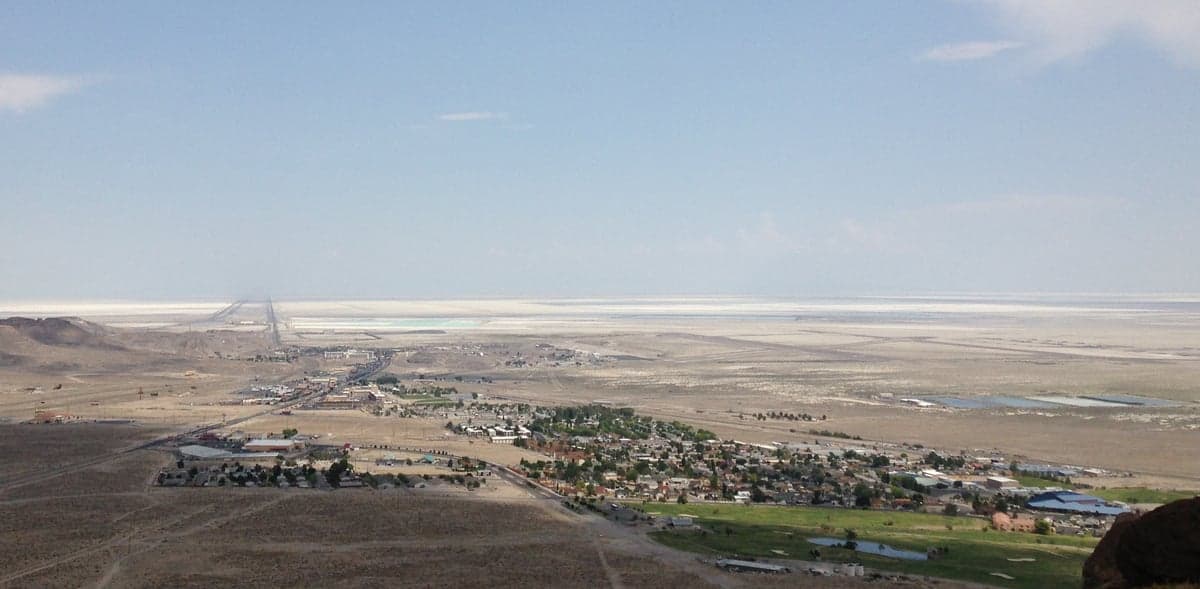
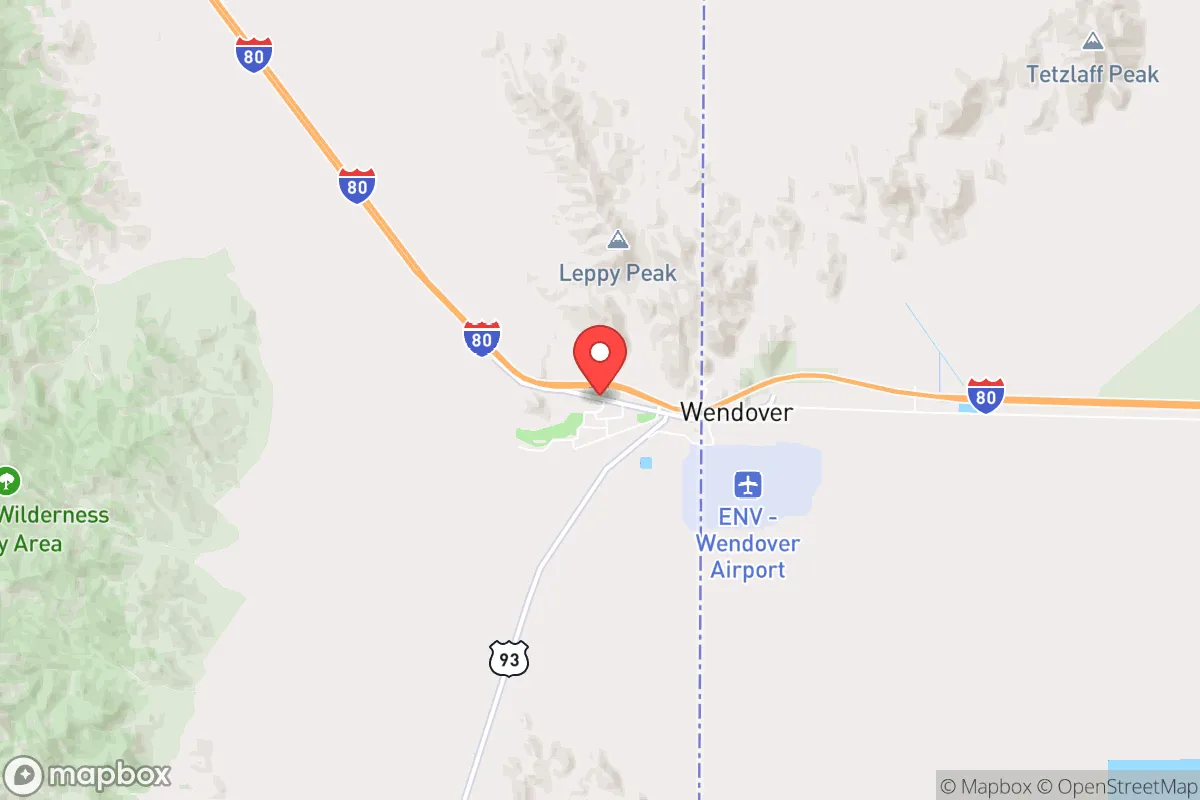
Photo: Wikipedia
Personal Sovereignty in West Wendover, NV
Viable for self-reliance. Generally workable, though some barriers may limit total independence.
What does Personal Sovereignty tell us?
Personal Sovereignty measures your capacity for self-reliance and independence with minimal government friction. Higher scores mean fewer barriers between you and the way you want to live... but it assumes you have the space you need and good neighbors.
What does this tell us?
Personal Sovereignty measures your capacity for self-reliance and independence with minimal government friction. Higher scores mean fewer barriers between you and the way you want to live... but it assumes you have the space you need and good neighbors.
State Policy
Energy independence: Importer (15% of energy produced in-state)
Personal Liberty
Homesteading

Personal Liberty Analysis
West Wendover, Nevada, offers a notably high degree of personal sovereignty compared to most of the United States, largely because it sits in a state that deliberately limits government reach. While the town itself is a small, isolated gambling hub on the Utah border, its legal and regulatory environment is shaped by Nevada’s strong tradition of individual liberty, low taxation, and minimal interference in personal choices. For those concerned with preserving autonomy in an era of expanding federal and state mandates, West Wendover provides a practical, if remote, base of operations where the government’s footprint is lighter than in nearly any neighboring jurisdiction.
Tax burden and regulatory posture: how Nevada’s structure protects your income and choices
Nevada’s tax structure is a major pillar of personal sovereignty here. The state imposes no personal income tax, no corporate income tax, and no inheritance or estate tax, meaning every dollar you earn stays in your pocket or your family’s control. Sales tax in Elko County, which includes West Wendover, is a moderate 8.265%, but there is no state-level tax on groceries or prescription medications. Property taxes are capped by the state constitution at a maximum of 3% of assessed value, and actual effective rates in Elko County hover around 0.6% to 0.8% of market value—among the lowest in the nation. This fiscal restraint directly reduces the government’s ability to fund expansive regulatory or enforcement agencies. Occupational licensing requirements are also less burdensome than in neighboring Utah or California; Nevada does not require a state-level business license for most sole proprietorships, and local permitting in West Wendover is straightforward for small-scale operations. For someone seeking to minimize the state’s claim on their labor and property, this is a deliberate, structural advantage.
Self-defense and gun law specifics: what the Second Amendment looks like in practice
Nevada is a shall-issue state for concealed carry permits, meaning the county sheriff must issue a permit if you meet basic criteria—no subjective “good cause” requirement. West Wendover residents apply through the Elko County Sheriff’s Office, which processes permits efficiently. No state permit is required to openly carry a firearm, and there is no waiting period for firearm purchases from private sellers. The state also has a strong preemption law that prevents local governments like West Wendover from enacting their own gun control ordinances—so the city council cannot ban carry in parks or impose magazine restrictions. Magazine capacity is not limited by state law, and there is no firearm registration or universal background check requirement for private transfers. Stand-your-ground laws are in effect, with no duty to retreat in any place where you are lawfully present. For the survivalist-minded, this means you can legally maintain a fully equipped personal arsenal without bureaucratic hurdles, and you can defend your home or person without fear of prosecution for exercising that right. The only notable restriction is that concealed carry without a permit is illegal, but the permit process is straightforward and costs about $100 for five years.
Self-reliance and homesteading viability: lot sizes, zoning, and off-grid feasibility
West Wendover’s location in the high desert of eastern Nevada creates both opportunities and constraints for self-reliance. The town itself is built on relatively small lots—typically one-quarter to one-half acre in residential zones—but the surrounding unincorporated Elko County land offers much more flexibility. County zoning allows for rural residential parcels as small as 2.5 acres without requiring a subdivision, and larger tracts of 5 to 40 acres are available within a 15-minute drive of town. Off-grid living is legally feasible: Nevada has no state law prohibiting rainwater collection, and the county does not require connection to municipal water or sewer on parcels larger than one acre, provided you install a septic system and a well. Solar panels are unrestricted, and net metering is available through the local utility, Mount Wheeler Power, though the desert climate means you’ll need to plan for winter cloud cover. Gardening is possible with raised beds and drip irrigation, but the alkaline soil and low rainfall (under 8 inches annually) make it a serious commitment. Livestock—chickens, goats, even a few cattle—are allowed on parcels over one acre without special permits, though the town itself restricts farm animals within city limits. For someone wanting to reduce dependency on supply chains and government services, the land and regulatory environment here are accommodating, but the harsh climate demands preparation and investment in water storage and passive solar design.
Personal liberties: parental rights, medical autonomy, speech, and property protections
Nevada’s legal framework generally respects parental rights, though it is not as aggressively protective as some states. There is no state law that explicitly codifies parental authority over medical decisions or education, but the state does not mandate any specific curriculum that overrides parental choice in private or homeschool settings. Homeschooling is legal with a simple notice of intent filed with the county school district, and there are no standardized testing requirements for homeschooled students. Medical autonomy is a mixed bag: Nevada has legalized recreational marijuana and allows medical use with a card, but it also has relatively broad vaccine mandates for school attendance (though philosophical exemptions are available for K-12). Property rights are strongly protected by Nevada’s eminent domain laws, which require “just compensation” and limit takings for private economic development. The state also has a right-to-farm law that shields agricultural operations from nuisance lawsuits, which matters if you plan to keep livestock. Free speech is fully protected under the First Amendment, and Nevada has no state-level “hate speech” laws that criminalize expression. For the conservative-leaning individual, the biggest concern may be the state’s relatively permissive stance on gambling and cannabis—but that same permissiveness extends to personal lifestyle choices, meaning the government is less inclined to police your private decisions. The trade-off is that West Wendover is a small, isolated town where social conformity can be strong, but the legal structure gives you wide latitude to live as you see fit.
Overall, West Wendover ranks among the most sovereignty-friendly locations in the Intermountain West. The combination of no income tax, minimal business regulation, strong gun rights, and permissive land-use policies creates an environment where a determined individual can build a self-reliant life with minimal government interference. The town’s small size and remote location mean fewer services and less economic opportunity than a major city, but for those prioritizing personal freedom over convenience, it is a strategic choice. Compared to neighboring Utah, which has higher taxes and more restrictive alcohol and land-use laws, or California, which is a regulatory behemoth, West Wendover offers a clear path to greater autonomy. The biggest risks are environmental—water scarcity and extreme temperatures—not governmental. For the survivalist or prepper seeking a low-overhead base in a state that still respects individual sovereignty, this is a strong contender.

* Values derived from national, state, county, city and local statistics and may differ in a specific area. Last updated: 2026-04-22T06:37:31.000Z
Narrative content on this page is AI-generated and may contain mistakes. Verify any details that matter before acting on them.
ReloMaps may earn a commission from affiliate links at no extra cost to you.

