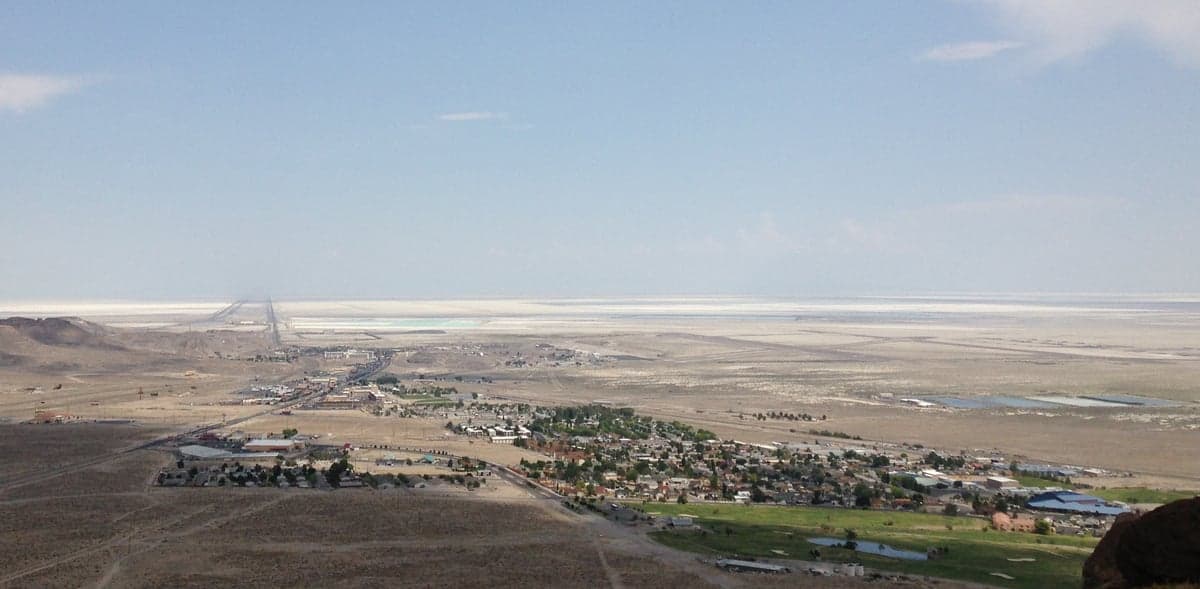
Photo: Wikipedia
Strategic Assessment of West Wendover, NV
Workable tactical position. Some exposure to population density or targets, but generally defensible in a crisis.
What does the Strategic Assessment tell us?
Our Strategic Assessment grades tactical survivability of an area. Major population centers, military targets, fallout zones, natural disasters, and border exposure all drive risk — lower exposure means a more defensible position in a crisis.
This is heavily inspired by Joel Skousen's Strategic Relocation book. Highly recommended you checkout the book ($)What does this tell us?
Our Strategic Assessment grades tactical survivability of an area. Major population centers, military targets, fallout zones, natural disasters, and border exposure all drive risk — lower exposure means a more defensible position in a crisis.
This is heavily inspired by Joel Skousen's Strategic Relocation book. Highly recommended you checkout the book ($)Strategic Pillars

Key Distances
Regional Safe Places
Below is our recommended "safe zones" in Nevada and the surrounding area based on our strategic heuristics. For most people, it's unrealistic to live in a “safe zone” full-time due to work, family or other personal reasons. They tend to be more rural. However, many of these areas are perfect for second homes and retreat properties that double as a vacation home or even a short-term rental.
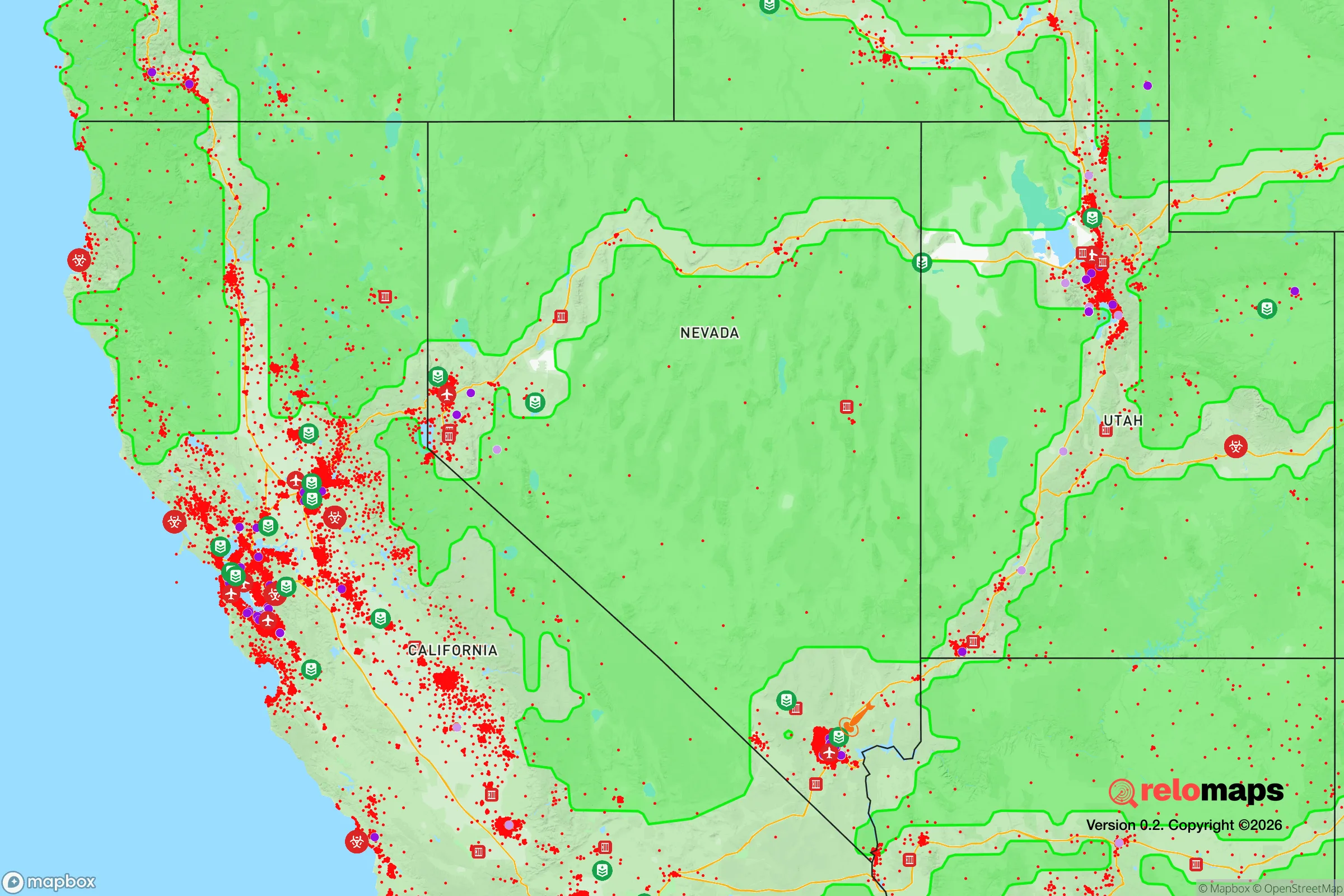
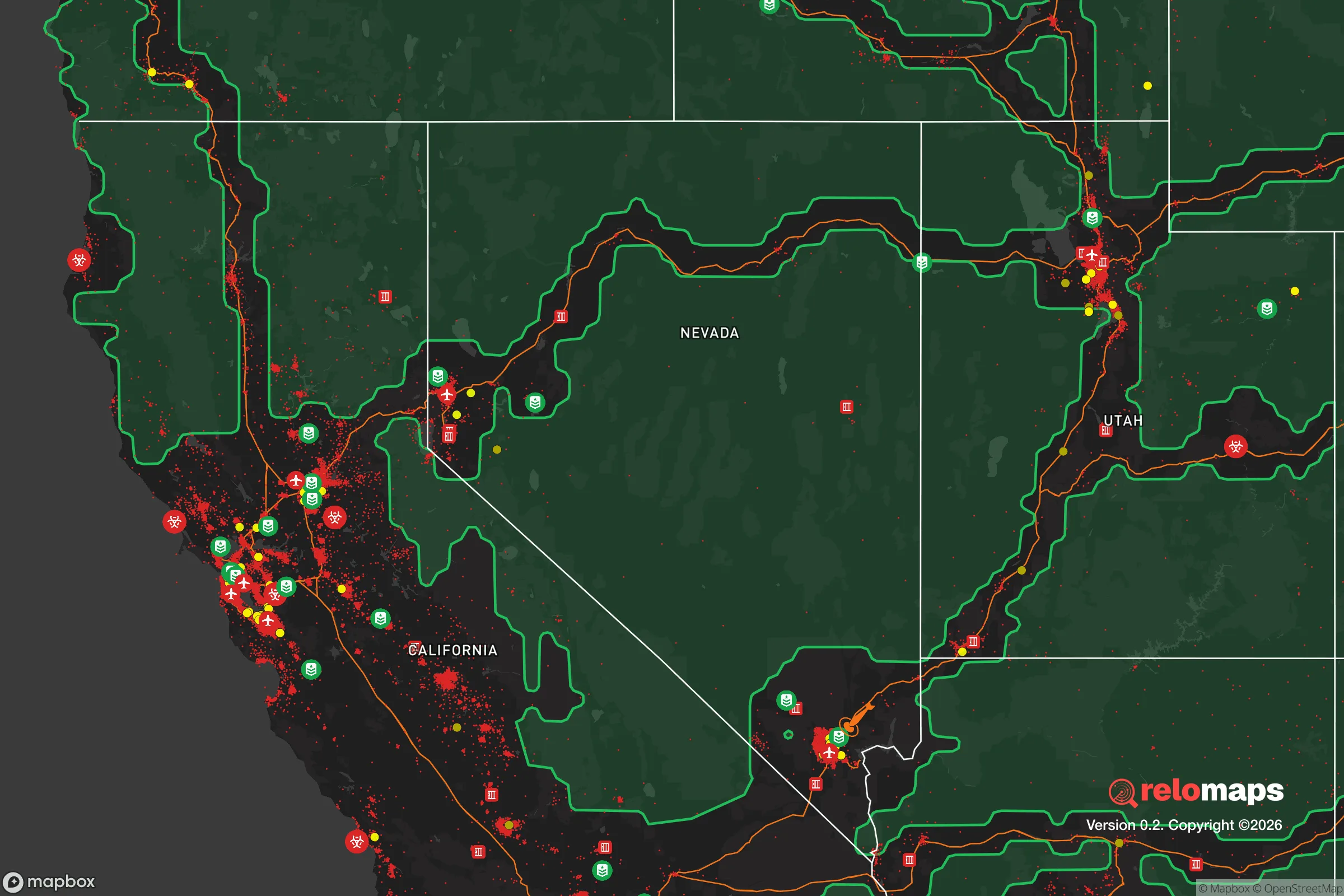


Important Note: For informational purposes only. This does not mean nothing bad ever happens in the green zones. Please use common sense. This is based on public data and modeled with AI. We tried to take a conservative approach but mistakes happen. We update this regularly as new information becomes available.
Solar Generator Recommendations
Backup power matters more here than in safer locations. We've picked three solar generators across budgets and capacity tiers — start with the budget unit if you only need a few essentials, or step up if you want to run a fridge and HVAC for days at a time.

Jackery Portable Power Station Explorer 300
Budget OptionPower on the Go: Weighing only 11 lbs, it's convenient to set up and store with book-sized foldable solar panels

BLUETTI Portable Power Station AC180
Designed for both indoor and outdoor scenarios, AC180 is highly capable as it has a robost capacity and continuous output power.

EF ECOFLOW DELTA Pro Ultra Power Station
Upgraded PickEcoFlow DELTA Pro Ultra is a whole-home energy system designed to grow with your family. Integrated with the Smart Home Panel 2, it scales to meet your evolving energy needs — keeping your home powered, intelligent, and secure through every stage of life.
We earn a commission, at no additional cost to you.
Strategic Assessment Analysis
West Wendover, Nevada, offers a unique strategic position for those prioritizing resilience and self-sufficiency, sitting at the Utah border along Interstate 80 with a population under 5,000. Its location provides a buffer from major metropolitan chaos while maintaining access to critical supply routes, and the surrounding Great Basin Desert offers natural isolation that appeals to those concerned with civic unrest or large-scale disasters. For a relocator with a prepper mindset, this small town presents a mixed bag of advantages and vulnerabilities that demand careful consideration before committing to a long-term survival plan.
Geographic position and natural advantages for long-term survival
West Wendover’s primary strength lies in its remoteness. It is roughly 120 miles west of Salt Lake City and 350 miles east of Reno, placing it far from the dense population centers that would likely become focal points for unrest or resource competition during a crisis. The surrounding landscape—high desert with sparse vegetation and low rainfall—offers natural defensibility; the open terrain provides clear sightlines, and the lack of cover makes approach by large groups difficult. The nearby Bonneville Salt Flats to the east are a vast, inhospitable area that further discourages unwanted traffic. Elevation sits around 4,400 feet, which moderates summer heat but brings cold winters, a trade-off that can be managed with proper preparation. Water is the critical limiting factor here: the area receives less than 8 inches of precipitation annually, so any long-term stay would require either a reliable well (groundwater depth varies, often exceeding 200 feet) or a robust water storage and hauling plan. The Humboldt River runs about 30 miles north, but it’s not a practical daily source for most. For those willing to drill deep and store aggressively, the isolation can be a fortress—but it’s not a place to show up without a water strategy.
Risks, exposures, and proximity to fallout-relevant landmarks
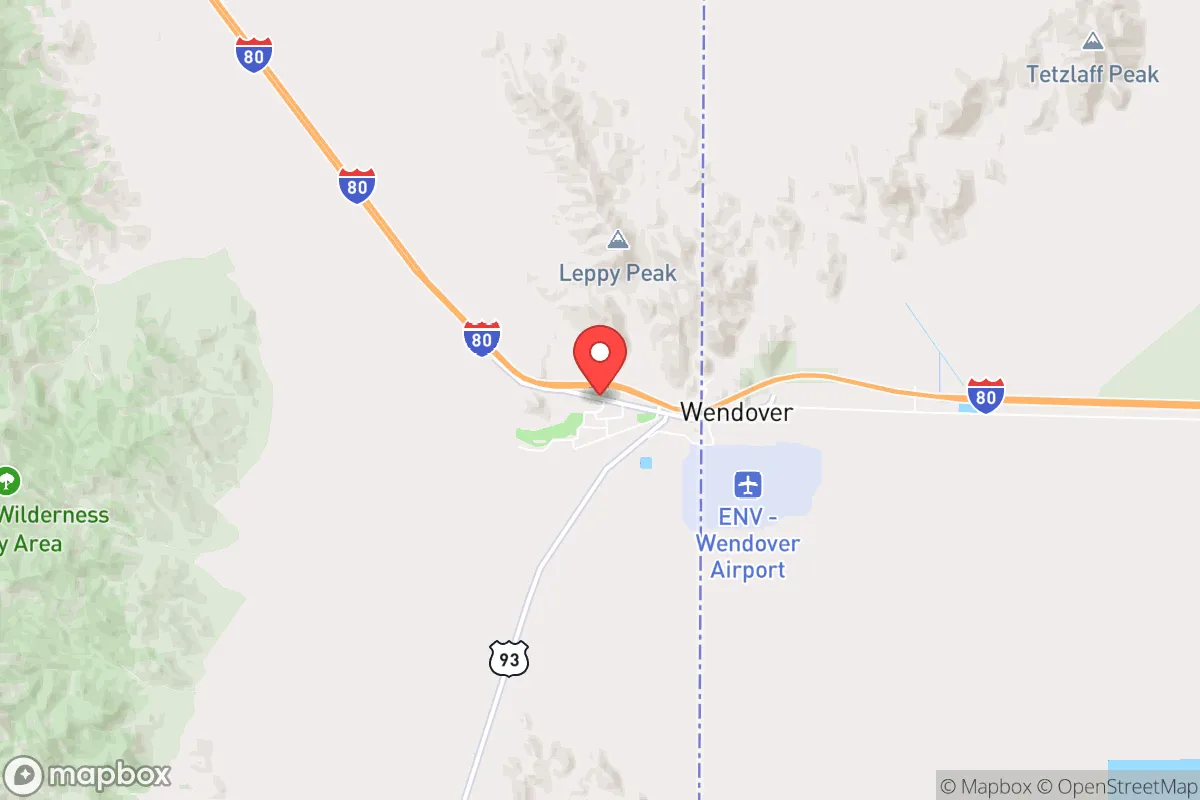
The most glaring risk for West Wendover is its proximity to the Utah Test and Training Range (UTTR) and the Dugway Proving Ground, both located roughly 50–60 miles south. These are active military installations involved in chemical, biological, and conventional weapons testing, as well as missile defense trials. In a major conflict or national emergency, these sites could become primary targets for adversaries or sources of secondary hazards like chemical releases or unexploded ordnance. Prevailing winds in the region blow from the southwest, meaning fallout from a strike on Dugway or UTTR could drift toward West Wendover. Additionally, the town sits directly on I-80, a major transcontinental artery. In a collapse scenario, this highway would become a funnel for refugees fleeing Salt Lake City or Reno, potentially bringing looting, disease, or violent competition for resources. The nearby Wendover Air Force Base (now a municipal airport) was historically a nuclear bomber base; while decommissioned, its legacy infrastructure could attract unwanted attention. The Bonneville Salt Flats, while a natural barrier, also host high-speed testing and occasional military exercises, adding another layer of unpredictability. For a survivalist, these factors make West Wendover a location that requires constant situational awareness and a plan for rapid evacuation east or north into the deeper desert.
Practical resilience for a relocator: food, water, energy, and defensibility
Self-sufficiency in West Wendover demands upfront investment. Water is the single most critical factor—municipal supply comes from deep wells and is generally reliable, but a grid-down scenario would leave residents dependent on stored reserves. A typical prepper setup here should include at least 500 gallons of potable water per person, plus a Berkey or similar filtration system for any local sources. The desert soil is alkaline and low in organic matter, making traditional gardening challenging; raised beds with imported soil and drip irrigation from stored water are possible but labor-intensive. Greenhouse construction is advisable to extend the short growing season (last frost around mid-May, first frost by late September). For energy, solar is excellent—the area averages over 300 sunny days per year—but battery storage is essential due to cold winter nights. Wind is also viable, with consistent breezes off the salt flats. Defensibility is mixed: the town’s layout is compact, with a few main roads and limited choke points, but the open desert means any approach is visible from miles away. A rural property on the outskirts, with a well and solar array, offers the best balance of isolation and access to town for supplies. The local economy is heavily tied to gambling and tourism (the town has several casinos), which could collapse in a prolonged crisis, but that also means fewer people with deep roots—less community cohesion but also less resistance to newcomers building their own networks. Stockpiling ammunition and medical supplies is wise, as the nearest major hospital is in Salt Lake City, a 2-hour drive under normal conditions.
Overall, West Wendover presents a viable but high-maintenance option for the strategic relocator. Its isolation is a double-edged sword: it offers protection from urban chaos but demands extreme self-reliance in water and food production. The military installations to the south are a real wildcard that cannot be ignored, and the I-80 corridor is both a lifeline and a liability. For a single individual or a small family willing to drill deep, store hard, and maintain a low profile, this area could serve as a solid fallback position—especially if paired with a secondary bug-out location in the nearby Ruby Mountains or deeper into Nevada’s interior. But it’s not a set-and-forget location; it requires active monitoring of geopolitical events and a willingness to relocate if the threat environment shifts. If you’re looking for a place that’s off the radar but not off the grid entirely, West Wendover earns a cautious recommendation—just don’t expect it to be easy.

* Values derived from national, state, county, city and local statistics and may differ in a specific area. Last updated: 2026-04-22T06:37:31.000Z
Narrative content on this page is AI-generated and may contain mistakes. Verify any details that matter before acting on them.
ReloMaps may earn a commission from affiliate links at no extra cost to you.

