Photo: Wikipedia
Political ClimatePolitical Climate in West Wendover, NV
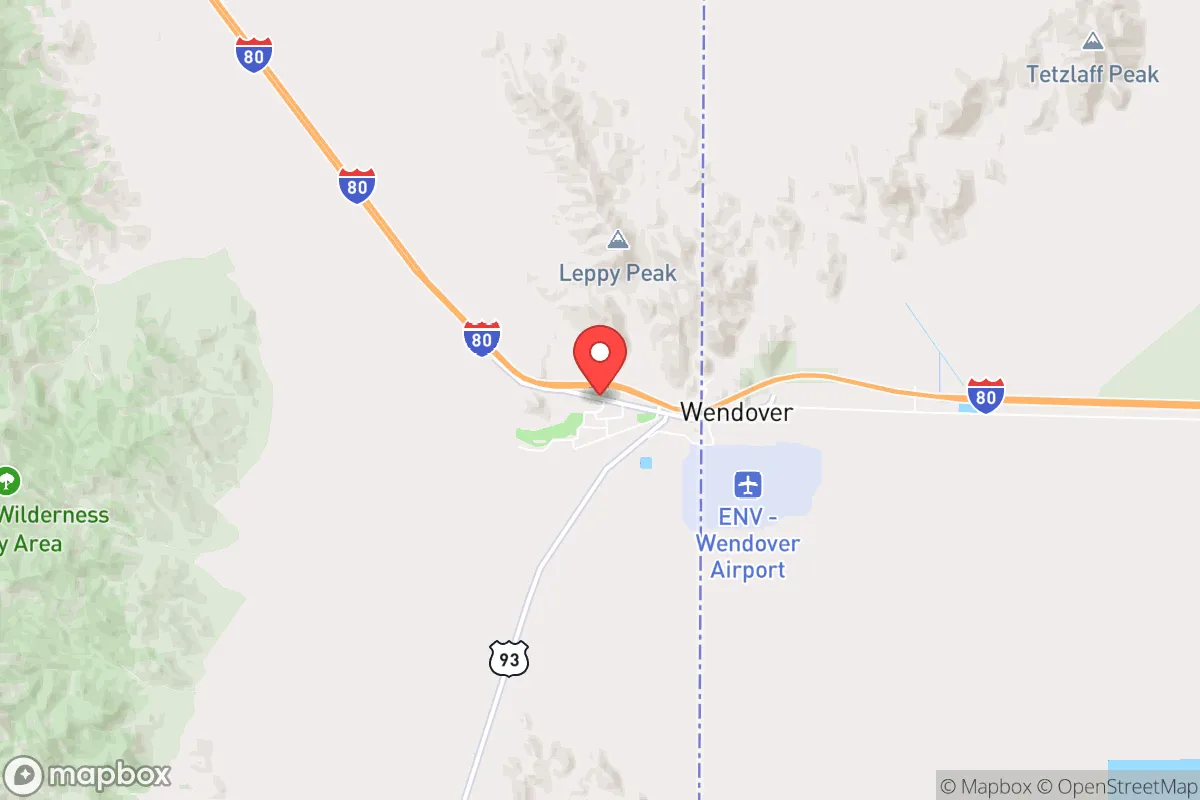
District shown is the primary district for this city’s centroid. Cities may span multiple districts.
Local Political AnalysisPolitical Analysis of West Wendover, NV
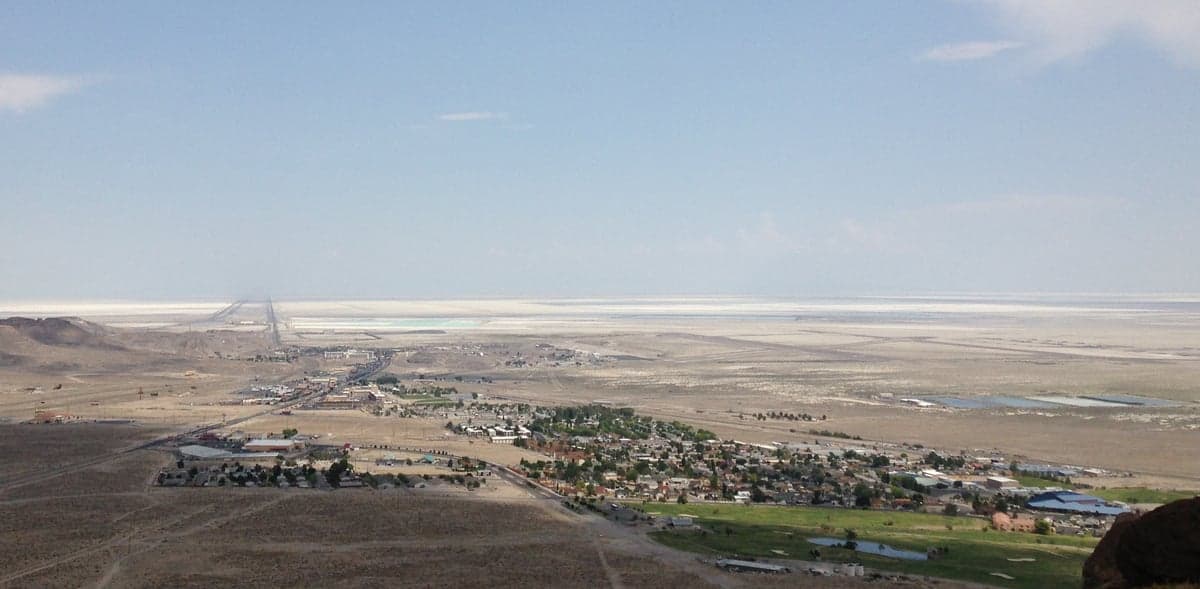
West Wendover, Nevada, has long been a solidly conservative community, and that hasn't changed much, even as the rest of the state has gotten a little more purple. The town sits right on the Utah line, and that's a big part of its identity. With a Cook PVI of R+7, you're looking at a place where folks generally believe in minding their own business and keeping the government out of their personal lives. It's not a flashy political scene here, but the lean is real and consistent, and most of us like it that way.
How it compares
If you drive just a few miles west to Elko, you'll find a similar conservative vibe, though Elko is a bigger hub and has a bit more of a mix. The real contrast is if you head toward Reno or Las Vegas, where the politics get a lot more progressive and the government tends to be more hands-on. Even closer, across the border in Wendover, Utah, you're in a different state with different laws, but the political outlook is pretty much the same—conservative, pro-business, and wary of government overreach. The difference is that Nevada's tax structure is a little friendlier to small business owners and folks who want to keep more of what they earn, which is a big reason people settle on this side of the line.
What this means for residents
For the people who live here, the political climate means a few practical things. You're not going to see a lot of new regulations that make it harder to run a business or own a firearm. The local government tends to take a hands-off approach, which is exactly how most of us want it. There's a general trust that people can make their own decisions without a bunch of red tape. That said, you do see some pressure from the state level in Carson City, where the legislature has been drifting leftward in recent years. There's a constant worry that those progressive policies—like higher taxes or stricter environmental rules—will trickle down and start messing with the way we live. So far, West Wendover has held its ground, but you can feel the tension when election season rolls around.
Another thing that stands out is the local economy. The town relies heavily on casinos and tourism, and that means a lot of folks are self-employed or work for small businesses. There's a real understanding here that government interference can kill a good thing. When the state tried to impose stricter gaming regulations a few years back, the pushback was immediate and loud. People here know that their livelihoods depend on a light regulatory touch, and they're not shy about saying so.
Looking ahead, the biggest concern is that the national trend toward progressive ideology will eventually wash over even a place like West Wendover. You see it in the schools, where there's more talk about social issues than there used to be, and in the local elections, where a few candidates have tried to bring in ideas that don't fit the community. Most of us are keeping a close eye on it. The hope is that the town's conservative roots are deep enough to withstand the pressure, but it's something you have to stay vigilant about. If you value personal freedom and a government that stays out of your way, West Wendover is still a good place to be—but it's not something you can take for granted anymore.

State Political ClimatePolitical Climate in Nevada
State Political AnalysisPolitical Environment in the State
Nevada is a classic swing state with a libertarian streak, but over the past two decades it has shifted from a reliably red-leaning state to a blue-leaning one, largely driven by massive growth in the Las Vegas metro area. The state’s overall partisan lean is roughly D+3, with Democrats holding the governorship, both U.S. Senate seats, and both chambers of the legislature as of 2026, but Republicans remain competitive in rural areas and have won statewide races as recently as 2022. The trajectory is concerning for conservatives: the state that once prided itself on “what happens here stays here” is increasingly adopting California-style policies, with the 2024 election seeing Clark County (Las Vegas) deliver a 12-point margin for Democrats, while the rest of the state voted Republican by a similar spread.
Urban vs. rural divide
The political map of Nevada is a tale of two worlds. Clark County, home to Las Vegas and about 73% of the state’s population, is the Democratic engine, powered by a coalition of unionized casino workers, Hispanic immigrants, and transplants from California and the Northeast. The city of Las Vegas itself is deep blue, but the suburbs tell a more nuanced story: Henderson, once a reliably Republican stronghold, has flipped to a purple-leaning-blue as it has grown denser and more diverse, while North Las Vegas is solidly Democratic with a large working-class and minority population. In contrast, Washoe County (Reno) is a true battleground, swinging between parties; Reno’s tech and logistics growth has brought in moderates, but the surrounding rural areas like Spanish Springs and Cold Springs lean red. The rest of the state—places like Elko, Ely, and Pahrump—is deeply Republican, with Elko County routinely voting 75%+ for GOP candidates. The divide is stark: drive 30 minutes outside of Las Vegas or Reno, and you’re in Trump country where “Keep Nevada Red” signs outnumber casino billboards.
Policy environment
Nevada’s policy environment is a mixed bag that should give conservatives pause. On the plus side, there is no state income tax, which remains a major draw for businesses and individuals fleeing high-tax states. Property taxes are also relatively low, capped at 3% annual increases. However, the state’s reliance on sales and gaming taxes makes it vulnerable to economic downturns. The regulatory posture is increasingly hostile to traditional values: Nevada passed universal mail-in voting in 2021 (AB 321), which conservatives argue weakens election integrity, and same-day voter registration remains in place. Education policy is a sore spot—Nevada ranks near the bottom nationally in K-12 outcomes, yet the state has resisted school choice expansion, with the teachers’ union (a major Democratic donor) blocking meaningful reform. Healthcare is dominated by the public option push; in 2023, the legislature passed a bill allowing a state-run public option, though it hasn’t launched yet. Gun laws are relatively permissive—no permit required for concealed carry, no magazine bans—but a 2024 bill (SB 143) raised the purchase age for semi-automatic rifles to 21, a move gun rights advocates see as a slippery slope.
Trajectory & freedom
Nevada is becoming less free by the year, particularly in the realms of personal liberty and economic freedom. The most alarming trend is the erosion of parental rights: in 2023, the legislature passed AB 195, which prohibits schools from notifying parents if a child changes their gender identity or pronouns, overriding parental authority. This law, coupled with the state’s sanctuary status (Nevada is a “sanctuary state” for illegal immigrants under SB 223, passed in 2019), signals a government that prioritizes progressive ideology over family autonomy. On the positive side, Nevada remains a “shall issue” state for concealed carry, and there is no red flag law—yet. But the 2024 session saw a push for a red flag bill that failed by only one vote, and activists are already planning to reintroduce it. Property rights are under threat from the state’s aggressive renewable energy mandates, which allow solar and wind projects to seize private land via eminent domain for transmission lines, a practice that has sparked backlash in rural counties like Lander and Eureka.
Civil unrest & political movements
Nevada has seen its share of political flashpoints. The 2020 election integrity controversy was a major issue here, with the state’s universal mail-in system leading to lawsuits and a recount in Clark County that confirmed Biden’s win but left many conservatives distrustful. The “Battle Born” movement, a loose coalition of rural counties, has threatened to secede from Clark County’s dominance, with Nye County (Pahrump) passing a resolution in 2023 to explore secession—though it’s largely symbolic. Immigration politics are heated: the sanctuary law has led to tensions, with Elko County Sheriff’s Office openly cooperating with ICE despite state policy, creating a patchwork of enforcement. On the left, the Culinary Union (representing 60,000 casino workers) is a powerful force, organizing protests for higher wages and against any immigration enforcement. The 2022 midterms saw a surge in conservative activism, with the “Moms for Liberty” chapter in Henderson gaining traction over school board issues, but they’ve struggled to translate that into legislative wins.
Projection
Over the next 5-10 years, Nevada is likely to continue its leftward drift, driven by demographic trends. Clark County is projected to add another 300,000 residents by 2035, mostly from California and international migration, which will further dilute rural conservative votes. The state’s growing Hispanic population (now 30% of the total) is trending more Democratic, though not uniformly—Cuban and Venezuelan communities in Las Vegas lean right. The Republican Party’s best hope is to flip Washoe County and hold the rural vote while making inroads with working-class Hispanics, but the legislative maps drawn by Democrats in 2021 are gerrymandered to protect their majorities through 2030. Expect more progressive policies: a state income tax is unlikely (it requires a two-thirds vote), but expect higher sales taxes, more gun restrictions, and expanded government healthcare. The biggest wildcard is the lithium mining boom in northern Nevada—if it brings in conservative workers from Texas and Oklahoma, it could slow the leftward shift in places like Humboldt County.
For a conservative moving to Nevada, the bottom line is this: choose your county carefully. If you want a community that shares your values, look at Elko, Pahrump, or the rural parts of Washoe County like Cold Springs. Avoid Clark County unless you’re prepared to fight for your rights at the ballot box every two years. The state’s lack of income tax and relatively permissive gun laws are still major draws, but the cultural and political winds are blowing in the wrong direction. If you’re a parent, be ready to homeschool or choose a private school, because the public education system is both failing and hostile to traditional values. Nevada is still freer than California, but the gap is closing fast—and if you’re not paying attention, you might wake up in a state that looks a lot like the one you left.
* Values derived from national, state, county, city and local statistics and may differ in a specific area. Last updated: 2026-04-22T06:37:31.000Z
Narrative content on this page is AI-generated and may contain mistakes. Verify any details that matter before acting on them.
ReloMaps may earn a commission from affiliate links at no extra cost to you.

