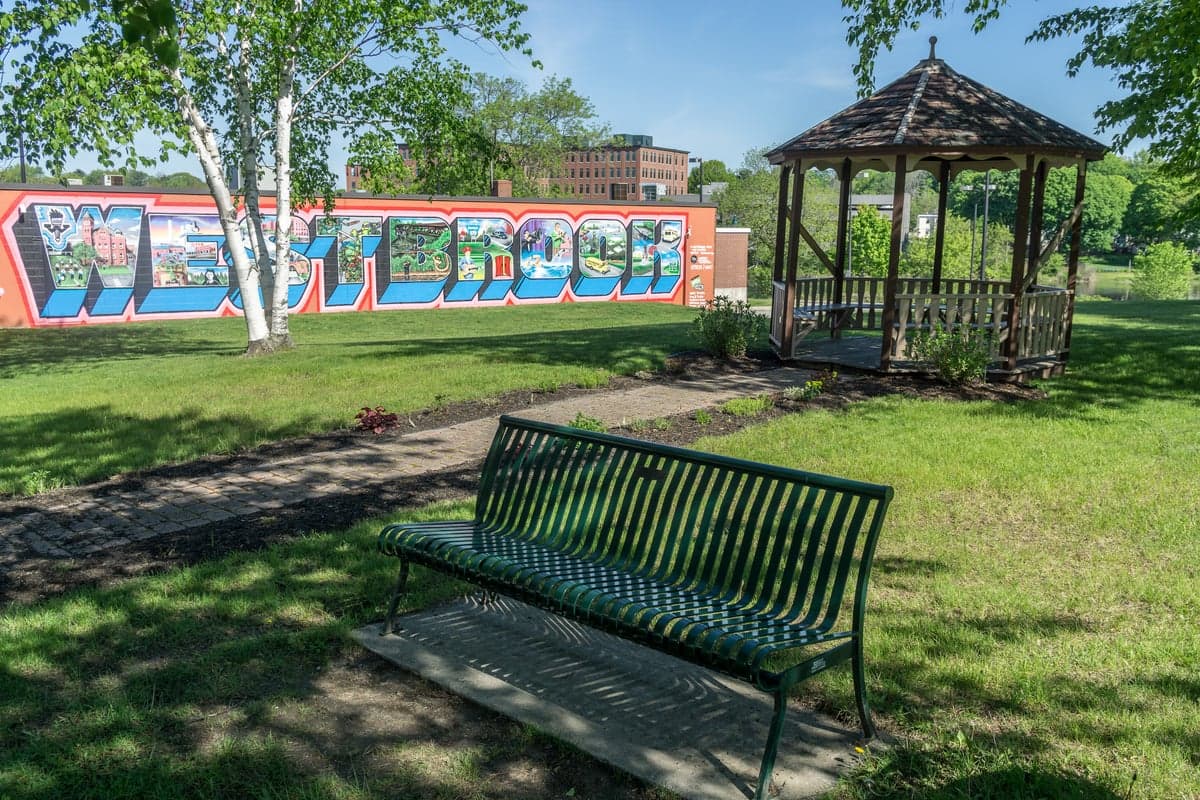
Photo: Wikipedia
Strategic Assessment of Westbrook, ME
Multiple tactical vulnerabilities. Population density, target proximity, or disaster risk are likely compounding. A retreat property and exit planning is required.
What does the Strategic Assessment tell us?
Our Strategic Assessment grades tactical survivability of an area. Major population centers, military targets, fallout zones, natural disasters, and border exposure all drive risk — lower exposure means a more defensible position in a crisis.
This is heavily inspired by Joel Skousen's Strategic Relocation book. Highly recommended you checkout the book ($)What does this tell us?
Our Strategic Assessment grades tactical survivability of an area. Major population centers, military targets, fallout zones, natural disasters, and border exposure all drive risk — lower exposure means a more defensible position in a crisis.
This is heavily inspired by Joel Skousen's Strategic Relocation book. Highly recommended you checkout the book ($)Strategic Pillars

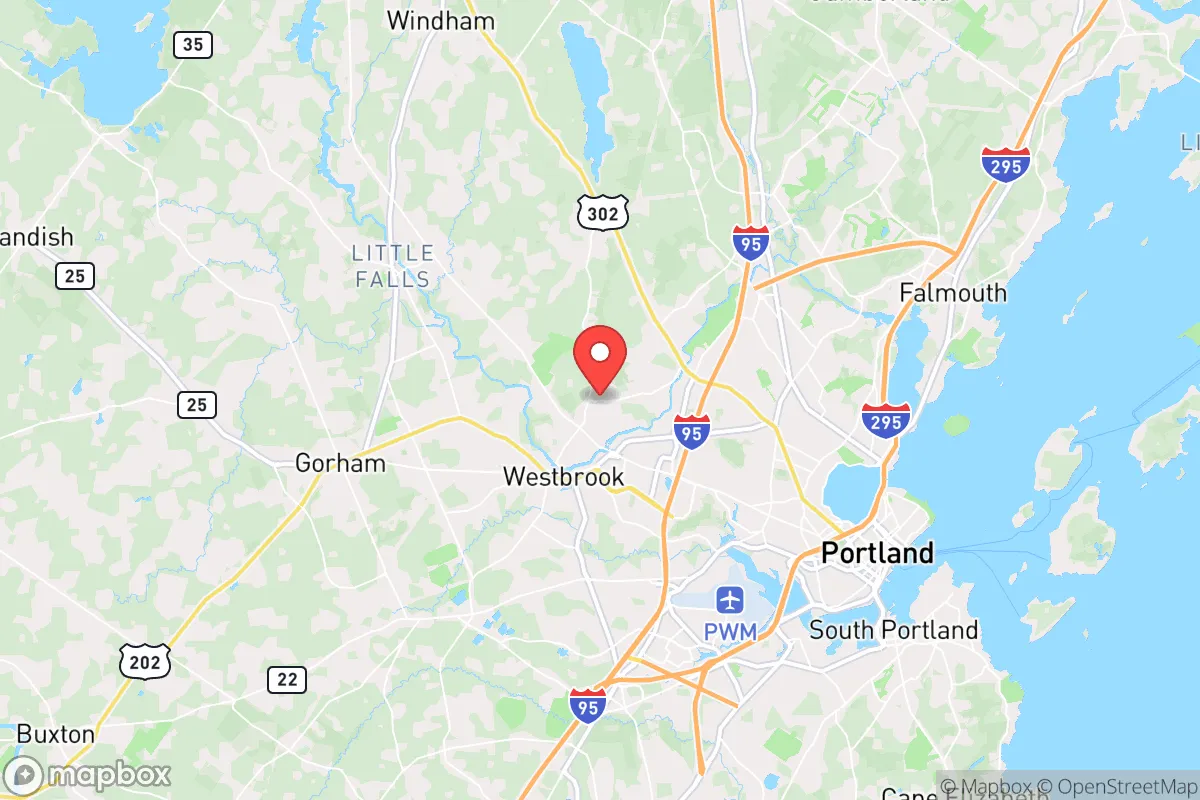
Key Distances
Regional Safe Places
Below is our recommended "safe zones" in Maine and the surrounding area based on our strategic heuristics. For most people, it's unrealistic to live in a “safe zone” full-time due to work, family or other personal reasons. They tend to be more rural. However, many of these areas are perfect for second homes and retreat properties that double as a vacation home or even a short-term rental.
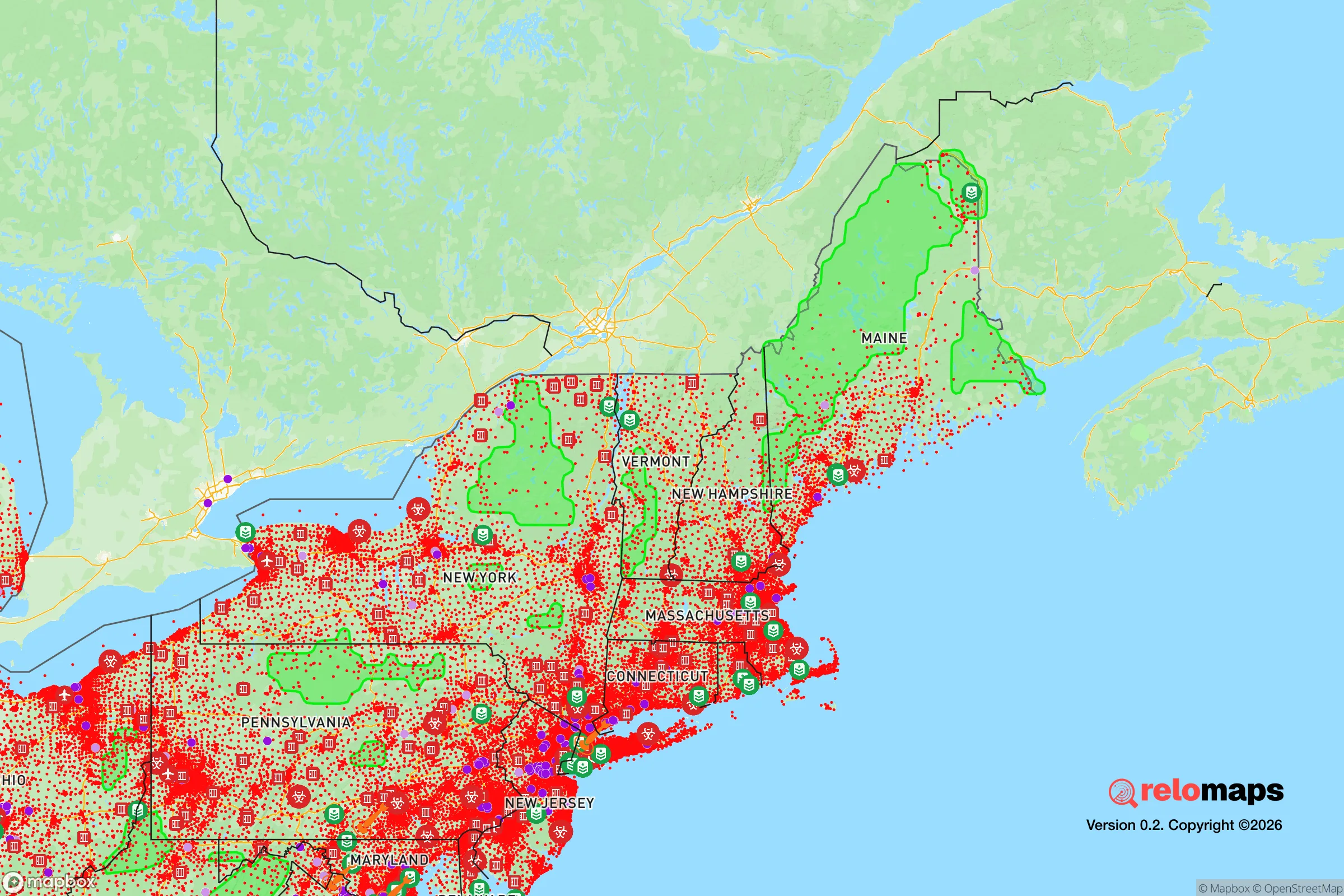
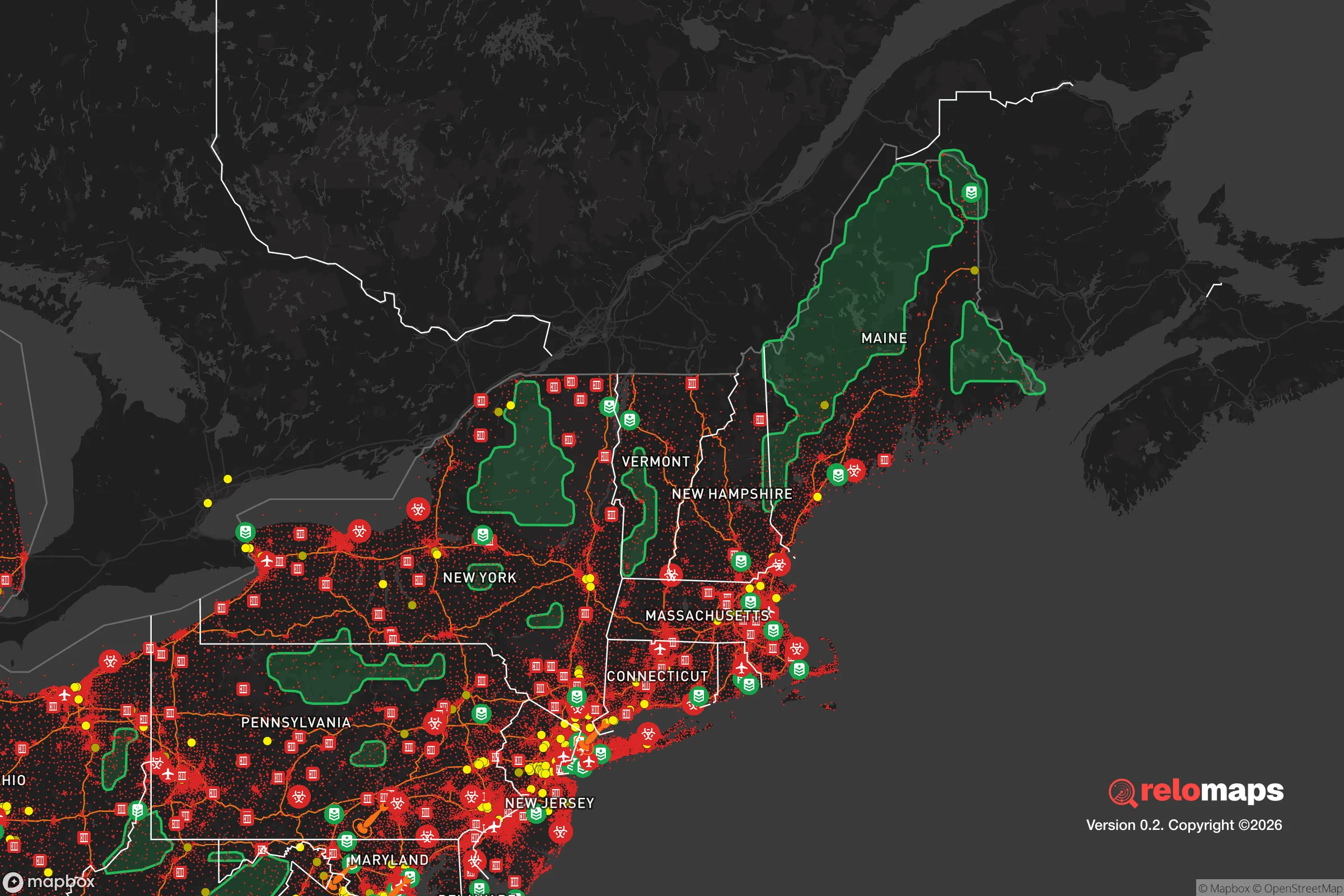


Important Note: For informational purposes only. This does not mean nothing bad ever happens in the green zones. Please use common sense. This is based on public data and modeled with AI. We tried to take a conservative approach but mistakes happen. We update this regularly as new information becomes available.
Solar Generator Recommendations
Backup power matters more here than in safer locations. We've picked three solar generators across budgets and capacity tiers — start with the budget unit if you only need a few essentials, or step up if you want to run a fridge and HVAC for days at a time.

Jackery Portable Power Station Explorer 300
Budget OptionPower on the Go: Weighing only 11 lbs, it's convenient to set up and store with book-sized foldable solar panels

BLUETTI Portable Power Station AC180
Designed for both indoor and outdoor scenarios, AC180 is highly capable as it has a robost capacity and continuous output power.

EF ECOFLOW DELTA Pro Ultra Power Station
Upgraded PickEcoFlow DELTA Pro Ultra is a whole-home energy system designed to grow with your family. Integrated with the Smart Home Panel 2, it scales to meet your evolving energy needs — keeping your home powered, intelligent, and secure through every stage of life.
We earn a commission, at no additional cost to you.
Strategic Assessment Analysis
Westbrook, Maine, presents a mixed bag for the strategic relocator. Its proximity to Portland offers convenience, but that same closeness introduces vulnerabilities that a prepper cannot ignore. The city’s resilience hinges on its position as a secondary hub—close enough to access resources, far enough to avoid the worst of a metropolitan collapse, provided you plan your exit routes and supply chains carefully. This analysis examines Westbrook through a survivalist lens, weighing its natural advantages against the risks that come with being a satellite of a major coastal city.
Geographic position and natural advantages for long-term sustainability
Westbrook sits at the confluence of the Presumpscot River and the Stroudwater River, a location that historically powered mills and today offers a reliable freshwater source. For a prepper, water is the first line of defense, and having two rivers within the city limits is a significant asset. The surrounding terrain is a mix of forested hills and wetlands, which provides natural cover and makes large-scale military or mob movements difficult. The city is roughly 10 miles inland from the Atlantic, placing it outside the immediate blast zone of a naval strike on Portland Harbor, yet close enough to monitor coastal activity. The climate is cold and wet—average January lows hover around 12°F—which naturally discourages transient populations and reduces the risk of tropical disease outbreaks. The growing season is short (roughly 140 days), but the soil in the river valleys is fertile enough for subsistence gardening if you amend it with compost. The real advantage here is the dense network of secondary roads—Route 25, Route 302, and the Maine Turnpike—that offer multiple egress routes toward the less populated interior of Oxford and Franklin counties. In a grid-down scenario, these roads become your lifeline to the north, where land is cheaper and fewer people compete for resources.
Risks, exposures, and proximity to fallout-relevant landmarks
The biggest liability for Westbrook is its proximity to Portland, just 5 miles southeast. Portland is a prime target for a nuclear strike, a major port disruption event, or a civil unrest epicenter. The prevailing winds in Maine blow from the west and northwest, meaning fallout from a Portland strike would likely drift over Westbrook within hours. Fallout shelters are virtually nonexistent in the city—most homes are wood-frame construction with basements that offer minimal protection against gamma radiation. You would need to pre-position potassium iodide and have a plan to bug out north or west within 30 minutes of a warning. Beyond nuclear threats, the city’s industrial history leaves a legacy of environmental hazards. The former S.D. Warren paper mill site (now Sappi) has contaminated soil and groundwater with heavy metals and PCBs. In a collapse, these toxins could leach into the river if the site is abandoned or damaged. Additionally, the nearby Portland International Jetport (PWM) is a secondary target for any adversary seeking to disrupt air mobility. The jetport is only 7 miles away, and its fuel storage tanks could become a fire hazard or a target for sabotage. On the plus side, Westbrook is far from major military installations—the nearest active base is the Portsmouth Naval Shipyard in Kittery, 50 miles south—so it avoids being a primary target. The risk profile is moderate but requires active mitigation: you must have a bug-out location at least 30 miles inland and a cache of supplies that doesn’t rely on the Portland metro area.
Practical resilience for a relocator: food, water, energy, and defensibility
Westbrook’s practical resilience is a study in contrasts. The water supply is excellent—the city draws from Sebago Lake via the Portland Water District, one of the cleanest surface water sources in New England. In a prolonged outage, the Presumpscot River can be filtered and boiled, but you’ll need a high-quality ceramic filter to handle the silt and potential industrial runoff. Food security is weak. The city has no major agricultural infrastructure; most grocery stores are supplied by truck from distribution centers in Massachusetts and New York. Local food production is limited to a few community gardens and small farms in the surrounding towns of Gorham and Windham. A relocator should plan to stock at least a six-month supply of non-perishables and consider joining a local CSA or buying land in the interior for a secondary garden. Energy is a bright spot. Maine has high penetration of solar and wind, and Westbrook is served by Central Maine Power, which has a relatively modern grid. However, the region is prone to ice storms that can knock out power for days. A backup generator with a 50-gallon propane tank is a minimum; solar panels with battery storage are ideal. Defensibility is moderate. Westbrook is a compact city of about 20,000 people, with a downtown that is walkable but not easily fortified. The best defensive positions are the single-family home neighborhoods on the western edge, near the Windham town line, where lots are larger and roads are dead ends. The city’s police force is small (roughly 40 officers), and in a crisis, they would be overwhelmed by calls from Portland. You cannot rely on them for protection. A neighborhood watch or a mutual-aid group with like-minded neighbors is essential. The local gun culture is strong—Maine has shall-issue concealed carry and no magazine restrictions—so you can legally prepare, but you must be discreet to avoid drawing attention.
The overall strategic picture for Westbrook is one of calculated risk. It is not a survivalist paradise—the proximity to Portland, the industrial contamination, and the lack of local food production are real liabilities. But it offers a solid foundation for someone who is willing to invest in preparation: a reliable water source, multiple escape routes, a cold climate that slows down threats, and a legal environment that respects the right to keep and bear arms. The key is to treat Westbrook as a base of operations, not a final redoubt. Your long-term plan should include acquiring land in the interior—Oxford County or even Aroostook County—as a fallback position. If you can do that, and if you harden your home with backup power, water filtration, and a defensible perimeter, Westbrook can serve as a viable staging ground for the uncertain years ahead. It’s a place to watch, wait, and prepare—not a place to hunker down forever.

* Values derived from national, state, county, city and local statistics and may differ in a specific area. Last updated: 2026-05-01T18:10:16.000Z
Narrative content on this page is AI-generated and may contain mistakes. Verify any details that matter before acting on them.
ReloMaps may earn a commission from affiliate links at no extra cost to you.

