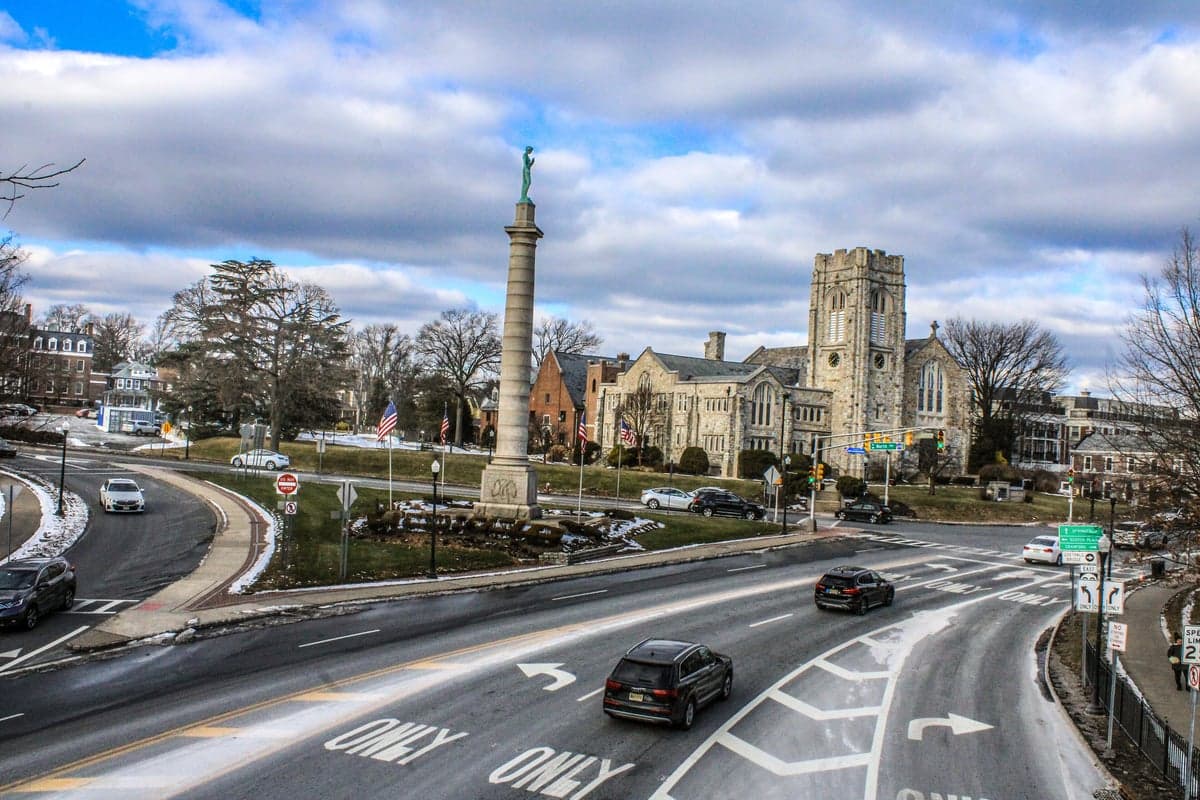
Photo: Wikipedia
Personal Sovereignty in Westfield, NJ
Viable for self-reliance. Generally workable, though some barriers may limit total independence.
What does Personal Sovereignty tell us?
Personal Sovereignty measures your capacity for self-reliance and independence with minimal government friction. Higher scores mean fewer barriers between you and the way you want to live... but it assumes you have the space you need and good neighbors.
What does this tell us?
Personal Sovereignty measures your capacity for self-reliance and independence with minimal government friction. Higher scores mean fewer barriers between you and the way you want to live... but it assumes you have the space you need and good neighbors.
State Policy
Energy independence: Importer (8% of energy produced in-state)
Personal Liberty
Homesteading

Personal Liberty Analysis
For the individual or family prioritizing personal sovereignty, Westfield, New Jersey presents a complex and often contradictory environment. While the town itself offers a high degree of local safety and a strong sense of community, it operates entirely within the framework of one of the most heavily regulated and high-tax states in the Union. A survivalist or prepper mindset will find the local community assets appealing, but the overarching state-level control over property, self-defense, and daily life creates significant friction for anyone seeking genuine autonomy. The core tension here is between a desirable, walkable, and safe suburban enclave and a state government that consistently prioritizes collective mandates over individual rights.
Tax burden and regulatory posture in a high-control state
The single greatest threat to personal sovereignty in Westfield is the crushing tax burden and the pervasive regulatory environment of New Jersey. Property taxes in Westfield are among the highest in the nation, routinely exceeding $15,000 to $25,000 annually for a standard single-family home. This is not a fee for services; it is a direct, recurring claim on your private property by the state. For a prepper focused on financial independence and resilience, this fixed, non-negotiable outflow is a critical vulnerability. The state’s regulatory posture extends far beyond taxes. New Jersey’s strict environmental regulations, building codes, and land use laws mean that even minor improvements to your property—installing a backup generator, building a shed, or modifying a driveway—require permits, inspections, and approvals. This bureaucratic overhead is a form of control, limiting your ability to adapt your property for self-reliance without government permission. The state’s aggressive approach to vehicle inspections, emissions standards, and even the types of fuel you can use for heating further erodes the ideal of living by your own rules. For the strategic relocator, Westfield’s local charm is real, but it comes with the price of living under a state apparatus that views individual property and decision-making as something to be managed, not respected.
Self-defense and gun law specifics in a restrictive state
On the critical issue of self-defense, New Jersey is a hostile environment for anyone who believes in the right to keep and bear arms. The state operates under a "may-issue" framework for concealed carry permits, which, despite the Bruen decision, remains administratively burdensome and expensive. The process involves extensive background checks, fingerprinting, references, and a demonstrated "justifiable need" that goes beyond general self-defense. For a prepper, this is a direct infringement on the most fundamental aspect of personal sovereignty: the ability to defend your life and your family. Furthermore, New Jersey bans a wide range of commonly owned firearms and accessories, including "assault weapons" (defined by cosmetic features) and magazines capable of holding more than 10 rounds. The state’s strict liability laws mean that even a lawful defensive use of a firearm can lead to immense legal jeopardy. While Westfield itself is a low-crime community, the inability to legally and practically prepare for a worst-case scenario with standard equipment is a deal-breaker for many in the survivalist community. The state’s posture is clear: it does not trust its citizens with the tools of self-defense, and it has built an expensive, time-consuming, and uncertain legal system to discourage ownership.
Self-reliance and homesteading viability in a dense suburb
Westfield’s zoning and lot sizes make traditional homesteading or off-grid living nearly impossible. The typical lot is a quarter-acre or less, with strict homeowners' association (HOA) covenants in many neighborhoods that prohibit livestock, extensive gardening, or any structure that deviates from the suburban aesthetic. Raising chickens for eggs, keeping bees, or installing a large vegetable garden is often restricted or requires special permission. The concept of "off-grid" is a non-starter here. The town requires connection to municipal water, sewer, and electric grids. Installing solar panels is possible but heavily regulated, and net-metering policies are subject to change by the state. Rainwater collection for anything beyond ornamental gardening is often limited by state health codes. For the prepper seeking true self-reliance—the ability to produce food, water, and energy independent of the system—Westfield is a poor fit. The environment is designed for consumption, not production. You can be a very well-stocked "prepper" in a basement or garage, but you will not be a homesteader. The strategic advantage here is access to high-quality supply chains and a dense network of like-minded individuals, but the physical capacity for self-sufficiency on your own land is severely constrained.
Personal liberties: parental rights, medical autonomy, and speech
On the broader front of personal liberties, Westfield reflects the deep-blue politics of New Jersey. Parental rights in education have been a flashpoint, with the state mandating curriculum standards that many conservative families find intrusive, particularly regarding gender identity and sexual education. While local school boards can push back, they operate under state law, meaning a parent’s ability to control what their child is taught is limited. Medical autonomy is similarly constrained. New Jersey has some of the strictest vaccine mandates in the country for school attendance, and during the pandemic, it was one of the most aggressive states in imposing lockdowns, mask mandates, and business closures. For a prepper who values the right to make personal health decisions without government coercion, this track record is a major red flag. Freedom of speech is legally protected, but the cultural climate in Westfield is overwhelmingly progressive. Expressing dissenting views on hot-button issues—whether in a town council meeting, a school board forum, or even on social media—can lead to social ostracism or professional repercussions. Property rights, as noted, are heavily circumscribed by zoning and environmental regulations. In essence, the individual's sphere of autonomy in Westfield is narrow and constantly subject to renegotiation by the state and the local cultural majority.
In the final analysis, Westfield offers a high quality of life in a safe, beautiful, and well-managed community, but it does so at the direct expense of personal sovereignty. For the strategic relocator with a conservative, survivalist mindset, the town is a study in trade-offs. You gain excellent schools, low crime, and a strong local network, but you surrender significant control over your property, your finances, your self-defense options, and your family's education. Compared to areas in the South, the Midwest, or the rural West, where property taxes are lower, gun laws are more permissive, and zoning is less restrictive, Westfield represents a highly managed existence. It is a place to thrive within the system, not to build a life independent of it. For those whose primary concern is maximizing personal autonomy and preparing for systemic disruption, the costs of living in Westfield—both financial and in terms of personal freedom—are likely too high. It is a comfortable cage, not a sovereign homestead.

* Values derived from national, state, county, city and local statistics and may differ in a specific area. Last updated: 2026-04-30T07:58:06.000Z
Narrative content on this page is AI-generated and may contain mistakes. Verify any details that matter before acting on them.
ReloMaps may earn a commission from affiliate links at no extra cost to you.

