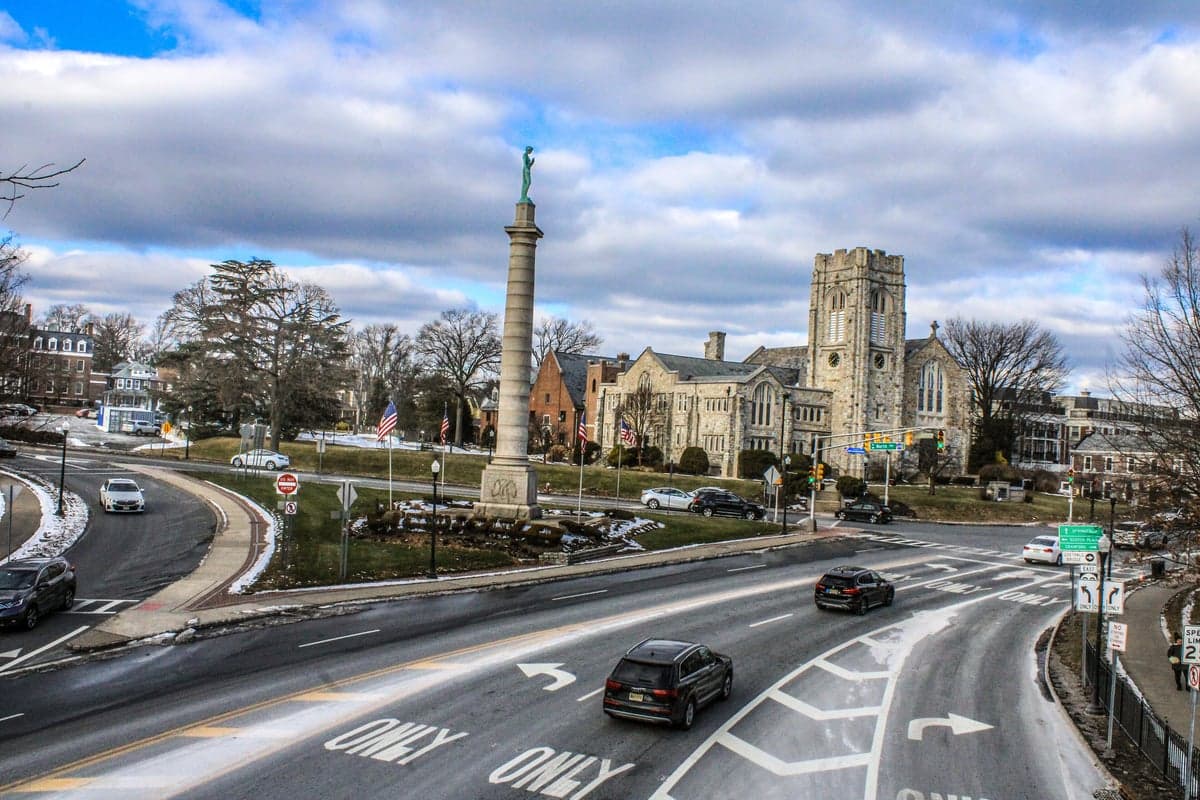
Photo: Wikipedia
Political ClimatePolitical Climate in Westfield, NJ
District shown is the primary district for this city’s centroid. Cities may span multiple districts.
Local Political AnalysisPolitical Analysis of Westfield, NJ
Westfield, New Jersey, sits in a political spot that’s getting harder to pin down, and if you’ve been around here long enough, you’ve felt the shift. The town’s Cook PVI is EVEN, meaning it’s a perfect toss-up between red and blue, but that label hides a lot of tension under the surface. Twenty years ago, this was a reliably conservative town—think Reagan Democrats and old-school fiscal responsibility—but the last few election cycles have seen a steady creep of progressive influence, especially from transplants out of New York City. The trajectory is concerning: we’re not flipping overnight, but the cultural and policy winds are blowing left, and it’s happening faster than most locals are comfortable with.
How it compares
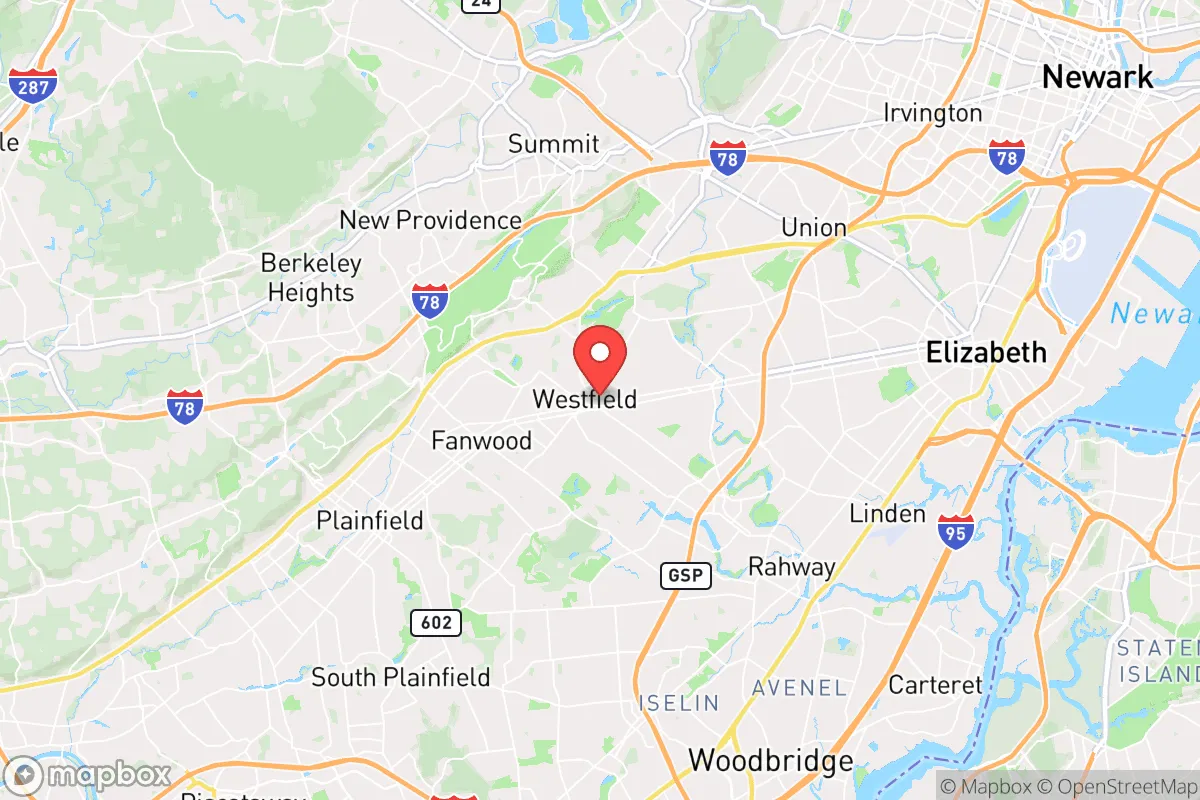
To really get what Westfield is becoming, you have to look at the towns around us. Head west a few miles to Scotch Plains or Fanwood, and you’ll find a more traditional, middle-of-the-road vibe—folks who still value low taxes and local control without the progressive activism. But go east toward Maplewood or South Orange, and you’re in deep-blue territory, where government overreach on things like zoning mandates and school curriculum is the norm. Westfield used to be the buffer, the sensible center. Now, it’s starting to mirror those eastern neighbors more than we’d like. The town council races are getting tighter, and you can see the progressive playbook being tested here—pushing for more density, higher taxes, and social policies that feel imported from the cities. It’s a stark contrast to the self-reliance and personal freedom that built this community.
What this means for residents
For the average family in Westfield, this political drift isn’t just abstract—it hits your wallet and your rights. Property taxes are already among the highest in the state, and every new progressive initiative—like affordable housing mandates or green energy overhauls—comes with a price tag that lands on your doorstep. More concerning is the erosion of personal freedoms: we’re seeing pressure on school boards to adopt ideological curricula, and local ordinances that chip away at property rights and parental choice. If you value the ability to live your life without government telling you how to run your home or raise your kids, the direction here should give you pause. The long-term outlook? If the trend holds, Westfield could become another Maplewood within a decade—a place where conservative voices are drowned out by well-funded progressive activism, and the cost of living becomes a barrier for the very families who made this town great.
Culturally, Westfield still holds onto some old-school charm—the downtown is walkable, the Fourth of July parade is a big deal, and there’s a genuine sense of community. But the policy distinctions are where the rubber meets the road. We’ve already seen fights over mask mandates and library book policies that would have been unthinkable ten years ago. The local government is increasingly cozy with state-level overreach from Trenton, and that’s a red flag for anyone who believes in local control. If you’re thinking of moving here, know that the political climate is in flux. It’s still a great place to raise a family, but you’ll want to keep an eye on the school board meetings and town council votes—because the fight for Westfield’s soul is just getting started.

State Political ClimatePolitical Climate in New Jersey
State Political AnalysisPolitical Environment in the State
New Jersey has long been one of the most reliably Democratic states in the nation, but don’t let the blue tint fool you—it’s a deep shade of purple under the surface. The state hasn’t voted for a Republican for president since George H.W. Bush in 1988, and Democrats control both legislative chambers and the governor’s mansion. But the 20-year trajectory shows a slow, grinding shift leftward, driven by the suburbanization of progressive values in the northern and central counties, even as the southern and rural parts of the state remain stubbornly conservative. If you’re a conservative looking to relocate, you need to understand that New Jersey’s political climate is a tale of two states—one run by Trenton and the other by the people who still remember what fiscal sanity looks like.
Urban vs. rural divide
The political map of New Jersey is a checkerboard of extremes. The urban core—Newark, Jersey City, Paterson, and Elizabeth—are Democratic strongholds where machine politics and union power still rule. These cities, along with the densely packed suburbs of Bergen and Essex counties, deliver massive vote margins for Democrats. Meanwhile, the rural and exurban counties in the south and west—Sussex, Warren, Hunterdon, Salem, and Cape May—vote reliably Republican. The real battleground is the “swing” territory: Ocean County, Monmouth County, and parts of Burlington and Gloucester counties. Ocean County, for example, is a Republican bastion thanks to its large retiree population and strong law-and-order sentiment, but it’s surrounded by blue-leaning areas. The 2021 gubernatorial race saw Republican Jack Ciattarelli come within 3 points of Governor Phil Murphy, largely by running up the score in Ocean and Monmouth while losing the urban centers by 80-20 margins. If you’re looking for a conservative enclave, towns like Toms River, Middletown, and Flemington offer a more red-friendly vibe, but you’re never more than a 30-minute drive from a blue stronghold.
Policy environment
New Jersey’s policy environment is a textbook case of progressive overreach. The state has the highest property taxes in the nation—averaging over $9,500 per year—and the second-highest overall tax burden. Governor Murphy signed a millionaire’s tax in 2020, pushing the top marginal income tax rate to 10.75%, which has accelerated the exodus of high earners to Florida and Texas. The regulatory posture is heavy: the state has some of the strictest environmental regulations in the country, a $15 minimum wage that was phased in by 2024, and a paid family leave program that mandates up to 12 weeks off. On education, New Jersey spends more per pupil than almost any other state, but the results are mixed—wealthy suburbs like Millburn and Princeton get top-tier schools, while urban districts like Camden and Newark remain chronically underfunded and underperforming. Healthcare is dominated by the state’s Medicaid expansion and the Affordable Care Act marketplace, with the state running its own exchange. Election laws are a sore spot for conservatives: New Jersey has no-excuse mail-in voting, automatic voter registration, and same-day registration, which critics argue erodes ballot integrity. The state also has a “blue state” sanctuary policy that limits cooperation with federal immigration enforcement, a flashpoint for many conservatives.
Trajectory & freedom
On the freedom front, New Jersey is moving in the wrong direction for conservatives. The state has some of the strictest gun laws in the nation, including a 2022 law that bans carrying firearms in “sensitive places” like parks, libraries, and public transit—a law that’s currently being challenged in court but remains in effect. Parental rights took a hit in 2023 when the state passed a law requiring school districts to adopt policies that affirm LGBTQ+ students’ gender identity without parental notification, effectively overriding parents’ ability to know what’s happening with their kids at school. Medical autonomy is limited: New Jersey has a vaccine mandate for schoolchildren that includes COVID-19 shots for certain healthcare workers, and the state’s public health emergency powers were expanded during the pandemic in ways that haven’t been fully rolled back. Property rights are under pressure from the state’s aggressive affordable housing mandates, which force towns to rezone for high-density development, often overriding local zoning laws. The state’s tax burden is a direct assault on economic freedom, and the recent push for a “wealth tax” on unrealized capital gains—though not yet passed—signals where the legislature’s head is at. On the plus side, New Jersey did repeal its “blue laws” in some counties, allowing Sunday shopping, but that’s small comfort when your property tax bill is higher than your mortgage.
Civil unrest & political movements
New Jersey has seen its share of political flashpoints. The 2020 Black Lives Matter protests in Newark and Trenton were large but largely peaceful, though they did lead to calls for defunding the police—a push that fizzled after crime spiked in 2021-2022. The state’s sanctuary policies have created tension with ICE, leading to high-profile arrests of illegal immigrants charged with violent crimes, which the governor’s office has downplayed. Election integrity remains a hot-button issue: the 2020 and 2022 elections saw widespread use of drop boxes and mail-in ballots, and while no major fraud was proven, the lack of transparency has left many conservatives skeptical. The “New Jersey Second Amendment Society” is an active grassroots group that has organized protests against the state’s gun laws, including a 2023 rally at the Statehouse that drew hundreds. On the left, the “New Jersey Working Families Party” has pushed for rent control, single-payer healthcare, and a Green New Deal-style energy plan. Immigration politics are particularly charged in towns like Elizabeth and Perth Amboy, where large immigrant populations have strained local services. The state’s “sanctuary” status means that local police are prohibited from asking about immigration status, a policy that many conservatives see as a magnet for illegal immigration.
Projection
Over the next 5-10 years, New Jersey is likely to continue its leftward drift, but the pace may slow as the state’s demographic and economic realities catch up. The exodus of high-income earners—New Jersey lost over 100,000 residents between 2020 and 2023—is draining the tax base, which will force either spending cuts or even higher taxes. The state’s pension system is underfunded by over $100 billion, and the debt load is crushing. In-migration is mostly from New York and Pennsylvania, and these newcomers tend to be more progressive, reinforcing the blue trend. However, the growing Hispanic population in places like Passaic and Union counties is not uniformly Democratic—many are socially conservative and could shift the calculus if Republicans make inroads. The 2025 gubernatorial race will be a bellwether: if a Republican can win, it would signal a realignment; if not, expect more of the same. For a conservative moving in now, expect to pay high taxes, deal with heavy regulation, and live in a state where your vote for president won’t matter, but your local school board and town council elections will be the real battlegrounds.
Bottom line: New Jersey is a tough place for a conservative to call home, but it’s not impossible. If you can afford the taxes and are willing to fight for your values at the local level, towns like Toms River, Middletown, and Flemington offer a quality of life that’s hard to beat—good schools, low crime, and proximity to the shore and the mountains. Just know that the state government is working against you, and every election cycle is a defensive battle to keep what little freedom you have left. If you’re looking for a place where your vote counts and your tax dollars are respected, you might want to look south or west. But if you’re a fighter, New Jersey is a worthy—if expensive—battleground.
* Values derived from national, state, county, city and local statistics and may differ in a specific area. Last updated: 2026-04-30T07:58:06.000Z
Narrative content on this page is AI-generated and may contain mistakes. Verify any details that matter before acting on them.
ReloMaps may earn a commission from affiliate links at no extra cost to you.

