Photo: Wikipedia
Demographics of Westhampton, NY
Affluence Level in Westhampton, NY
An upper-middle-class area. Household wealth, education levels, and homeownership run ahead of national benchmarks.
People of Westhampton, NY
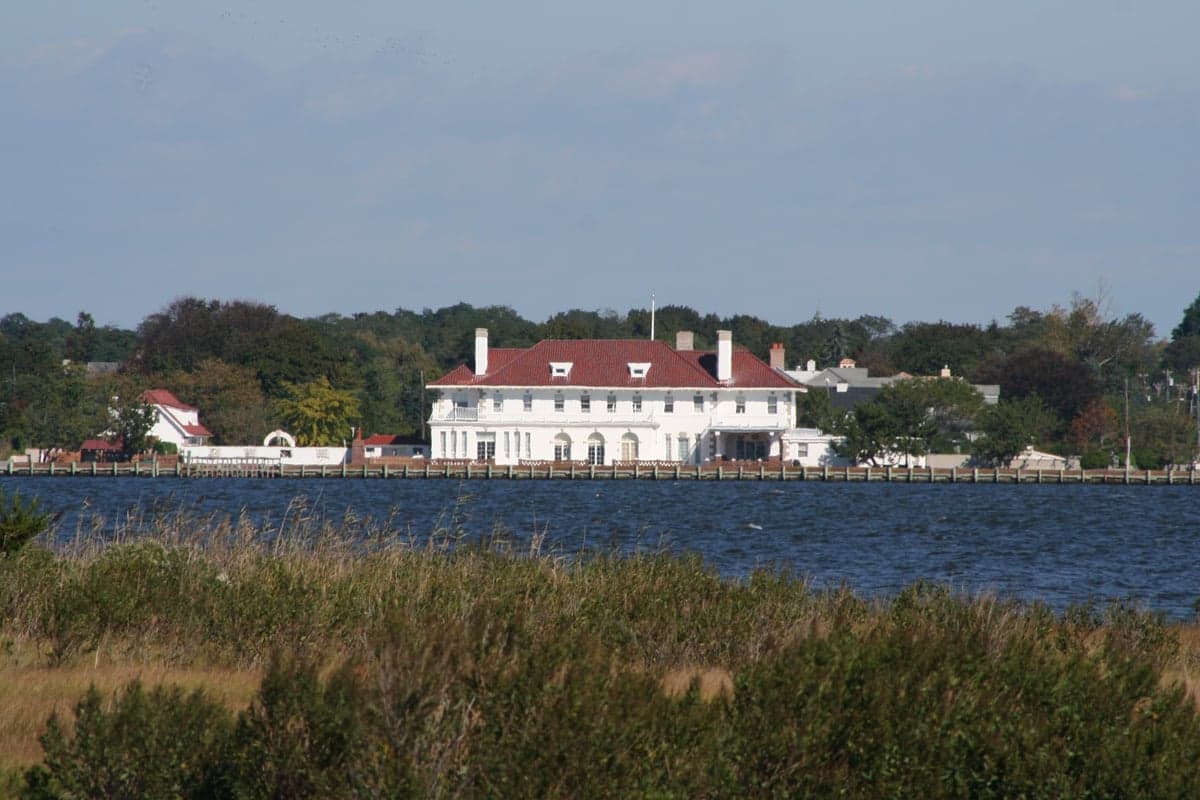
Today, Westhampton, New York, is a small, affluent village of 3,702 residents with a distinctly traditional character. The population is predominantly white (73.8%) and highly educated, with 52.0% holding a college degree, while the foreign-born share sits at a modest 6.2%. The village retains a tight-knit, family-oriented atmosphere, shaped by its historic role as a summer resort and its evolution into a year-round community for professionals and retirees.
How the city was settled and grew
Westhampton’s human history begins with the indigenous Shinnecock people, who inhabited the eastern end of Long Island for centuries before European contact. English settlers from Connecticut and Massachusetts arrived in the mid-17th century, drawn by land grants and the promise of fertile soil for farming and grazing. The village was officially founded in 1749 as part of the Town of Southampton, with early settlers clearing land for agriculture and building small homesteads. The arrival of the Long Island Rail Road in the 1870s transformed Westhampton from a quiet farming hamlet into a fashionable summer destination for wealthy New York City families. The Rogers Beach and Westhampton Beach areas became the epicenter of this resort boom, with grand hotels and cottages springing up along the shoreline. Through the early 20th century, the population remained small and overwhelmingly white, with a seasonal economy centered on hospitality and summer tourism. The Speonk and Remsenburg neighborhoods, just east of the village, saw modest growth from railroad workers and service staff, but the core of Westhampton stayed a quiet, exclusive enclave.
Modern era (post-1965)
The post-1965 era brought gradual change, though Westhampton remained far less diverse than many other Long Island communities. The 1965 Hart-Cellar Act did not trigger a large wave of immigration here; instead, the village’s population growth came primarily from domestic in-migration. Young families and professionals from New York City began buying second homes or relocating permanently, drawn by the area’s beaches, good schools, and relative safety. The Westhampton Country Club neighborhood and the Pine Neck area saw new single-family home construction, attracting upper-middle-class white families. Hispanic residents, now 8.9% of the population, began arriving in the 1980s and 1990s, many working in landscaping, construction, and hospitality. They settled primarily in the Eastport and Manorville outskirts, though some found housing in the older rental stock near the train station. Black residents, at 6.1%, have a longer but small presence, with families concentrated in the Remsenburg area and a few scattered homes in the village core. East/Southeast Asian residents (2.4%) are a more recent addition, arriving in the 2000s and 2010s, often as professionals in healthcare or technology, and living in newer subdivisions near the Quogue border. The Indian subcontinent population remains at 0.0%, reflecting the village’s limited draw for that demographic. Overall, Westhampton’s modern growth has been slow and selective, with housing prices and zoning restrictions limiting large-scale demographic shifts.
The future
Westhampton’s population is likely to remain stable or grow very slowly over the next 10–20 years. The village is not homogenizing further—it is already quite homogeneous—but it is also not tribalizing into distinct ethnic enclaves. The Hispanic and Black shares may increase modestly, driven by service-sector workers seeking affordable housing, but high property values will continue to limit significant in-migration. East/Southeast Asian communities may grow slightly as professionals are attracted to the area’s schools and quality of life, but the Indian subcontinent population is expected to remain negligible. The most notable trend is the aging of the white population, as many long-time residents retire and younger families are priced out. This could lead to a slight population decline unless new housing development—currently rare—opens up. The village’s character will likely remain that of a quiet, affluent, predominantly white community with a seasonal rhythm, though the year-round population may become slightly more diverse at the margins.
For someone moving in now, Westhampton offers a stable, safe, and traditional environment with strong schools and a low crime rate. The population is not undergoing rapid change, so newcomers should expect a community that values continuity and privacy. The trade-off is limited diversity and high housing costs, but for those seeking a predictable, family-oriented village on the South Fork, Westhampton remains a consistent choice.

* Values derived from national, state, county, city and local statistics and may differ in a specific area. Last updated: 2026-04-24T01:46:36.000Z
Narrative content on this page is AI-generated and may contain mistakes. Verify any details that matter before acting on them.
ReloMaps may earn a commission from affiliate links at no extra cost to you.

