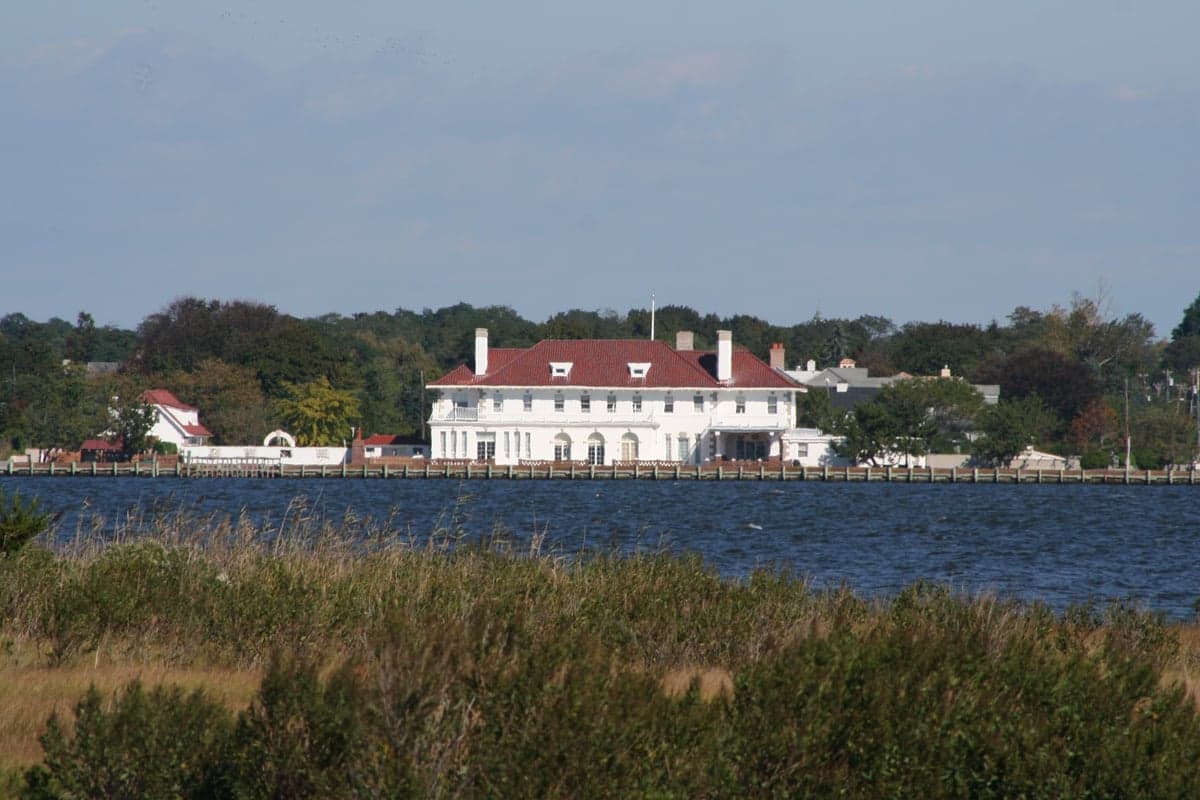
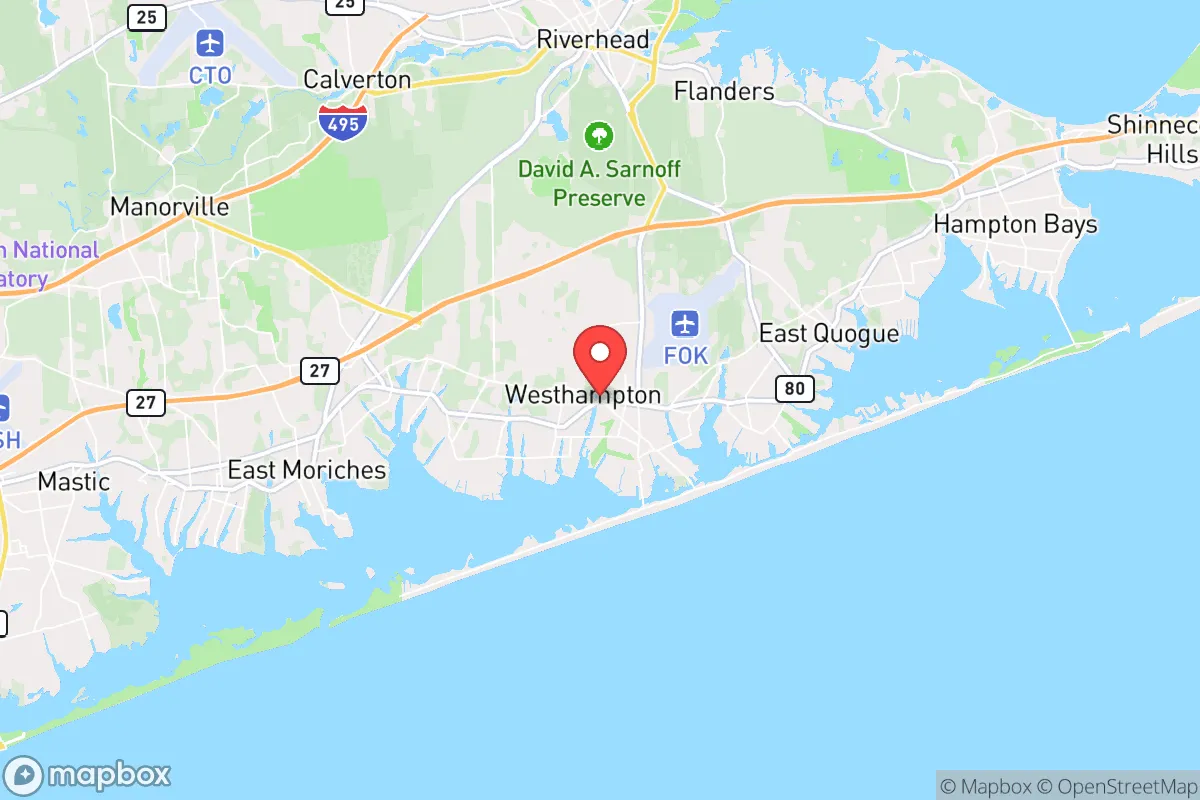
Photo: Wikipedia
Personal Sovereignty in Westhampton, NY
Moderate friction. Expect trade-offs in some aspect of personal liberty and independence.
What does Personal Sovereignty tell us?
Personal Sovereignty measures your capacity for self-reliance and independence with minimal government friction. Higher scores mean fewer barriers between you and the way you want to live... but it assumes you have the space you need and good neighbors.
What does this tell us?
Personal Sovereignty measures your capacity for self-reliance and independence with minimal government friction. Higher scores mean fewer barriers between you and the way you want to live... but it assumes you have the space you need and good neighbors.
State Policy
Energy independence: Importer (12% of energy produced in-state)
Personal Liberty
Homesteading

Personal Liberty Analysis
Westhampton, New York, presents a complex picture for those prioritizing personal sovereignty. While the village and its surrounding Hamptons area offer a high degree of physical safety and community cohesion, the overarching regulatory environment of Suffolk County and New York State imposes significant constraints on individual autonomy. For a survivalist or prepper mindset, the trade-off is stark: you gain a secure, low-crime enclave with strong property rights, but you operate within one of the nation's most restrictive state-level frameworks for self-defense, taxation, and personal medical choice. The key is understanding that Westhampton's local character can buffer some state overreach, but it cannot eliminate it.
Tax burden and regulatory posture in Suffolk County
New York State's tax burden is among the highest in the nation, and Westhampton is no exception. Property taxes in the Hamptons are notoriously steep, driven by high property values and a complex web of school, fire, and library districts. For a single individual or family, this means a significant portion of income is redirected to government services—services that may not align with a prepper's preference for self-reliance. The state's regulatory posture is equally aggressive. New York's building codes, environmental regulations (particularly concerning coastal zones and wetlands), and energy mandates (like the Climate Leadership and Community Protection Act) add layers of compliance that can frustrate off-grid or independent construction projects. Suffolk County's Department of Health Services also imposes strict septic and water well regulations, making it difficult to achieve true self-sufficiency without navigating costly permitting processes. The net effect is a high cost of personal freedom in terms of both money and bureaucratic hassle.
Self-defense and gun law specifics in New York State
This is the most significant sovereignty concern for a conservative-leaning individual. New York State operates under a "may-issue" concealed carry framework, heavily restricted by the 2022 CCIA (Concealed Carry Improvement Act). To carry a firearm in Westhampton, you must obtain a pistol permit from the Suffolk County Police Department, a process that can take 6-12 months, requires character references, and mandates a 16-hour safety course. The CCIA also bans firearms in "sensitive locations," which includes virtually all public spaces like parks, libraries, and even private businesses unless the owner explicitly posts a sign allowing carry. Magazine capacity is limited to 10 rounds. For a survivalist, this means your ability to defend yourself outside your home is severely curtailed. While Suffolk County is generally more pro-Second Amendment than New York City, the state's legal climate is hostile to self-defense rights. The recent Supreme Court decision in Bruen has led to ongoing litigation, but as of 2026, the practical reality is that carrying a firearm for personal protection in Westhampton requires significant time, money, and legal risk. Long guns and shotguns are less restricted, but the state's background check system and waiting periods remain a barrier.
Self-reliance and homesteading viability in the Hamptons
Westhampton's zoning and lot sizes offer a mixed bag for self-reliance. The area is characterized by large residential lots—often one to five acres in the more rural sections—which provide space for gardens, small livestock (chickens, rabbits), and rainwater catchment. However, the town of Southampton's zoning code is strict. Raising pigs, goats, or larger livestock typically requires a special permit and acreage minimums. Off-grid living is nearly impossible: the town requires connection to public water and sewer in most areas, and solar panel installations must comply with historic district aesthetic guidelines. Firewood collection on your own property is allowed, but clearing land for a food forest may require environmental review. The high water table and coastal flooding risks also complicate basement storage or bunker construction. For a prepper, the best strategy is to focus on above-ground gardening, food preservation, and building a network of like-minded neighbors—but full homesteading autonomy is not realistic within the village limits.
Personal liberties: parental rights, medical autonomy, and speech
New York State has a strong record on parental rights in education, with a clear opt-out process for sex education and the ability to homeschool without excessive state interference. However, the state's vaccine mandates for school attendance and its strict medical privacy laws (which can limit parental access to minor children's records in certain cases) are points of friction. Medical autonomy is heavily constrained: New York has some of the nation's most restrictive laws on alternative medicine, and the state's health department aggressively regulates supplements and treatments. Free speech is protected under the First Amendment, but New York's hate speech laws and social media regulations (like the SAFE Act's reporting requirements) create a chilling effect for those expressing dissenting views on public health or government policy. Property rights are relatively strong in Westhampton due to the high value of real estate, but eminent domain for coastal resiliency projects (like dune restoration) is a real concern. The village's historic preservation board also has veto power over exterior modifications, limiting your ability to fortify or modify your home without approval.
Overall, Westhampton offers a unique sovereignty profile: it is a sanctuary of physical safety and community stability within a state that actively restricts individual autonomy. For a survivalist or prepper, the area's low crime, strong property values, and access to the Atlantic for fishing and trade are genuine assets. But the trade-offs are severe: you will pay heavily in taxes, navigate a hostile gun law environment, and face bureaucratic hurdles to any independent project. Compared to a state like Texas or New Hampshire, Westhampton is a poor choice for those seeking maximum personal sovereignty. However, compared to New York City or even Nassau County, it is a relative haven. The decision hinges on whether the local benefits—safety, community, and natural resources—outweigh the state-level constraints on your freedom to live as you see fit. For a single individual or family willing to work within the system, it is livable. For those seeking true independence, it is not.

* Values derived from national, state, county, city and local statistics and may differ in a specific area. Last updated: 2026-04-24T01:46:36.000Z
Narrative content on this page is AI-generated and may contain mistakes. Verify any details that matter before acting on them.
ReloMaps may earn a commission from affiliate links at no extra cost to you.

